
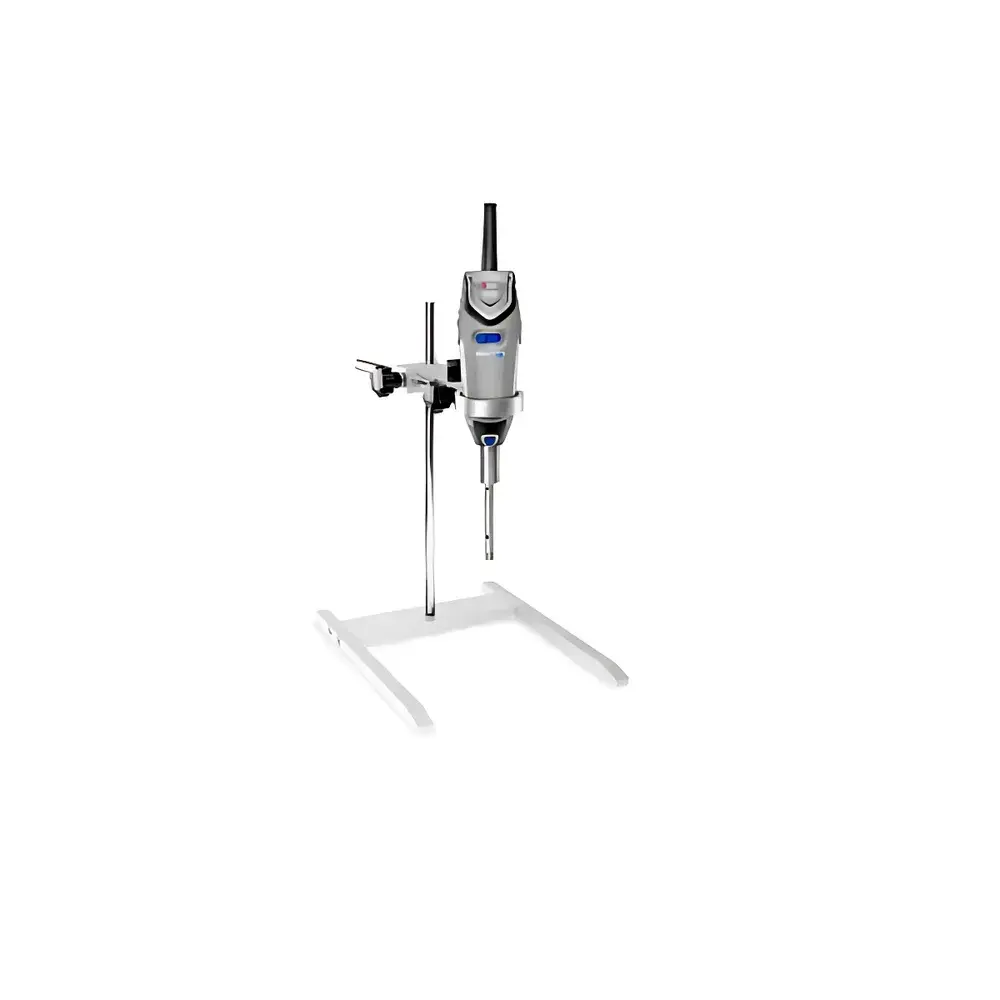
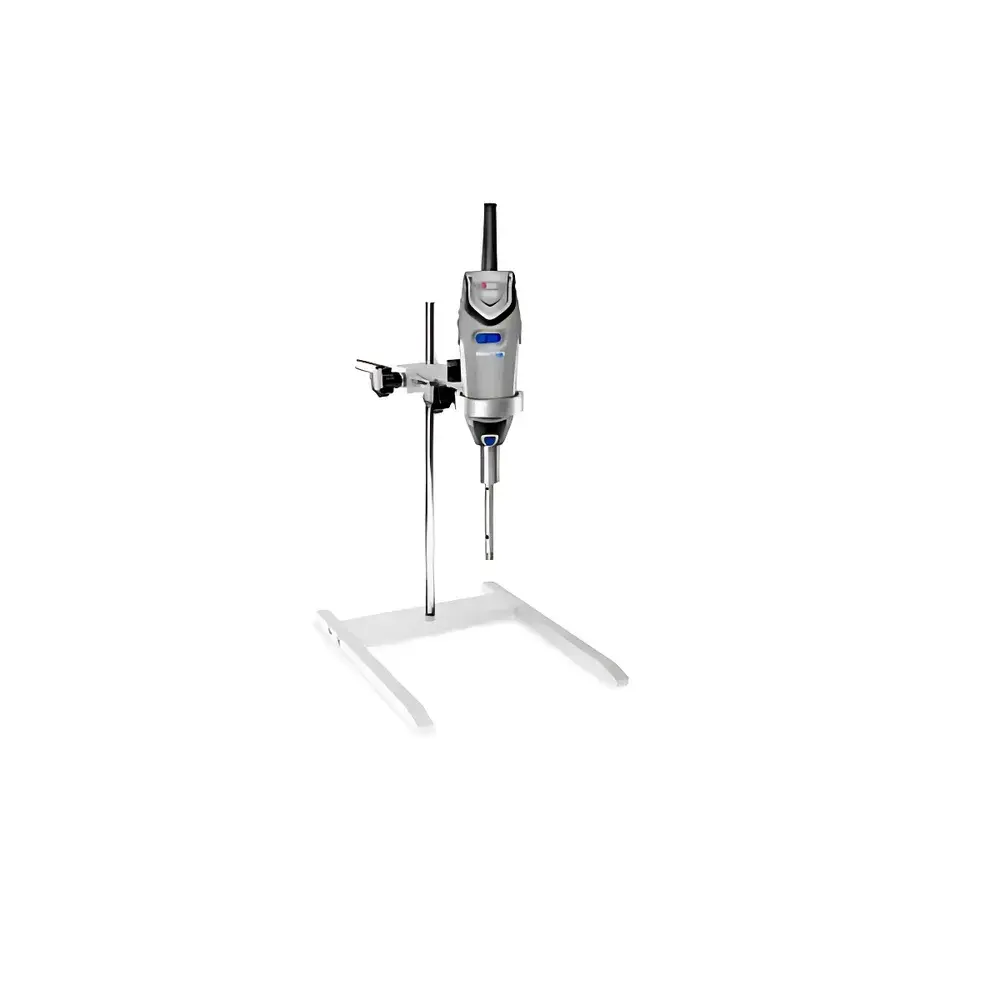
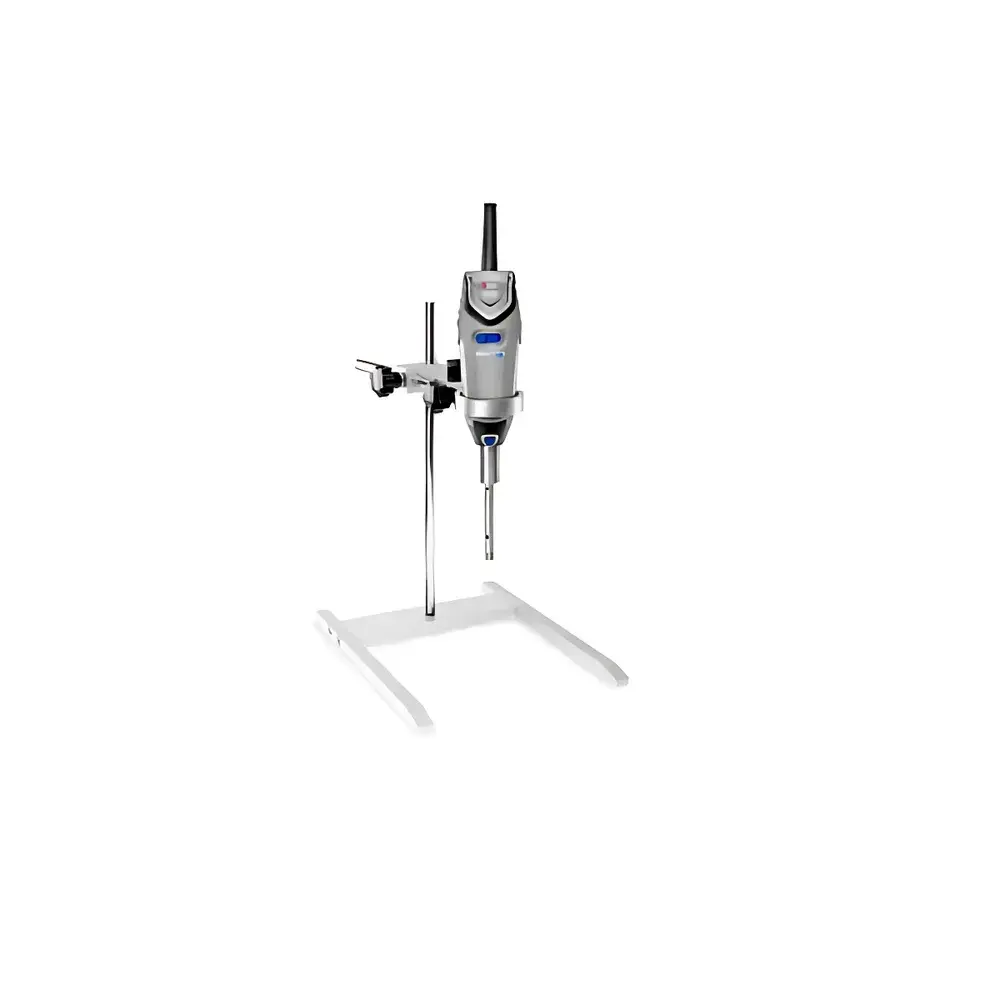
DLAB D-160 Handheld High-Shear Homogenizer
| Brand | DLAB (Beijing) |
|---|---|
| Origin | Beijing, China |
| Model | D-160 |
| Speed Range | 8,000–32,000 rpm |
| Speed Settings | 10-step manual dial |
| Max. Tip Linear Velocity | 6.3 m/s (DS-160/5 tip) or 14 m/s (DS-160/10 tip) |
| Sample Volume Capacity | 0.1–50 mL (DS-160/5) |
| Max. Viscosity | 5,000 mPa·s |
| Wetted Materials | ASTM A276 Type 316L stainless steel, PTFE |
| Noise Level | 72 dB(A) |
| IP Rating | IP20 |
| Motor | AC brushed motor |
| Power Input | 110–120 V / 60 Hz or 220–240 V / 50–60 Hz |
| Dimensions (L×W×H) | 45 × 55 × 190 mm |
| Weight | 0.54 kg |
| Operating Ambient | 0–40 °C, ≤85% RH |
Overview
The DLAB D-160 Handheld High-Shear Homogenizer is an engineered solution for rapid, reproducible sample homogenization, dispersion, emulsification, and cell lysis in laboratory environments where portability, ergonomic control, and material compatibility are critical. Based on rotor-stator high-shear principle, the device generates intense hydrodynamic cavitation and turbulent shear forces at the tip interface—enabling efficient particle size reduction, uniform phase mixing, and disruption of biological membranes without significant thermal accumulation. Its compact form factor and single-hand operation support benchtop flexibility and integration into biosafety cabinets, fume hoods, or cold rooms. Designed for routine use across academic, pharmaceutical, and industrial R&D labs, the D-160 delivers consistent mechanical energy input under variable load conditions while maintaining compliance with general electrical safety standards (IEC 61010-1) and electromagnetic compatibility (IEC 61326-1).
Key Features
- Ergonomic handheld design with balanced weight distribution (0.54 kg) and non-slip textured grip for extended operator comfort and fatigue reduction during repetitive tasks.
- 10-step manually adjustable speed control (8,000–32,000 rpm), enabling precise optimization of shear intensity for sensitive samples such as primary cells or protein formulations.
- Interchangeable stainless steel dispersing tips (DS-160/5 and DS-160/10) fabricated from ASTM A276 Type 316L—resistant to corrosion from organic solvents, acidic/basic buffers, and repeated autoclaving (up to 121 °C, 20 min).
- PTFE-sealed shaft assembly ensures leak-tight operation and prevents cross-contamination between samples; tip attachment/detachment requires no tools and completes in <3 seconds.
- Robust AC brushed motor (160 W nominal output) provides stable torque delivery across viscosity ranges up to 5,000 mPa·s, validated using standard silicone oil calibration fluids (ISO 2555).
- Low acoustic signature (72 dB(A) at 1 m distance) meets typical laboratory ambient noise requirements per ISO 11201; IP20-rated housing limits ingress of solid objects >12.5 mm but is not dust- or water-resistant.
Sample Compatibility & Compliance
The D-160 supports a broad range of sample matrices including aqueous suspensions, lipid emulsions, polymer solutions, nanoparticle colloids, tissue homogenates, and microbial lysates. Its wetted path complies with USP Class VI biocompatibility criteria for 316L SS and PTFE components. While not certified for GMP manufacturing environments, the unit supports GLP-aligned workflows when used with documented cleaning procedures (e.g., 70% ethanol rinse followed by UV exposure) and traceable tip lot numbers. It is routinely employed in protocols aligned with ASTM D445 (kinematic viscosity), ISO 13320 (laser diffraction particle sizing pre-treatment), and USP <729> (emulsion droplet size analysis). No built-in audit trail or electronic record functionality; manual logbook documentation is recommended for regulated applications.
Software & Data Management
The D-160 operates as a standalone electromechanical instrument with no embedded firmware, connectivity ports (USB/Ethernet), or software interface. All operational parameters—including speed setting, runtime, and tip type—are manually recorded by the user. For laboratories requiring digital traceability, integration with external timers, RPM loggers, or LIMS via serial-to-USB adapters (e.g., RS-232 TTL modules) is feasible but requires third-party configuration. No FDA 21 CFR Part 11 compliance features are present; electronic signatures or secure data export are not supported natively.
Applications
- Biological sample preparation: mammalian cell lysis, bacterial homogenization, subcellular fractionation, and nucleic acid extraction workflows.
- Nanomaterial processing: exfoliation of 2D materials, dispersion stabilization of carbon nanotubes or metal oxides in aqueous/organic media.
- Pharmaceutical formulation development: oil-in-water emulsion screening, active pharmaceutical ingredient (API) suspension deagglomeration, and viscosity modifier testing.
- Food & cosmetic R&D: dairy homogenate standardization, cosmetic emulsion stability assessment, pigment dispersion in makeup bases.
- Environmental and agrochemical analysis: soil slurry homogenization, pesticide suspension uniformity verification, and microplastic extraction from aqueous filters.
FAQ
What is the maximum recommended operating time per cycle to prevent motor overheating?
Continuous operation should not exceed 60 seconds per activation, followed by ≥30 seconds of rest—particularly above 25,000 rpm or with viscous samples (>2,000 mPa·s).
Can the D-160 be used in sterile environments such as laminar flow hoods?
Yes; its compact dimensions and absence of ventilation grilles allow safe placement inside Class II biosafety cabinets. Autoclavable tips must be cooled to ambient temperature before reinstallation.
Is the DS-160/10 tip compatible with low-volume samples (<1 mL)?
No; the DS-160/10 tip requires minimum 1 mL volume for stable vortex formation and effective energy transfer. For volumes below 1 mL, only the DS-160/5 tip is suitable.
Does DLAB provide calibration certificates for rotational speed accuracy?
Factory calibration is performed using NIST-traceable tachometers; however, formal calibration certificates are available only upon request and incur additional lead time and cost.
What maintenance is required for long-term reliability?
Carbon brushes should be inspected every 500 hours of cumulative use; replacement kits (part #BRUSH-D160) are available directly from DLAB distributors. Bearings require no scheduled lubrication.



