
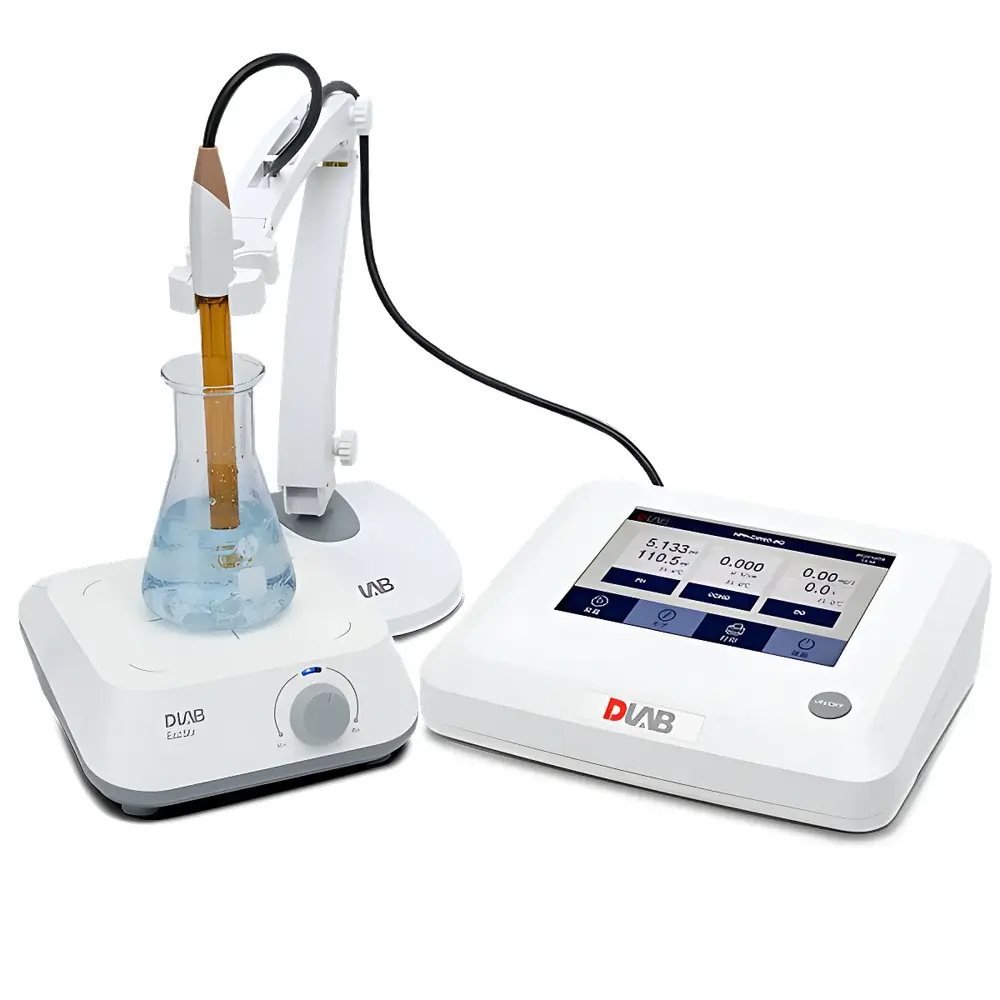
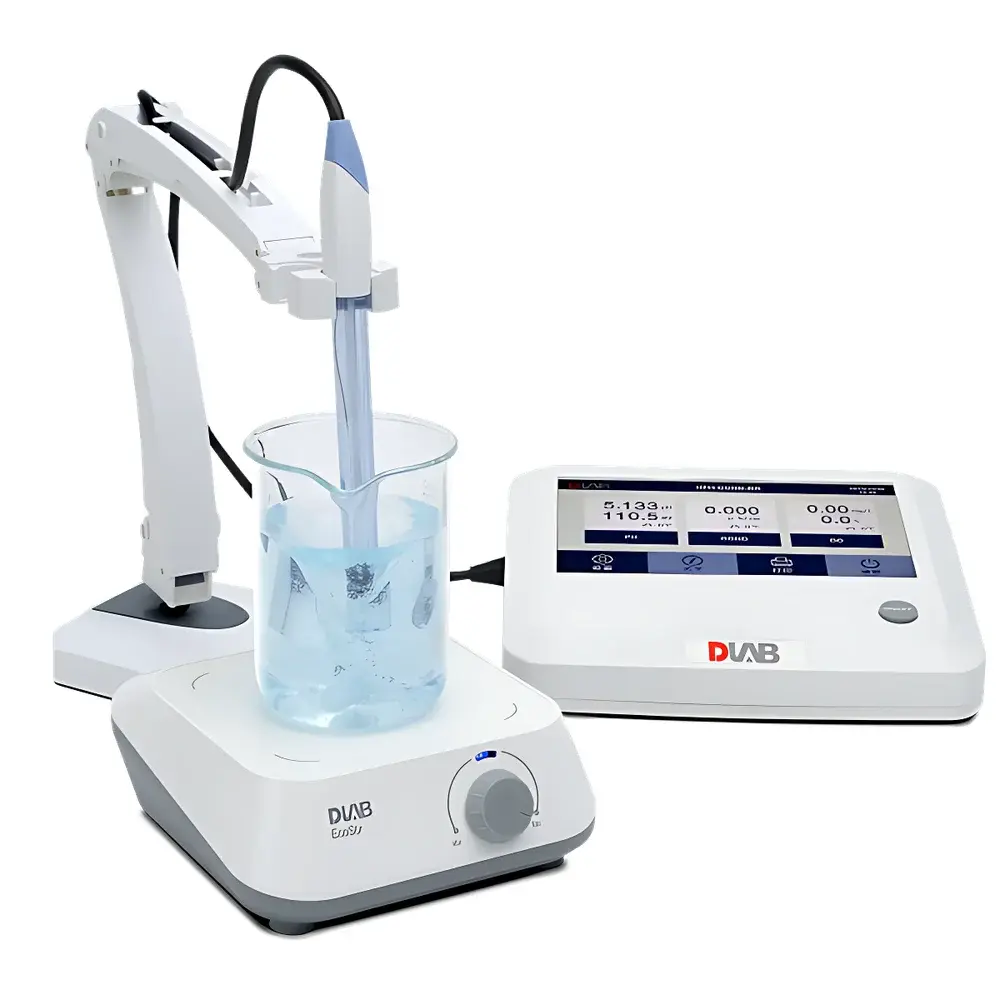
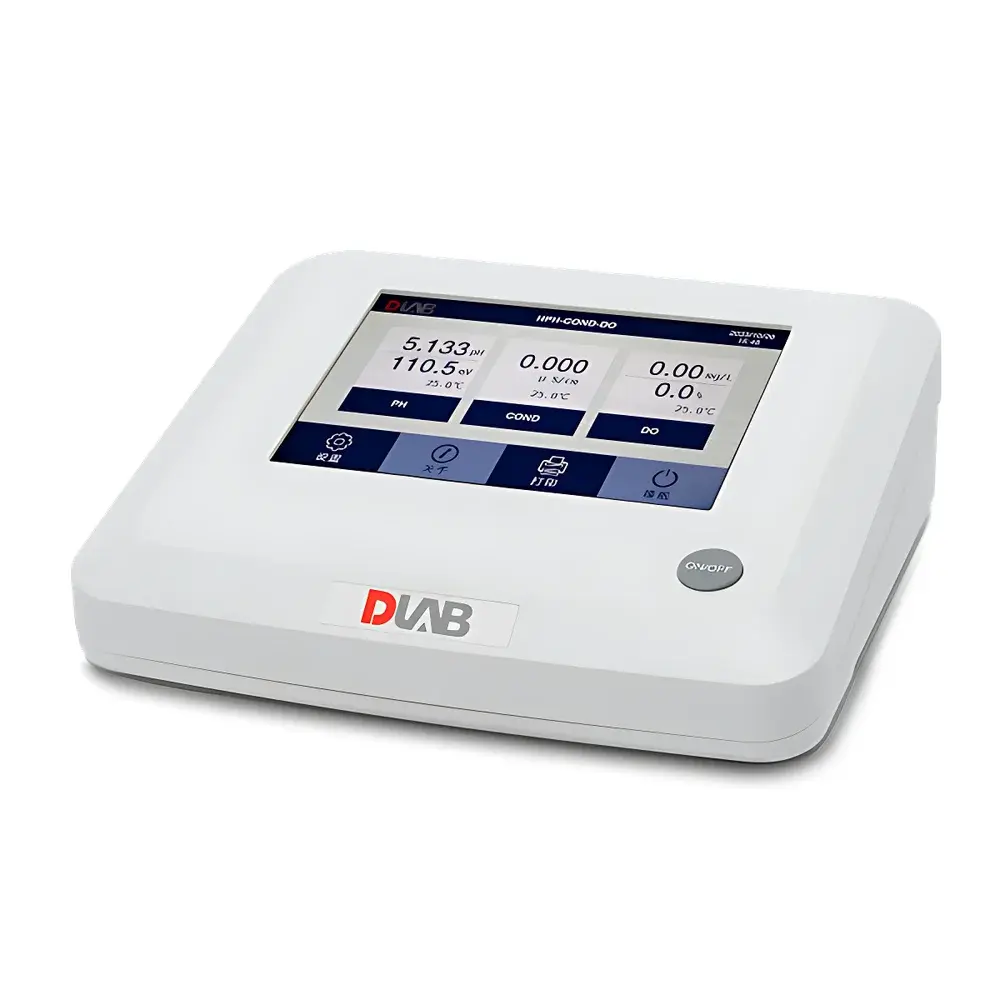
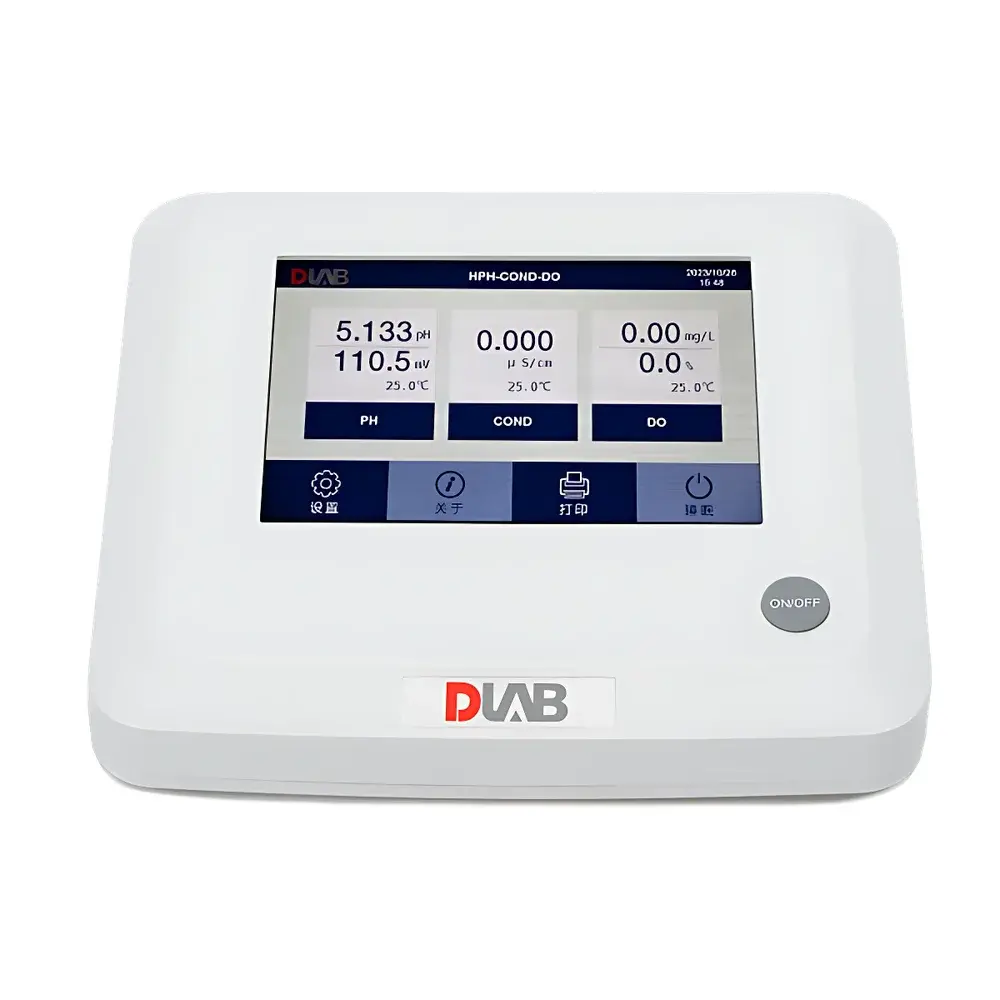
DLAB DLAB Desktop Electrochemical Analyzer – Touchscreen Model (Single- or Multi-Parameter)
| Brand | DLAB |
|---|---|
| Origin | Beijing, China |
| Manufacturer Type | Direct Manufacturer |
| Instrument Type | Benchtop |
| Parameter Capability | Multi-Parameter |
| Display | High-Resolution LCD Touchscreen |
| Data Storage Capacity | 450 Records (ID, Value, Unit, Temperature, Timestamp) |
| Data Export | USB Flash Drive / Optional Thermal Printer |
| Ingress Protection Rating | IP54 |
| Includes | Standard Electrode Holder & Calibration Solution Kit |
Overview
The DLAB Desktop Electrochemical Analyzer – Touchscreen Model is a benchtop analytical instrument engineered for precise, repeatable electrochemical measurements in quality control laboratories, academic research settings, and routine industrial testing environments. Based on potentiometric and conductometric measurement principles, the analyzer supports simultaneous or independent determination of key aqueous solution parameters—including pH, mV (redox potential), conductivity (EC), total dissolved solids (TDS), salinity, and temperature—depending on electrode configuration and calibration protocol. Its modular architecture accommodates both single-parameter and multi-parameter operation modes, enabling flexible deployment across diverse sample matrices without hardware modification. Designed for compliance with standard laboratory workflows, the system adheres to fundamental metrological requirements outlined in ISO 7888 (conductivity), ISO 3696 (water purity for analysis), and ASTM D1125 (electrical conductivity of water). The instrument operates under ambient laboratory conditions (10–40 °C, ≤85% RH non-condensing) and meets CE marking requirements for electromagnetic compatibility (EMC Directive 2014/30/EU) and low-voltage safety (LVD Directive 2014/35/EU).
Key Features
- High-resolution capacitive touchscreen interface with intuitive icon-driven navigation—no physical buttons required for primary operation.
- Built-in temperature compensation algorithms (NTC 30 kΩ sensor) applied automatically during pH and conductivity measurements per ISO 17025-recommended practices.
- Real-time stability monitoring: visual and audible alerts triggered when measurement drift falls below user-defined thresholds (±0.01 pH units over 10 s or ±0.1 μS/cm over 15 s).
- Automated calibration confirmation: prompts operator upon successful completion of 1-, 2-, or 3-point pH calibration or 1–3 point conductivity standardization; stores calibration history with date/time stamps.
- Robust mechanical design compliant with IP54 rating—dust-protected enclosure and resistance to water splashes from any direction, suitable for shared lab benches near sinks or humidified enclosures.
- Integrated electrode holder compatible with standard BNC and DIN connectors; supports combination pH electrodes, Pt1000 temperature probes, and graphite or stainless-steel conductivity cells.
Sample Compatibility & Compliance
The analyzer is validated for use with aqueous samples across a broad pH range (0.00–14.00), conductivity range (0.00 μS/cm to 200.0 mS/cm), and temperature range (0–105 °C) when paired with appropriate electrodes. It accommodates routine calibration using NIST-traceable buffer solutions (pH 4.01, 7.00, 10.01) and KCl-based conductivity standards (e.g., 84 μS/cm, 1413 μS/cm, 12.88 mS/cm). All stored data include mandatory metadata fields (sample ID, parameter value, unit, measured temperature, timestamp), supporting auditability under GLP and GMP frameworks. While not pre-certified for FDA 21 CFR Part 11, the system’s data integrity features—including immutable timestamping, password-protected method editing, and export-locked records—facilitate validation by end users in regulated environments.
Software & Data Management
Data are stored locally in non-volatile memory (450 records maximum) with full traceability: each entry includes a unique numeric ID, measured value, SI or conventional unit, temperature reading, and ISO 8601-formatted timestamp. Export is supported via standard USB-A port to FAT32-formatted flash drives; exported files follow CSV format with UTF-8 encoding and header rows compliant with LIMS ingestion protocols. Optional thermal printer integration enables hard-copy generation of calibration reports and single-measurement summaries—printer driver firmware is vendor-supplied and requires no third-party software. No cloud connectivity or remote access capability is included, preserving data sovereignty per institutional IT policy requirements.
Applications
- Quality assurance of purified water systems (PW, WFI) per USP and EP 2.2.38 specifications.
- Monitoring of electroplating bath chemistry (pH, conductivity) in automotive and electronics manufacturing lines.
- Environmental field lab support for surface water characterization (stream, lake, wastewater influent/effluent).
- Teaching laboratories for undergraduate electrochemistry experiments involving buffer titration, ion-selective electrode response, and conductivity vs. concentration relationships.
- Pharmaceutical excipient testing where pH and ionic strength influence dissolution behavior and formulation stability.
FAQ
Does this instrument support automatic temperature compensation (ATC) for all parameters?
Yes—ATC is enabled by default for pH and conductivity measurements using the integrated Pt1000 temperature probe; TDS and salinity calculations derive from compensated EC values.
Can I import custom calibration curves or modify slope/offset values manually?
No—the system uses factory-programmed Nernstian and linear calibration models only; user-modifiable coefficients are disabled to maintain metrological traceability.
Is the USB data export function compatible with macOS and Linux systems?
Yes—CSV files generated are plain-text and universally readable; no proprietary drivers or software installation is required on host computers.
What electrode types are recommended for high-ionic-strength samples (e.g., seawater or brine)?
A sealed, double-junction pH electrode with KCl gel electrolyte and a graphite conductivity cell rated for 0–200 mS/cm are advised to minimize junction clogging and polarization error.
Does the IP54 rating permit use in controlled humidity chambers?
IP54 provides protection against dust ingress and water splashes but does not guarantee performance under sustained condensation or pressurized steam exposure; placement outside direct chamber airflow is recommended.




