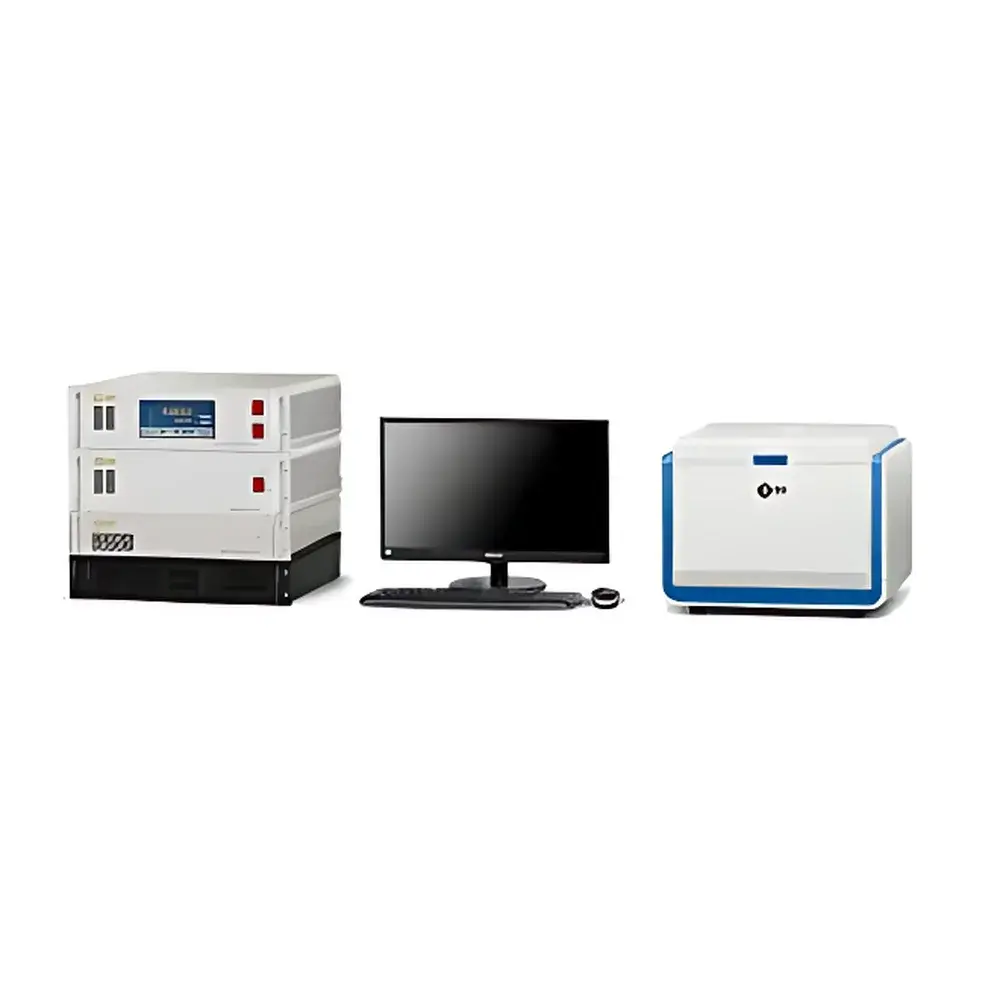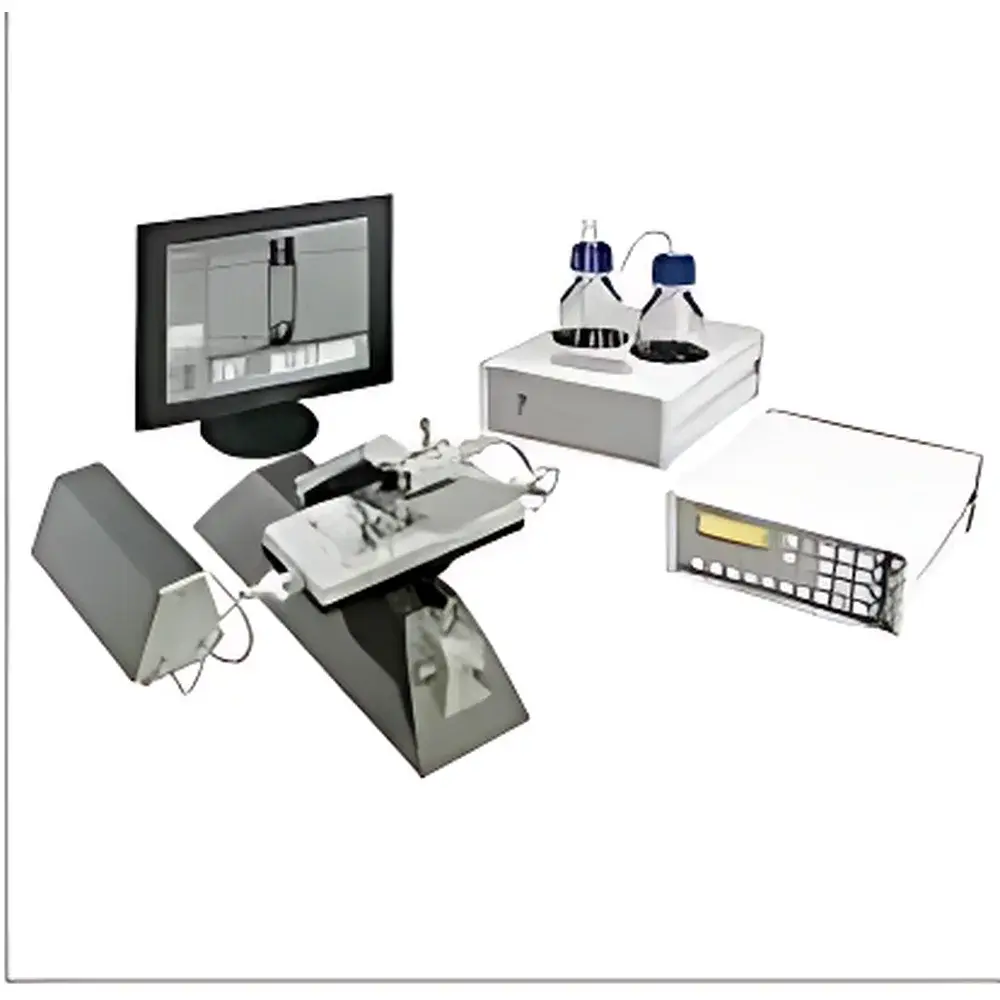
DMT 111P In Vitro Microvascular Pressure-Diameter Measurement System
| [Origin | Denmark |
|---|---|
| Manufacturer Type | Authorized Distributor |
| Origin Category | Imported |
| Model | 111P |
| Price | Upon Request |
| Vessel Diameter Range | >60 µm |
| Tension Range | ±50 mN |
| Tension Resolution | 0.01 mN |
| Pressure Range | 0–250 mmHg |
| Pressure Accuracy | ±0.1 mmHg |
| Temperature Range | Ambient to 50 °C |
| Temperature Accuracy | ±0.1 °C |
| Bath Volume | Up to 10 mL (3 mL standard) |
| Bath Material | Acid-Resistant Stainless Steel |
| Heating | Integrated Electronic Feedback Control |
| Analog Output | 1.0 V F.S. (12-bit) |
| Digital Interface | RS232 / RS485 |
| Power Supply | 100–240 VAC, 50/60 Hz |
| Environmental Operating Temp | 15–30 °C] |
Overview
The DMT 111P In Vitro Microvascular Pressure-Diameter Measurement System is a precision-engineered platform for functional and structural characterization of isolated resistance-level microvessels under near-physiological conditions. Designed in accordance with established principles of vascular physiology, the system enables real-time, high-fidelity quantification of vessel diameter dynamics in response to controlled intraluminal pressure, transmural pressure gradients, axial stretch, pharmacological stimuli, and metabolic modulators. It operates on the fundamental biomechanical premise that microvascular tone—governed by smooth muscle contractility, endothelial signaling, and extracellular matrix compliance—is directly reflected in pressure-diameter relationships, wall thickness-to-lumen ratio, and distensibility indices. The 111P supports vessels ≥60 µm in native external diameter, covering arterioles, small arteries, and venules commonly studied in hypertension, diabetes, ischemia-reperfusion injury, and microcirculatory dysfunction research.
Key Features
- Integrated inverted microscope (DMT-branded) with bottom-mounted optical window for continuous, non-invasive video-based lumen and outer diameter measurement;
- Independent, user-defined control of intraluminal pressure (0–250 mmHg), axial tension (±50 mN), and bath temperature (ambient to 50 °C, ±0.1 °C stability);
- Electronic feedback heating eliminates need for continuous perfusion-based thermal maintenance, enhancing experimental reproducibility and reducing fluid handling complexity;
- Acid-resistant stainless steel single-chamber bath (3 mL standard, up to 10 mL capacity) with sealed lid featuring dedicated ports for drug infusion, gas equilibration (O2/CO2), rapid drainage/filling, and cannula access;
- Modular hardware architecture supporting optional add-ons: micro-flowmeter (15–1500 µL/min), pH probe (0–14, 0–50 °C), peristaltic pump (2.5–50 rpm), and intracellular Ca2+ fluorescence monitoring interfaces;
- Calibration-ready analog output (1.0 V full scale, 12-bit resolution) and bidirectional digital communication (RS232/RS485) for seamless integration into third-party data acquisition systems compliant with GLP/GMP workflows;
- Manual three-axis (X/Y/Z) micromanipulator for precise vessel alignment and glass cannula positioning, ensuring consistent axial loading and minimal tissue trauma during cannulation.
Sample Compatibility & Compliance
The 111P accommodates enzymatically or mechanically isolated microvessels from rodent (rat, mouse), porcine, and human tissue sources—including mesenteric, cerebral, coronary, renal, and skeletal muscle beds—provided external diameters exceed 60 µm. Vessels are mounted between dual glass micropipettes and pressurized via hydrostatic columns or regulated pneumatic sources. The system conforms to core methodological standards referenced in peer-reviewed vascular physiology literature (e.g., American Journal of Physiology – Heart and Circulatory Physiology, Microcirculation) and supports experimental protocols aligned with ISO 10993 (biocompatibility), ASTM F2129 (electrical safety), and FDA 21 CFR Part 11 when paired with validated software audit trails. All wetted components are autoclavable or chemically sterilizable; bath material meets EN 10088-1 requirements for corrosion-resistant austenitic stainless steel.
Software & Data Management
DMT’s proprietary acquisition and analysis software provides synchronized, time-stamped recording of diameter (inner/outer), pressure, axial force, temperature, and optional parameters (flow, pH, Ca2+). Video calibration is user-defined using stage micrometers or pixel-to-µm reference tools, enabling traceable dimensional metrology. Software modules support automated myogenic response profiling, pressure-step protocols, ramped agonist titration, and passive mechanical property derivation (e.g., incremental elastic modulus, Laplace-derived wall stress). Export formats include CSV, MATLAB (.mat), and HDF5 for downstream statistical modeling (e.g., nonlinear regression of sigmoidal pressure-diameter curves). Audit trail functionality logs user actions, parameter changes, and calibration events—critical for regulatory submissions and multi-site collaborative studies adhering to ALP/CLIA or ISO/IEC 17025 frameworks.
Applications
- Quantitative assessment of myogenic autoregulation and pressure-induced vasoconstriction/vasodilation;
- Evaluation of endothelium-dependent and -independent vasoreactivity (e.g., acetylcholine, sodium nitroprusside, phenylephrine);
- Pharmacodynamic profiling of novel vasoactive compounds targeting RAS, NO-sGC-cGMP, or TRP channels;
- Mechanistic studies of vascular remodeling in disease models: hypertensive arteriolar hypertrophy, diabetic microvascular rarefaction, sepsis-induced capillary leak;
- Validation of computational hemodynamic models requiring empirically derived wall stiffness and distensibility coefficients;
- Training platform for graduate-level vascular physiology laboratories emphasizing quantitative biomechanics and integrative signal transduction.
FAQ
What vessel types and sizes are compatible with the 111P system?
Vessels must be isolated, cannulated, and exhibit an external diameter ≥60 µm—typical of terminal arterioles (1A–3A order), small resistance arteries, and collecting venules. Larger conduit vessels (>300 µm) may require custom cannulae and modified mounting fixtures.
Is the system suitable for long-term viability experiments?
Yes—under optimized physiological salt solution (PSS), oxygenation, and temperature control, viable contractile responses have been documented for >24 hours in published studies using rat mesenteric arteries.
Can the 111P be integrated with fluorescence imaging systems?
The bath design and inverted microscope configuration allow coupling with epifluorescence or confocal setups; DMT provides mechanical mounting adapters and synchronization TTL triggers for concurrent Ca2+ or membrane potential imaging.
Does the system meet regulatory requirements for preclinical contract research?
Hardware design complies with IEC 61010-1 safety standards; when operated with validated software and documented calibration procedures, it supports GLP-compliant study execution per OECD Principles of Good Laboratory Practice.
What level of technical support and validation documentation is provided?
DMT-certified installation, IQ/OQ documentation templates, annual calibration services, and application-specific protocol development support are available through authorized distributors.