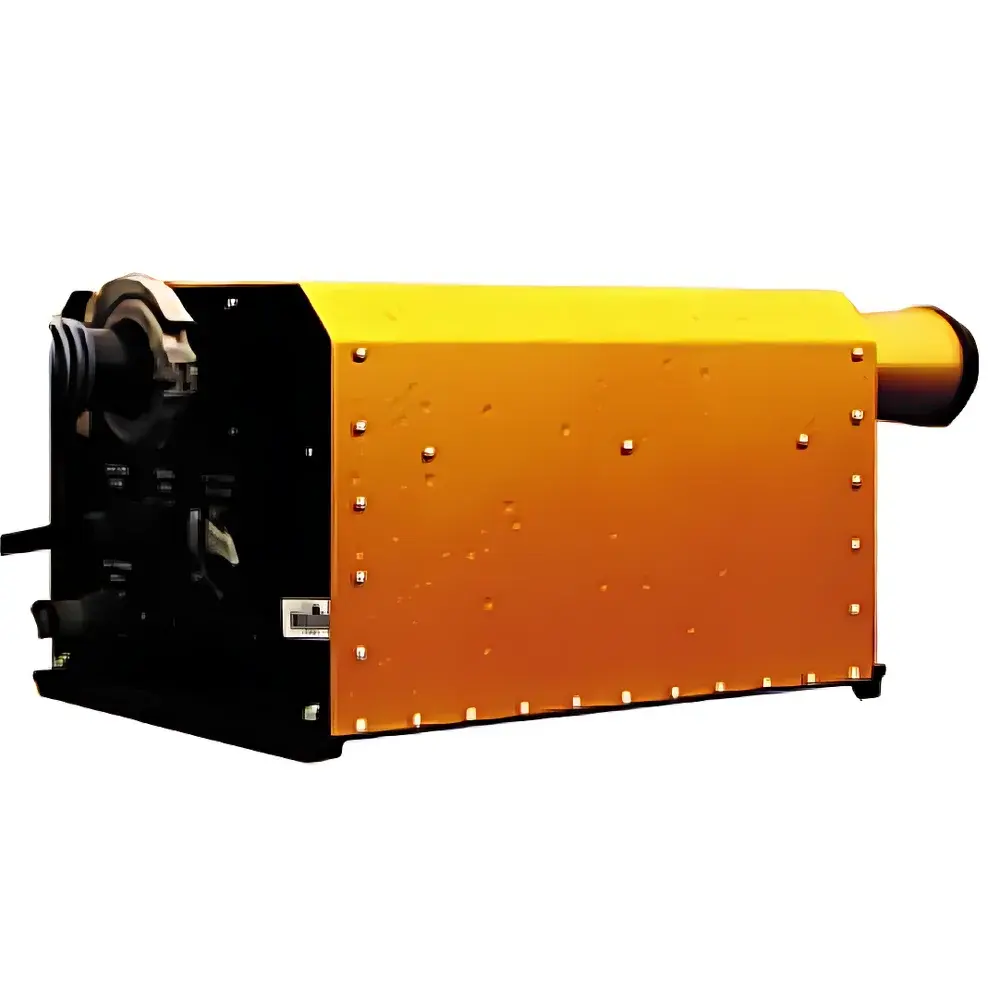
DMT FM-120 Forward-Scattering Optical Droplet Spectrometer
| Origin | USA |
|---|---|
| Manufacturer Type | Authorized Distributor |
| Origin Category | Imported Instrument |
| Model | FM-120 |
| Measurement Range | 2–50 µm |
| Sampling Area | 0.24 mm² |
| Volumetric Flow Rate | 1 m³/min |
| Sampling Frequency | Adjustable from 0.04 s to 20 s |
| Refractive Index Assumption | 1.33 (non-absorbing, water standard) |
| Scattering Collection Angle | 3.5°–12° (annular forward cone) |
| Operating Temperature | 0–40 °C |
| Relative Humidity | 0–100 % RH (non-condensing) |
| Altitude Limit | ≤ 4,000 m |
| Instrument Weight | 10.0 kg |
| External Pump Weight | 9.5 kg |
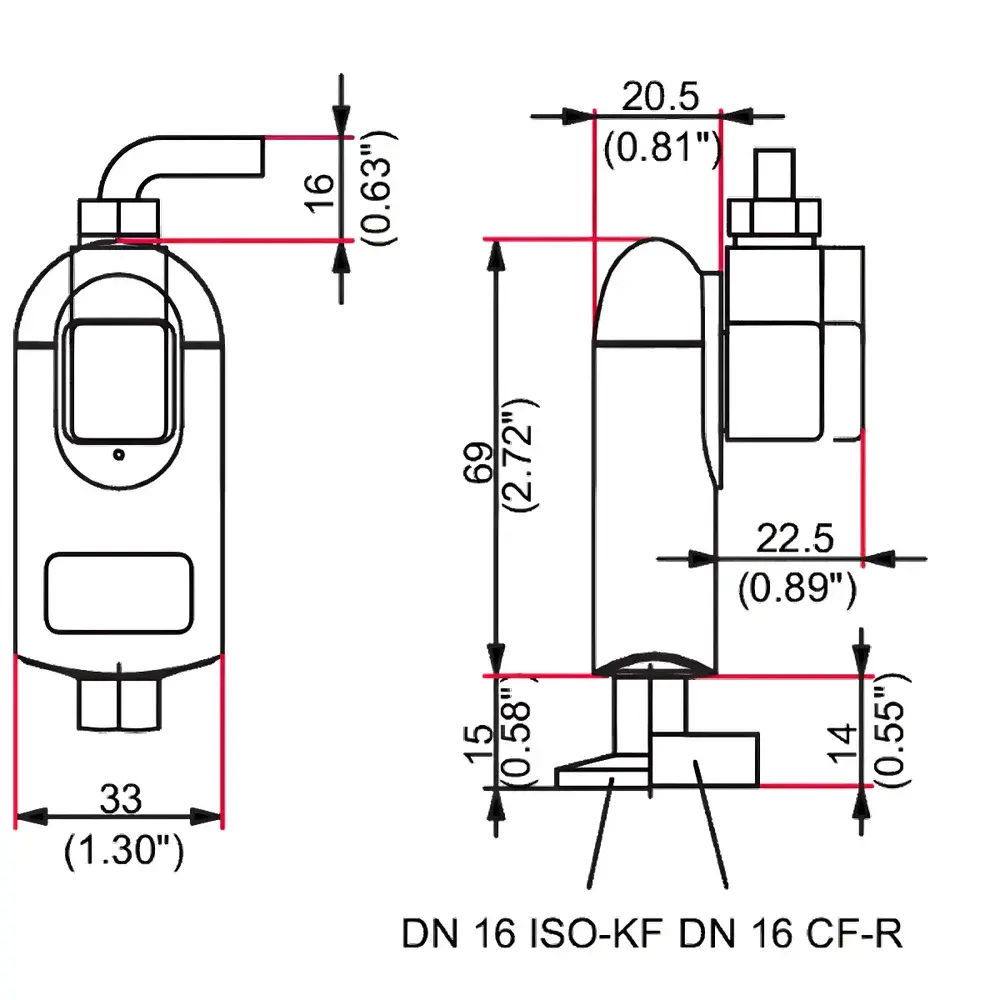
| Dimensions (Detector Unit) | 23 cm (W) × 37 cm (L) × 28 cm (H) |
| Power Supply | FM-120 unit: 85–264 VAC, 50–60 Hz |
| External pump | 220 VAC |
| Data Interface | RS-422 or RS-232 |
Overview
The DMT FM-120 Forward-Scattering Optical Droplet Spectrometer is a field-deployable, all-weather instrument engineered for continuous, in-situ measurement of liquid cloud and fog droplet size distributions in ambient air. It operates on the principle of forward-scattering laser optics: a collimated laser beam defines a fixed sampling volume (depth of field, DOF), and individual droplets traversing this volume scatter light within a precisely defined angular cone (3.5°–12°). The scattered photons are collected by an optical train incorporating a 50/50 beam splitter and two photodetectors—designated as the “Sizer” and “Qualifier”—to discriminate valid scattering events based on geometric positioning and signal amplitude. This dual-detector architecture ensures high-fidelity rejection of out-of-plane particles and background noise, enabling robust discrimination of droplets between 2 and 50 µm diameter under real-world atmospheric conditions. Designed for permanent tower or ground-based deployment, the FM-120 integrates a thermostatically controlled anti-icing heater and IP65-rated environmental housing, permitting reliable operation across diverse climatic zones—from coastal fog banks to high-elevation mountain observatories.
Key Features
- Optically calibrated forward-scattering detection with geometric depth-of-field validation via dual photodetector logic (Qualifier/Sizer coincidence)
- Real-time, high-temporal-resolution sampling (configurable interval: 0.04 s to 20 s) synchronized with volumetric flow control (1 m³/min)
- Fixed sampling cross-section of 0.24 mm², enabling direct derivation of number concentration (cm⁻³) without empirical calibration drift
- All-weather enclosure with integrated anti-icing heater, rated for continuous operation at 0–40 °C and ≤100 % RH (non-condensing)
- Modular design supporting co-location with meteorological towers, boundary-layer flux stations, or mobile platforms
- Compliance-ready digital output via RS-422 (preferred) or RS-232 interface, compatible with SCADA, CR1000X, or custom data acquisition systems
Sample Compatibility & Compliance
The FM-120 is optimized for hydrometeors composed of pure water or dilute aqueous solutions (refractive index ≈1.33), including natural fog, stratus cloud droplets, and supercooled liquid water (SLW) in mixed-phase clouds. It does not resolve ice crystals, aerosol particles below 2 µm, or non-spherical or highly absorbing particulates. Its measurement protocol aligns with established atmospheric physics methodologies referenced in WMO Guide to Instruments and Methods of Observation (CIMO Guide, Chapter 12) and ASTM D6243–20 (Standard Practice for Determination of Liquid Water Content in Clouds). While not certified to ISO/IEC 17025 for metrological traceability, its optical geometry and signal processing are validated against NIST-traceable polystyrene latex (PSL) standards and intercomparison campaigns conducted under GEWEX Cloud System Study (GCSS) protocols. The system supports GLP-aligned metadata tagging (timestamp, temperature, humidity, flow rate) for audit-ready data archives.
Software & Data Management
Raw photon pulse data are processed onboard using deterministic thresholding and pulse-height analysis to generate per-sample droplet size spectra (bin width: 0.5 µm). Output includes time-stamped, ASCII-formatted files containing derived parameters: size-resolved number concentration (dN/dlogD), total liquid water content (g/m³), effective diameter (Deff), volume median diameter (VMD), and droplet number concentration (cm⁻³). Optional DMT-supplied software (SpectraView™) provides spectral visualization, batch processing, QA/QC flagging (e.g., flow deviation, heater fault), and export to NetCDF or CSV for integration with Python (Py-ART, xarray), MATLAB, or R-based atmospheric modeling pipelines. All firmware updates and configuration changes are logged with timestamps and user IDs, satisfying basic requirements for FDA 21 CFR Part 11–compliant environments when deployed in regulated research settings.
Applications
- Cloud microphysics studies: quantification of droplet activation, condensational growth, and collision-coalescence efficiency in stratiform and orographic fog
- Aviation weather monitoring: SLW detection for icing hazard assessment on runways, wind turbines, and power transmission lines
- Environmental exposure modeling: parameterization of fog deposition fluxes for pollutant scavenging and ecosystem nutrient cycling studies
- Climate model evaluation: validation of cloud droplet number concentration (CDNC) and effective radius in regional climate simulations (e.g., WRF-Chem, COSMO-ART)
- Artificial fog generation and dispersion testing: real-time feedback for industrial humidification, agricultural pesticide spray optimization, and fire suppression system development
FAQ
What particle types can the FM-120 reliably measure?
It measures spherical, optically transparent liquid droplets with refractive index ~1.33 (e.g., water, dilute salt solutions). It excludes ice crystals, dust, soot, or irregularly shaped aerosols.
Does the FM-120 require periodic optical recalibration?
No routine recalibration is required; its geometric DOF and scattering angle are factory-fixed. Annual verification using PSL standards is recommended for long-term research-grade datasets.
Can it operate unattended for extended periods?
Yes—designed for >12-month continuous deployment with remote diagnostics, watchdog timers, and heater fault monitoring via serial status registers.
Is the FM-120 compatible with solar-powered remote stations?
Yes, when paired with appropriate DC-AC inverters and battery management systems; average power draw is <120 W during active sampling.
How is liquid water content (LWC) calculated from raw spectra?
LWC (g/m³) = Σ [Ni × (π/6) × ρw × Di³], where Ni is number concentration in bin i, Di is midpoint diameter, and ρw = 1 g/cm³.