
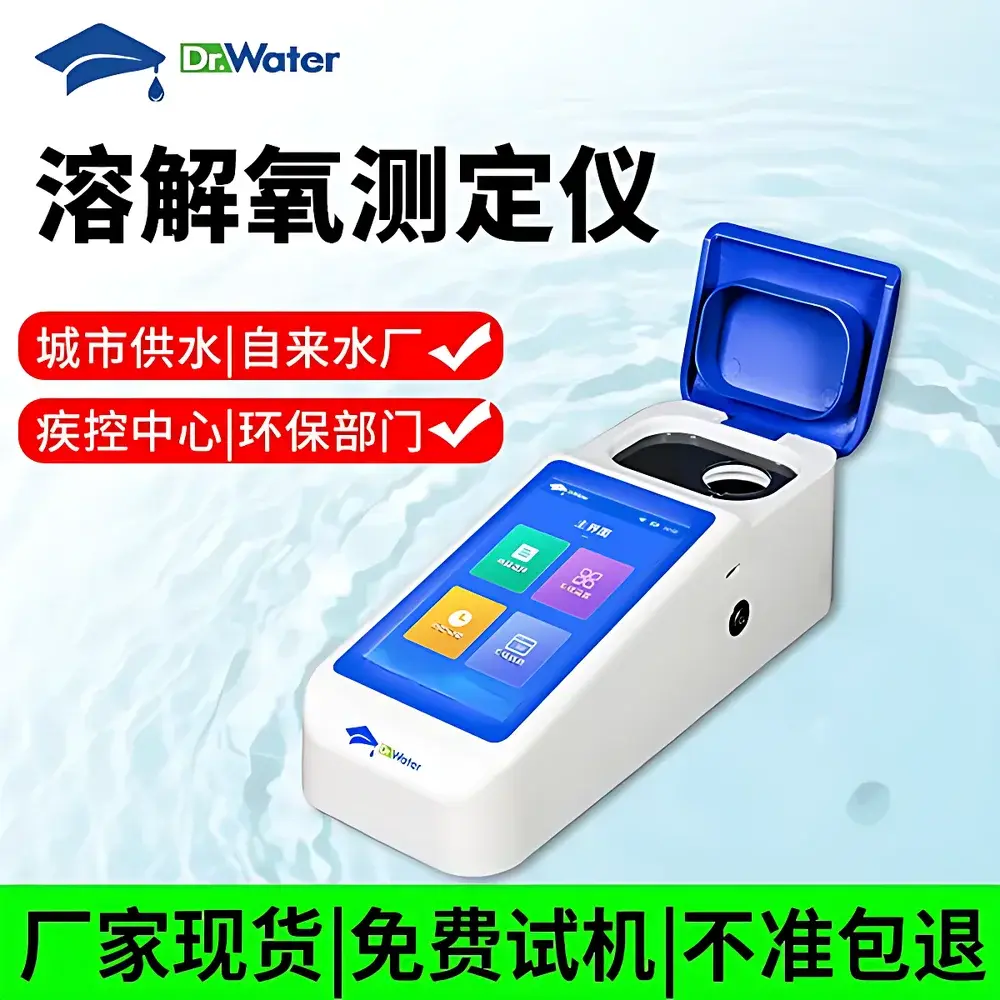
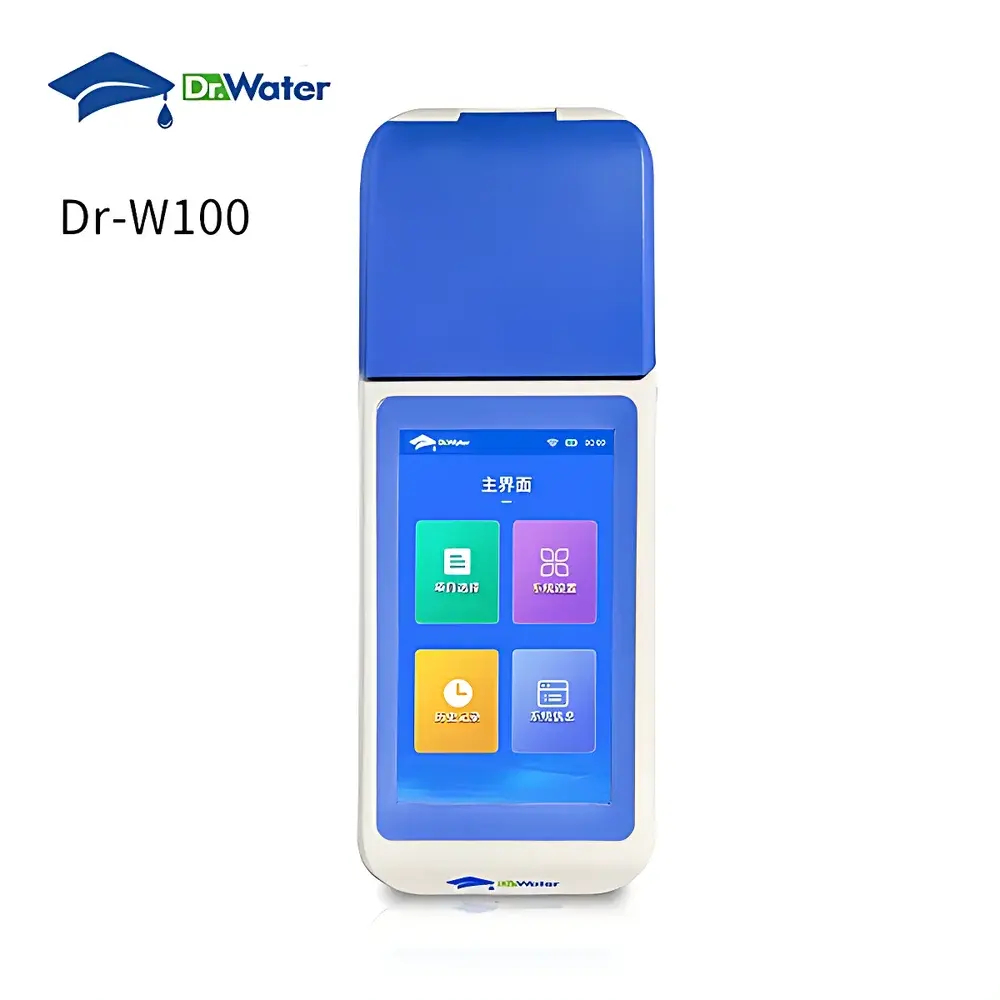
DoctorWater Dr-W120 Portable Dissolved Oxygen and Multi-Parameter Water Quality Analyzer
| Brand | DoctorWater |
|---|---|
| Origin | Hunan, China |
| Model | Dr-W120 |
| Instrument Type | Portable |
| Measurement Principle | Optical (LED-based colorimetric method with interference-compensated photometry) |
| Measurement Range (DO) | 0.20–15.00 mg/L |
| Accuracy | ≤ ±5% |
| Repeatability | ≤ ±2% |
| Detection Limit | 0.20 mg/L |
| Wavelength Range | 330–900 nm |
| Wavelength Accuracy | ±5 nm |
| Absorbance Resolution | 0.001 Abs |
| Optical Stability | ≤ ±0.005 Abs/20 min |
| Display | 5-inch HD color capacitive touchscreen |
| Power Supply | Rechargeable Li-ion battery + AC adapter |
| Data Storage | 1,000,000 measurement records |
| Interface | USB Type-C (charging & data transfer) |
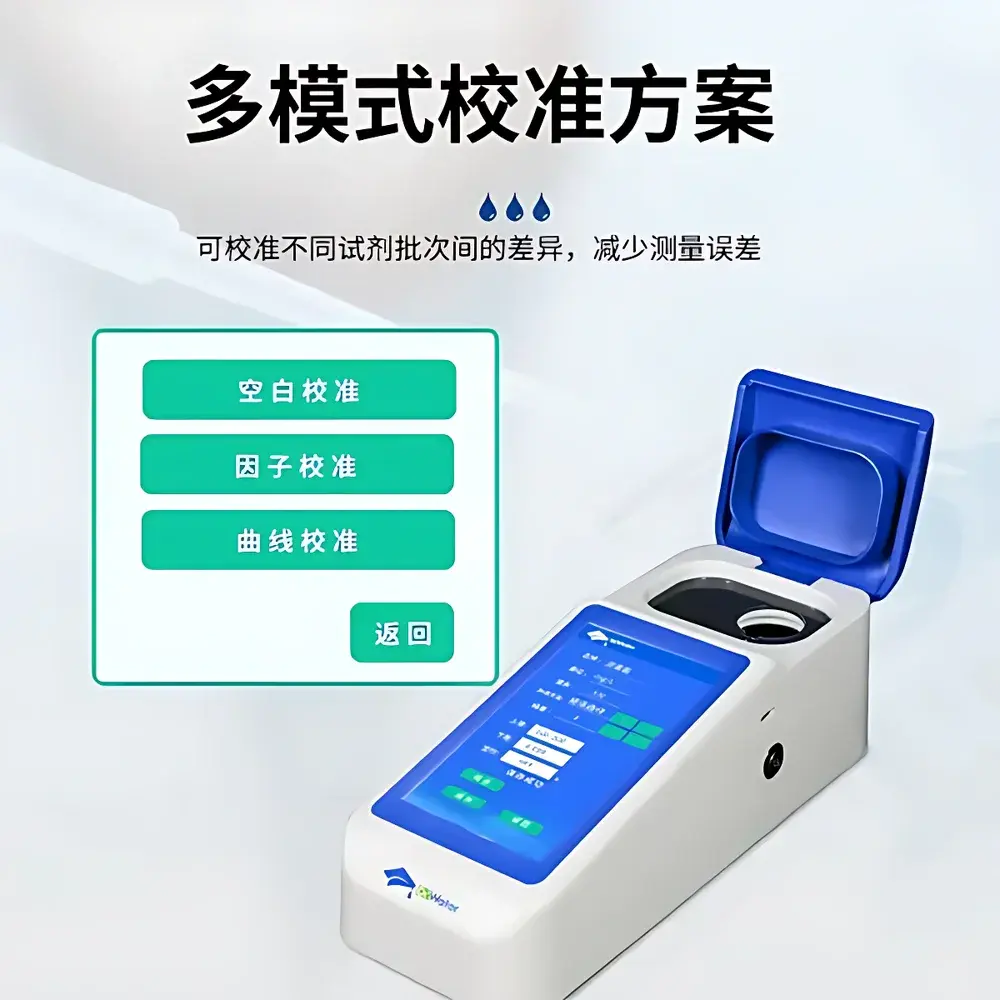
| Calibration Modes | Blank, Factor, and Curve calibration |
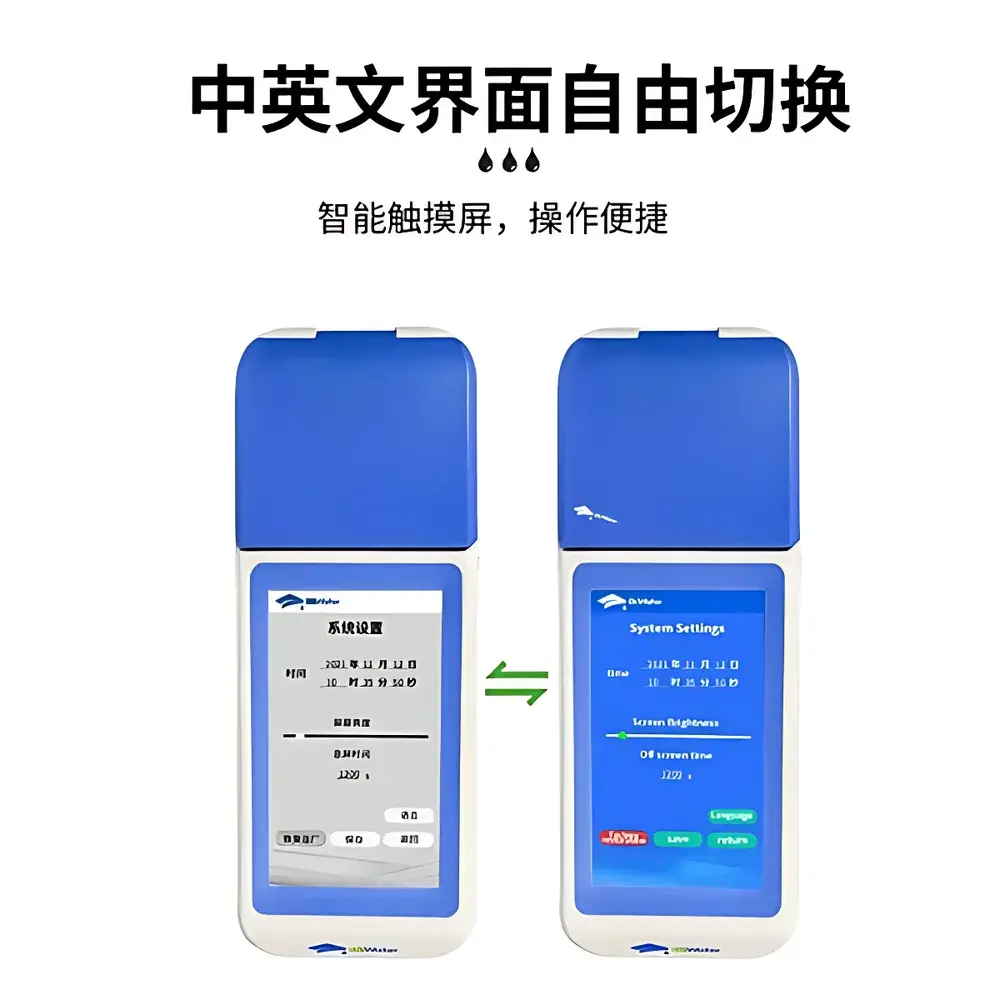
| Language Support | English / Chinese switchable |
| Sample Format | 16 mm and 25 mm round cuvettes |
| Light Source | Imported long-life cold LED (≥100,000 h) |
| Housing Material | Corrosion-resistant ABS |
| Printer | Built-in thermal printer |
| Readout Units | mg/L, ppm, or Abs |
Overview
The DoctorWater Dr-W120 is a field-deployable, multi-parameter water quality analyzer engineered for reliable dissolved oxygen (DO) quantification alongside up to 11 additional critical parameters—including turbidity, color, free chlorine, chlorine dioxide, total hardness, permanganate index (CODMn), ammonia nitrogen, ozone, urea, iron, and manganese. Unlike electrochemical DO probes—whose performance degrades with membrane fouling, electrolyte depletion, or temperature drift—the Dr-W120 employs a stable optical colorimetric methodology. It measures DO indirectly via a Winkler-based or indigo carmine–derived chromogenic reaction, where dissolved oxygen oxidizes a reagent to produce a colored complex proportional to concentration. This absorbance is quantified using a precision LED-driven photometric system spanning 330–900 nm, with automatic wavelength selection and real-time interference compensation for color and light attenuation—eliminating reliance on fragile membranes or frequent recalibration. Designed to meet the operational rigor of routine environmental monitoring, the instrument complies with core principles outlined in ISO 5815-1:2016 (DO determination by Winkler titration) and supports method validation per EPA Method 4500-O G and ASTM D888-22. Its robust architecture ensures consistent performance across variable ambient conditions—from municipal water intake stations to remote river sampling sites.
Key Features
- 5-inch HD capacitive touchscreen with intuitive icon-driven navigation and dual-language support (English/Chinese), enabling rapid method selection and result review without manual lookup.
- Proprietary dual-algorithm processing—combining polynomial interpolation and least-squares regression curve fitting—to minimize systematic error across nonlinear calibration ranges.
- Integrated initialization stability monitor that delays measurement initiation until optical baseline drift falls below ±0.005 Abs/20 min, ensuring reproducibility from first use.
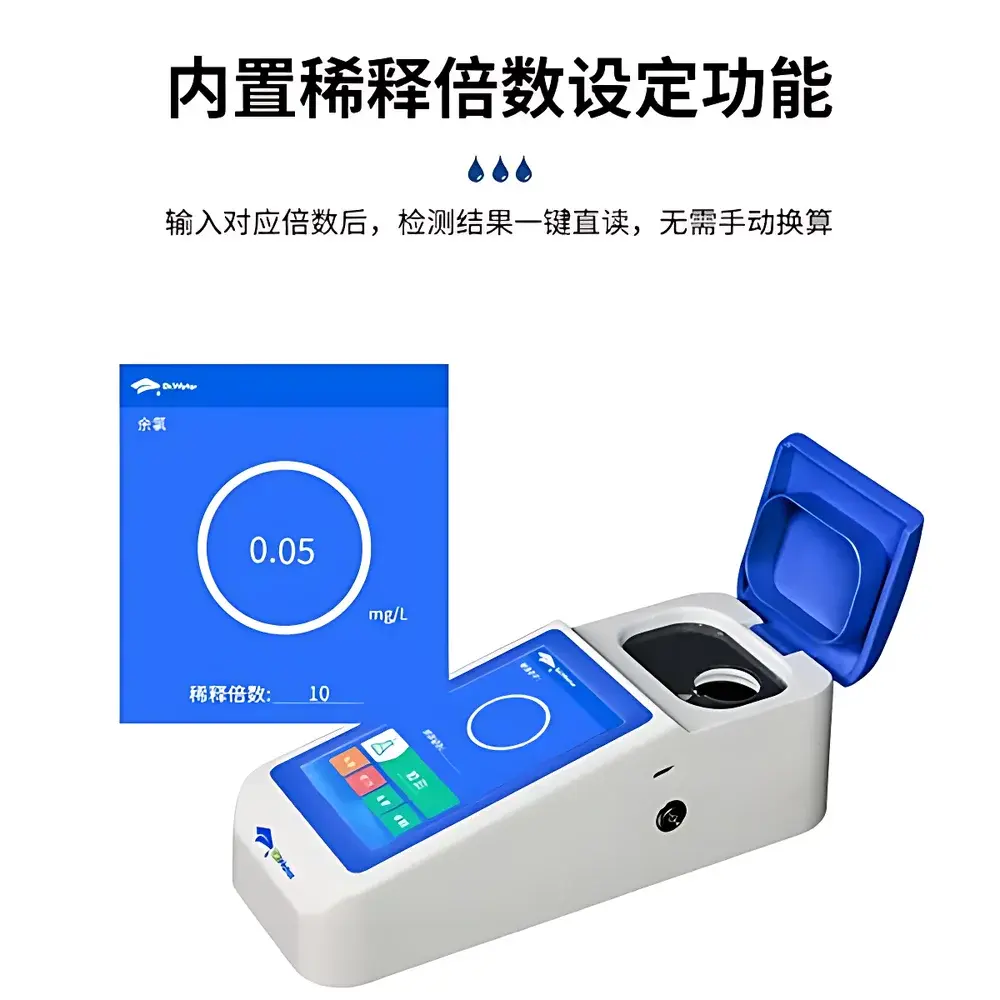
- On-device dilution factor programming: users input sample dilution ratio once; the system auto-scales raw absorbance to final concentration, eliminating manual calculation errors.
- Programmable timed assay mode: schedule start time and interval for unattended batch testing—ideal for compliance-driven workflows requiring fixed-interval monitoring.
- Three-tier calibration flexibility: blank correction for background subtraction, factor calibration for lot-specific reagent response, and full multi-point curve calibration for nonlinearity compensation.
- User-defined alarm thresholds with audible and visual alerts upon exceedance—critical for real-time process control in drinking water distribution or wastewater effluent monitoring.
- Multi-mode turbidity analysis: selectable algorithms for standard (0–1000 NTU), low-turbidity (<1 NTU), signal-averaged (for noisy field samples), and rapid-settling (for suspended solids kinetics) applications.
- Dual-power architecture: high-capacity Li-ion battery (≥12 h continuous operation) plus universal AC adapter—validated for IP67-rated portable cases with acid/alkali resistance per IEC 60529.
Sample Compatibility & Compliance
The Dr-W120 accepts standard 16 mm and 25 mm round glass or quartz cuvettes, accommodating both EPA-compliant digestion vials and field-ready disposable tubes. Its optical path design minimizes stray light and eliminates cuvette alignment dependency through auto-centering detection. All preloaded methods align with national and international reference standards: DO measurements follow APHA Standard Methods 4500-O G (modified Winkler); turbidity adheres to ISO 7027-1:2016; chlorine assays conform to ASTM D1253-21; and ammonia nitrogen analysis implements ISO 7150-1:1984. The device’s firmware architecture supports audit-trail logging (user ID, timestamp, calibration history, and raw absorbance values), satisfying GLP documentation requirements and facilitating FDA 21 CFR Part 11–aligned data integrity protocols when paired with validated LIMS export.
Software & Data Management
Embedded firmware provides full local data lifecycle control: measurement acquisition, parameter configuration, calibration archiving, and report generation. Stored datasets (up to 1 million entries) retain full metadata—including date/time, operator ID, method ID, cuvette ID, and raw Abs values at primary and secondary wavelengths. USB Type-C enables direct file export in CSV or PDF formats; no proprietary drivers required. Thermal printing delivers immediate hard-copy reports with embedded QR codes linking to digital audit logs. Optional cloud synchronization (via secure HTTPS API) allows centralized fleet management for multi-site utilities or contract laboratories—supporting role-based access control and automated regulatory submission templates for state-level water quality reporting portals.
Applications
The Dr-W120 serves as a primary analytical tool across regulated and industrial water management domains: routine DO profiling in surface water bodies per USGS NWIS protocols; verification of aeration efficiency in activated sludge basins; verification of residual disinfectant levels in potable water distribution networks; QC screening of purified water in pharmaceutical cleanrooms (meeting USP and EP 2.2.43); and rapid field assessment during environmental incident response (e.g., fish kill investigations or algal bloom monitoring). Its portability and battery endurance make it suitable for mobile labs deployed under EPA Region 4 Mobile Laboratory Response Guidelines, while its multi-parameter capability reduces instrument redundancy in resource-constrained municipal labs.
FAQ
Does the Dr-W120 measure dissolved oxygen electrochemically?
No. It uses optical colorimetry based on standardized chromogenic reactions—eliminating membrane replacement, polarization time, and flow-rate dependence inherent to Clark-type sensors.
Can calibration curves be imported from external sources?
Yes. Users may load custom calibration files (CSV format) containing wavelength-specific absorbance/concentration pairs, enabling method transfer between instruments or lab-to-field harmonization.
Is the thermal printer compatible with third-party label stock?
The built-in printer accepts standard 58 mm thermal paper only; adhesive-backed labels are not supported due to thermal head clearance constraints.
How is optical stability maintained over extended field use?
The system performs automatic dark-current compensation before each measurement cycle and applies real-time LED intensity feedback control—verified per IEC 61000-4-3 immunity testing for sustained photometric fidelity.
What regulatory documentation is provided for audit readiness?
Each unit ships with a Factory Calibration Certificate traceable to NIST SRMs, Firmware Validation Report (per IEC 62304), and a complete Design History File summary available upon request for GMP/GLP inspections.
Related Products







