
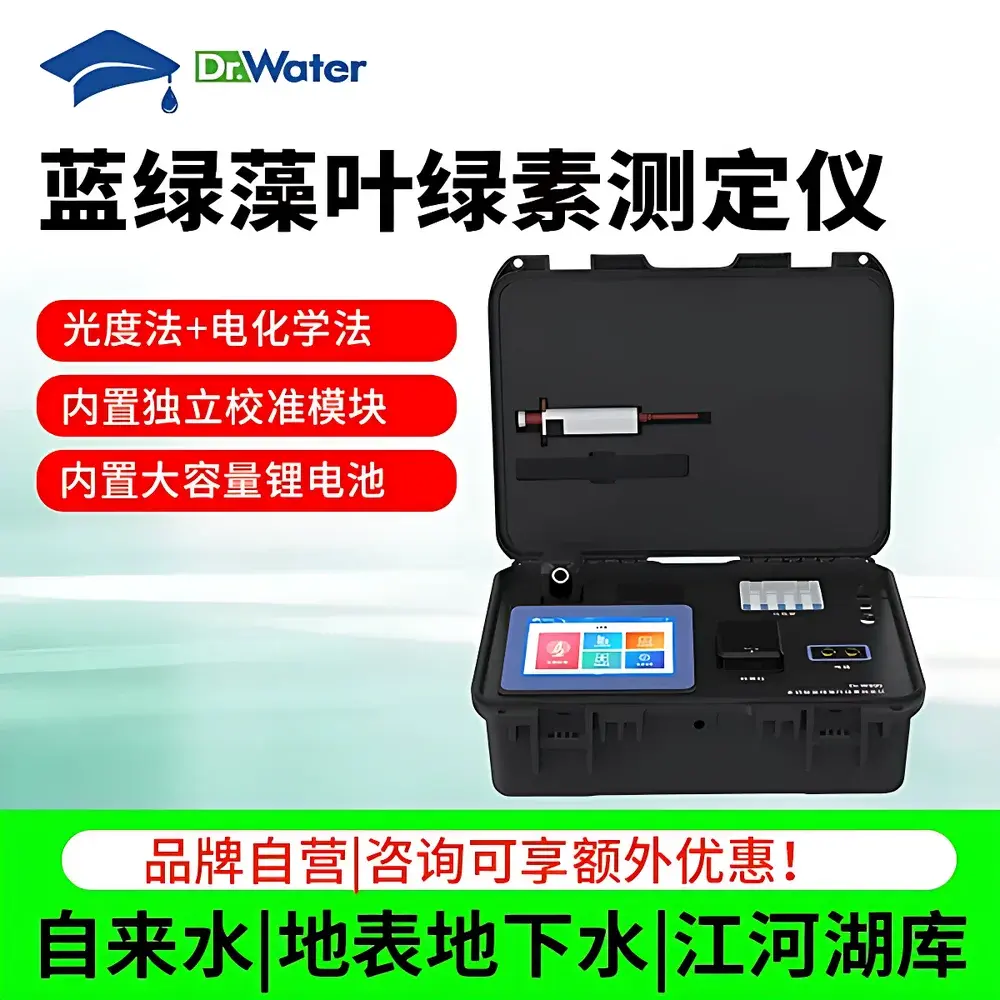
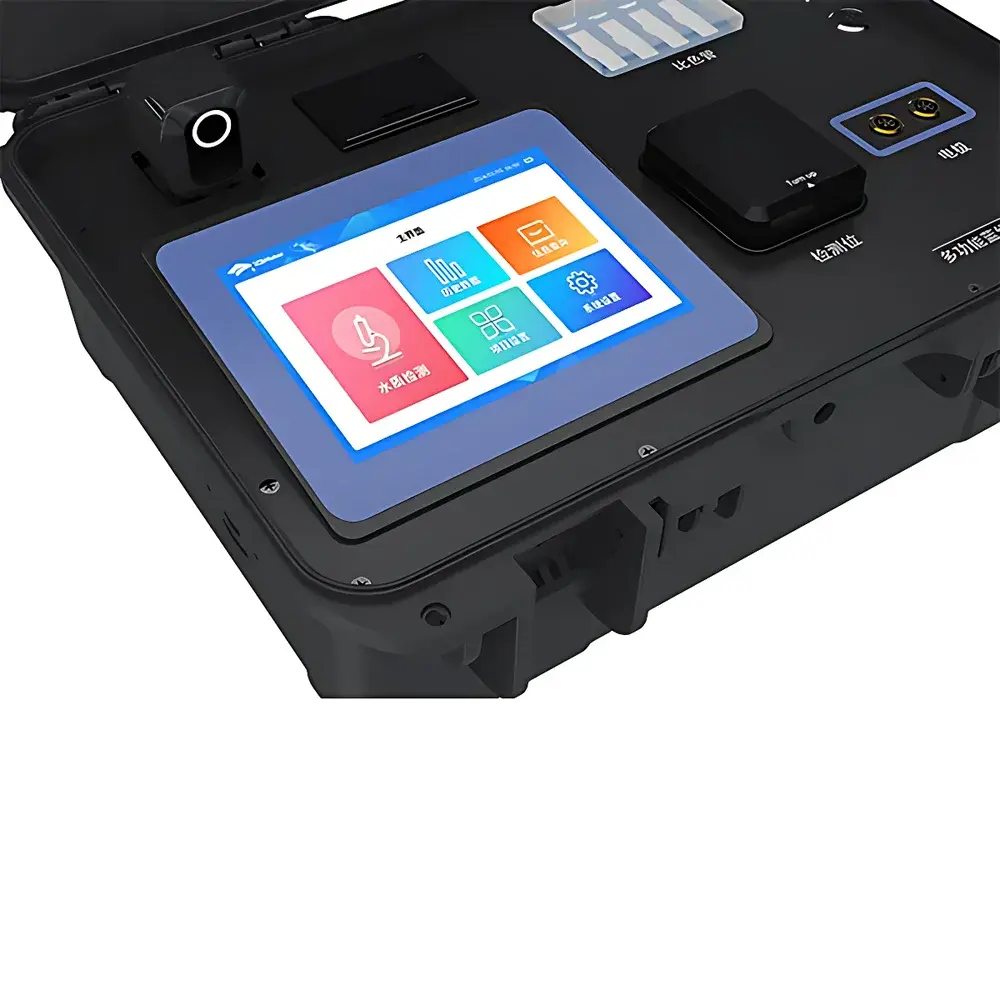
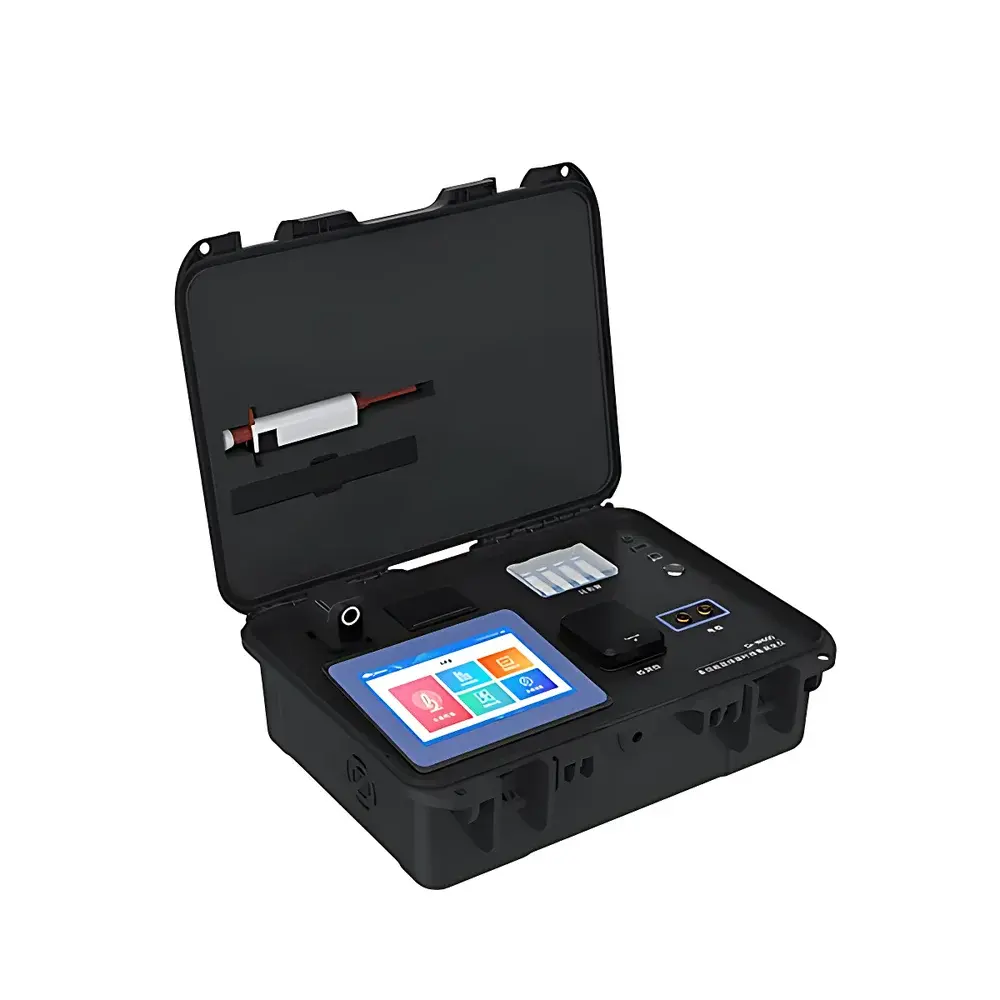
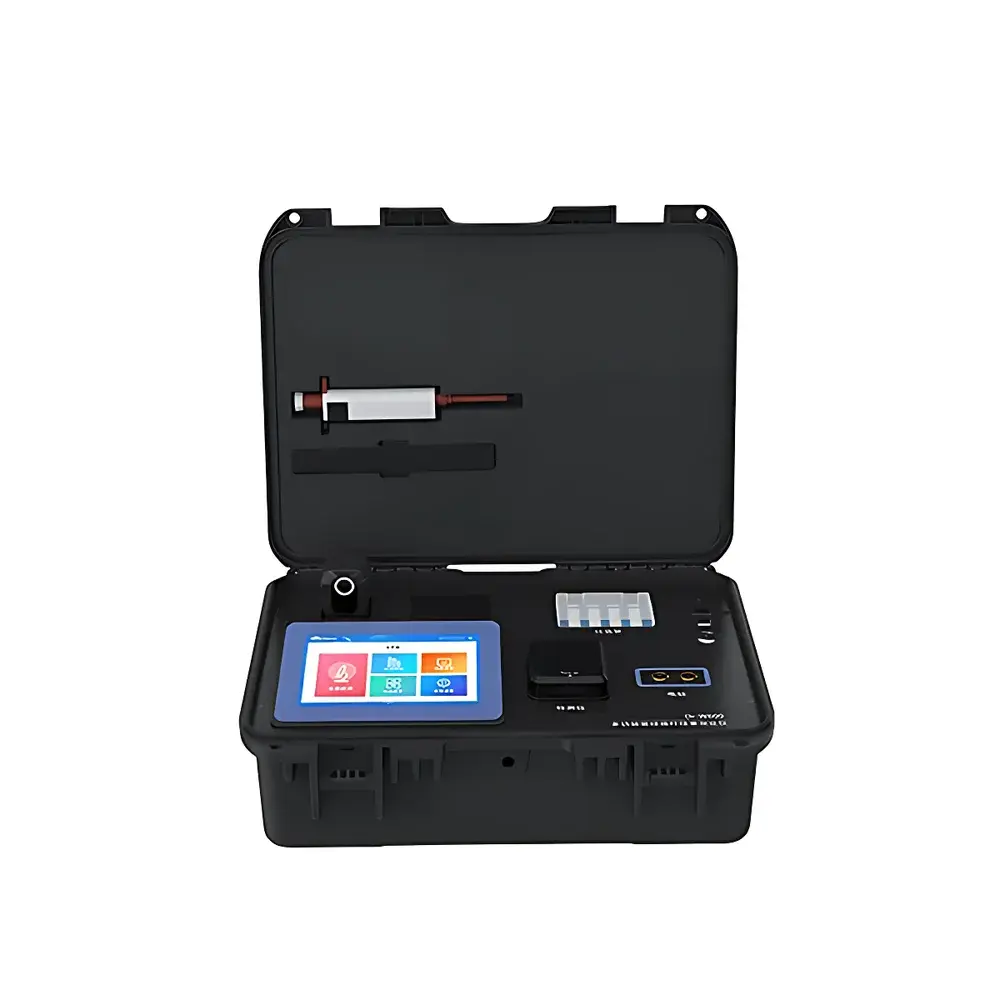
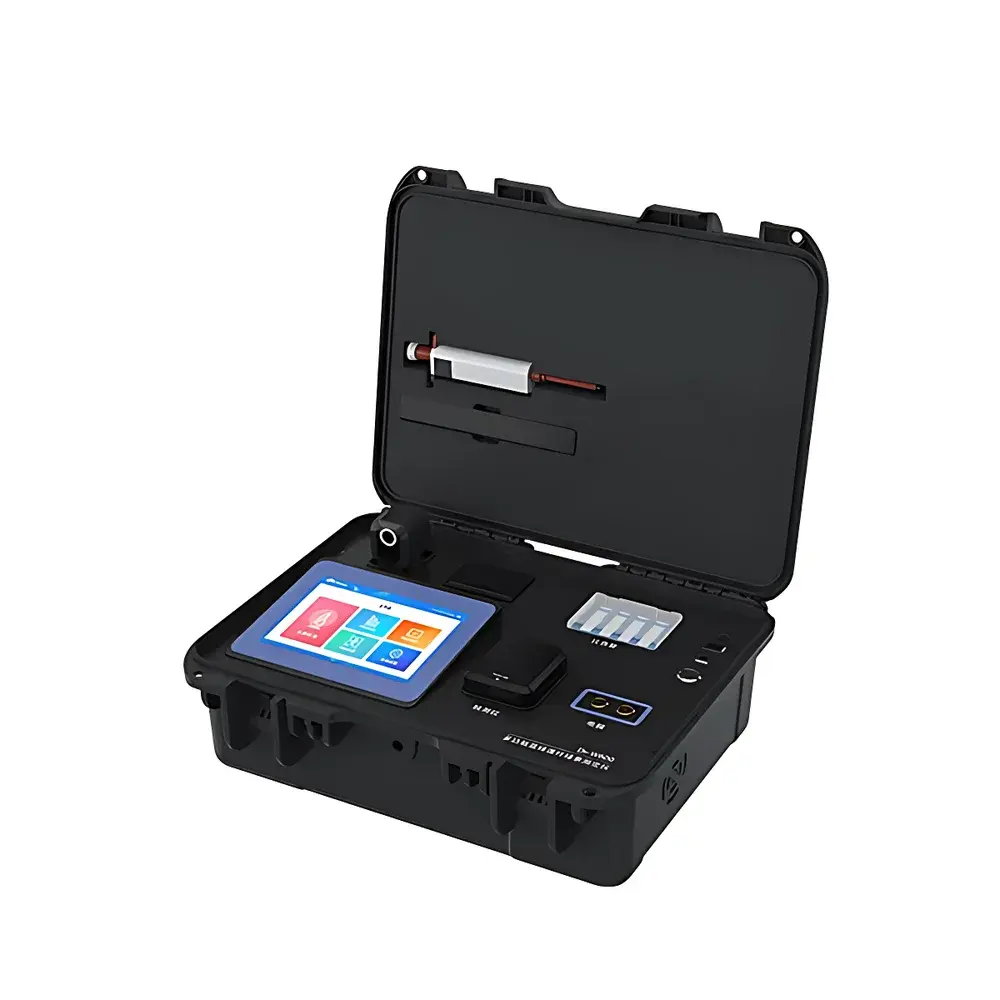
DoctorWater W600 Portable Chlorophyll-a and Cyanobacteria Analyzer
| Brand | DoctorWater |
|---|---|
| Origin | Hunan, China |
| Model | W600 |
| Detection Principle | Chlorophyll Fluorescence Method |
| Chlorophyll-a Range | 0.01–500 µg/L |
| Detection Limit | 0.01 µg/L |
| Cyanobacteria Range | 0–40 × 10⁶ cells/L |
| Resolution | 1 × 10⁴ cells/L (cyanobacteria), 0.01 µg/L (chlorophyll-a) |
| Accuracy | ±5% |
| Display | 8-inch IPS capacitive touchscreen (1024 × 768) |
| Operating System | Android-based embedded OS |
| Power | Rechargeable Li-ion battery + AC adapter |
| Data Storage | ≥10 million records |
| Connectivity | USB, Wi-Fi, Bluetooth, 4G |
| Compliance | Designed for field-deployable water quality monitoring per ISO 10260, ASTM D3921, and EPA Method 445.0 (fluorometric chlorophyll-a) |
Overview
The DoctorWater W600 Portable Chlorophyll-a and Cyanobacteria Analyzer is a field-deployable, multi-parameter fluorometric instrument engineered for rapid, on-site quantification of phytoplankton biomass in natural and engineered water systems. It operates on the principle of pulse-amplitude modulated (PAM) chlorophyll fluorescence detection—exciting chlorophyll-a pigments at 450–470 nm and measuring emitted fluorescence intensity at 680–700 nm. This optical method enables selective, interference-resistant measurement of viable cyanobacteria and eukaryotic algae without solvent extraction or centrifugation. Unlike spectrophotometric or HPLC-based lab assays, the W600 delivers real-time, in-situ data with minimal sample preparation—critical for bloom early warning, reservoir management, and regulatory compliance monitoring across surface waters, drinking water intakes, and wastewater effluents.
Key Features
- Integrated dual-mode detection: Simultaneous chlorophyll-a fluorescence and cyanobacteria phycocyanin fluorescence (620–650 nm excitation / 650–680 nm emission) for taxonomic discrimination between cyanobacterial and eukaryotic algal contributions.
- Industrial-grade 8-inch IPS capacitive touchscreen (1024 × 768 resolution) with glove-compatible operation and anti-glare coating—optimized for outdoor use under variable ambient lighting.
- Self-contained calibration architecture: On-device standardization using certified chlorophyll-a reference solutions (NIST-traceable); user-executable calibration verification without factory return or external hardware.
- Dedicated 10 mm square quartz cuvette path geometry—minimizing inner-filter effects and scattering artifacts common in turbid freshwater matrices.
- Robust power management: High-capacity lithium-ion battery supporting ≥12 hours of continuous operation (typical usage: 200+ measurements per charge); automatic 5-minute idle sleep mode to conserve energy.
- Embedded thermal printer with direct label output—enabling immediate hard-copy documentation for field logs, chain-of-custody forms, or regulatory submissions.
Sample Compatibility & Compliance
The W600 accepts unfiltered or pre-filtered (0.45 µm) water samples from raw surface waters, treated distribution systems, aquaculture ponds, and stormwater retention basins. Its optical design compensates for moderate turbidity (up to 100 NTU) and colored dissolved organic matter (CDOM) via dual-wavelength background subtraction algorithms. Instrument validation aligns with internationally recognized protocols: fluorescence response is traceable to EPA Method 445.0 for chlorophyll-a; cyanobacteria cell enumeration correlates with ISO 10260 microscopical counts; pH, conductivity, and DO modules meet ISO 7888, ISO 7889, and ISO 5814 specifications respectively. The system supports GLP-compliant audit trails—including operator ID, timestamped calibration events, and measurement metadata—for integration into regulated environmental monitoring programs.
Software & Data Management
Running a hardened Android-based firmware (API Level 29), the W600 features native cloud synchronization via secure TLS 1.2 encrypted channels to the DoctorWater Cloud Platform. All datasets—including raw fluorescence intensities, derived concentrations, GPS-tagged location stamps, and instrument diagnostics—are stored indefinitely with version-controlled backups. Data export options include CSV, PDF reports (with embedded QR codes linking to cloud records), and direct API integration with third-party platforms (e.g., EPA STORET, EU WISE, national water information systems). Local storage retains ≥10 million measurement records with searchable filtering by date, site ID, parameter, or operator. Firmware updates are delivered over-the-air with cryptographic signature verification to ensure integrity.
Applications
- Early detection and spatial mapping of cyanobacterial blooms in lakes, reservoirs, and rivers—supporting predictive modeling and mitigation response planning.
- Routine compliance monitoring for drinking water utilities under WHO Guideline Values (1.0 µg/L microcystin-equivalent threshold) and EU Bathing Water Directive Annex II parameters.
- Research-grade phytoplankton community assessment in limnological field studies, including nutrient limitation experiments and climate-driven phenology tracking.
- Emergency response during algal toxin events—providing quantitative baseline data within minutes of sample collection for public health advisories.
- Performance evaluation of in-line UV/oxidation treatment systems targeting algal cell lysis and intracellular toxin release.
FAQ
What regulatory standards does the W600 support for chlorophyll-a reporting?
The instrument’s fluorescence methodology complies with EPA Method 445.0 and ISO 10260 Annex B for field-deployable chlorophyll-a estimation. Final reporting may require correlation with laboratory HPLC validation per local regulatory frameworks.
Can the W600 differentiate between Microcystis and Anabaena species?
It distinguishes cyanobacteria from eukaryotic algae via phycocyanin fluorescence but does not provide species-level identification. For taxonomic resolution, microscopy or molecular analysis remains necessary.
Is the internal battery replaceable in the field?
Yes—the Li-ion module is user-serviceable using standardized Torx T8 tools and carries CE/UN38.3 certification for air transport.
Does the device support FDA 21 CFR Part 11-compliant electronic signatures?
While the firmware includes role-based access control and full audit logging, formal Part 11 compliance requires deployment within a validated IT infrastructure and documented SOPs—beyond the scope of standalone instrument validation.
How often must the optical path be cleaned?
Routine cleaning with lint-free wipes and isopropyl alcohol is recommended after every 20–30 measurements in high-turbidity or organic-rich samples to maintain signal fidelity.
Related Products







