
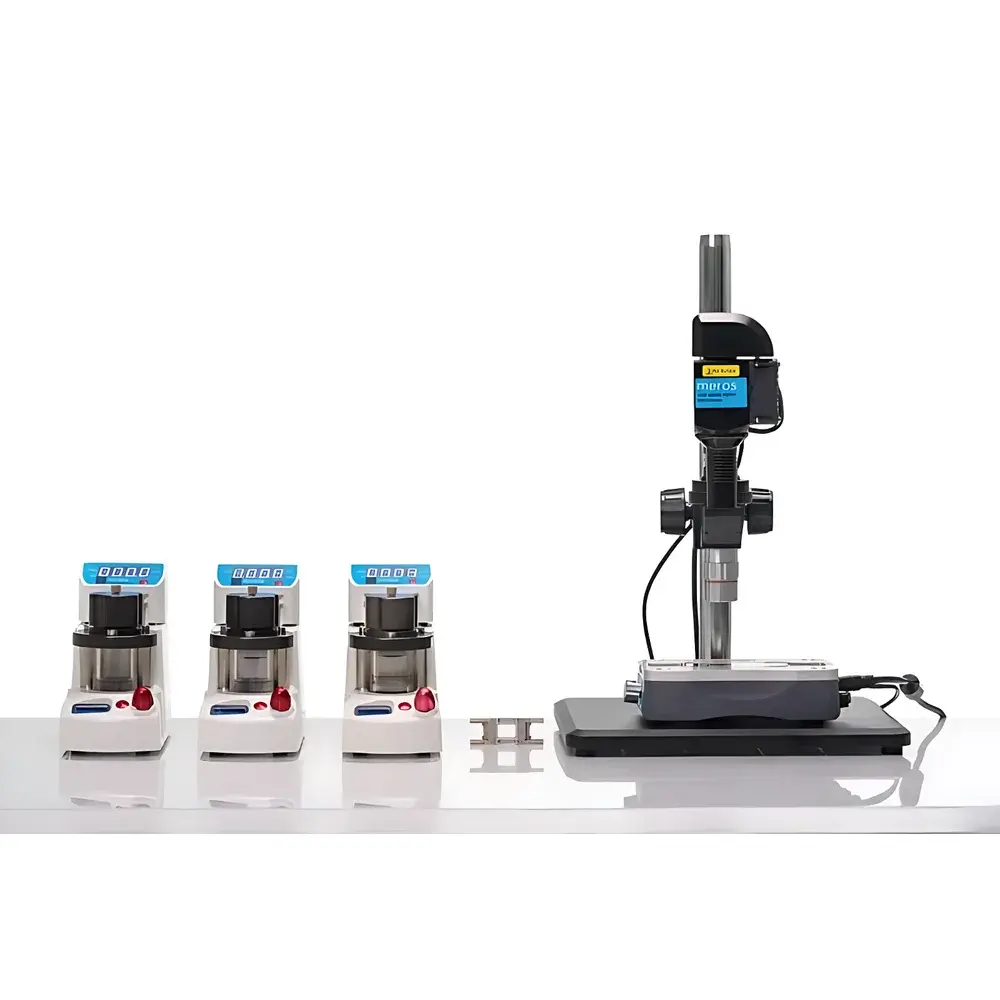
Dolomite Polymer Nanoparticle Generation System
| Brand | Dolomite |
|---|---|
| Origin | United Kingdom |
| Manufacturer Type | Authorized Distributor |
| Origin Category | Imported |
| Model | Polymer Nanoparticle Generation System |
| Price | USD 42,000 (FOB UK) |
| Particle Size Range | 50–500 nm |
| Polydispersity (CV) | 20–30% |
| Sample Volume Capacity | 0.5 mL – several liters |
| Wetted Materials | PEEK, PTFE, Borosilicate Glass |
| Pump Pressure Range | 0–10 bar |
| Flow Rate Range | 5 nL/min – >100 mL/min |
| Droplet/Nanoparticle Generation Frequency | up to 1 GHz (system-dependent) |
Overview
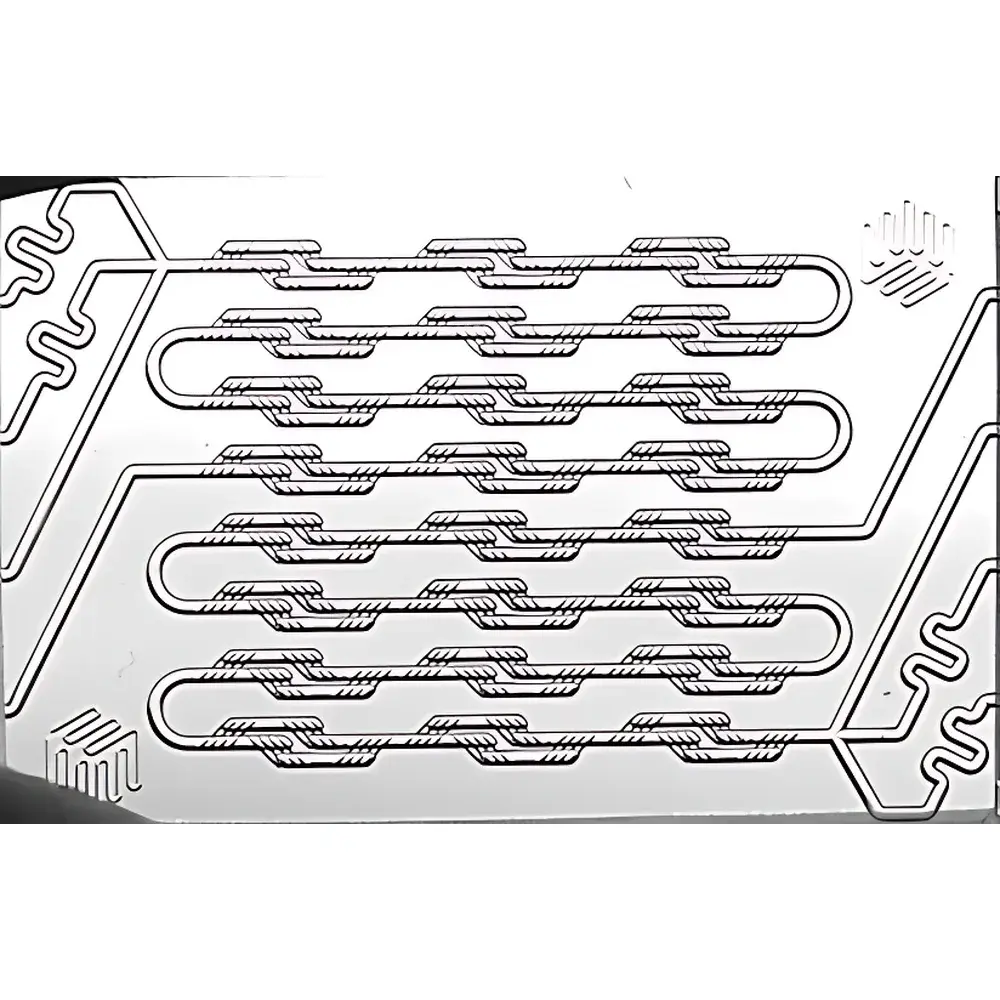
The Dolomite Polymer Nanoparticle Generation System is a precision-engineered microfluidic platform designed for the continuous, reproducible synthesis of monodisperse polymeric nanoparticles via hydrodynamic focusing and high-shear micromixing. Unlike conventional batch emulsification or nanoprecipitation methods—which suffer from poor inter-batch consistency, broad size distributions, and limited scalability—this system leverages laminar flow control and geometrically defined microchannels to achieve deterministic particle nucleation and growth. It operates on the principle of controlled diffusion-limited polymer self-assembly under precisely regulated residence time, solvent–antisolvent mixing kinetics, and interfacial energy modulation. The architecture supports both lab-scale formulation development and process-intensified production, making it suitable for preclinical nanomedicine manufacturing, functional material synthesis, and quality-by-design (QbD) compliant process validation.
Key Features
- Continuous-flow microfluidic synthesis enabling real-time parameter adjustment and closed-system operation
- Modular design with interchangeable chips and pump modules—supports rapid reconfiguration for PLGA, PEG-DA, polystyrene, PVC, and other amphiphilic or biodegradable polymers
- Chemically inert fluidic path constructed entirely from PEEK, PTFE, and borosilicate glass—compatible with organic solvents (e.g., DCM, acetone, THF), aqueous surfactants, and acidic/basic formulations
- Stable, pulseless flow delivery across six orders of magnitude (5 nL/min to >100 mL/min), enabled by syringe- and pressure-driven actuation options
- Scalable droplet generation frequency: up to 1 GHz in production-grade configurations, with standard research systems operating reliably at ≤10 MHz
- Integrated pressure monitoring and flow feedback loops ensure consistent shear history and mixing intensity across runs
- Minimal reagent consumption per experiment—typical formulation screening requires <1 mL total volume per condition
Sample Compatibility & Compliance
The system accommodates a broad spectrum of polymer–solvent–stabilizer combinations, including but not limited to PLGA in ethyl acetate/acetone with PVA or DSPE-PEG, PEG-diacrylate in water/methanol with photoinitiators, and polystyrene in toluene with oleic acid. All wetted components comply with USP Class VI and ISO 10993-5 biocompatibility standards. The modular architecture permits integration into GMP-aligned environments when paired with validated peripherals (e.g., sterile filtration, in-line UV-Vis monitoring, and nitrogen-purged collection vessels). While the base system does not include 21 CFR Part 11-compliant audit trails, optional software packages support electronic signatures, user access controls, and immutable data logging—enabling alignment with GLP, ISO 9001:2015, and ICH Q5A(R2) guidelines for nanomaterial characterization.
Software & Data Management
Operation is managed through Dolomite’s proprietary ControlSuite™ software, which provides synchronized control of up to eight independent flow channels, real-time pressure and flow rate visualization, and automated method sequencing. Experimental protocols—including ramped flow profiles, multi-step solvent exchange, and timed UV crosslinking triggers—are saved as reusable .xml-based method files. Raw sensor data (pressure, temperature, flow) are timestamped and exported in CSV or HDF5 format for downstream analysis in MATLAB, Python (Pandas/NumPy), or commercial statistical platforms. Optional API integration allows bidirectional communication with LIMS and MES systems for traceability in regulated environments.
Applications
- Development of injectable nanocarriers for controlled drug release and active targeting (e.g., folate- or RGD-conjugated PLGA particles)
- Rapid screening of polymer–drug loading efficiency and release kinetics under physiologically relevant conditions
- Synthesis of radiolabeled nanoparticle probes for PET/SPECT imaging agent development
- Formulation of nanostructured catalysts with tunable surface area and pore architecture
- Production of functionalized nanobinders for high-performance coatings, inkjet inks, and anti-fouling marine paints
- Generation of stimuli-responsive nanogels for oilfield applications—including enhanced oil recovery (EOR) and scale inhibition
- Radioactive waste encapsulation matrices using radiation-stable polymeric networks
FAQ
What polymers are compatible with this system?
PLGA, PCL, PEG-DA, polystyrene, PVC, chitosan derivatives, and other solvent-processable synthetic or semi-synthetic polymers—with compatibility determined primarily by solvent choice and interfacial tension requirements.
Can the system produce particles below 50 nm?
Standard configurations target 50–500 nm; sub-50 nm synthesis is possible with custom chip geometries and optimized mixing dynamics, though CV typically increases above 30% in that regime.
Is sterilization of the microfluidic chips supported?
PEEK and glass chips tolerate autoclaving (121°C, 20 min); PTFE components require gamma or EtO sterilization—full system validation must be performed per ISO 11137 or ISO 11135.
How is particle size distribution verified post-synthesis?
DLS (Zetasizer), TEM, and AFM are recommended orthogonal techniques; the system itself does not include in-line sizing but supports integration with microfluidic light-scattering or resistive pulse sensing modules.
What maintenance is required for long-term operation?
Daily flushing with compatible solvents, quarterly inspection of O-rings and tubing integrity, and annual calibration of pressure transducers and flow sensors per ISO/IEC 17025 guidelines.





