
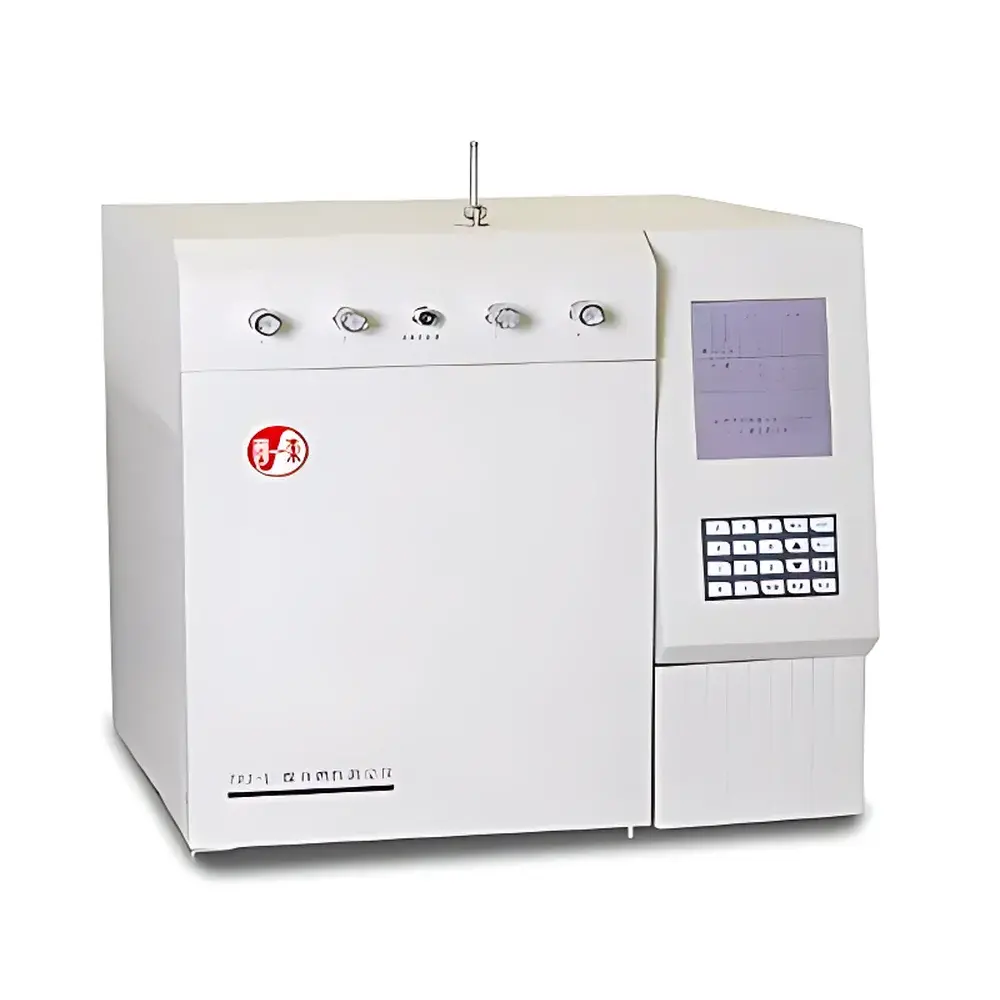
Dongxi Analytical GC-4175 Coal Spontaneous Combustion Tendency Analyzer
| Brand | Dongxi Analytical |
|---|---|
| Origin | Beijing, China |
| Manufacturer Type | Original Equipment Manufacturer (OEM) |
| Regional Classification | Domestic (PRC) |
| Model | GC-4175 |
| Pricing | Available Upon Request |
Overview
The Dongxi Analytical GC-4175 Coal Spontaneous Combustion Tendency Analyzer is a dedicated gas chromatographic instrument engineered for the quantitative determination of coal’s oxygen adsorption capacity under controlled low-temperature, ambient-pressure conditions. It implements the standardized Chromatographic Oxygen Adsorption Method (COAM), as specified in the People’s Republic of China National Standard GB/T 20104–2006 *Determination of Coal’s Spontaneous Combustibility by Chromatographic Oxygen Adsorption*, and conforms to the technical requirements outlined in MT/T 708–1997 *Technical Specifications for Coal Spontaneous Combustibility Analyzers*. The method is grounded in Langmuir monolayer physical adsorption theory: at temperatures below 35 °C and atmospheric pressure, coal surfaces adsorb molecular oxygen reversibly in a single-layer configuration. By measuring the equilibrium oxygen uptake rate across two parallel gas streams—one passing through a coal sample column and the other through an inert reference column—the GC-4175 calculates the differential oxygen depletion, yielding the specific oxygen adsorption volume (cm³/g·h) as the primary metric for spontaneous combustion classification.
Key Features
- Four-channel parallel sample analysis system with 45° angular arrangement of sample ports—enabling simultaneous evaluation of up to four coal specimens while optimizing accessibility, thermal uniformity, and mechanical stability during column insertion/removal.
- Integrated electronic mass flow controllers (MFCs) for carrier gas (helium or nitrogen) and reactive gas (oxygen-enriched air), providing real-time digital display and closed-loop regulation of flow rates (range: 0–100 mL/min) with ±1% full-scale accuracy.
- Microprocessor-based temperature control architecture featuring independent PID-regulated ovens for column compartment (range: ambient +5 °C to 150 °C, ±0.1 °C stability) and dual thermal conductivity detectors (TCDs), each with programmable setpoints and live feedback visualization on a high-resolution LCD interface.
- Dedicated Windows-based acquisition and calculation software compliant with GLP data integrity principles—supporting automatic peak integration, baseline correction, calibration curve generation (linear or polynomial), and direct output of oxygen adsorption rate, corrected for moisture and ash content per GB/T 20104–2006 Annex B.
Sample Compatibility & Compliance
The GC-4175 accommodates pulverized coal samples prepared according to GB/T 20104–2006 Section 5.2: particle size ≤0.2 mm, moisture content <5% (air-dried basis), and ash content determined per GB/T 212. Sample holders are constructed from quartz glass to eliminate catalytic surface effects and ensure chemical inertness. Instrument validation includes linearity verification across 0.05–0.50 cm³/g·h oxygen uptake range using certified reference coals (CRCs) traceable to CNAS-accredited interlaboratory studies. The analyzer satisfies mandatory metrological verification requirements under JJG 700–2016 (Gas Chromatograph Verification Regulation) and supports audit-ready documentation for mine safety certification workflows mandated by the State Administration of Mine Safety Inspection (SAMSI).
Software & Data Management
The proprietary Dongxi COAM Workstation v3.2 provides role-based user access control, electronic signature capability, and full 21 CFR Part 11–compatible audit trail logging—including operator ID, timestamp, parameter modifications, raw chromatogram storage (in .dxr binary format), and final report generation in PDF/A-1b. All calculation algorithms are hard-coded per GB/T 20104–2006 Sections 7–9; no user-adjustable coefficients are exposed. Data export options include CSV (for LIMS integration), XML (for regulatory submission portals), and printed reports bearing instrument ID, calibration certificate number, and analyst verification stamp.
Applications
- Pre-mining geological exploration: classification of newly discovered seams into Class I (high tendency), Class II (medium tendency), or Class III (low tendency) per GB/T 20104–2006 Table 1.
- Mine ventilation planning: correlation of oxygen adsorption kinetics with measured goaf gas composition (O₂ depletion, CO evolution) to refine spontaneous heating risk models.
- Coal blending optimization: quantifying relative reactivity of feedstock blends prior to coking or power generation to mitigate silo fire hazards.
- Research on inhibition mechanisms: evaluating efficacy of antioxidant coatings (e.g., MgCl₂, NH₄H₂PO₄) by comparing pre-/post-treatment oxygen uptake profiles.
FAQ
What gas standards are required for calibration?
Certified binary gas mixtures of 20.9% O₂ in N₂ (certified to ISO 6142) and zero-air (O₂ <0.1 ppm) are used for detector response calibration and baseline drift correction.
Is helium mandatory as the carrier gas?
No—nitrogen is acceptable per GB/T 20104–2006 Section 6.3; however, helium yields higher TCD sensitivity and is recommended for low-rank coals with sub-0.1 cm³/g·h adsorption rates.
How is moisture correction applied?
The software automatically applies the gravimetric moisture correction factor defined in GB/T 20104–2006 Equation (2), using user-input air-dried moisture content determined per GB/T 212.
Can the GC-4175 be integrated into a central laboratory LIMS?
Yes—via OPC UA server interface or scheduled CSV export; metadata fields include sample ID, preparation date, analyst ID, and instrument calibration status flag.






