
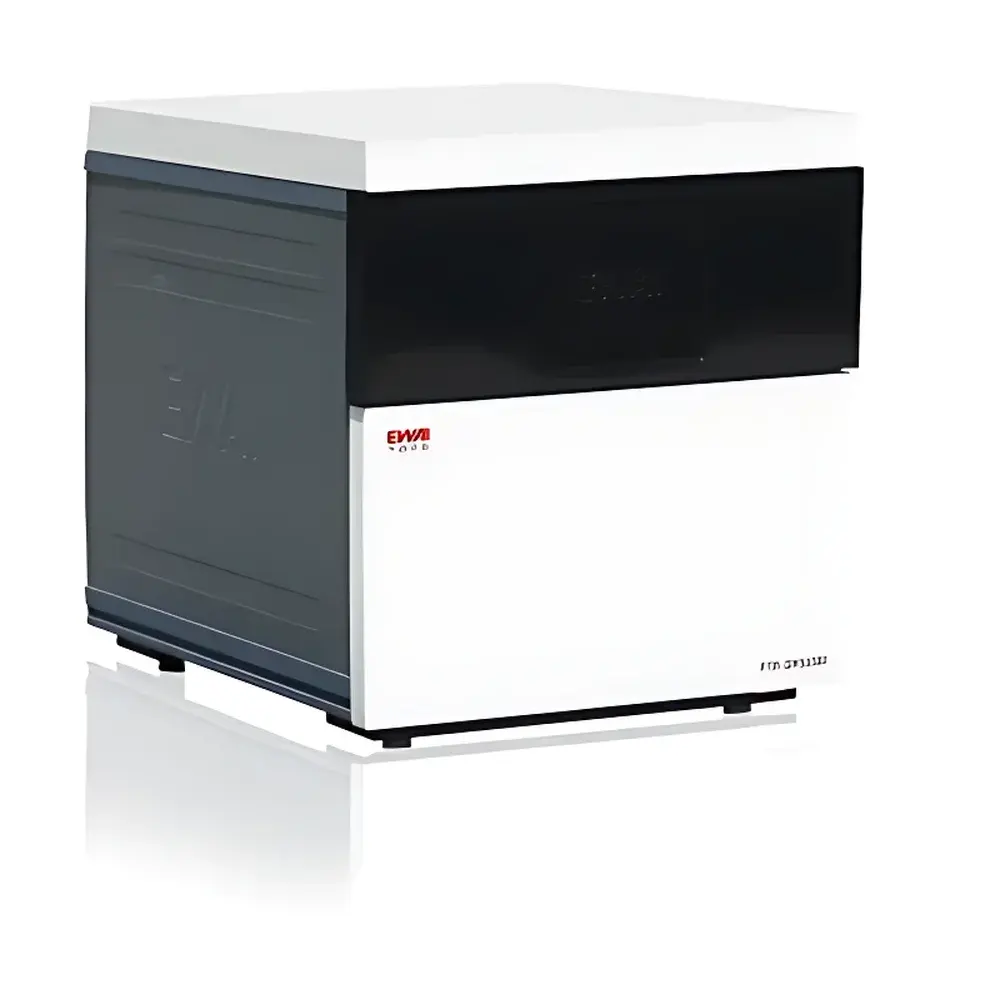
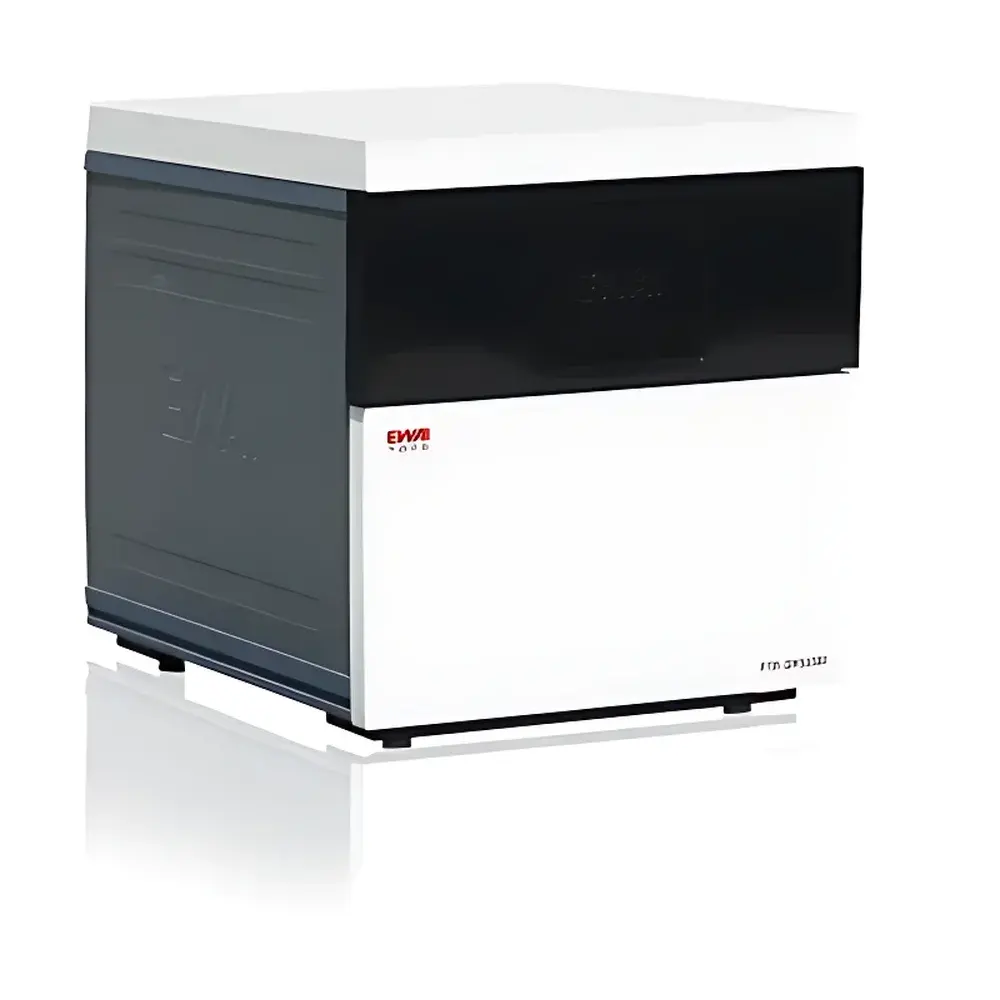
Dongxi Analytical PTR-QMS3500 Proton Transfer Reaction Quadrupole Mass Spectrometer
| Brand | Dongxi Analytical |
|---|---|
| Origin | Beijing, China |
| Manufacturer Type | Original Equipment Manufacturer (OEM) |
| Product Category | Domestic |
| Model | PTR-QMS3500 |
| Pricing | Upon Request |
| Mass Range | 1.5–600 amu |
| Resolution | Unit Mass Resolution |
| Response Time | 100 ms |
| Detection Limit | 100 pptv (for benzene) |
| Linear Dynamic Range | 50 pptv – 10 ppmv |
| Adjustable Inlet Flow Rate | 80–800 sccm |
| Heated Capillary Inlet Length | 1.0 m (inert, temperature-controlled up to 150 °C) |
| Drift Tube/Reaction Chamber Temperature Range | 40–150 °C |
| Primary Reagent Ion | H₃O⁺ |
| Optional Reagent Ions | NH₄⁺, O₂⁺, NO⁺ |
| Power Supply | 220 V AC |
| Dimensions (W × H × D) | 48 × 54.5 × 63 cm |
| Weight | ~100 kg |
| Remote Interface | 4–20 mA output & MODBUS RTU protocol support |
Overview
The Dongxi Analytical PTR-QMS3500 is a high-sensitivity, real-time proton transfer reaction quadrupole mass spectrometer engineered for quantitative trace analysis of volatile organic compounds (VOCs) in gas-phase samples. It operates on the well-established principle of chemical ionization via proton transfer: hydrated hydronium ions (H3O+)—generated in a low-pressure micro-glow discharge ion source—serve as soft reagent ions that selectively protonate analyte molecules with proton affinity exceeding 691 kJ·mol−1. This results in near-exclusive formation of intact [M+H]+ adducts, minimizing fragmentation and enabling unambiguous compound identification and direct quantification without chromatographic separation. Unlike electron ionization (EI) or other hard ionization methods, PTR-MS delivers exceptional selectivity against major atmospheric constituents (N2, O2, Ar, CO2), which possess lower proton affinities than H2O and therefore remain un-ionized—effectively eliminating matrix interference and enabling direct introduction of ambient air or breath samples without pre-concentration or cryo-trapping.
Key Features
- Low-pressure micro-glow discharge ion source with high electron density, optimized for stable and reproducible H3O+ generation; designed for robustness and minimal maintenance in continuous operation.
- High-transmission quadrupole mass analyzer with unit mass resolution across 1.5–600 amu, delivering long-term signal stability and mass accuracy suitable for regulatory-compliant monitoring.
- Detection limits down to 100 pptv (benzene, 1 s integration), with sub-second temporal resolution (100 ms full-spectrum acquisition) supporting dynamic process monitoring.
- Heated inert capillary inlet (1.0 m, up to 150 °C) and thermally controlled drift tube (40–150 °C) prevent condensation and wall adsorption of polar or semi-volatile VOCs.
- Reagent ion switching capability: rapid, vacuum-isolated exchange between H3O+, NH4+, O2+, and NO+ enables compound-class-selective detection and structural elucidation (e.g., distinguishing isomers via differential reactivity).
- Fully automated parameter tuning routine optimizes ion transmission, reaction time, and detector gain—reducing operator dependency and ensuring method reproducibility.
- Embedded control system with industrial-grade I/O: 4–20 mA analog output and MODBUS RTU serial interface for seamless integration into SCADA, DCS, or environmental data acquisition platforms.
- Compact footprint (48 × 54.5 × 63 cm) and shock-resistant mechanical design facilitate mobile deployment—including vehicle-mounted or portable field laboratories—without compromising analytical integrity.
Sample Compatibility & Compliance
The PTR-QMS3500 accepts direct gas-phase sampling from ambient air, human breath, headspace vials, process streams, or evacuated canisters. Its soft ionization mechanism ensures compatibility with thermally labile, polar, and low-molecular-weight VOCs—including aldehydes, ketones, esters, monoterpenes, aromatic hydrocarbons (e.g., benzene, toluene), and sulfur-containing compounds. The instrument supports GLP/GMP-aligned operation through audit-trail-capable software logging (time-stamped method parameters, calibration events, and raw spectral metadata). While not pre-certified to specific regulatory standards, its performance characteristics align with measurement requirements outlined in EPA TO-15, ISO 16017-1, and EN 14662 for ambient VOC monitoring. Data export formats (CSV, mzML) are compatible with third-party validation tools used in ISO/IEC 17025-accredited laboratories.
Software & Data Management
Bundled acquisition and analysis software provides dual operational modes: targeted single-ion monitoring (SIM) for high-sensitivity routine quantification, and full-scan mode (1–600 amu) for exploratory profiling. All spectra are acquired with internal timestamping and synchronized with auxiliary sensor inputs (e.g., temperature, pressure, flow rate). Raw data files include embedded instrument configuration metadata required for traceability. Batch processing supports automated peak integration using user-defined retention time windows and isotopic pattern matching. Export options include ASCII-compatible CSV for LIMS integration and open-standard mzML for interoperability with ProteoWizard, OpenMS, or Skyline. Software architecture complies with FDA 21 CFR Part 11 principles when deployed with optional electronic signature and role-based access controls.
Applications
- Ambient Air Quality Monitoring: Real-time tracking of urban VOC diurnal profiles, traffic-related emissions (e.g., benzene, isoprene), biogenic emissions (e.g., α-pinene), and secondary organic aerosol precursors—supporting source apportionment and model validation.
- Human Breath Analysis: Non-invasive detection of disease-associated VOC biomarkers in exhaled breath, including acetone (diabetes), aldehydes (lung cancer), and short-chain fatty acids (gastrointestinal disorders), under IRB-approved clinical research protocols.
- Food & Flavor Science: Rapid headspace profiling of roasted coffee, fermented teas, dairy products, and baked goods to correlate volatile signatures with sensory attributes and shelf-life degradation pathways.
- Industrial Process Control: Continuous monitoring of reactor off-gases, solvent recovery streams, or cleanroom environments for fugitive emissions or process upsets—enabling closed-loop feedback in compliance with ISO 14001 environmental management systems.
- Security & Forensics: Field-deployable detection of nitroaromatic explosives (e.g., TNT, DNT) and illicit narcotics (e.g., cocaine, heroin metabolites) at sub-ppbv levels in vapor phase, meeting sensitivity thresholds specified in ASTM E2781 for trace vapor detection.
FAQ
What types of compounds can be detected by the PTR-QMS3500?
Compounds with proton affinity >691 kJ·mol−1, including most VOCs such as aromatics, oxygenates, terpenes, and sulfur compounds—but excluding permanent gases (N2, O2, CO2) and methane.
Is sample pre-concentration required?
No. Ambient air, breath, or process gas can be introduced directly into the reaction chamber without trapping, cryofocusing, or thermal desorption.
Can the instrument operate continuously for unattended monitoring?
Yes. Designed for 24/7 operation with automatic daily tuning, remote diagnostics, and fail-safe vacuum interlocks.
How is calibration performed?
Using certified permeation tubes or dynamic dilution systems traceable to NIST standards; response factors are compound-specific and stored in the method library.
Does the system support multi-point remote data transmission?
Yes—via MODBUS RTU over RS-485 or TCP/IP, and analog 4–20 mA outputs configurable per ion channel or derived concentration value.
Related Products





