
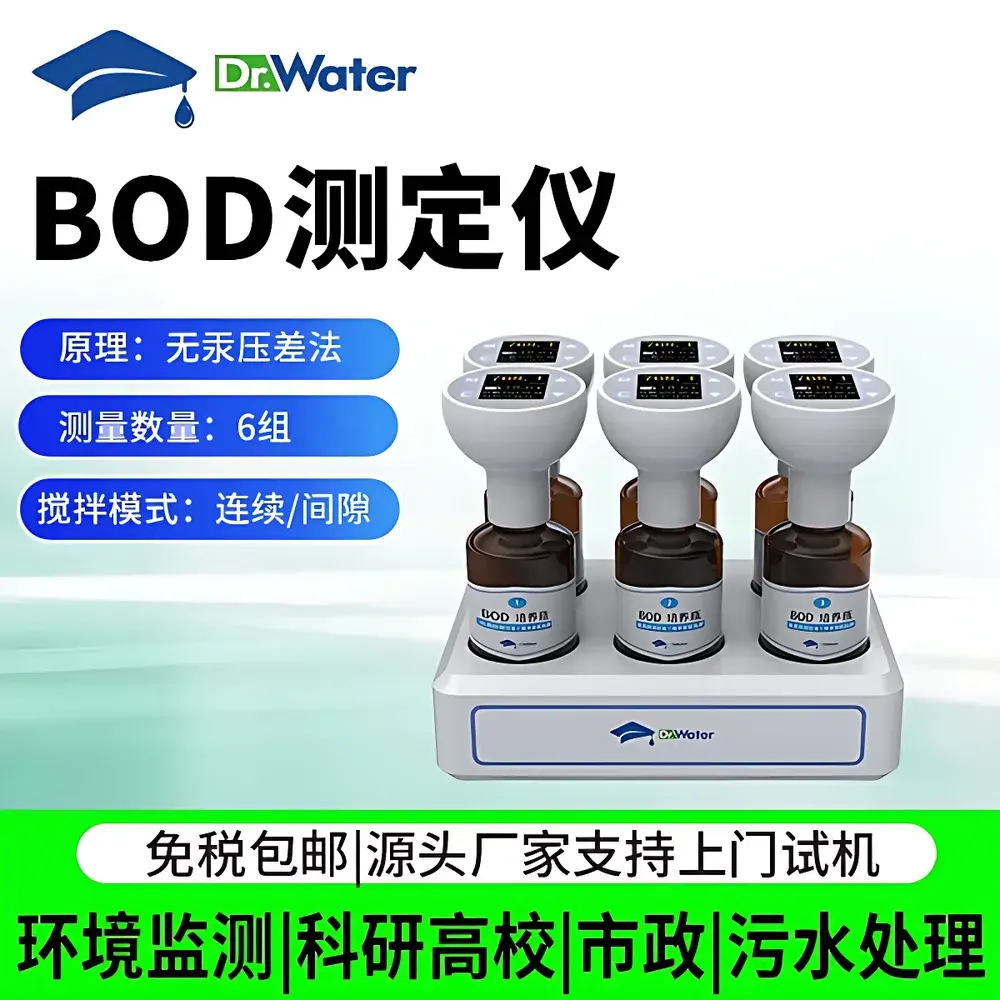
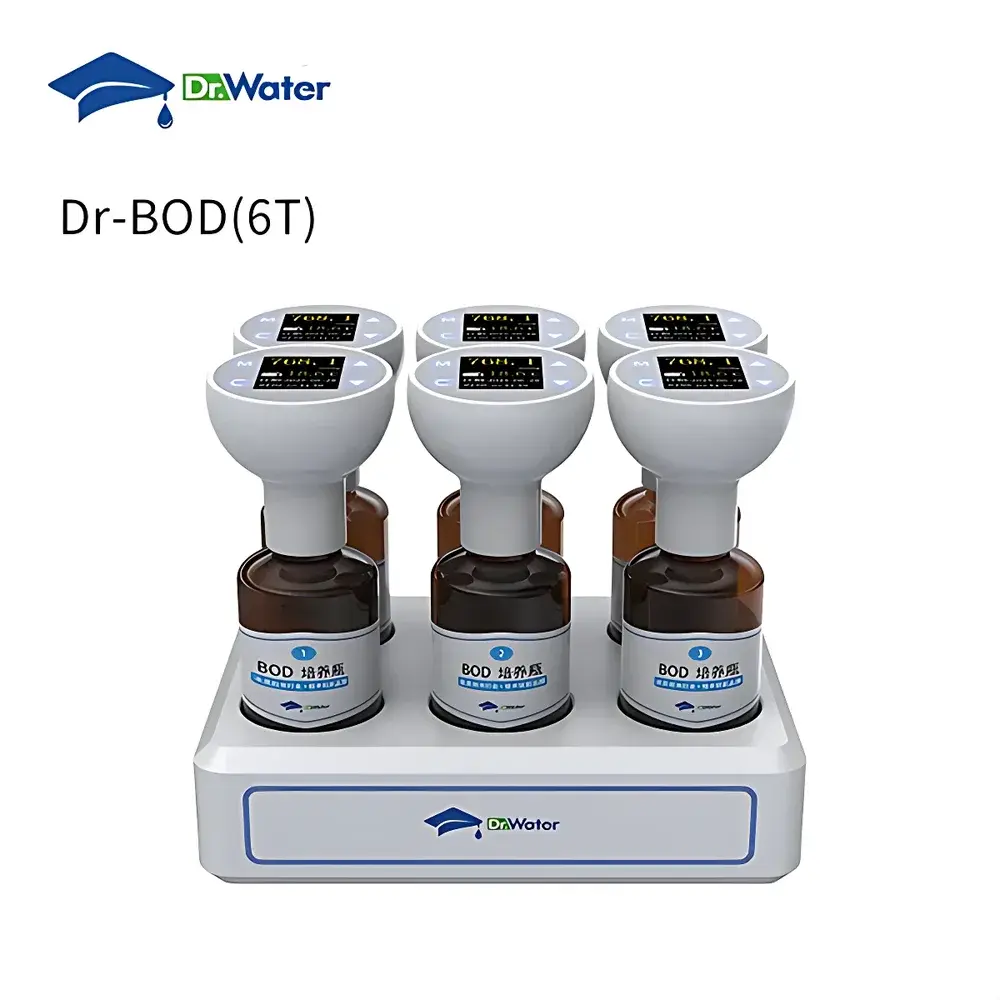
Dr-BOD(6T) Six-Channel Laboratory BOD5 Analyzer by Doctor Water
| Brand | Doctor Water |
|---|---|
| Origin | Hunan, China |
| Model | Dr-BOD(6T) |
| Measurement Principle | Mercury-Free Pressure-Difference Method |
| BOD5 Range | 0–4000 mg/L |
| Accuracy | Compliant with Standard BOD5 Accuracy Requirements (Glucose-Glutamic Acid Reference Standard: 180–230 mg/L) |
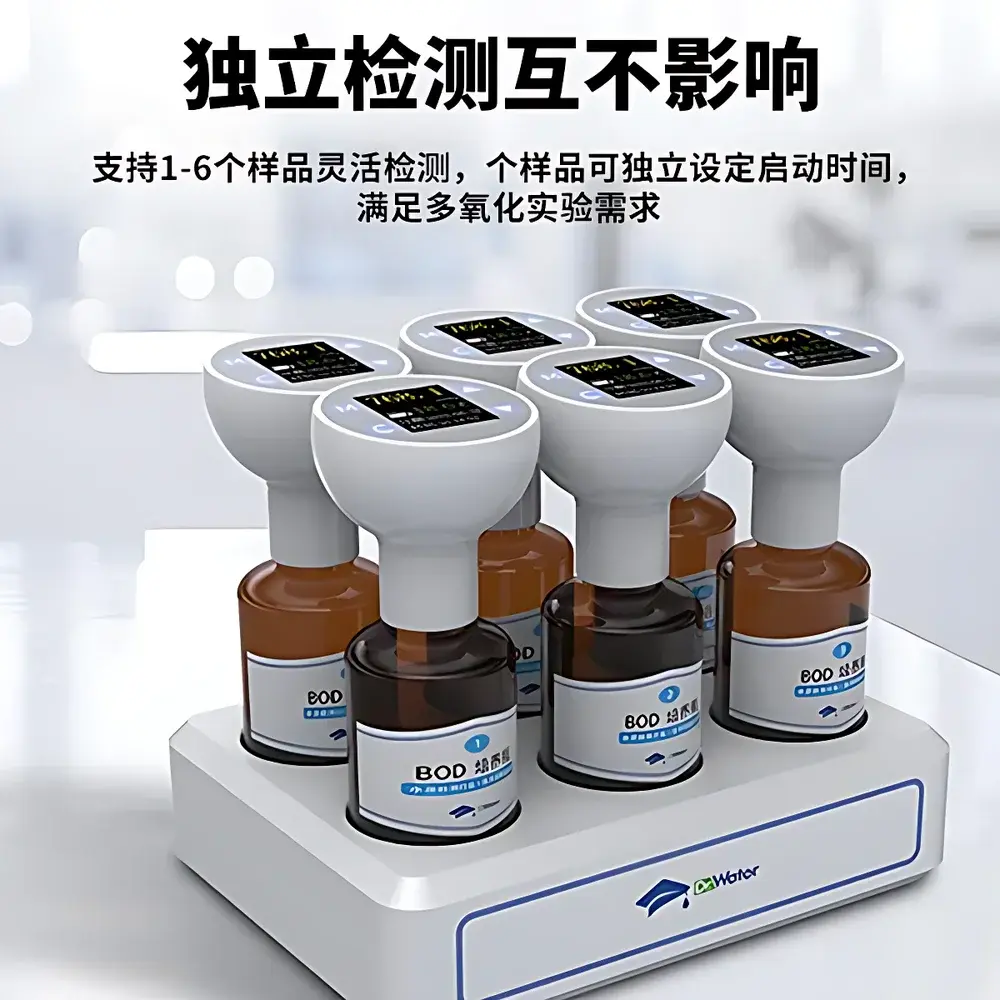
| Sample Capacity | 6 Independent Channels |
| Incubation Temperature | 20 ± 1 °C |
| Data Logging Interval | Every 2 Hours |
| Incubation Duration | 1–30 Days |
| Bottle Volume | 580 mL |
| Data Storage Capacity | 100,000 Records |
| Stirring Modes | Continuous or Intermittent |
| Power Supply | AC 110–220 V, 50/60 Hz |
| Rated Power | 10 W |
| Battery Backup | Rechargeable Li-ion per Channel |
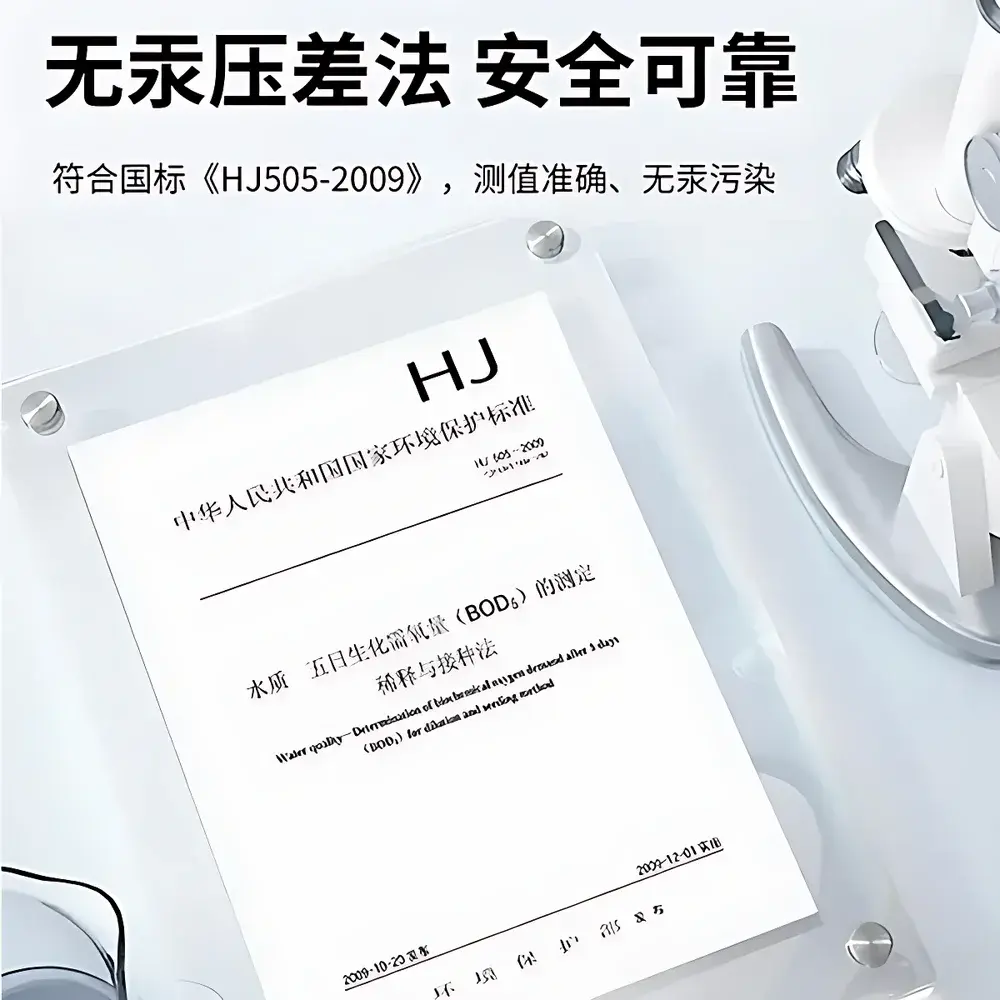
| Compliance | ASTM D5210, ISO 5815-1:2019, EPA 405-B-16-001 |
Overview
The Dr-BOD(6T) Six-Channel Laboratory BOD5 Analyzer is an engineered solution for standardized biochemical oxygen demand (BOD5) measurement in environmental and wastewater laboratories. It operates on the mercury-free pressure-difference principle—measuring the differential pressure change across a sealed, water-saturated headspace as microorganisms consume dissolved oxygen during the 5-day aerobic biodegradation of organic matter. This method eliminates hazardous mercury manometers while maintaining traceable metrological equivalence to classical dilution techniques. The system supports simultaneous incubation and real-time monitoring of up to six samples under tightly controlled conditions (20 ± 1 °C), conforming to internationally recognized protocols including ASTM D5210 (Standard Test Method for Determining Anaerobic Biodegradation of Plastic Materials Under Accelerated Conditions), ISO 5815-1:2019 (Water Quality — Determination of Biochemical Oxygen Demand After N Days — Part 1: BOD5), and U.S. EPA Method 405-B-16-001. Its modular architecture enables independent channel operation, allowing staggered start times, variable incubation durations (1–30 days), and autonomous data acquisition without manual intervention.
Key Features
- Six fully independent measurement channels, each equipped with dedicated lithium-ion battery backup and isolated pressure transducers to prevent cross-channel interference and ensure uninterrupted operation during power fluctuations.
- High-stability, low-drift pressure sensing system calibrated against NIST-traceable reference standards; sensor drift < 0.1% FS/month under continuous operation.
- Microprocessor-controlled incubation chamber with PID-regulated thermal management, maintaining uniform 20 ± 1 °C across all six positions (per ISO 5815-1 temperature homogeneity requirements).
- Configurable stirring modes—continuous or programmable intermittent (e.g., 10 min ON / 50 min OFF)—to optimize oxygen transfer kinetics for diverse sample matrices (e.g., municipal effluent, industrial process water, surface runoff).
- Onboard data logging at user-defined intervals (default: every 2 hours), storing up to 100,000 timestamped records with full audit trail (date/time, channel ID, pressure delta, calculated BOD5, elapsed incubation time).
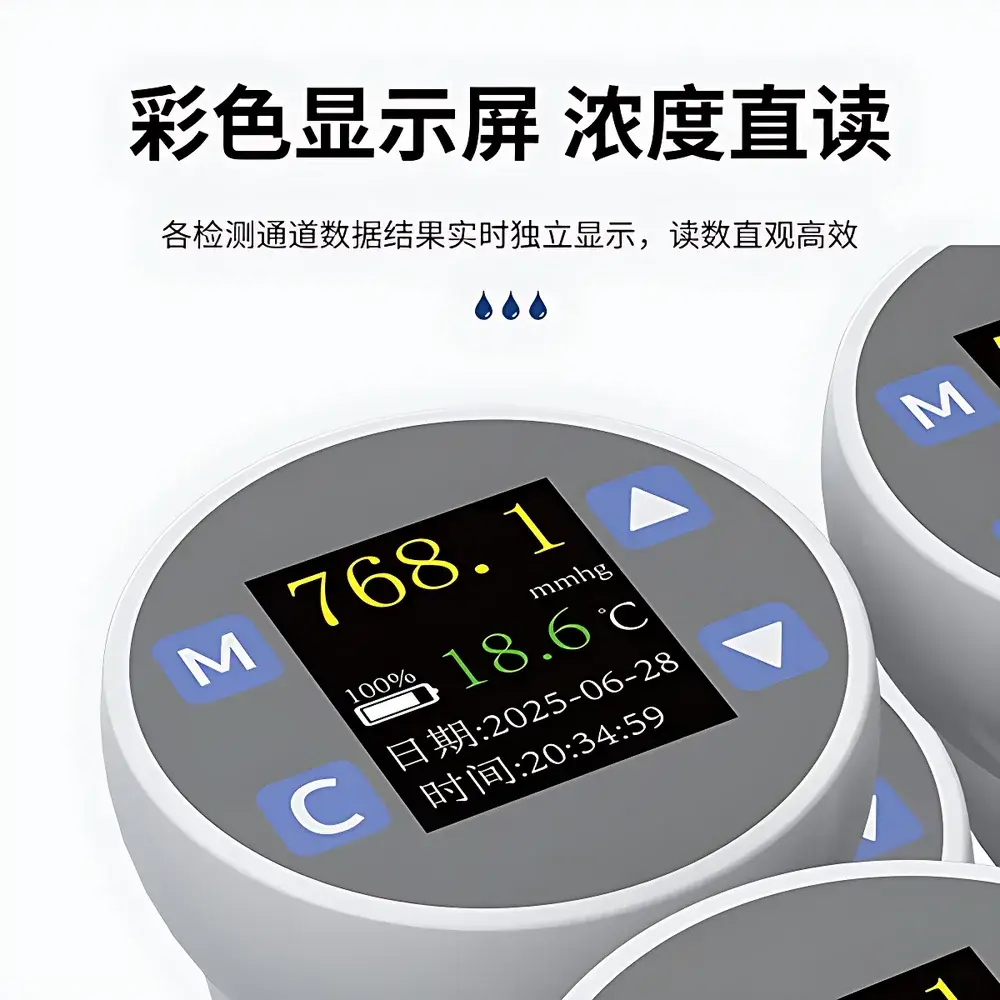
- Intuitive LED interface per channel displaying real-time BOD5 concentration (mg/L), cumulative incubation duration, sample volume input (580 mL nominal bottle capacity), and system status indicators (e.g., stirrer active, battery level, temperature deviation).
Sample Compatibility & Compliance
The Dr-BOD(6T) accommodates standard 580 mL BOD bottles compliant with ASTM D5210 and ISO 5815-1 dimensional specifications. It accepts undiluted or pre-diluted samples—including raw sewage, secondary effluent, river water, landfill leachate, and biodegradable chemical solutions—provided appropriate seed acclimation and nitrification inhibition (e.g., allylthiourea) are applied per test protocol. All measurements adhere to GLP-aligned data integrity practices: each record includes immutable metadata (channel ID, initiation timestamp, operator code if entered, firmware version). The instrument’s pressure-difference algorithm implements the stoichiometric conversion factor (1 mg O2/L ≈ 0.71 kPa at 20 °C) and corrects for barometric pressure and temperature-induced gas expansion, ensuring compliance with ISO/IEC 17025 documentation requirements for accredited testing laboratories.
Software & Data Management
Data export is supported via USB 2.0 interface in CSV format, compatible with LIMS integration and statistical analysis platforms (e.g., JMP, Minitab, Python pandas). Optional PC software provides graphical trend visualization (BOD vs. time curves per channel), automated report generation (PDF/Excel), and comparative analysis across batches. Audit trails meet FDA 21 CFR Part 11 criteria for electronic records when used with configured user access controls and digital signature workflows. Firmware updates are delivered via signed binary packages with SHA-256 verification to maintain system integrity throughout its service life.
Applications
- Regulatory compliance testing for municipal wastewater treatment plants (NPDES permit monitoring)
- Industrial pretreatment program verification (e.g., food processing, pharmaceutical manufacturing)
- Environmental impact assessment (EIA) studies for discharge permits
- Research on biodegradability kinetics of novel surfactants, polymers, or agrochemicals
- Quality control of activated sludge health and treatment efficiency in pilot-scale bioreactors
- Educational laboratory instruction in environmental engineering and analytical chemistry curricula
FAQ
How does the mercury-free pressure-difference method compare to traditional dilution methods in terms of accuracy?
It achieves equivalent accuracy when calibrated against glucose-glutamic acid (GGA) reference standards (target BOD5: 198 ± 15 mg/L); inter-laboratory validation studies confirm mean recovery rates within 97–103% of certified values.
Can the Dr-BOD(6T) be used for BOD measurements beyond 5 days?
Yes—incubation duration is programmable from 1 to 30 days, supporting extended BOD (e.g., BOD20) or respiration inhibition assays per OECD 301 series guidelines.
Is temperature uniformity verified across all six channels?
Yes—chamber homogeneity is validated per ISO 5815-1 Annex C; maximum spatial deviation is ≤ ±0.3 °C at steady state (20 °C setpoint).
What maintenance is required for long-term reliability?
Annual recalibration of pressure sensors using certified dead-weight testers is recommended; routine cleaning of bottle seals and stirrer shafts ensures consistent mechanical performance.
Does the system support remote monitoring or network connectivity?
Not natively—but USB-exported data files integrate seamlessly with cloud-based LIMS or SCADA systems via middleware; optional Ethernet gateway modules are available upon request for enterprise deployment.







