Dr.Lab® Smart Laboratory Management Platform
| Brand | Dr.Lab |
|---|---|
| Origin | Shanghai, China |
| Manufacturer Type | Authorized Distributor |
| Product Origin | Domestic (China) |
| Model | Dr.Lab |
| Price Range | USD 140 – 14,000 (based on deployment scale and module licensing) |
Overview
The Dr.Lab® Smart Laboratory Management Platform is a cloud-native, IoT-integrated Laboratory Information Management System (LIMS) designed for dynamic, unattended oversight of academic, research, and industrial laboratory operations. Unlike traditional LIMS solutions requiring on-premise servers and extensive IT infrastructure, Dr.Lab leverages standardized IEEE 802.11 Wi-Fi connectivity and edge-compatible sensor nodes to collect, contextualize, and act upon real-time environmental, equipment, and access data. Its architecture follows a modular microservices design—enabling phased deployment from a single lab room to multi-building institutional campuses—while maintaining strict data lineage, audit-ready logging, and role-based enforcement per ISO/IEC 17025:2017 and GLP-compliant workflows.
Key Features
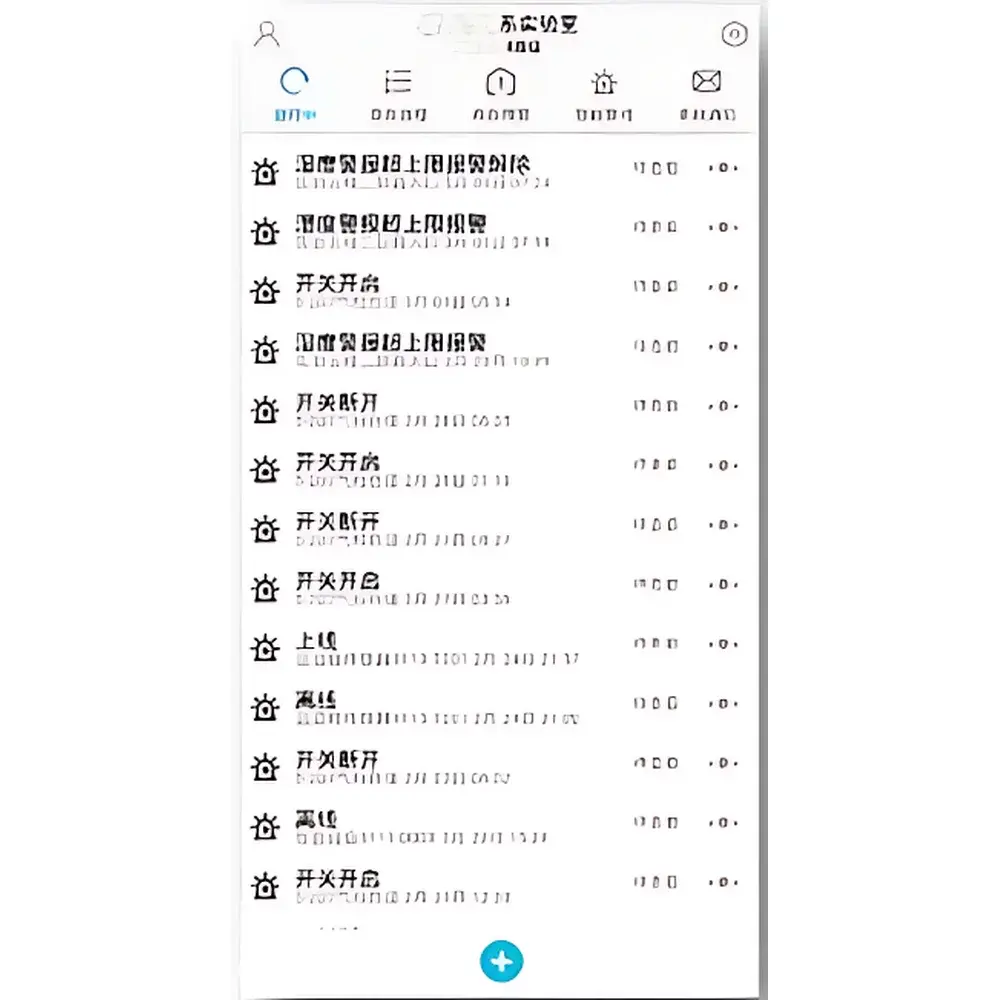
- IoT-Enabled Environmental Monitoring: Integrates with certified temperature, humidity, VOC, CO₂, and door-state sensors (e.g., Sensirion SHT45, Bosch BME688) to continuously log environmental parameters at configurable intervals (1–300 sec), with configurable thresholds triggering automated alerts via email, SMS, or in-app notification.
- Instrument Lifecycle & Access Orchestration: Supports RFID/NFC-enabled instrument check-in/out, time-stamped usage logging, maintenance scheduling, and automatic deactivation upon overdue calibration—aligned with ISO/IEC 17025 clause 6.4.9 and USP <797> equipment qualification requirements.
- Hazardous Material Traceability: Enforces barcode/QR-scanned receipt, storage location assignment (cabinet-level geotagging), inventory reconciliation, and disposal documentation with full chain-of-custody records compliant with GHS labeling standards and local regulatory frameworks (e.g., China’s MEE Order No. 7, EU CLP Regulation).
- Dynamic Space & Role-Based Authorization: Implements context-aware access policies—including time-windowed permissions, multi-factor authentication (TOTP), and conditional entry (e.g., “only users with chemical safety training may enter fume hood zones after 18:00”)
- Smart Inventory Forecasting: Applies consumption-rate modeling and low-stock threshold algorithms to generate procurement recommendations; integrates with ERP systems via RESTful API (OAuth 2.0 secured) for PO synchronization.
Sample Compatibility & Compliance
Dr.Lab supports heterogeneous hardware integration through standardized protocols: Modbus RTU/TCP for legacy instruments, MQTT v3.1.1 for edge sensors, and HL7 FHIR R4 for health-science lab interoperability. All data transmissions are encrypted using TLS 1.2+; audit logs meet FDA 21 CFR Part 11 requirements for electronic records and signatures, including immutable timestamps, user attribution, and change history. The platform undergoes annual third-party penetration testing and holds ISO 27001:2022 certification for information security management. It is validated for use in GLP, GMP, and ISO/IEC 17025-accredited environments, with documented IQ/OQ protocols available upon request.
Software & Data Management
Deployed as a SaaS solution hosted on AWS GovCloud (China-North-1) or private cloud (VMware/OpenStack), Dr.Lab provides a responsive web interface and native iOS/Android applications. Data persistence uses PostgreSQL 14 with point-in-time recovery and daily encrypted backups. All user actions generate timestamped, non-repudiable audit trails—including login attempts, configuration changes, and report exports—with retention configurable per organizational policy (minimum 7 years). Role-based dashboards support customizable KPIs: instrument uptime %, hazardous material turnover rate, incident response latency, and compliance gap metrics. Export formats include CSV, PDF/A-2b, and XML (NIEM 4.0 schema for cross-agency reporting).
Applications
- University core facilities managing shared instrumentation across departments (e.g., NMR, SEM, HPLC suites)
- Pharmaceutical R&D labs enforcing ALCOA+ data integrity principles during method development
- Environmental testing laboratories tracking field sample chain-of-custody from collection to analysis
- Government metrology institutes coordinating inter-laboratory comparison programs with real-time uncertainty propagation
- Biobanks requiring cryo-storage monitoring with liquid nitrogen level telemetry and alarm escalation trees
FAQ
Does Dr.Lab require on-site server installation?
No. Dr.Lab operates as a cloud-hosted service; only battery-powered or PoE-connected IoT sensors and optional gateway hardware need physical deployment.
Can it integrate with existing LIMS or ELN systems?
Yes—via bidirectional REST APIs supporting JSON and XML payloads; pre-built connectors available for LabVantage, Thermo Fisher SampleManager, and Benchling.
How is data sovereignty ensured for international users?
Data residency is contractually guaranteed; customers select region-specific hosting (e.g., AWS Frankfurt for EEA, AWS Beijing for PRC) with encryption-at-rest (AES-256) and encryption-in-transit (TLS 1.3).
Is validation documentation provided for regulated industries?
Yes—IQ/OQ documentation, UAT test scripts, and 21 CFR Part 11 compliance reports are included with enterprise licenses.
What is the typical implementation timeline for a 50-user deployment?
Average go-live is 6–8 weeks, including hardware provisioning, sensor calibration, role mapping, workflow configuration, and end-user training—phased by lab zone to minimize operational disruption.