
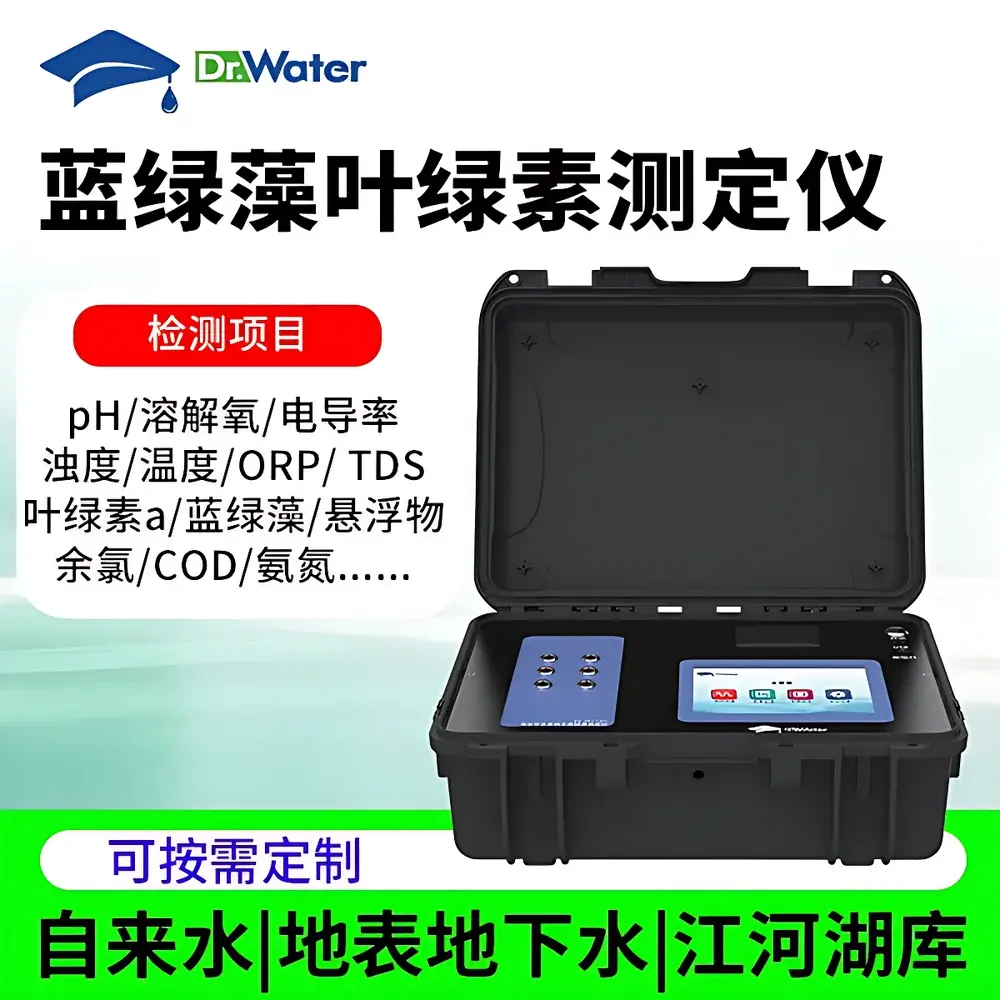
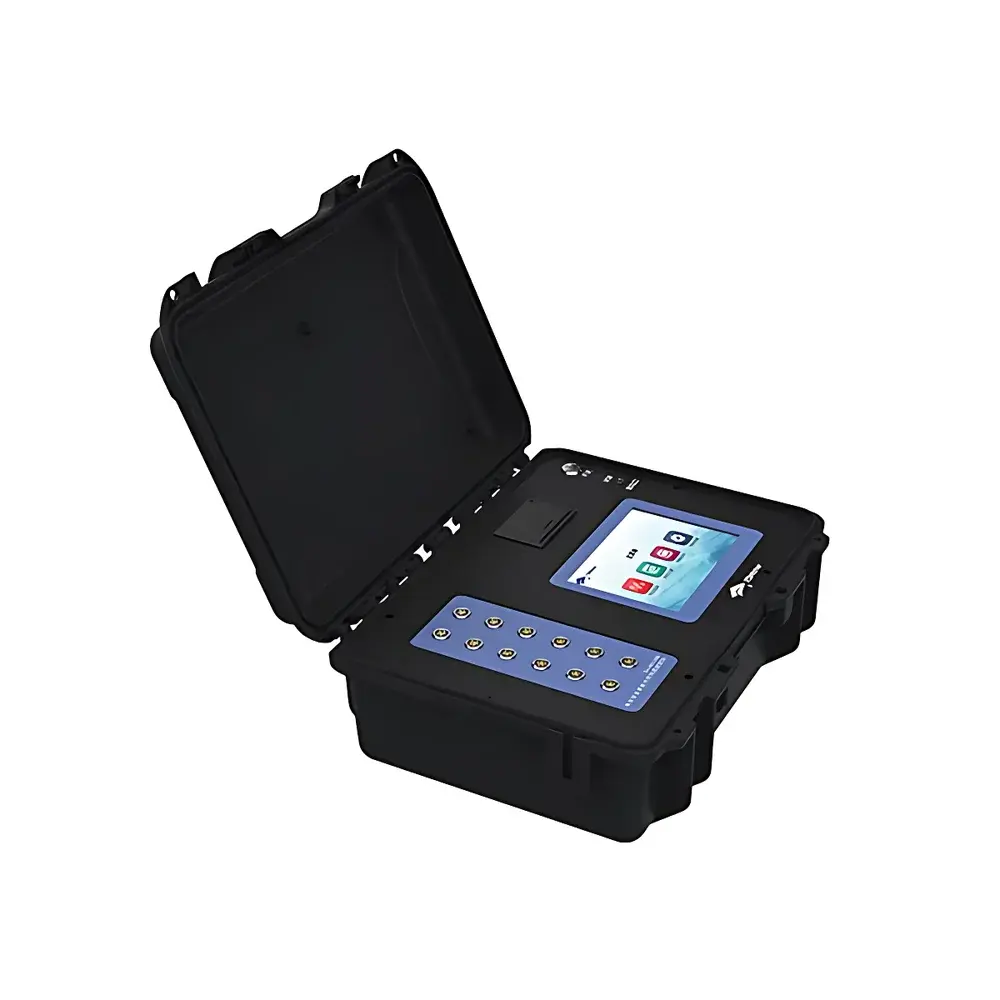
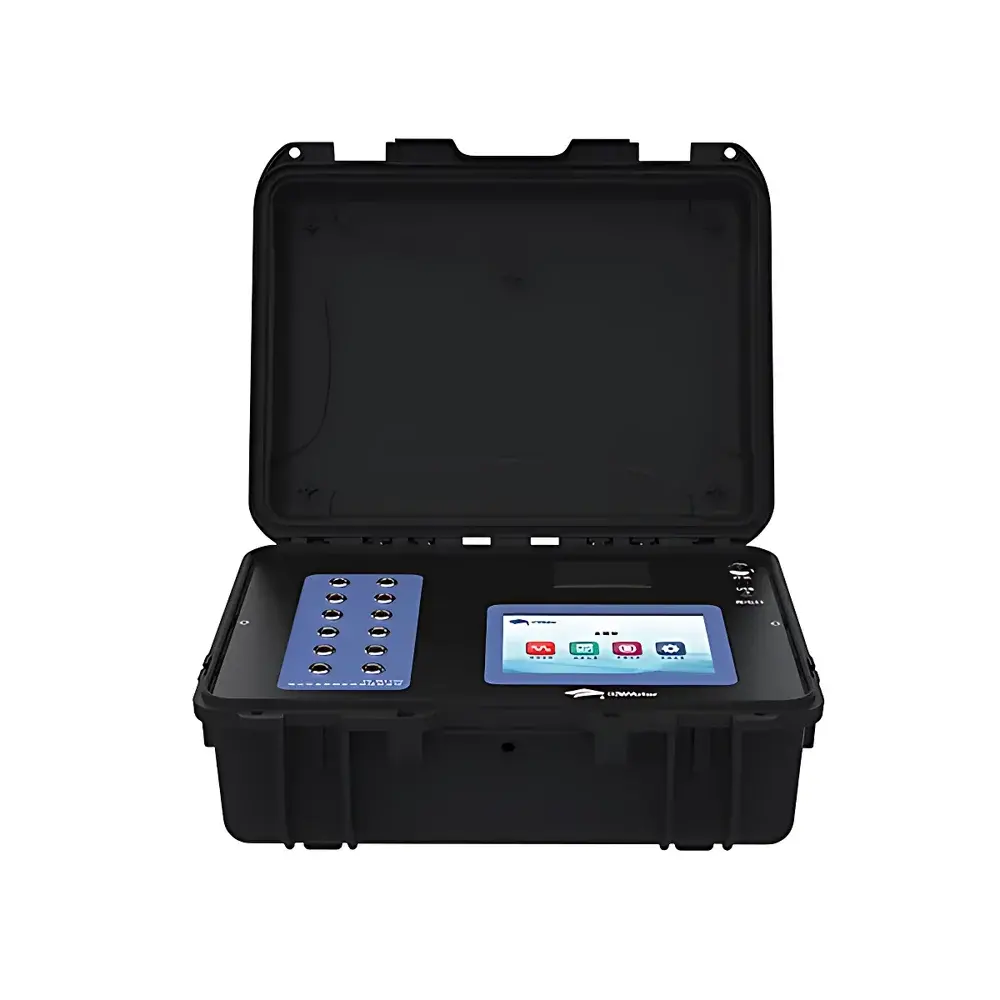
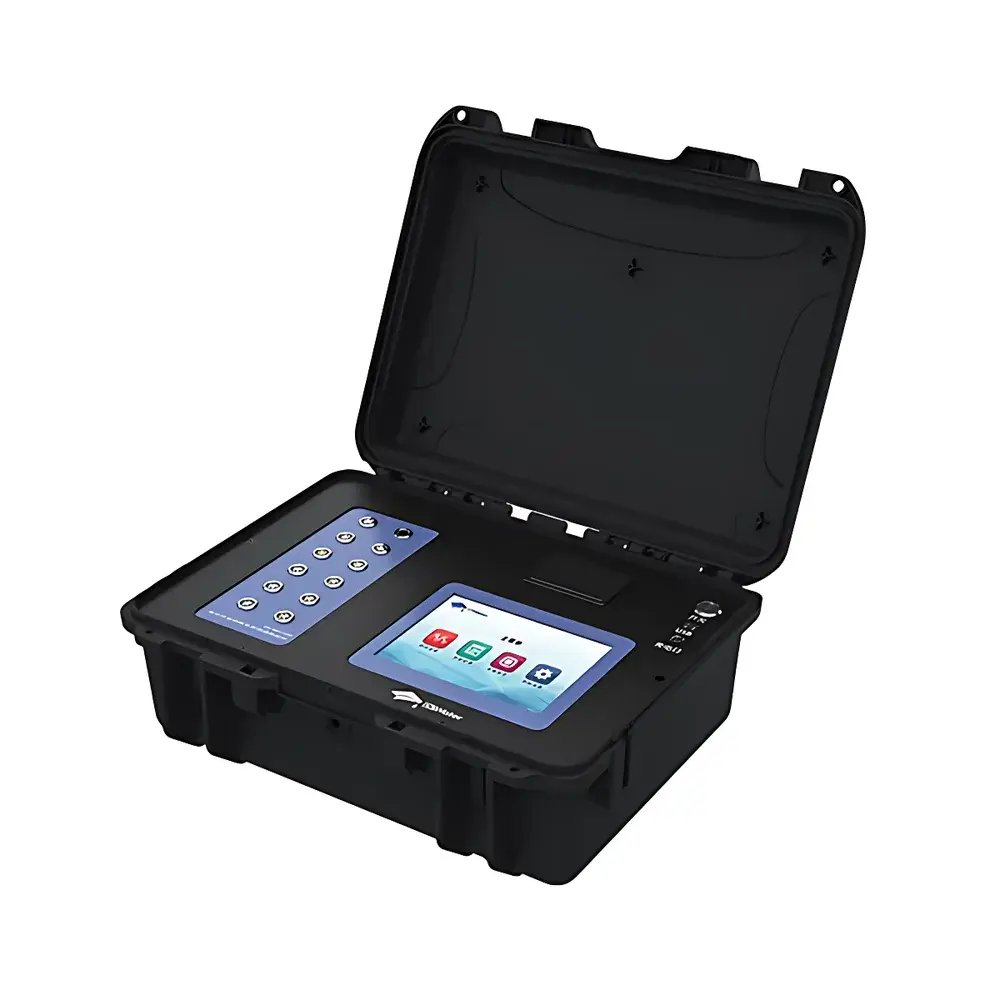
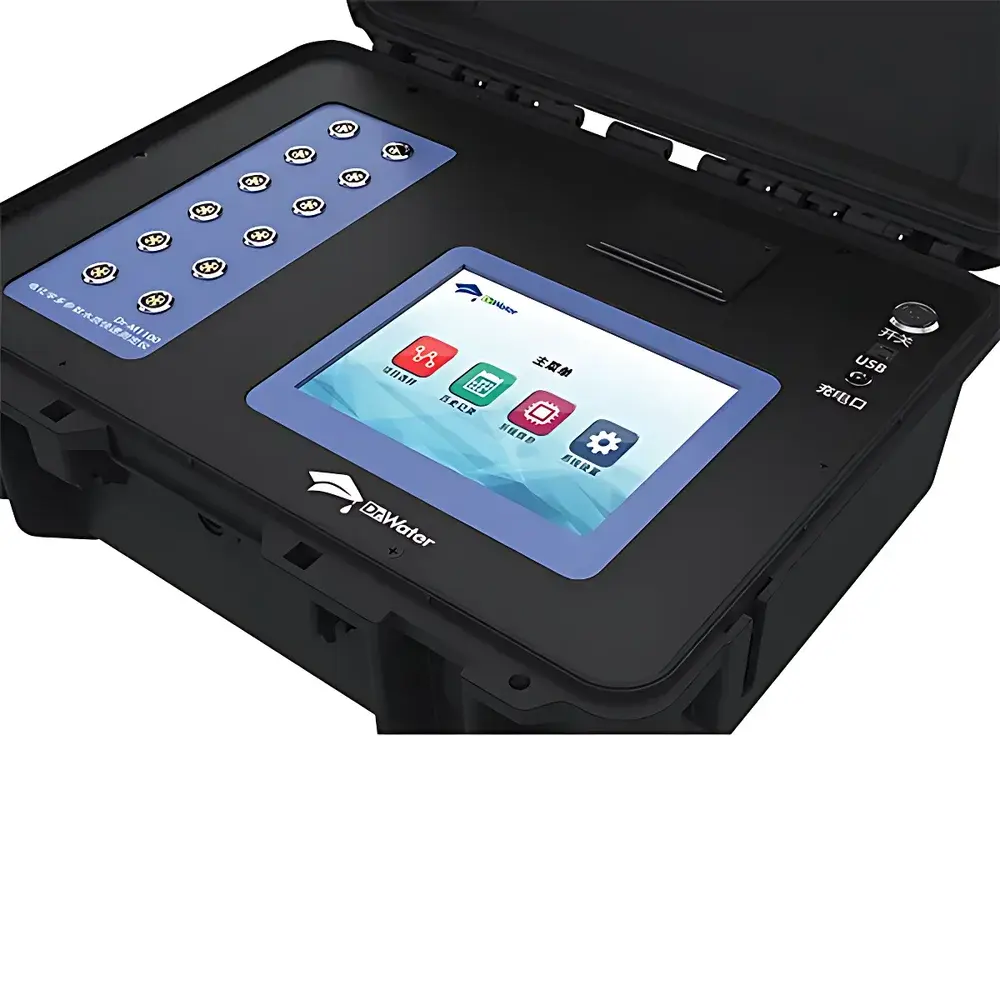
Dr-M1100 Multi-Parameter Electrochemical Water Quality Analyzer
| Brand | DoctorWater |
|---|---|
| Origin | Hunan, China |
| Model | Dr-M1100 |
| Instrument Type | Portable/HANDHELD Water Quality Analyzer |
| Detection Principle | Electrochemical Sensing |
| Measured Parameters | pH, Dissolved Oxygen (DO), Electrical Conductivity (EC), Turbidity, Temperature, Oxidation-Reduction Potential (ORP), Total Dissolved Solids (TDS), Chlorophyll-a, Phycocyanin (Blue-Green Algae), Suspended Solids (SS), Residual Chlorine, COD (via electrochemical proxy), Ammonia-Nitrogen (NH₃-N), Hydrocarbon Oil, Salinity |
| pH Range | 0–14 pH |
| Display | 8-inch HD color TFT touchscreen |
| Data Storage | 1,000,000 measurement records |
| Power Supply | Rechargeable Li-ion battery + AC adapter |
| Electrode Protection Rating | IP68 |
| Operating Environment | 0–50 °C, ≤85% RH (non-condensing) |
| Electrode Cable Length | 3–5 m (customizable) |
| Communication | USB interface |
| Reading Modes | Real-time, Timed, Interval |
| Auto Temperature Compensation | Yes |
| Number of Independent Sensor Ports | 6 (expandable to 8–12) |
Overview
The Dr-M1100 Multi-Parameter Electrochemical Water Quality Analyzer is a field-deployable, high-integrity analytical platform engineered for simultaneous, real-time quantification of up to 16 critical water quality parameters using standardized electrochemical transduction principles. Unlike optical or wet-chemistry-based systems, the Dr-M1100 relies on potentiometric, amperometric, and conductometric sensor modalities—each implemented via digital smart electrodes with embedded microprocessors that perform on-sensor signal conditioning, calibration validation, and temperature compensation. This architecture eliminates analog signal degradation, minimizes drift, and ensures traceable measurement integrity across diverse matrices—from freshwater lakes and municipal distribution networks to industrial effluents and aquaculture recirculation systems. Designed to meet the operational rigor of environmental compliance monitoring and process control applications, the instrument adheres to foundational metrological requirements aligned with ISO 5667 (water sampling), ISO 7888 (electrical conductivity), ISO 5814 (dissolved oxygen), and ASTM D1293 (pH of water), supporting data credibility in regulatory reporting contexts.
Key Features
- Digital smart electrode interface: Plug-and-play recognition of calibrated sensors; automatic parameter assignment and firmware handshake eliminate manual configuration errors.
- Six independent, electrically isolated sensor channels: Enable concurrent measurement of heterogeneous parameters (e.g., pH + DO + EC + ORP + turbidity + residual chlorine) without cross-talk or mutual interference.
- Integrated auto-compensation algorithms: Real-time temperature correction applied per sensor type using NIST-traceable polynomial coefficients (e.g., DIN 19263 for conductivity, APHA 4500-O for DO).
- Triple-mode reading logic: Selectable real-time continuous output, timed endpoint acquisition (1–300 s), or programmable interval logging (1 min – 24 h) for unattended deployment.
- Ruggedized hardware design: IP68-rated electrodes rated for submersion at 2 m depth; instrument housing conforms to IEC 60529 ingress protection and MIL-STD-810G shock/vibration profiles.
- Dual-power architecture: Field operation supported by 14,400 mAh Li-ion battery (≥16 h continuous use at 25 °C); laboratory mode enabled via universal AC adapter (100–240 VAC, 50/60 Hz).
Sample Compatibility & Compliance
The Dr-M1100 is validated for use with natural waters (surface, groundwater, estuarine), treated drinking water, wastewater effluents, industrial process streams, and aquaculture media. Its electrochemical sensor suite avoids reagent consumption, eliminating hazardous waste generation and enabling zero-chemical footprint operation—consistent with EPA Method 150.1 (conductivity), 365.3 (amperometric chlorine), and ISO 10523 (pH). While not a certified reference method instrument per se, its performance characteristics satisfy QA/QC criteria outlined in US EPA Guidance for Water Quality Monitoring Programs (EPA 841-B-00-004) and support GLP-compliant data collection when paired with audit-trail-enabled software (see Software & Data Management). Sensor calibration protocols align with ISO/IEC 17025 clause 7.7 requirements for equipment verification.
Software & Data Management
Onboard firmware supports full-cycle data lifecycle management: measurement acquisition, timestamped storage (with GPS optional via Bluetooth module), on-device review (including trend graphs and statistical summaries), thermal printing of field reports, and USB mass-storage export of CSV/Excel-compatible files. All stored records include metadata: sensor ID, calibration date/stamp, operator ID (user-defined), ambient temperature/humidity, and measurement uncertainty flags. For enterprise integration, optional PC software provides automated synchronization, customizable report templates (PDF/XLSX), spectral overlay for multi-parameter correlation analysis, and secure user-role access control—enabling compliance with FDA 21 CFR Part 11 electronic record requirements when deployed in regulated pharmaceutical or food processing environments.
Applications
- Regulatory environmental monitoring: Routine sampling for NPDES permits, WFD (EU Water Framework Directive) status assessment, and WHO drinking water guideline verification.
- Municipal utility operations: Source water characterization, treatment plant influent/effluent QC, distribution system corrosion potential (ORP/pH/Cl⁻) mapping.
- Industrial process control: Cooling tower chemistry management, semiconductor fab ultrapure water loop surveillance, biopharma buffer solution verification.
- Aquatic ecosystem research: In-situ phytoplankton dynamics tracking (Chl-a + phycocyanin), eutrophication index derivation, hypolimnetic oxygen depletion profiling.
- Emergency response: Rapid screening during chemical spills, algal bloom events, or post-disaster water safety triage.
FAQ
Does the Dr-M1100 require routine recalibration in the field?
Yes—electrochemical sensors require periodic verification against certified standards. The instrument supports single- or multi-point calibration for each parameter; recommended frequency is before each sampling campaign or every 8 hours of continuous use.
Can the Dr-M1100 be used for seawater or high-salinity brines?
Yes, with salinity-rated electrodes (e.g., titanium-clad ORP, solid-state Ag/AgCl reference). Default configurations are optimized for 0–40 ppt; custom high-range conductivity and pH electrodes are available for >50 ppt applications.
Is raw sensor data accessible for third-party analysis?
Yes—USB export delivers unprocessed voltage/current readings alongside compensated values, enabling advanced modeling (e.g., multivariate regression for COD estimation) in MATLAB, Python, or R environments.
How is data integrity ensured during extended unattended deployments?
Each measurement includes CRC-32 checksums, write-protected memory sectors, and automatic timestamp synchronization via internal RTC (±2 s/month accuracy). Battery-backed RAM preserves settings and last-calibration data during power loss.
Are replacement electrodes supplied with NIST-traceable calibration certificates?
Calibration certificates are provided upon request for premium-grade electrodes (e.g., Class A pH, DO sensors with membrane diffusion coefficient certification); standard electrodes include factory verification reports compliant with ISO 9001.







