
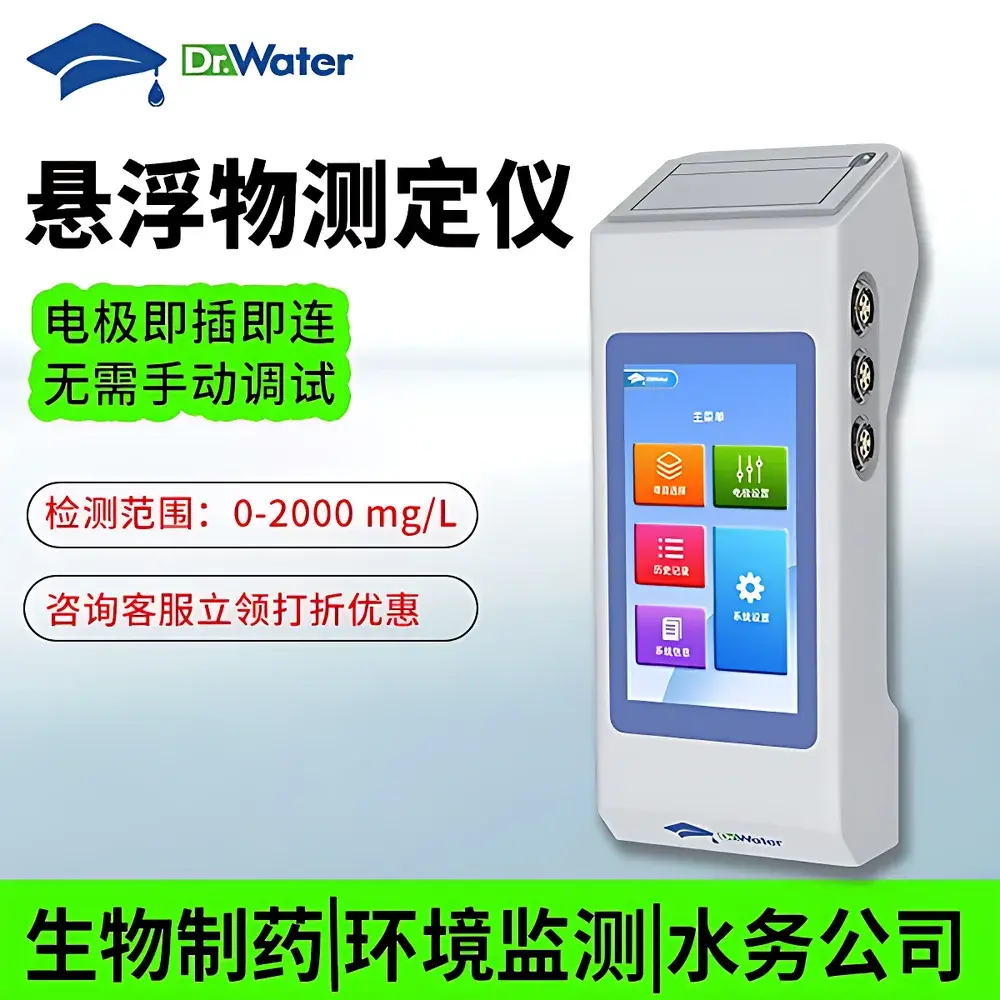
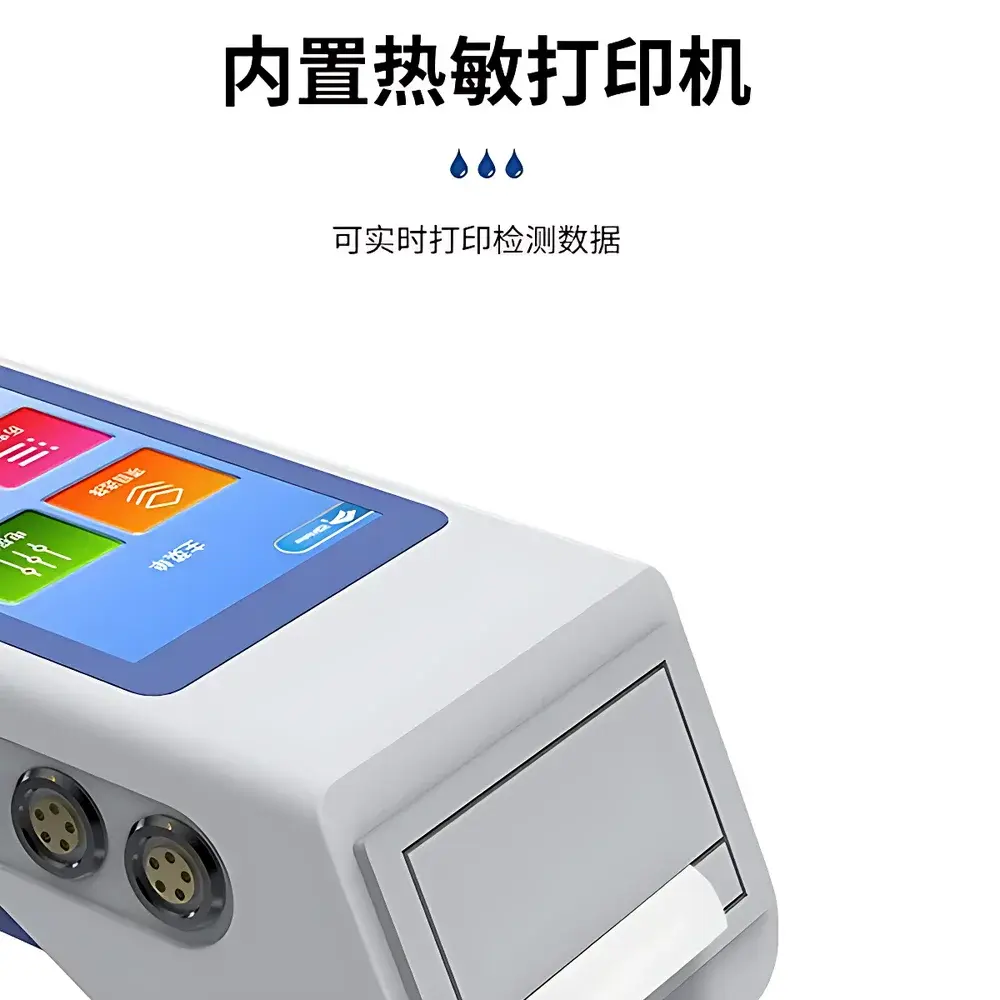
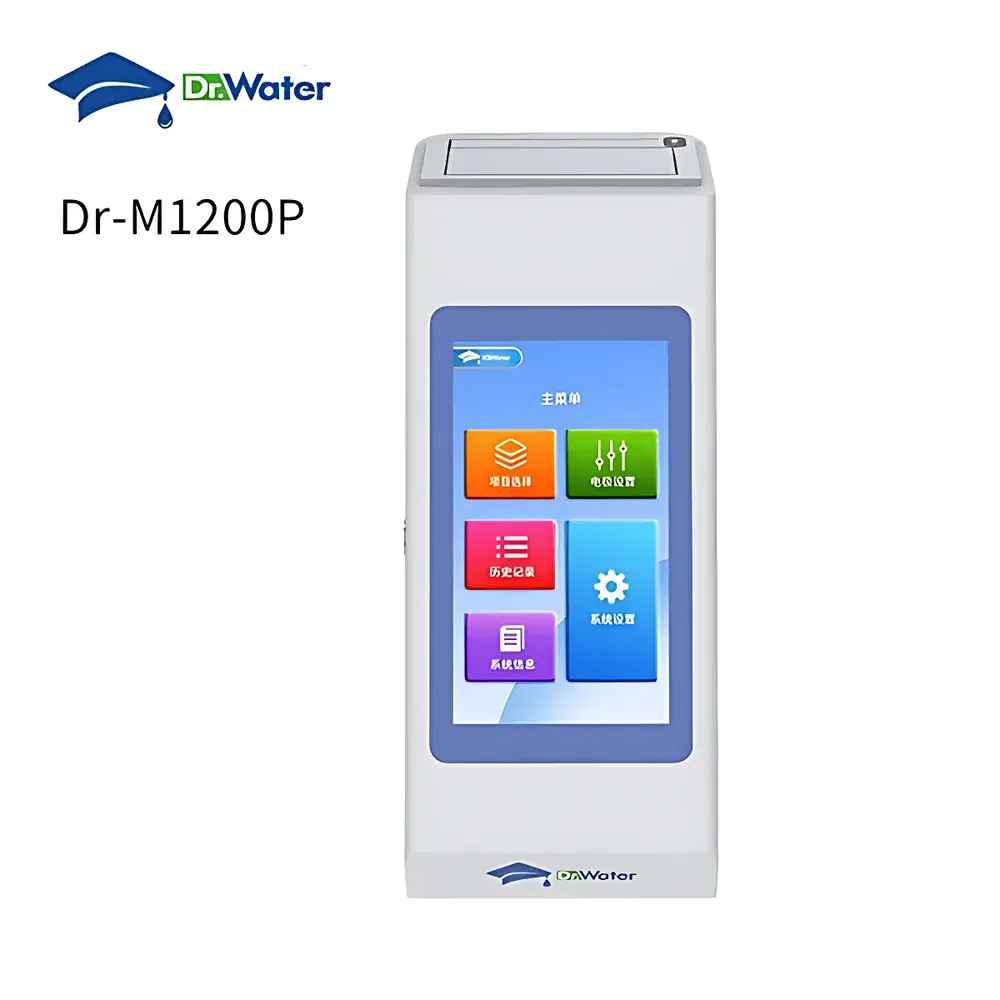
Dr-M1212P Portable Multi-Parameter Water Quality Analyzer (Suspended Solids, COD, Ammonia-N, pH, DO, EC, Turbidity, ORP, TDS, Chlorophyll-a, Phycocyanin, Free Chlorine, Oil-in-Water, Salinity) by DoctorWater
| Brand | DoctorWater |
|---|---|
| Origin | Hunan, China |
| Model | Dr-M1212P |
| Portability | Portable |
| Measurement Principle | Electrochemical & Optical (Nephelometric for Turbidity/Suspended Solids) |
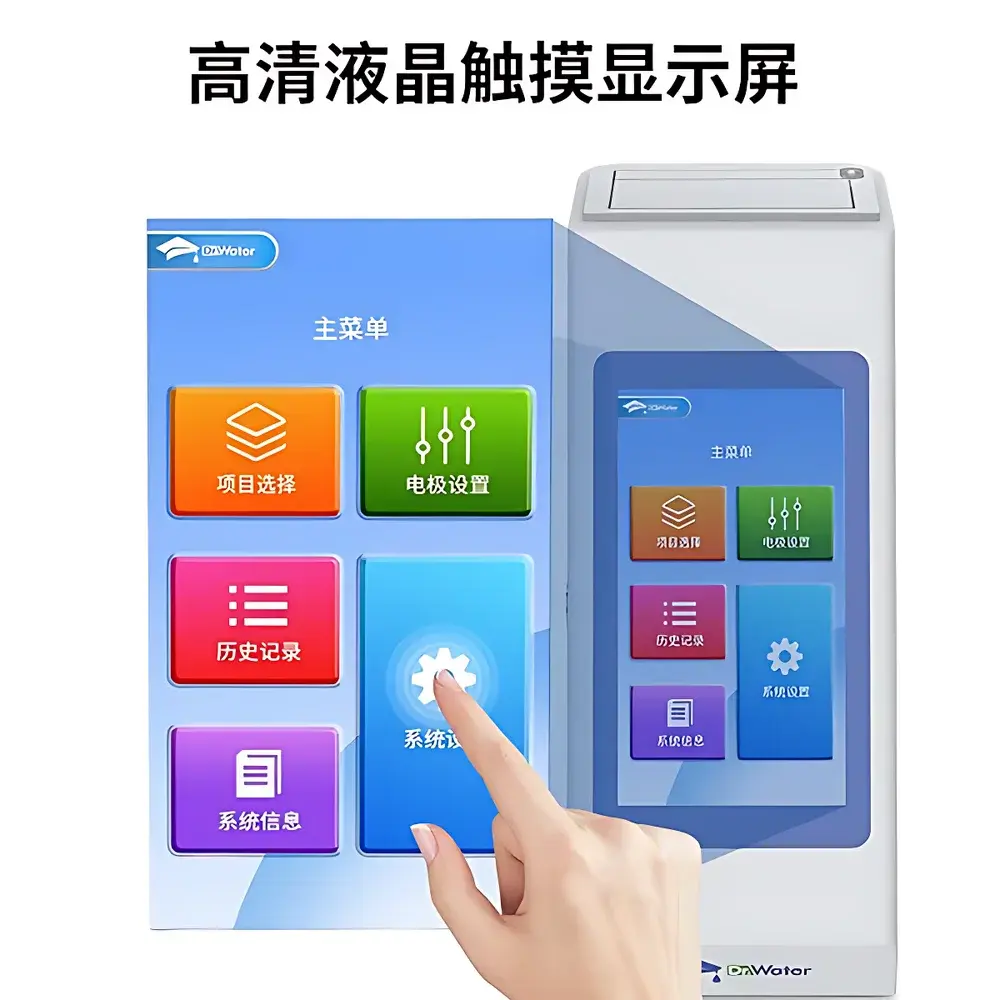
| Display | 5-inch HD color capacitive touchscreen |
| Language Support | English & Chinese |
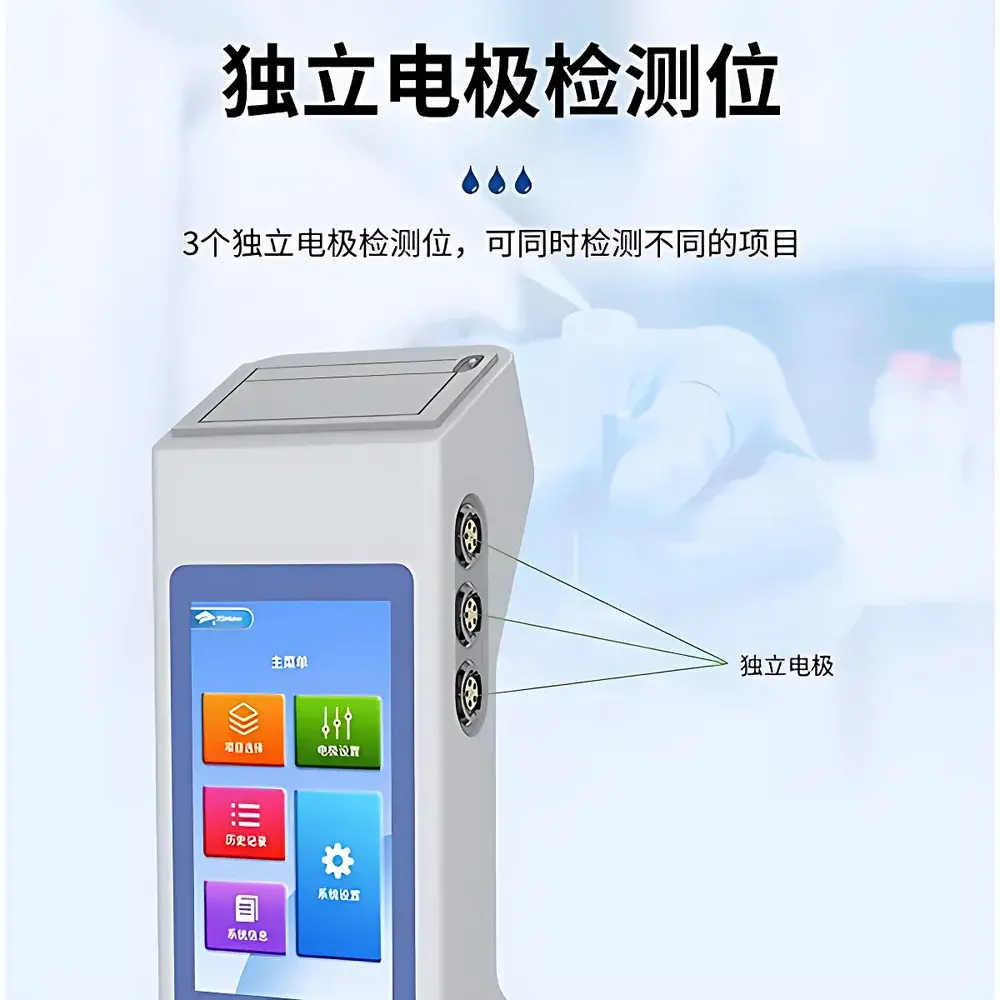
| Electrode Ports | 3 independent digital electrode slots |
| Electrode Interface | Plug-and-play digital electrodes with auto-recognition |
| Temperature Compensation | Automatic real-time compensation (0–50 °C) |
| Power Supply | Rechargeable Li-ion battery + USB Type-C AC adapter (dual-mode operation) |
| Data Storage | Up to 1,000,000 measurement records with timestamp, location (GPS optional), and electrode ID tagging |
| Data Output | USB Type-C interface for direct PC transfer |
| IP Rating | IP68-rated electrodes |
| Operating Environment | 0–50 °C, ≤85% RH (non-condensing) |
| Electrode Cable Length | Standard 3–5 m (customizable) |
| Compliance | Designed per ISO 7027 (turbidity), ISO 5814 (DO), ISO 7888 (EC/TDS), ASTM D1293 (pH), USP <643> (TOC proxy via COD), and GLP-aligned data integrity architecture |
Overview
The Dr-M1212P Portable Multi-Parameter Water Quality Analyzer is an integrated field-deployable instrument engineered for simultaneous, real-time quantification of suspended solids (SS) and up to 14 complementary water quality parameters—including chemical oxygen demand (COD), ammonia-nitrogen (NH₃-N), pH, dissolved oxygen (DO), electrical conductivity (EC), turbidity, oxidation-reduction potential (ORP), total dissolved solids (TDS), chlorophyll-a, phycocyanin (blue-green algae), free chlorine, oil-in-water, salinity, and temperature. Unlike traditional gravimetric or filtration-based SS analyzers, the Dr-M1212P employs a calibrated nephelometric optical sensor—aligned with ISO 7027 principles—for non-invasive, in-situ suspended solids estimation. This optical method, combined with electrochemical detection modules (e.g., Clark-type DO sensors, ISFET pH transducers, and amperometric chlorine sensors), eliminates the need for reagents, reduces cross-contamination risk, and ensures zero chemical waste generation. The system’s architecture supports both regulatory-grade spot-checking and long-term trend monitoring, making it suitable for compliance verification under national discharge standards (e.g., China’s GB 3838–2002, US EPA Method 160.1 for turbidity), as well as research-grade environmental profiling.
Key Features
- Triple digital electrode interface with automatic sensor recognition—no manual calibration coefficient entry required upon probe insertion.
- Real-time automatic temperature compensation across all electrochemical and optical channels, referenced to NIST-traceable Pt1000 thermistors embedded in each sensor tip.
- Dual power architecture: high-capacity lithium-ion battery (≥16 h continuous operation at 1 Hz sampling) + universal USB Type-C input (5 V / 2 A) enabling seamless transition between field surveys and lab bench use.
- Three adaptive reading modes—real-time (live analog waveform display), timed (user-defined duration averaging), and interval (programmable logging from 1 s to 24 h)—enabling optimization for rapid screening or diurnal cycle studies.
- IP68-rated digital electrodes with 3–5 m shielded, low-noise coaxial cables; compatible with immersion, flow-through, and grab-sample configurations.
- On-device data governance: 1,000,000-record internal memory with time/date stamping, GPS metadata (optional external module), electrode serial tracking, and user-defined sample IDs—all structured in CSV-compliant format for audit-ready export.
Sample Compatibility & Compliance
The Dr-M1212P is validated for use with freshwater, estuarine, wastewater effluent, drinking water distribution systems, aquaculture ponds, and industrial process streams (pH 2–12, EC up to 200 mS/cm, turbidity 0–4000 NTU). Its optical SS channel is calibrated against formazin and AMCO-AE standards per ISO 7027 Annex B. Electrochemical modules comply with ISO 5814 (DO), ISO 7888 (EC/TDS), and ASTM D1293 (pH). The instrument’s firmware enforces GLP/GMP-aligned data integrity: all measurements include immutable timestamps, operator ID fields (PIN-protected), and change logs for calibration history and configuration edits. While not FDA 21 CFR Part 11 certified out-of-box, its audit trail structure supports validation protocols required for regulated environments including municipal water utilities and pharmaceutical manufacturing sites.
Software & Data Management
The embedded operating system provides native support for EN 14181-compliant QA/QC workflows, including multi-point calibration validation, drift monitoring, and sensor health diagnostics. Data are stored in a relational SQLite database with encrypted backup capability. USB Type-C connectivity enables direct mass-storage mode for drag-and-drop CSV retrieval or integration with third-party LIMS platforms (e.g., LabWare, STARLIMS) via standardized ODBC drivers. Optional cloud synchronization (via LTE-enabled docking station) supports remote fleet management and automated report generation aligned with ISO/IEC 17025 documentation requirements. Firmware updates are delivered via signed binary packages with SHA-256 checksum verification.
Applications
- Regulatory field monitoring: EPA NPDES permit compliance, river basin authority surveillance, and WWTP influent/effluent reporting.
- Process control in drinking water treatment plants—real-time turbidity and free chlorine tracking at filtration and disinfection stages.
- Aquaculture health management: concurrent monitoring of DO, NH₃-N, chlorophyll-a, and SS to assess phytoplankton dynamics and feed efficiency.
- Industrial pretreatment verification: oil-in-water and COD screening prior to municipal sewer discharge.
- Research applications: longitudinal studies of eutrophication indicators (phycocyanin + chlorophyll-a + SS), sediment resuspension events, and climate-driven salinity gradients in coastal zones.
FAQ
Does the Dr-M1212P require reagent addition for suspended solids measurement?
No—the suspended solids channel uses a factory-calibrated 90° scattered-light nephelometer compliant with ISO 7027; no consumables or reagents are needed.
Can the instrument store calibration data per electrode?
Yes—each digital electrode retains its own calibration coefficients, slope, offset, and expiration date in onboard EEPROM; the host unit auto-loads this information on connection.
Is GPS positioning integrated into the device?
GPS is not built-in but supported via optional Bluetooth 5.0 external GNSS receiver (e.g., u-blox M8T), with coordinates embedded in exported datasets.
What is the maximum allowable total dissolved solids (TDS) concentration for accurate conductivity-based salinity calculation?
The EC-to-salinity algorithm is validated for TDS ≤ 100,000 mg/L (equivalent to ~105 g/kg seawater); beyond this range, users should select “seawater” or “brine” density correction mode.
How is data integrity ensured during extended field deployments?
All measurements are written to non-volatile flash memory with cyclic redundancy check (CRC-32); power-loss recovery preserves the last complete record set, and firmware prohibits deletion of archived data without administrative authentication.
Related Products







