
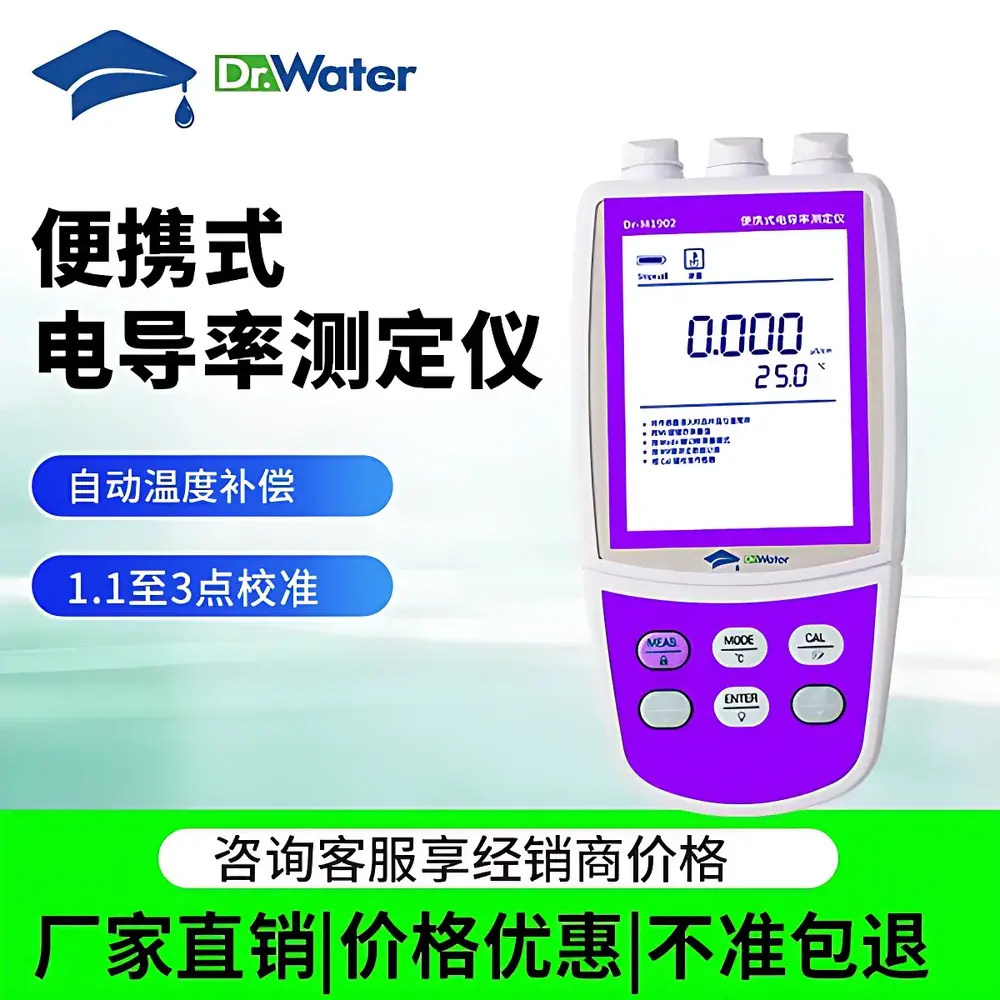
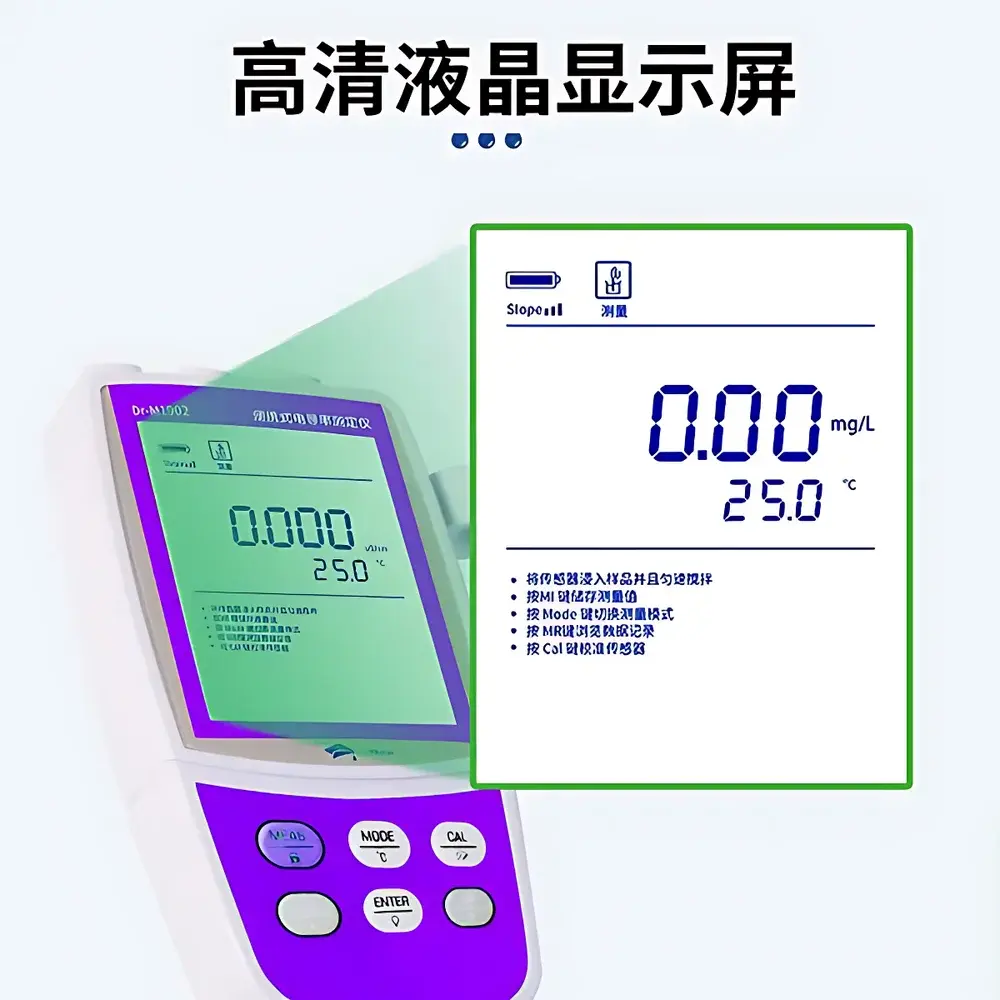
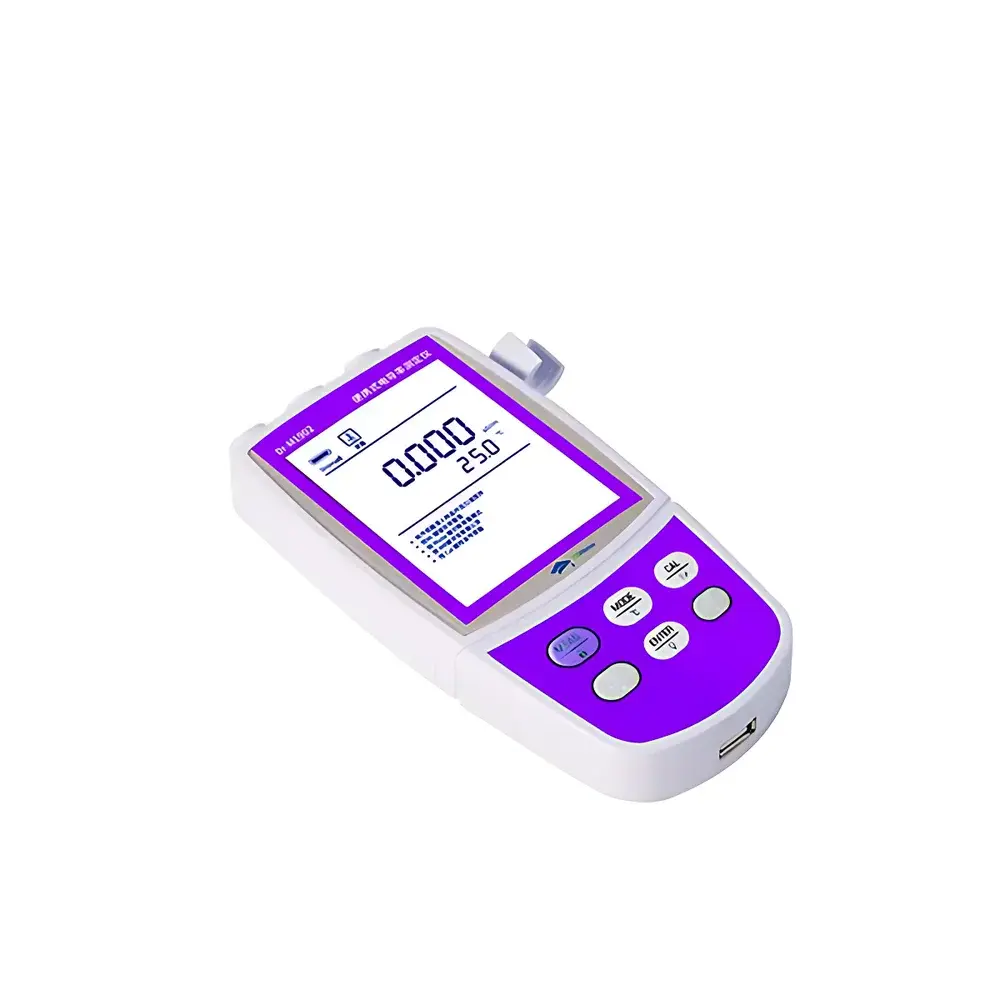
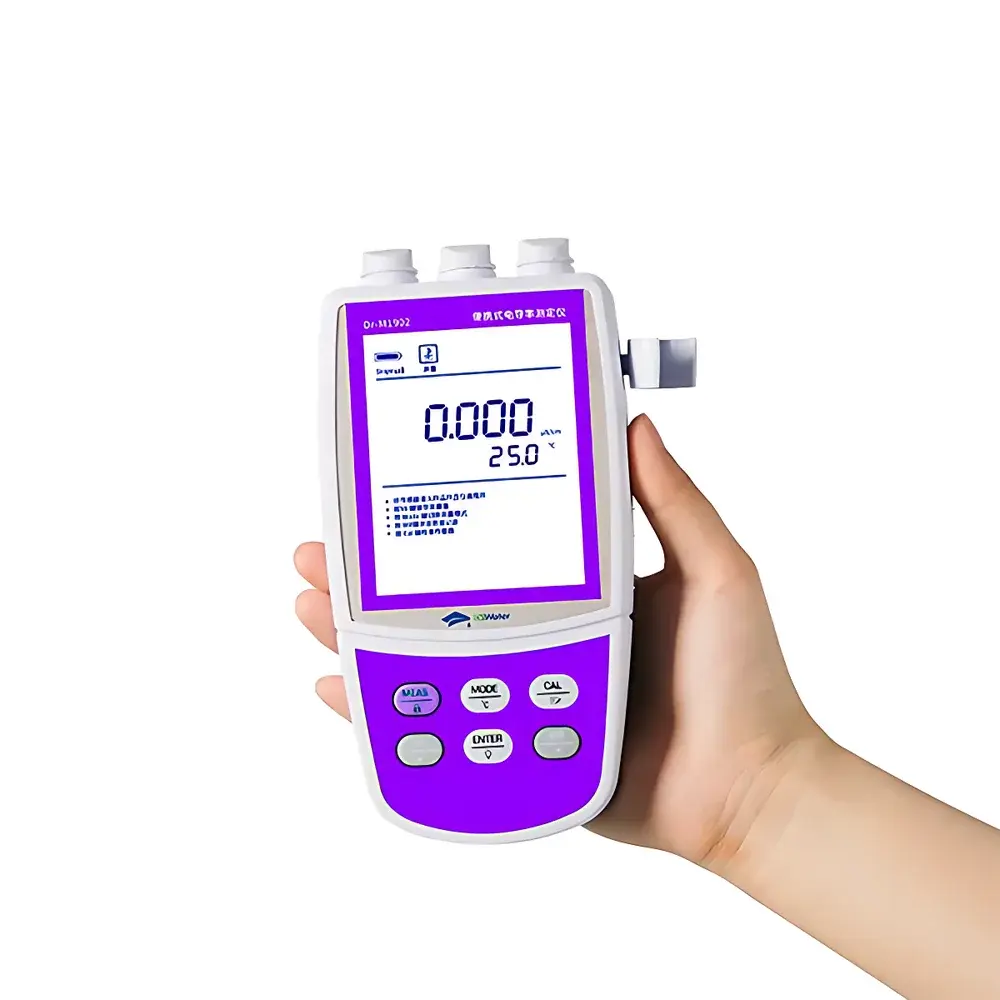
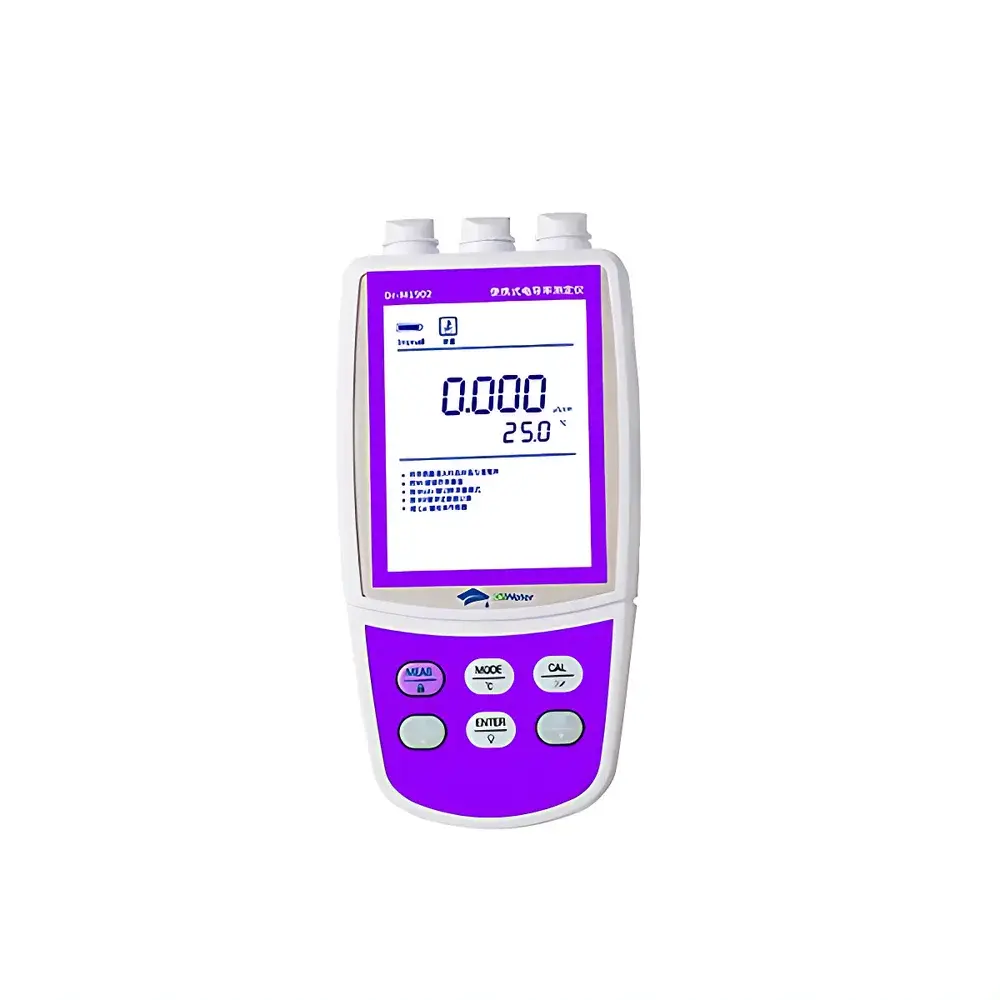
Dr-M1902 Portable Conductivity Meter by DoctorWater
| Brand | DoctorWater |
|---|---|
| Origin | Hunan, China |
| Model | Dr-M1902 |
| Portability | Portable |
| Conductivity Range | 0.01–20.00 µS/cm, 200.0 µS/cm, 2000 µS/cm, 20.00 mS/cm, 200.0 mS/cm |
| Temperature Range | 0–105°C (32–221°F) |
| Conductivity Accuracy | ±0.5% of full scale |
| Conductivity Resolution | 0.001 / 0.01 / 0.1 / 1 (auto-ranging) |
| Temperature Accuracy | ±0.5°C |
| Temperature Resolution | 0.1°C |
| Calibration Points | 1–3 points |
| Supported Standard Solutions | 10, 84, 1413 µS/cm |
| Temperature Compensation | Automatic or manual (linear: 0.0–10.0%/°C |
| Reference Temperature | 20°C or 25°C |
| Cell Constant Options | K = 0.1, 1.0, 10.0 cm⁻¹ |
| Data Storage | 100 measurement records |
| Interface | USB Type-A (data export & DC5V power input) |
| Power | 3× AA batteries (≈150 h runtime, backlight off) or external 5V adapter |
| Operating Temperature | 0–50°C |
| Connector | 6-pin DIN |
Overview
The Dr-M1902 Portable Conductivity Meter by DoctorWater is a field-deployable, microprocessor-controlled electrochemical instrument engineered for precise and reproducible measurement of electrical conductivity and temperature in aqueous solutions. Based on the fundamental principle of two-electrode AC conductivity measurement—where a known alternating current is applied across a pair of platinum or stainless-steel electrodes and the resulting voltage drop is used to calculate solution conductance—the Dr-M1902 delivers traceable, stable readings across five decades of conductivity (from ultra-pure water to concentrated brines). Its integrated automatic temperature compensation (ATC) system employs a high-stability NTC thermistor to correct conductivity values to a user-selectable reference temperature (20°C or 25°C), ensuring metrological consistency regardless of ambient thermal drift. Designed for routine QC, environmental monitoring, boiler feedwater analysis, and educational laboratories, the meter complies with foundational electrochemical measurement practices aligned with ISO 7888 (water quality — determination of electrical conductivity) and ASTM D1125 (standard test method for electrical conductivity of water).
Key Features
- Auto-ranging conductivity measurement across five calibrated ranges: 0.01–20.00 µS/cm, 200.0 µS/cm, 2000 µS/cm, 20.00 mS/cm, and 200.0 mS/cm
- Configurable temperature compensation modes: linear (adjustable 0.0–10.0%/°C), nonlinear (for natural waters), and pure water (low-conductivity algorithm per ISO 3696)
- Intelligent electrode diagnostics: real-time detection of electrode fouling, open/short circuits, and cell constant deviation
- 1–3 point calibration using certified standard solutions (10, 84, 1413 µS/cm; 12.88, 111.8 mS/cm) with auto-recognition of nominal concentration
- User-definable parameters: reference temperature, cell constant (K = 0.1, 1.0, or 10.0 cm⁻¹), auto-off delay (default 30 min), temperature unit (°C/°F), and endpoint locking behavior
- Stable endpoint detection with manual or automatic data hold function, minimizing operator-induced variability
- Factory reset capability to restore all configuration settings to original defaults without firmware reflash
Sample Compatibility & Compliance
The Dr-M1902 supports direct immersion measurements in potable water, surface water, wastewater effluents, cooling tower fluids, nutrient solutions, and low-ionic-strength ultrapure water (with K=0.1 cell). It is not intended for non-aqueous solvents, highly viscous media, or suspensions containing abrasive particulates (>50 µm). The instrument’s measurement architecture adheres to the functional requirements of GLP-compliant environments: audit-ready calibration logs (date/time-stamped), non-volatile storage of up to 100 datasets with parameter metadata (conductivity value, temp, K-factor, timestamp), and immutable factory defaults. While not certified to IEC 61000-6-2/4 for industrial EMC, it meets CE marking requirements for portable laboratory equipment under Directive 2014/30/EU (EMC) and 2011/65/EU (RoHS). No FDA 21 CFR Part 11 compliance features are implemented.
Software & Data Management
Data transfer is facilitated via a standard USB Type-A interface supporting CDC (Communication Device Class) protocol—no proprietary drivers required on Windows, macOS, or Linux hosts. Exported records follow CSV format with columns: Timestamp (YYYY-MM-DD HH:MM:SS), Conductivity (value + unit), Temperature (°C), Cell Constant (K), Reference Temp (°C), and Calibration Status (Pass/Fail). The onboard memory retains entries even during battery replacement. Firmware updates are performed offline using DoctorWater-provided hex files and a serial bootloader utility; no cloud connectivity or remote access capabilities exist. All stored data may be reviewed, scrolled, or deleted directly on the device using the intuitive menu navigation system.
Applications
- Field verification of reverse osmosis (RO) and deionized (DI) water purity in pharmaceutical manufacturing cleanrooms
- Routine monitoring of conductivity in municipal drinking water distribution systems per WHO and EPA guidance
- Educational demonstrations of ion mobility, electrolyte dissociation, and TDS estimation (using configurable conversion factors)
- Process control of electroplating bath conductivity in metal finishing facilities
- Environmental sampling of river, lake, and groundwater conductivity as a surrogate for total dissolved solids (TDS) and salinity
- Calibration verification of fixed-mount inline conductivity sensors in HVAC condensate loops
FAQ
What calibration standards are supported?
The Dr-M1902 recognizes five standard solutions: 10 µS/cm, 84 µS/cm, 1413 µS/cm, 12.88 mS/cm, and 111.8 mS/cm. Calibration is performed using 1–3 points selected from this set.
Can the instrument measure resistivity?
No. The Dr-M1902 reports only conductivity (µS/cm or mS/cm). Resistivity (Ω·cm) must be calculated externally as the reciprocal of conductivity.
Is the USB port used for charging?
No. The USB interface provides data export and optional 5 VDC auxiliary power—it does not charge batteries. AA cells are non-rechargeable.
How is temperature accuracy verified?
A single-point offset calibration is available: immerse the probe in a NIST-traceable temperature bath, enter the known value, and apply correction (±10°C range).
Does the meter support GLP audit trails?
It stores calibration dates and measurement timestamps but lacks electronic signature, user login, or tamper-evident logging required for full GLP/GMP compliance.



