
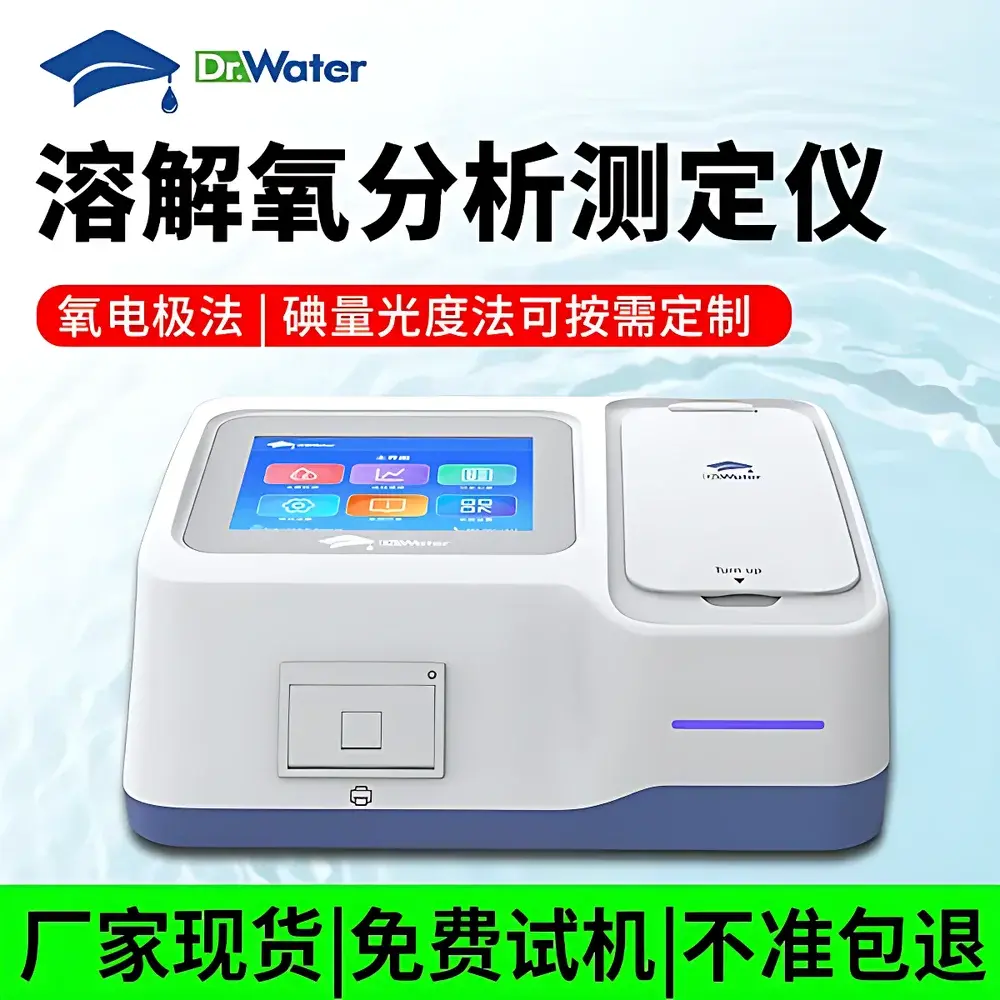
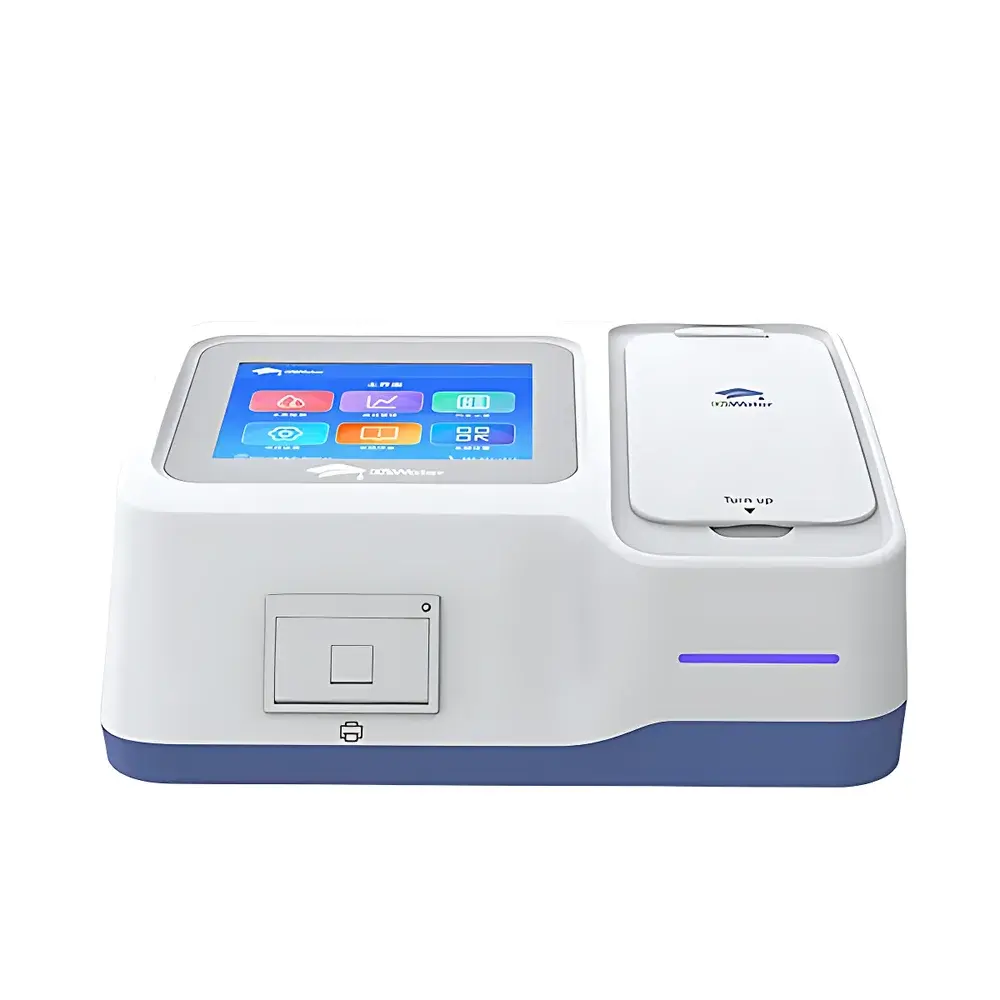
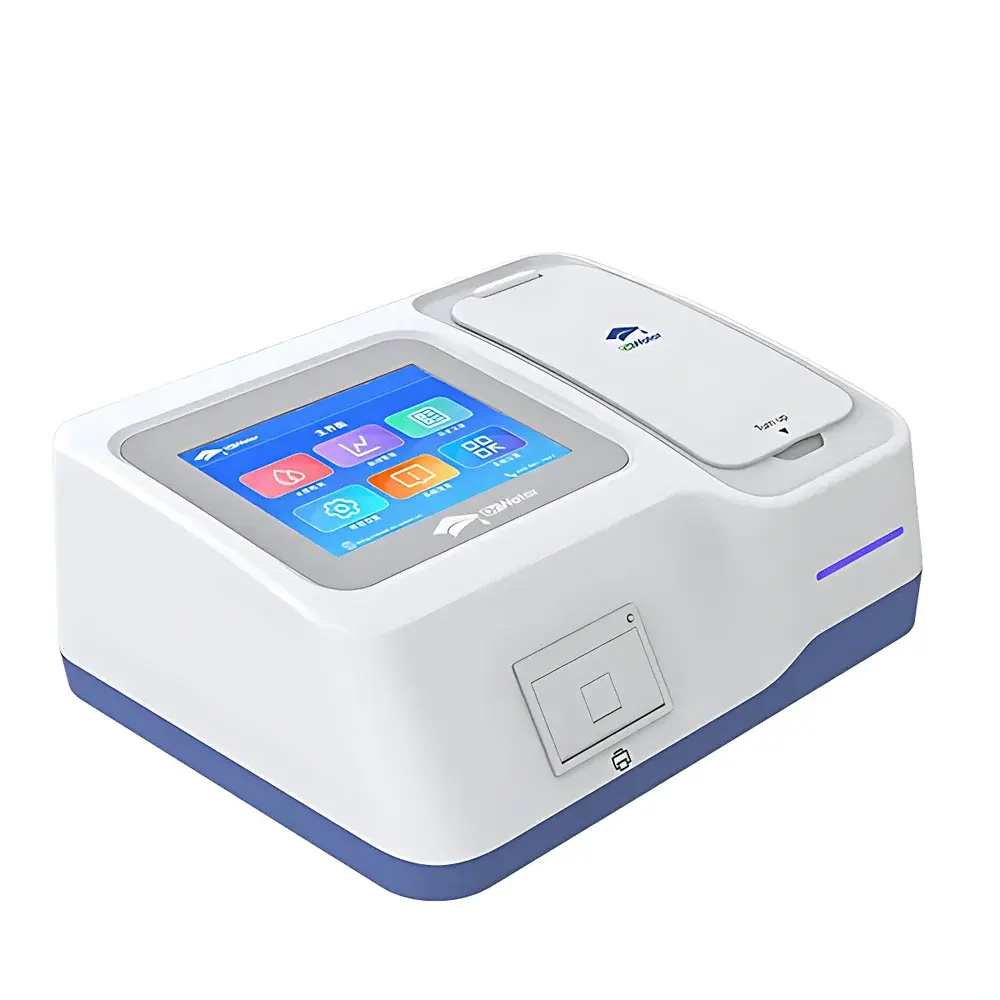
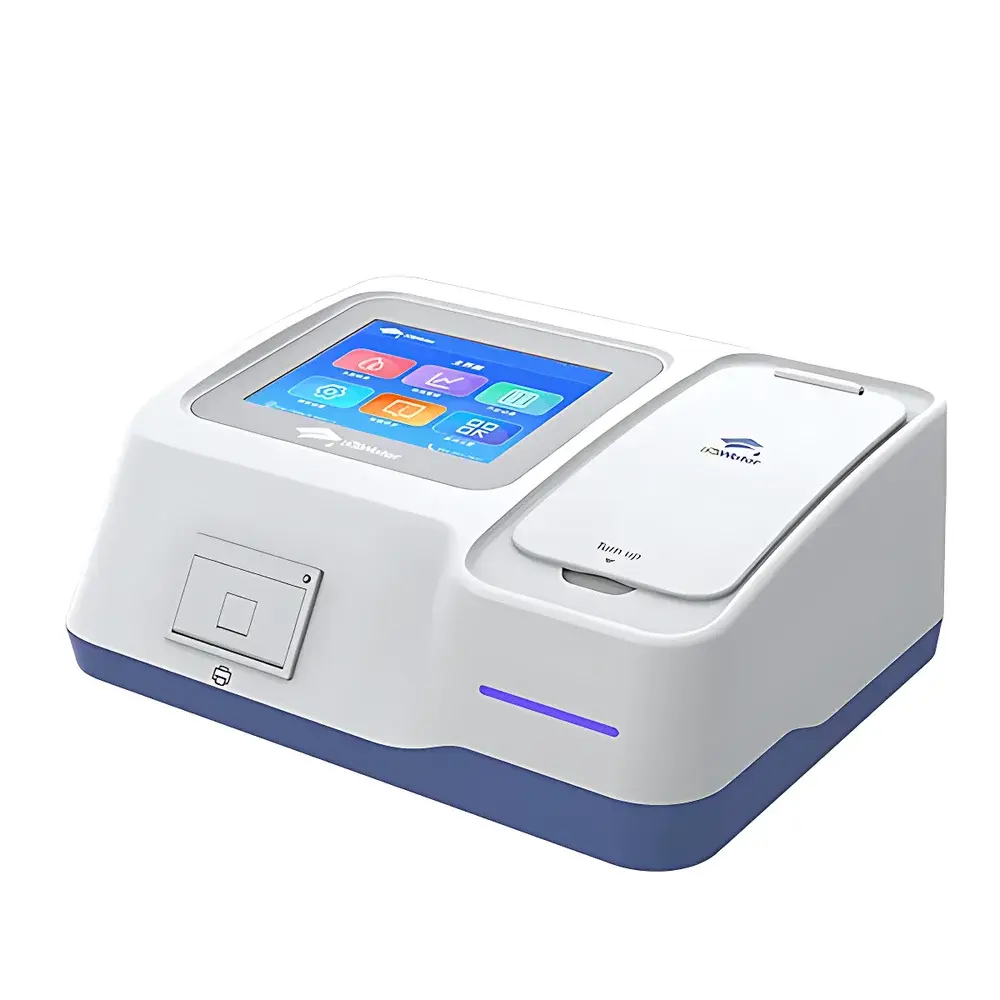
Dr-T9020 Dissolved Oxygen and Multi-Parameter Water Quality Analyzer by DoctorWater
| Brand | DoctorWater |
|---|---|
| Origin | Hunan, China |
| Model | Dr-T9020 |
| Instrument Type | Laboratory Benchtop Analyzer |
| Measurement Principle | Optical (LED-based Photometry) + Electrochemical (Galvanic/Clark-type DO Sensor) |
| Measurement Range (DO) | 0–20 mg/L |
| Accuracy (DO) | ≤ ±5% FS |
| Repeatability (DO) | ≤ ±2% FS |
| Detection Limit (DO) | Not Specified |
| Wavelength Range | 340–900 nm |
| Wavelength Accuracy | ±1 nm |
| Spectral Bandwidth | 4 nm |
| Absorbance Resolution | 0.001 Abs |
| Photometric Stability | ≤ ±0.005 Abs/20 min |
| Preloaded Calibration Curves | 1000+ |
| Data Storage Capacity | 1,000,000 measurements |
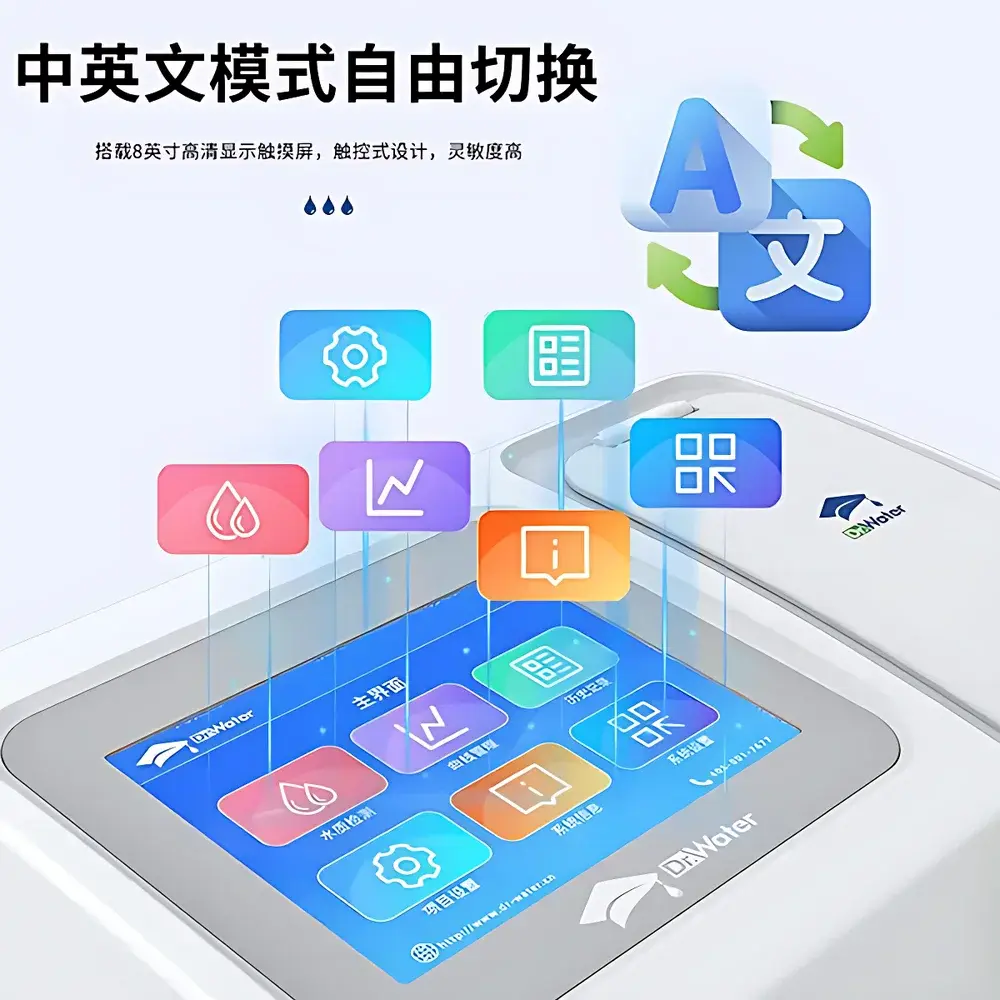
| Display | 8-inch HD capacitive touchscreen |
| Interface Language | Chinese (English optional) |
| Sample Holders | Rotatable 16-mm tube position + dual cuvette positions (10 mm & 30 mm pathlength) + 4 independent digital electrode ports |
| Power Supply | AC 100–240 V, 50/60 Hz |
| Dimensions (W×D×H) | 392 × 315 × 170 mm |
| Weight | 4.4 kg |
Overview
The Dr-T9020 Dissolved Oxygen and Multi-Parameter Water Quality Analyzer is a laboratory-grade benchtop instrument engineered for simultaneous, high-reproducibility quantification of dissolved oxygen (DO) and up to 100 water quality parameters—including COD, ammonia nitrogen, total phosphorus, total nitrogen, pH, conductivity, ORP, turbidity, chlorophyll-a, TDS, and heavy metals—using dual-mode detection architecture. It integrates optical photometry (based on LED-driven absorbance measurement across 340–900 nm) with electrochemical sensing (galvanic or Clark-type DO probe interface), enabling trace-level DO analysis in conjunction with standardized colorimetric assays. The system complies with key Chinese environmental testing standards including HJ/T 399–2007 (COD), HJ 535–2009 (ammonia nitrogen), and GB 11893–1989 (total phosphorus), supporting method validation under GLP-aligned laboratory workflows. Its modular optical path—featuring fiber-optic light delivery, cold-light LED source (>100,000 h lifetime), and 4 nm spectral bandwidth—ensures minimal stray light interference and long-term photometric stability (≤ ±0.005 Abs/20 min). Designed for regulatory and research-grade applications, the Dr-T9020 delivers traceable, auditable results suitable for accreditation under ISO/IEC 17025 frameworks.
Key Features
- Dual-detection architecture: Independent photometric and electrochemical modules operate concurrently without cross-interference.
- 360° rotatable tube holder: Compensates for tube-to-tube optical variance, eliminating systematic error from cylindrical cuvette asymmetry.
- Multi-format sample compatibility: Supports 16-mm round tubes, 10-mm and 30-mm rectangular cuvettes, and four digitally addressable electrode inputs (including DO, pH, conductivity, ORP).
- High-fidelity optical system: Cold LED light source with ±1 nm wavelength accuracy, 0.2 nm repeatability, and <0.5% transmittance error ensures compliance with spectrophotometric metrology requirements.
- Intelligent calibration suite: Single-point and multi-point calibration modes with automatic curve fitting; preloaded with >1000 certified method curves aligned to national standard protocols.
- Real-time data integrity monitoring: On-screen color-coded alerts (green = within limits, red = out-of-range) based on user-defined threshold values.
- Full audit trail support: Timestamped storage of 1 million measurements with USB export (CSV/Excel-compatible), thermal printer output, and on-device graphical trend visualization.
- Rugged industrial design: ABS housing rated for chemical resistance and thermal stability in ambient lab environments (10–40 °C, 20–80% RH non-condensing).
Sample Compatibility & Compliance
The Dr-T9020 accommodates diverse aqueous matrices—including raw sewage, industrial effluents, groundwater, surface water, reclaimed water, and aquaculture systems—without requiring matrix-specific hardware modifications. Its photometric module accepts standard glass or quartz cuvettes and disposable plastic tubes compliant with ASTM D1253 and ISO 5815-1 for DO determination. Electrode inputs accept industry-standard BNC or mini-DIN connectors compatible with calibrated galvanic DO sensors meeting ISO 5814:2012 performance criteria. The analyzer supports full documentation of calibration history, operator ID, environmental conditions, and raw absorbance/electrode signals—enabling alignment with FDA 21 CFR Part 11 requirements when paired with validated electronic signature protocols. All preloaded methods reference nationally recognized procedures, facilitating internal QA/QC verification and external proficiency testing participation.
Software & Data Management
The embedded firmware provides a fully navigable, icon-driven interface with contextual help prompts and guided workflow sequences—reducing operator dependency and minimizing procedural deviation. Data management includes time-stamped logging, customizable field labeling, batch ID assignment, and real-time statistical summary (mean, SD, CV%). Export options include USB mass storage (FAT32 formatted drives), direct thermal printing of reports with QR-coded metadata, and CSV-formatted datasets compatible with LIMS integration. The system maintains an immutable record of all calibration events, sensor diagnostics, and firmware updates—critical for ISO/IEC 17025 clause 7.7 traceability and internal audit readiness. Optional English-language UI firmware is available upon request for multinational laboratory deployments.
Applications
The Dr-T9020 serves as a primary analytical platform in municipal water quality laboratories, environmental monitoring stations, wastewater treatment facilities, and university research centers. It supports routine compliance testing per local discharge permits, process control in biological nutrient removal (BNR) systems, and ecological assessment of eutrophication indicators (e.g., DO saturation deficit, nitrification efficiency). Industrial users deploy it for pretreatment validation in pharmaceutical manufacturing (USP ), cooling tower management in power generation, and effluent screening in electroplating and textile dyeing operations. Educational institutions utilize its modular architecture for teaching fundamental principles of photometry, electrochemistry, and environmental analytical method development.
FAQ
Does the Dr-T9020 comply with international standards such as ISO or ASTM?
Yes—the photometric module meets ISO 7027 (turbidity) and ISO 5815-1 (DO) optical performance benchmarks; electrochemical DO measurement aligns with ISO 5814:2012. Method-specific compliance is maintained via preloaded curves referencing HJ and GB standards.
Can the instrument be used for field deployment?
No—it is designed exclusively for laboratory use with AC mains power and fixed benchtop configuration. Portable DO meters are recommended for field sampling.
Is remote data access or cloud connectivity supported?
Not natively; data transfer is limited to USB export and thermal printout. Integration with third-party LIMS requires manual CSV ingestion or custom API development.
What maintenance is required for long-term photometric accuracy?
Annual verification using NIST-traceable neutral density filters and absorbance standards is recommended. LED source lifetime exceeds 100,000 hours; no routine lamp replacement is needed.
Are reagents and consumables supplied by DoctorWater?
Yes—certified reagent kits, calibration standards, cuvettes, and DO sensor membranes are available through authorized distributors, with lot-specific certificates of analysis provided.
Related Products







