
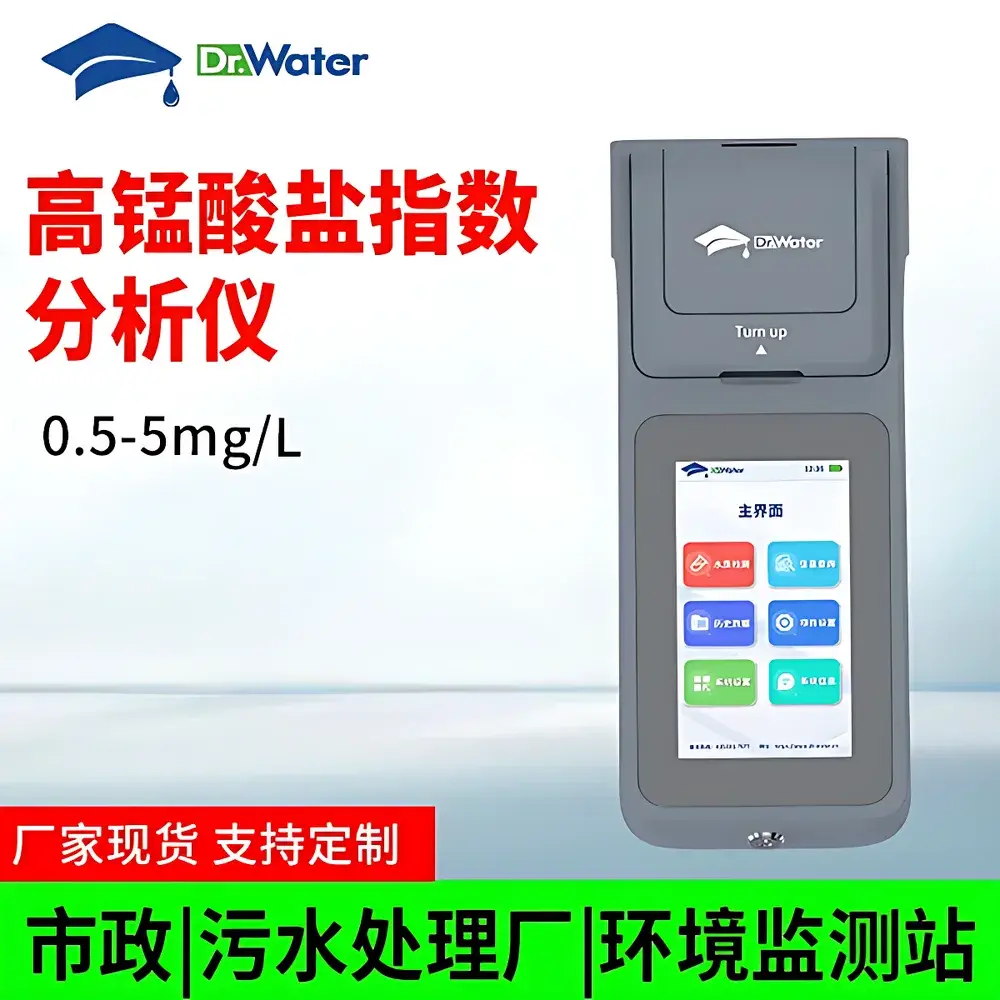
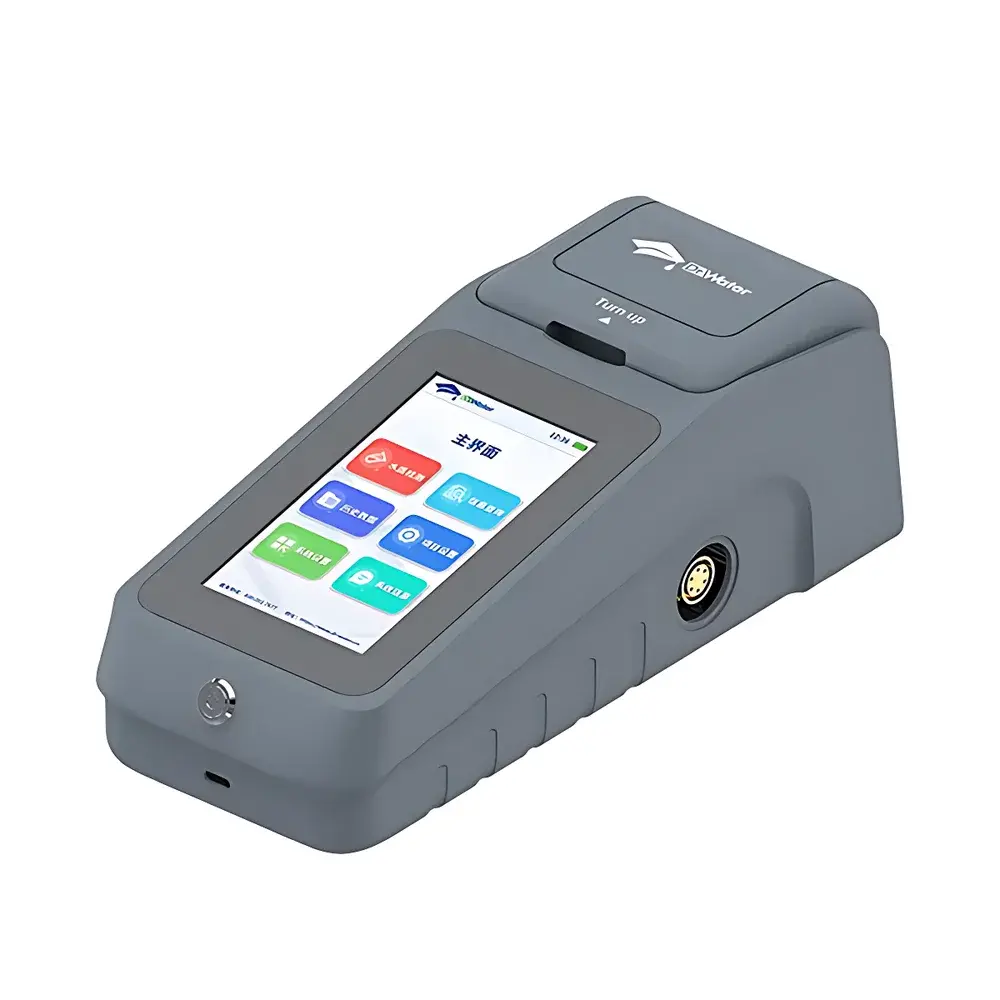
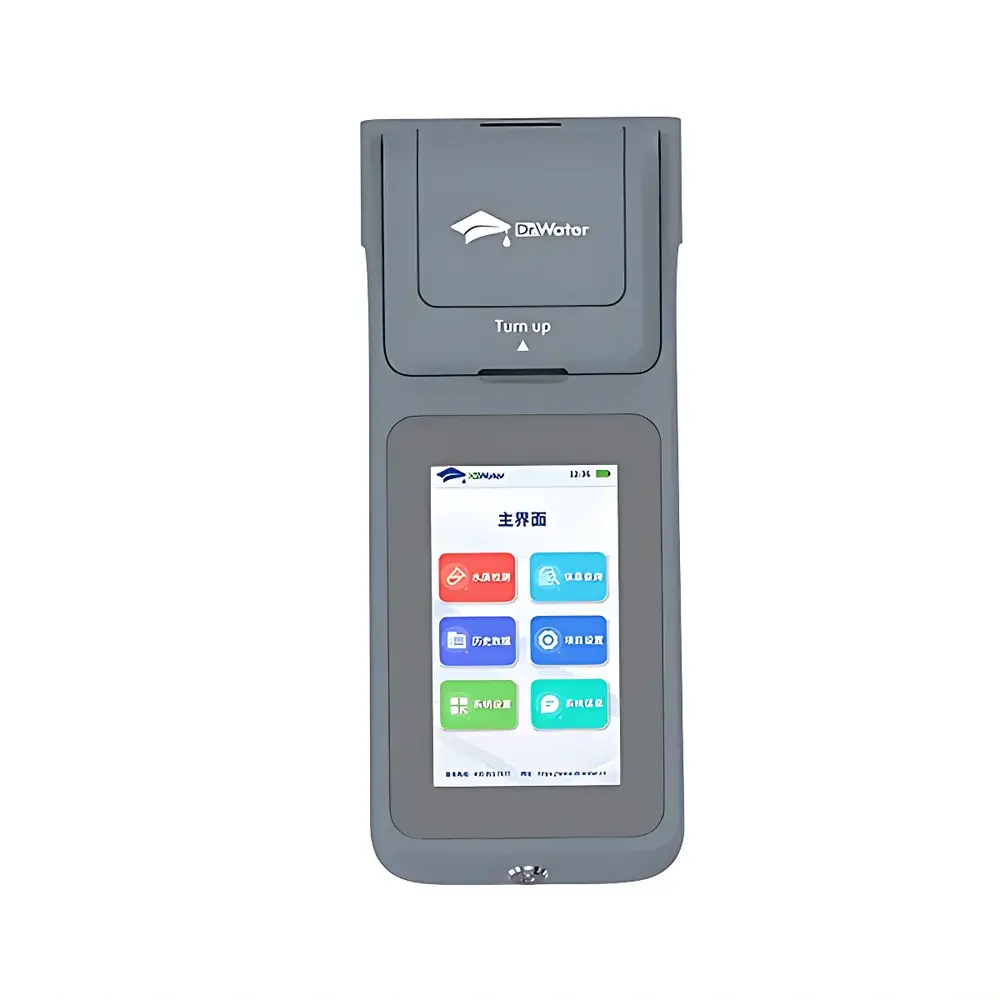
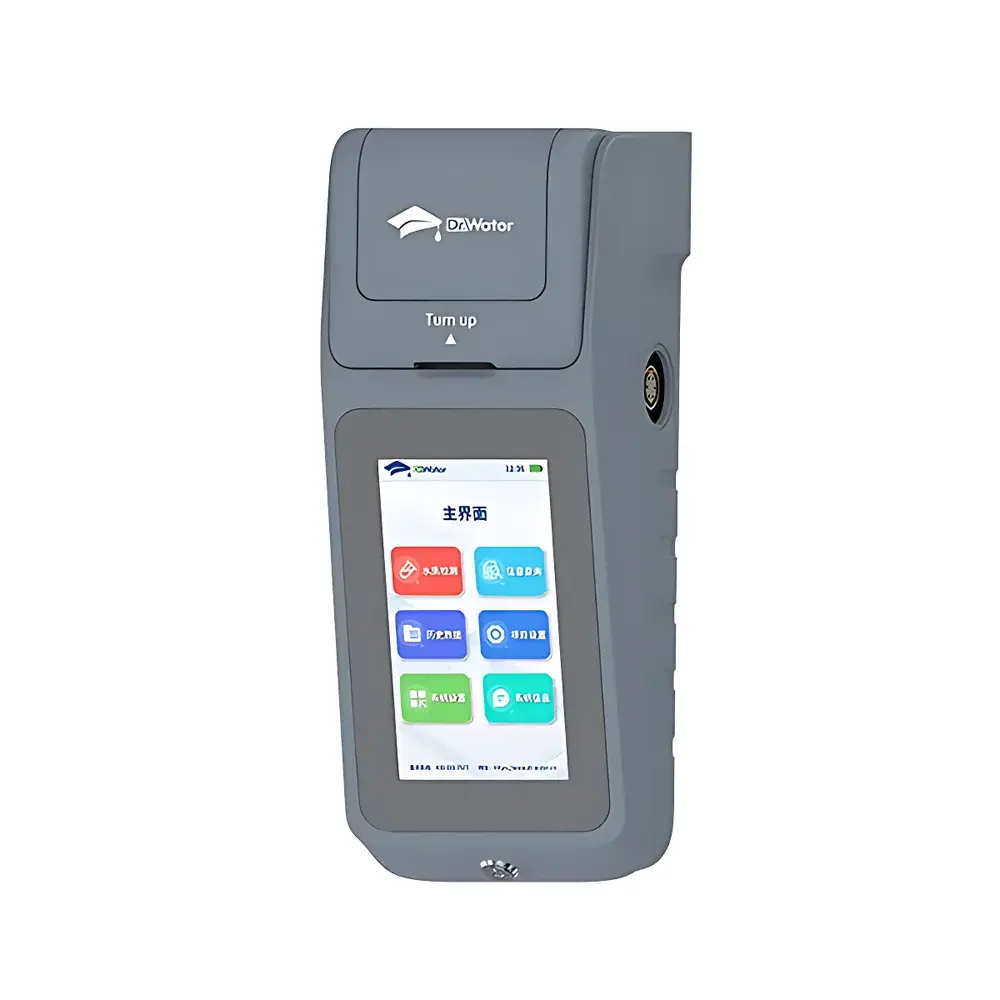
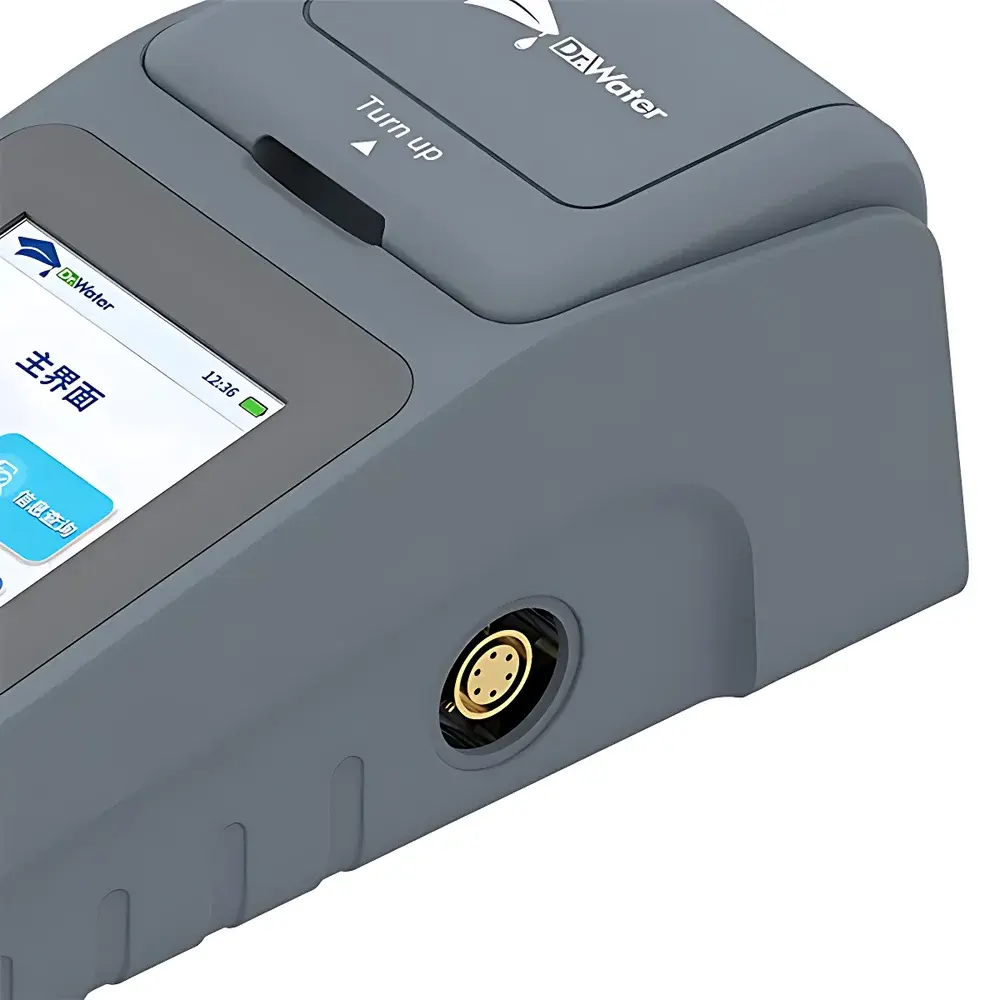
Dr-T9910 Permanganate Index Analyzer by DoctorWater
| Brand | DoctorWater |
|---|---|
| Origin | Hunan, China |
| Model | Dr-T9910 |
| Instrument Type | Portable |
| Measurement Range | 0.5–5 mg/L |
| Repeatability | ≤ ±2% |
| Accuracy | ≤ ±5% |
| LOD | 0.5 mg/L |
| Resolution | 0.001 Abs |
| Single-Test Time | 10 min |
| Wavelength Range | 340–900 nm |
| Wavelength Accuracy | ±1 nm |
| Wavelength Repeatability | < 0.2 nm |
| Spectral Bandwidth | 4 nm |
| Transmittance Error | ±0.5% |
| Transmittance Repeatability | ≤ 0.2% T |
| Optical Stability | ≤ ±0.005 Abs/20 min |
Overview
The Dr-T9910 Permanganate Index Analyzer is a field-deployable, multi-parameter water quality analyzer engineered for precise determination of the permanganate index (CODMn)—a critical indicator of oxidizable organic and inorganic contaminants in natural waters, drinking water sources, and treated effluents. Unlike conventional dichromate-based COD methods, the permanganate index employs potassium permanganate under acidic or alkaline conditions as the oxidant, aligning with standardized environmental monitoring protocols including HJ/T 399–2007 (for rapid digestion spectrophotometric COD), HJ 535–2009 (ammonia nitrogen), and GB 11893–1989 (total phosphorus). The Dr-T9910 implements dual-mode optical detection—360° rotational tube photometry and fixed-cuvette photometry—combined with integrated electrochemical sensor inputs, enabling simultaneous quantification of up to 80 water quality parameters without external instrumentation.
Key Features
- Dual-detection architecture: Integrated spectrophotometric module (340–900 nm) with cold-light LED source (≥100,000 h lifetime) and dedicated electrochemical interface for pH, ORP, DO, conductivity, TDS, salinity, and ion-selective measurements.
- High-fidelity optical performance: Wavelength accuracy ±1 nm, repeatability <0.2 nm, spectral bandwidth 4 nm, and transmittance repeatability ≤0.2% T—ensuring compliance with ISO 7027 (turbidity), ISO 6060 (CODMn), and EPA Method 4500-P (phosphate).
- Robust field operation: IP67-rated ABS housing with acid- and alkali-resistant surface finish; shock-absorbing, waterproof carrying case certified to MIL-STD-810G for transport and deployment in uncontrolled environments.
- Intelligent calibration & data integrity: Supports single- and multi-point calibration across 600 preloaded method curves; built-in audit trail logs all calibrations, measurements, and user actions per GLP/GMP traceability requirements.
- Extended operational autonomy: 12,000 mAh Li-ion battery supports ≥12 hours continuous use (≥200 tests per charge); dual-power mode enables seamless transition between field mobility and lab bench operation via AC adapter.
Sample Compatibility & Compliance
The Dr-T9910 is validated for direct analysis of raw surface water, groundwater, municipal wastewater, industrial effluents (including pulp/paper, pharmaceutical, and electroplating discharges), aquaculture systems, and reclaimed water. It meets analytical performance criteria specified in Chinese national standards HJ/T 399–2007, HJ 535–2009, GB 11893–1989, and GB/T 5750.5–2023 (potable water testing). While not FDA 21 CFR Part 11–certified out-of-box, its secure user authentication, encrypted data storage, and immutable measurement logs support validation pathways for regulated laboratories operating under ISO/IEC 17025 or CNAS accreditation frameworks.
Software & Data Management
Equipped with a 5-inch capacitive touchscreen running embedded Linux OS, the instrument delivers bilingual UI (English/Chinese) with customizable language firmware. All measurements—including absorbance, transmittance, and concentration—are timestamped and stored locally (1,000,000 records capacity) with automatic metadata tagging (operator ID, location GPS coordinates if enabled, calibration status). Data export is supported via USB 2.0 and Bluetooth 5.0 (to thermal printer or PC). Firmware updates and curve management are performed through DoctorWater’s desktop utility, which generates CSV/Excel-compatible reports compliant with LIMS integration standards (ASTM E1482, ISO 15197).
Applications
- Regulatory monitoring: Routine surveillance of permanganate index in source water intakes and distribution networks per China’s “Surface Water Environmental Quality Standards” (GB 3838–2002).
- Treatment process control: Real-time tracking of organic load removal efficiency across coagulation-sedimentation, biological activated carbon (BAC), and advanced oxidation units.
- Industrial compliance: On-site verification of discharge permits for textile dyeing, food processing, and metal finishing facilities subject to local ecological department audits.
- Research & education: Teaching platform for environmental chemistry labs requiring hands-on instruction in redox titrimetry principles, spectrophotometric method validation, and multivariate water quality interpretation.
- Emergency response: Rapid triage during algal bloom events or chemical spills where elevated CODMn, ammonia, and turbidity serve as early-warning indicators.
FAQ
What regulatory standards does the Dr-T9910 specifically support for permanganate index measurement?
It complies with HJ/T 399–2007 (acidic KMnO4 digestion at 100°C), which defines the reference method for CODMn in China’s environmental monitoring system.
Can the instrument perform simultaneous multi-parameter analysis without manual reconfiguration?
Yes—optical and electrochemical modules operate concurrently; users select target parameters via software, and the system auto-switches detection paths and applies appropriate calibration curves.
Is method validation documentation available for laboratory accreditation purposes?
DoctorWater provides a full Validation Support Package (VSP), including linearity studies, LOD/LOQ verification reports, inter-laboratory comparison data, and IQ/OQ templates aligned with ISO/IEC 17025 Clause 7.2.
How is data security maintained during Bluetooth transmission?
All wireless sessions use AES-128 encryption; pairing requires manual confirmation on both devices, and no data is cached on the receiving endpoint unless explicitly saved by the user.
Does the analyzer require annual recalibration by an authorized service center?
No—field users may perform full optical and electrochemical recalibration using NIST-traceable standards; however, annual performance verification against certified reference materials is recommended for accredited labs.







