
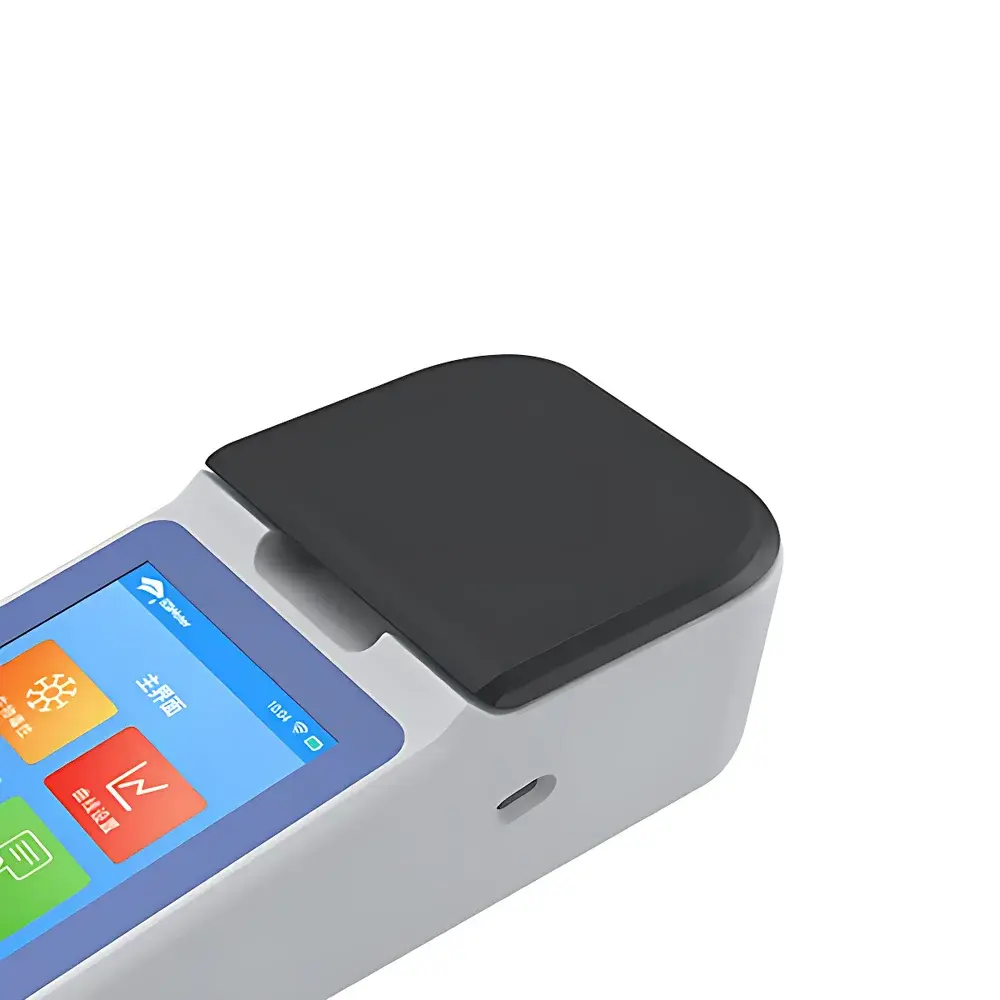
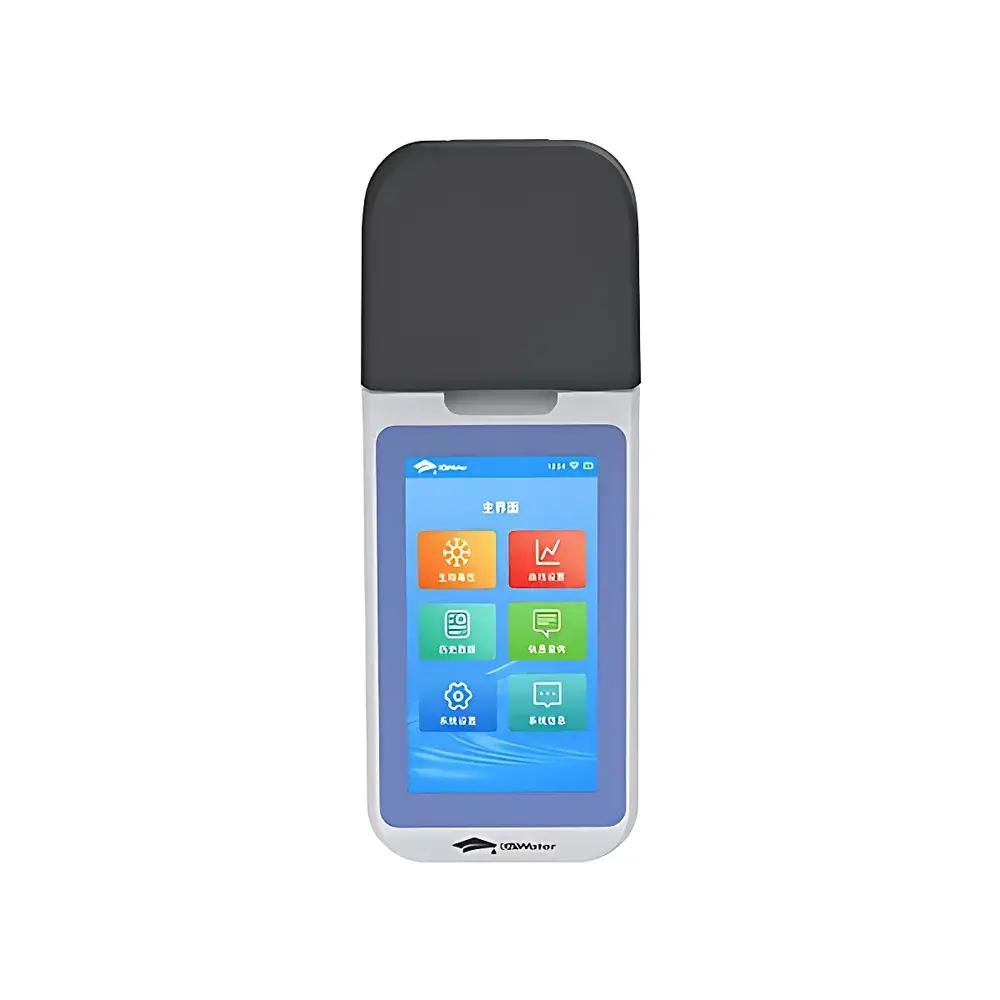
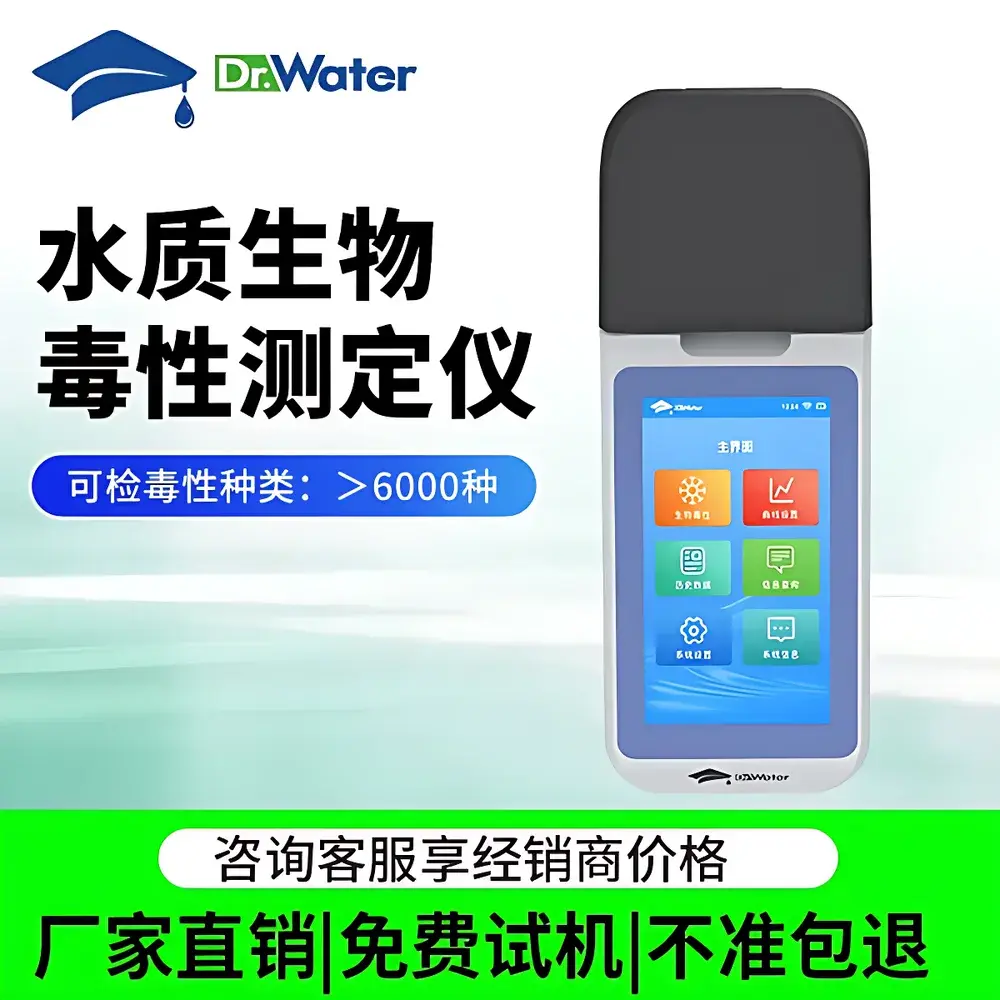
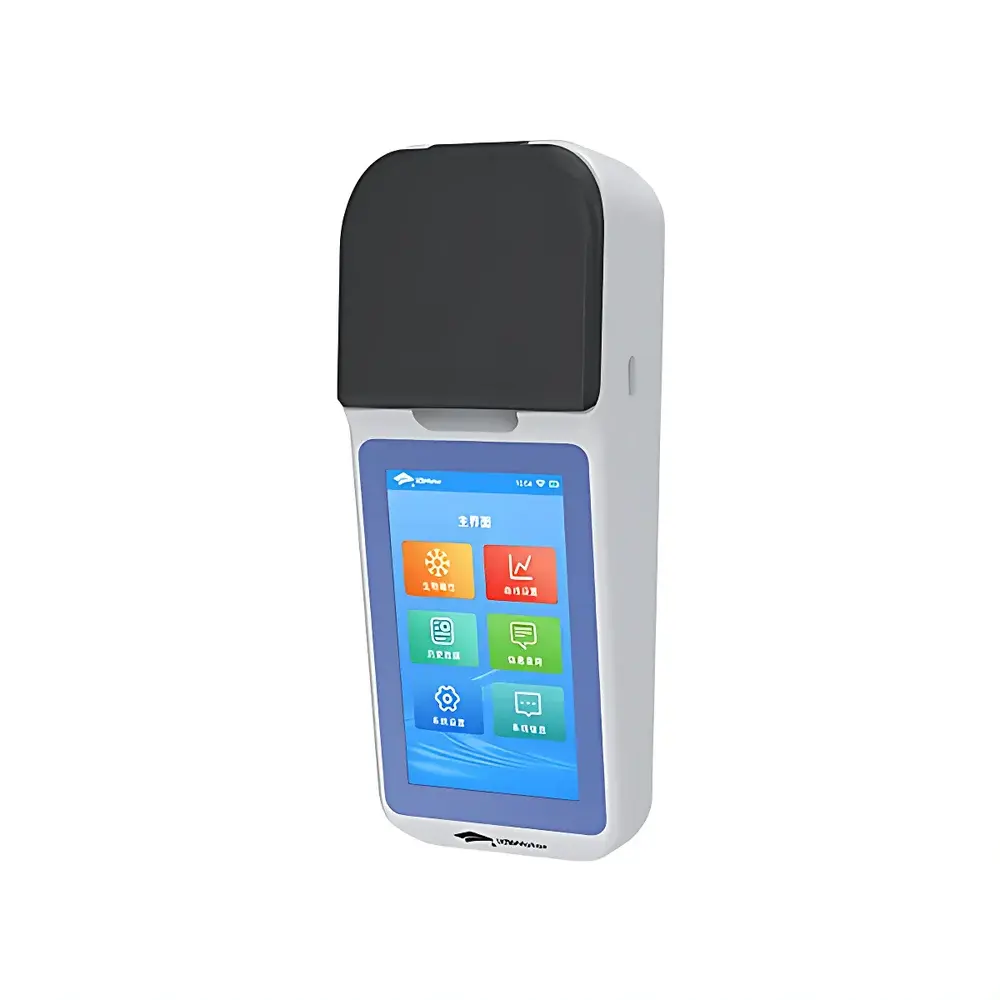
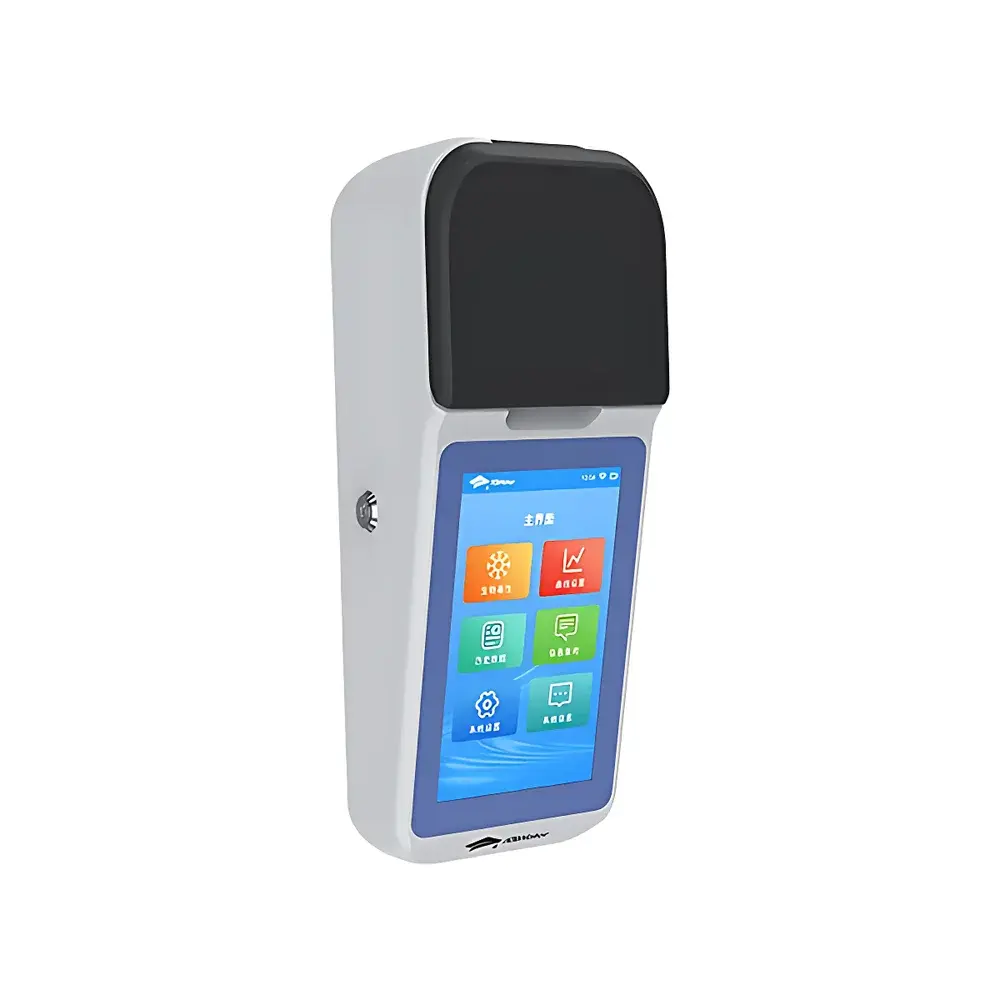
Dr-Water Dr-W960 Portable Bioluminescent Toxicity Analyzer
| Brand | Dr-Water |
|---|---|
| Origin | Hunan, China |
| Model | Dr-W960 |
| Instrument Type | Portable |
| Biological Indicator | Bioluminescent Bacteria (Aliivibrio fischeri, Vibrio qinghaiensis, Photobacterium phosphoreum) |
| Operating Temperature | 10–40 °C (ambient) |
| Detection Time | ≤15 min post-sample preparation |
| Light Detection Range | 300–1100 nm |
| Photodetector | Silicon Photomultiplier (SiPM) |
| Display | 5″ IPS Capacitive Touchscreen (1024×768) |
| Power Supply | Rechargeable Li-ion Battery + AC Adapter |
| Data Connectivity | USB-C, Wi-Fi, Bluetooth 5.0, 4G LTE |
| Data Storage | ≥10 million test records |
| Compliance | ISO 11348-3, GB/T 15441-1995 |
| Toxicity Quantification | Relative Luminescence Inhibition (%) → Converted to Equivalent Toxic Unit (TU) or Reference Toxicant (e.g., ZnSO₄·7H₂O mg/L) |
| Accuracy | ±1% RSD (n=3, vs. certified reference standard) |
Overview
The Dr-Water Dr-W960 Portable Bioluminescent Toxicity Analyzer is an engineered field-deployable instrument designed for rapid, quantitative assessment of acute aquatic toxicity using standardized bioluminescent bacterial bioassays. It operates on the well-established principle that metabolically active luminescent bacteria—primarily Aliivibrio fischeri (formerly Vibrio fischeri), Vibrio qinghaiensis, and Photobacterium phosphoreum—emit stable, quantifiable light under controlled physiological conditions. Upon exposure to toxicants, cellular respiration and ATP-dependent luciferase activity are inhibited, resulting in a measurable, dose-dependent reduction in bioluminescence intensity. This inhibition percentage correlates linearly with toxicant concentration across a broad spectrum of >6,000 chemical classes—including heavy metals, pesticides, pharmaceuticals, industrial solvents, surfactants, and unknown xenobiotics—making the Dr-W960 particularly valuable for screening uncharacterized contaminants where chemical-specific analysis is impractical or unavailable.
Key Features
- High-sensitivity silicon photomultiplier (SiPM) detector with spectral response from 300 nm to 1100 nm, optimized for peak bacterial luminescence emission (~490 nm) while rejecting ambient interference;
- 5-inch industrial-grade IPS capacitive touchscreen (1024 × 768 resolution) with glove-compatible touch response and sunlight-readable luminance;
- Embedded Android-based operating system enabling intuitive workflow navigation, real-time calibration curve generation (1–20 concentration points per curve), and on-device data validation;
- Dual-power architecture: integrated high-capacity lithium-ion battery supporting ≥8 hours of continuous operation in standalone mode, plus universal AC adapter for lab-based use;
- Multi-modal data transmission: USB-C (for bulk export and firmware updates), Wi-Fi (for local network synchronization), Bluetooth 5.0 (for wireless thermal printing and peripheral pairing), and optional 4G LTE for direct cloud upload;
- Comprehensive onboard data management: storage capacity for ≥10 million test records with time-stamped metadata (sample ID, operator, location GPS via connected module, temperature, humidity); searchable by date range, toxicity class, or sample group;
- Battery health monitoring with low-voltage warning and real-time charging status visualization;
- Standard Bluetooth thermal printer support for immediate hard-copy reporting compliant with GLP documentation requirements.
Sample Compatibility & Compliance
The Dr-W960 is validated for direct testing of raw and filtered aqueous matrices without pre-concentration, including drinking water, groundwater, surface water (rivers, lakes, reservoirs), seawater, wastewater effluents (municipal and industrial), and leachates from sediments or solid waste. Sample turbidity up to 50 NTU is accommodated via built-in optical compensation algorithms. The assay protocol strictly adheres to ISO 11348-3 (Determination of the inhibitory effect of water samples on the light emission of Aliivibrio fischeri — Part 3: Method using freeze-dried bacteria) and Chinese national standard GB/T 15441-1995 (Determination of acute toxicity of water quality by bioluminescent bacteria method). All measurement outputs—including % inhibition, EC₅₀ equivalents, Toxic Units (TU), and categorical toxicity classification (Low / Moderate / High / Severe / Extreme)—are traceable to certified reference materials and fully auditable for regulatory submissions under ISO/IEC 17025-accredited laboratories.
Software & Data Management
Firmware-integrated software supports full audit trail functionality compliant with FDA 21 CFR Part 11 requirements when deployed in regulated environments: electronic signatures, user role-based access control (administrator/operator/auditor), immutable record logging, and automatic timestamping of all critical events (calibration, test initiation, result confirmation, data export). Raw luminescence counts and normalized inhibition values are automatically synchronized to the Dr-Water Cloud Platform via encrypted TLS 1.2 channels. Data is retained indefinitely with version-controlled backups and accessible through web dashboard, desktop client, and mobile application (iOS/Android). APIs enable integration with LIMS, EMS, and national environmental monitoring platforms (e.g., China’s National Surface Water Monitoring System).
Applications
- Routine compliance monitoring of wastewater discharge against local and national toxicity limits;
- Emergency response during chemical spills, illegal dumping incidents, or natural disaster-related contamination events;
- Drinking water safety verification at intake, treatment stages, and distribution endpoints;
- Ecotoxicological screening of industrial effluents prior to discharge permitting;
- Research applications in environmental toxicology, sediment risk assessment, and mixture toxicity modeling;
- Validation of advanced oxidation processes (AOPs) and membrane filtration efficiency via toxicity removal tracking;
- Support for ISO 14001-certified environmental management systems through objective, biology-based performance metrics.
FAQ
What bacterial strains are supported, and how are they supplied?
The Dr-W960 is validated for lyophilized preparations of Aliivibrio fischeri, Vibrio qinghaiensis, and Photobacterium phosphoreum. Strains are provided as CE-marked, ISO 11348-compliant freeze-dried reagents with defined viability and luminescence stability specifications.
Can the instrument perform multi-point calibration automatically?
Yes—the embedded software guides users through serial dilution setup and auto-generates inhibition-response curves with linear regression (R² ≥ 0.995), IC₁₀/IC₅₀/IC₉₀ calculation, and outlier detection.
Is the device suitable for use in GLP or GMP-regulated laboratories?
When configured with audit trail enabled and operated under documented SOPs, the Dr-W960 meets core GLP data integrity requirements per OECD Series on Principles of Good Laboratory Practice and supports GMP process validation where biological endpoint monitoring is required.
How is instrument performance verified between tests?
Each run includes built-in positive (ZnSO₄·7H₂O) and negative (ISO medium blank) controls; pass/fail criteria are enforced before result release, and QC logs are archived with every dataset.
Does the system support custom toxicity thresholds or reporting templates?
Yes—users can define jurisdiction-specific action levels, configure automated alerts, and export reports in PDF, CSV, or XML formats aligned with regional regulatory reporting structures (e.g., US EPA Form 3320, EU WFD Annex V).







