
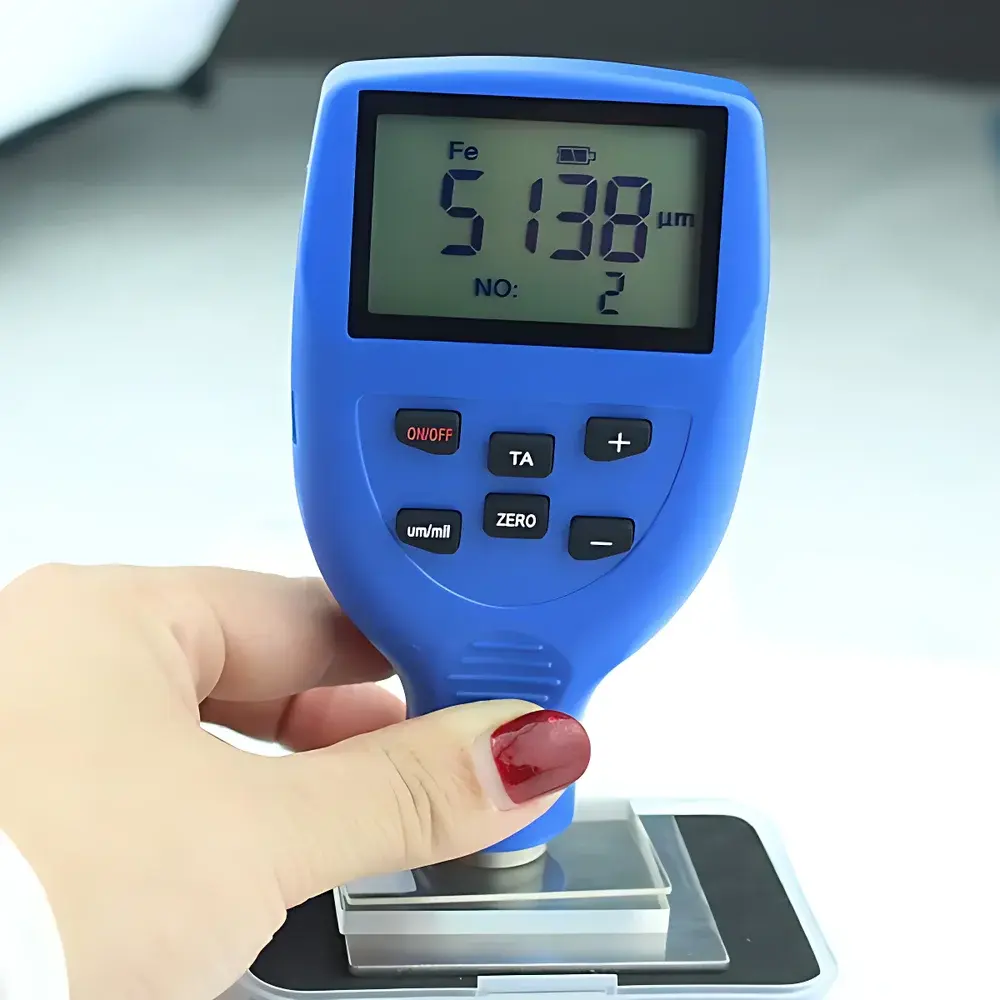
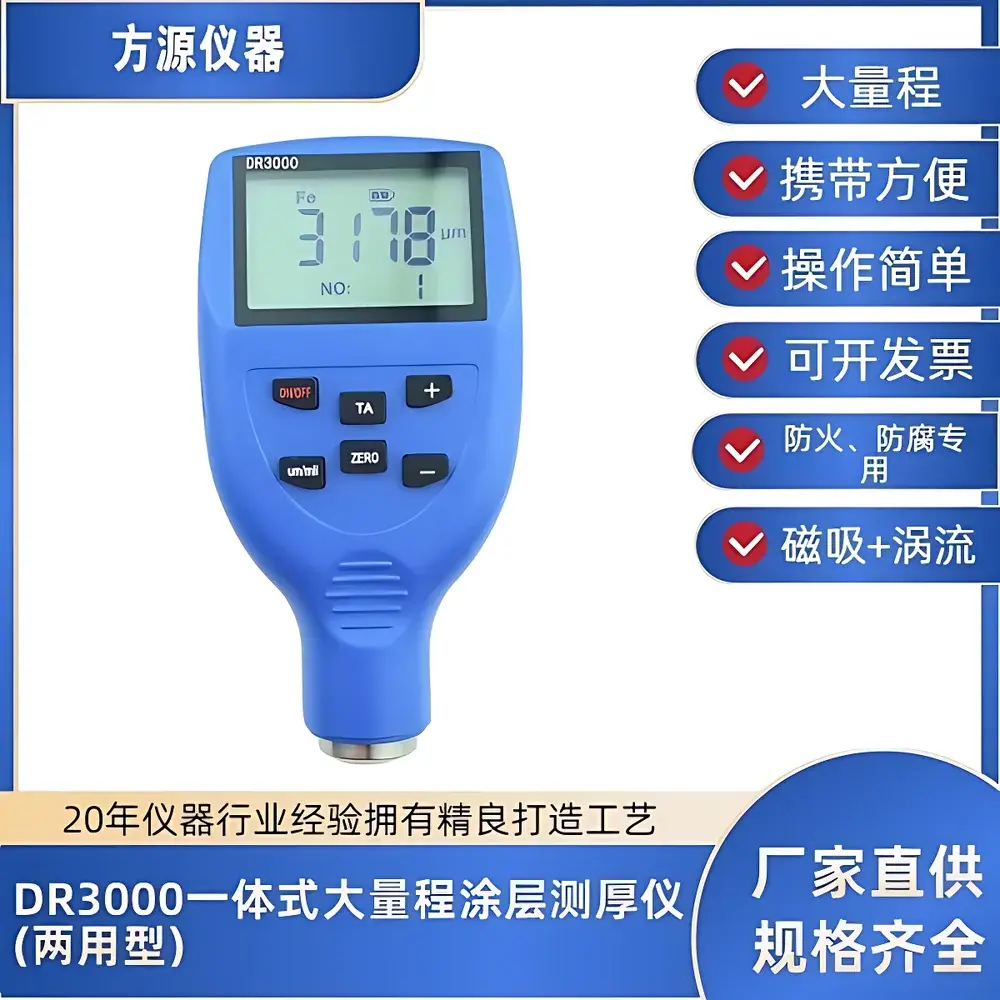
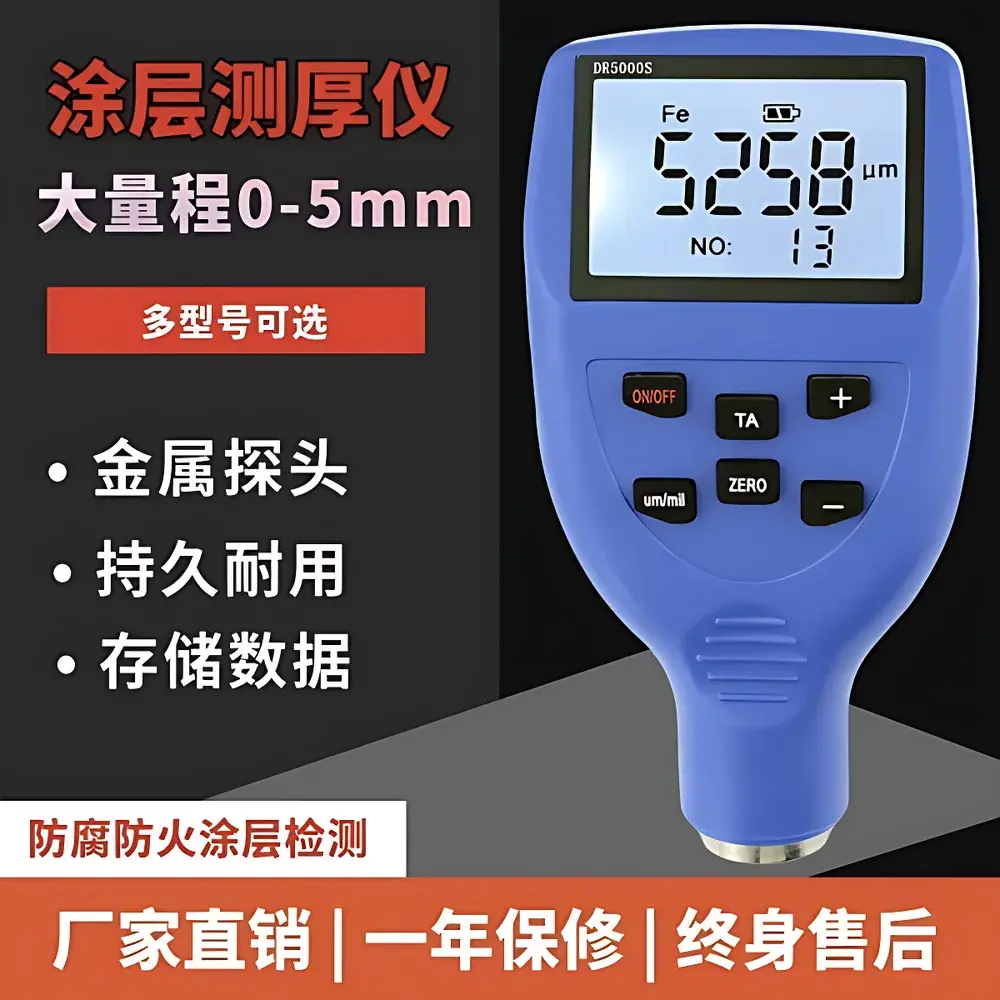
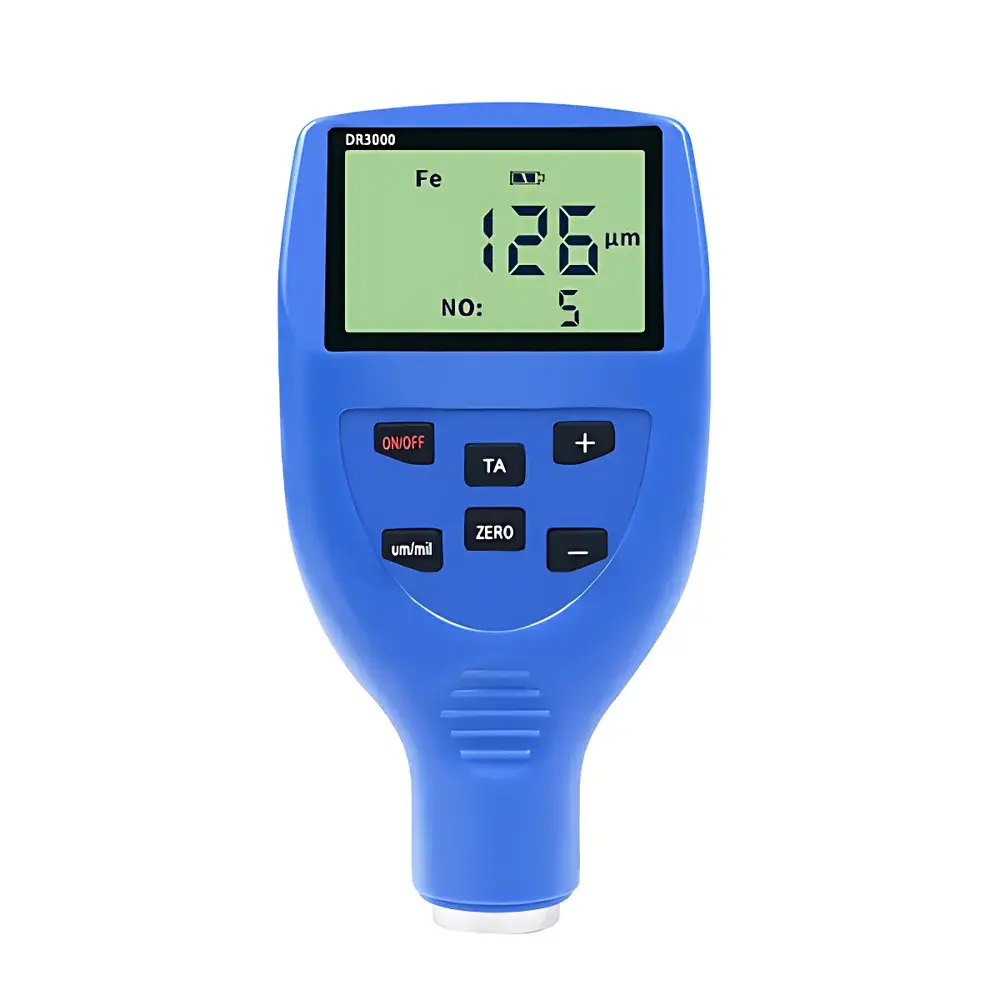
DR3000 Coating Thickness Gauge for Structural Steel Fireproofing and Corrosion Protection Coatings
| Brand | Fangyuan Instruments |
|---|---|
| Origin | Guangdong, China |
| Manufacturer Type | Authorized Distributor |
| Country of Origin | China |
| Model | DR3000 |
| Price | USD 170 (FOB Guangdong) |
| Measurement Principles | Magnetic Induction (Fe) & Eddy Current (Non-Fe) |
| Range | 0–3000 µm |
| Resolution | 1 µm (0–99.9 µm), 0.01 mm (100–3000 µm) |
| Accuracy | ±(1–3)% of reading + 2 µm |
| Substrate Compatibility | Ferrous (steel, iron) & Non-ferrous (aluminum, stainless steel, copper) |
| Display | Backlit LCD with dual-unit readout (µm/mil) |
| Calibration | Zero & Two-point calibration supported |
| Power | 2 × AAA batteries (approx. 25 hrs continuous use) |
| Operating Temperature | 0–40 °C |
| IP Rating | IP54 (dust- and splash-resistant) |
Overview
The DR3000 Coating Thickness Gauge is an industrial-grade, dual-principle measurement instrument engineered for reliable, non-destructive thickness evaluation of protective coatings on structural steel and other metallic substrates. Designed specifically for demanding applications in fireproofing inspection, corrosion protection verification, and quality assurance of heavy-duty infrastructure, the DR3000 integrates magnetic induction (for ferrous substrates such as carbon steel and cast iron) and eddy current (for non-ferrous substrates including aluminum, austenitic stainless steel, and copper alloys) into a single, rugged handheld platform. Its extended measurement range of 0–3000 µm enables accurate assessment of thick intumescent fireproofing coatings—commonly applied at 500–2500 µm thicknesses—as well as multi-layer epoxy, zinc-rich primers, and polymer-based anti-corrosion systems. The gauge complies with fundamental metrological requirements outlined in ISO 2178 (magnetic methods), ISO 2360 (eddy current methods), and ASTM D7091 (standard practice for nondestructive measurement of dry film thickness of nonmagnetic coatings applied to ferrous metals and nonconductive coatings applied to non-ferrous metals).
Key Features
- True dual-sensor architecture: Automatic substrate recognition and seamless switching between magnetic and eddy current modes without manual mode selection.
- Extended high-range capability: Full-scale measurement up to 3000 µm ensures suitability for thick-film fireproofing materials (e.g., cementitious and intumescent coatings) where conventional gauges (typically limited to 1250 µm) fail.
- High-resolution display with real-time unit conversion: Backlit LCD supports simultaneous µm/mil readouts and dynamic resolution scaling—1 µm precision below 100 µm, 0.01 mm above 100 µm—to maintain readability across all thickness regimes.
- Robust mechanical design: IP54-rated enclosure with reinforced probe housing and abrasion-resistant ceramic wear plate, validated for field use in construction sites, shipyards, and industrial maintenance environments.
- Traceable calibration support: Built-in zero and two-point calibration routines compatible with certified reference standards (e.g., Fe/NFe shims per ISO 2064); calibration logs stored locally for internal QA documentation.
- Low-power architecture: Dual AAA battery operation with intelligent power management delivers >25 hours of continuous measurement—critical for multi-site inspections without recharging infrastructure.
Sample Compatibility & Compliance
The DR3000 is validated for use on flat, curved, and moderately rough surfaces typical of structural steel members (I-beams, columns, trusses) and piping systems. It accommodates minimum substrate thicknesses ≥1 mm (Fe) and ≥0.5 mm (non-Fe) to avoid base-metal interference. Surface roughness up to Ra 10 µm is tolerated without correction; for Ra >10 µm, ISO 19840-recommended averaging (≥3 readings per location) is advised. The instrument meets essential electromagnetic compatibility (EMC) requirements per IEC 61326-1 and conforms to RoHS Directive 2011/65/EU. While not FDA-certified (as it performs no biological measurement), its data integrity features—including timestamped readings and user-defined ID tagging—support alignment with GLP and ISO/IEC 17025 documentation workflows.
Software & Data Management
The DR3000 operates as a standalone field instrument with no proprietary software dependency. All measurements are displayed and stored onboard (up to 1,000 records with date/time stamp, substrate type flag, and operator ID). Data export is enabled via optional USB-C adapter (sold separately), supporting CSV output for integration into LIMS, CMMS, or Excel-based reporting systems. No cloud connectivity or remote firmware updates are implemented—ensuring data sovereignty and eliminating cybersecurity exposure in air-gapped industrial networks. Audit trails (calibration events, zero adjustments) are retained in non-volatile memory and accessible via service menu for internal quality audits.
Applications
- Verification of dry film thickness (DFT) of intumescent and cementitious fireproofing coatings on structural steel per UL 1709, ASTM E119, and EN 13381-8.
- In-process and final inspection of multi-coat corrosion protection systems (e.g., zinc silicate primers, epoxy mastic intermediates, polyurethane topcoats) per SSPC-PA 2 and ISO 19840.
- Third-party compliance auditing for offshore platforms, power generation facilities, and petrochemical plants requiring ASME B31.4/B31.8 coating integrity documentation.
- Pre-commissioning QA for galvanized and metallized coatings on bridges and transmission towers where thickness uniformity directly correlates with service life expectancy.
- Field validation of coating repair patches following abrasive blasting and recoating per NACE SP0188 guidelines.
FAQ
Does the DR3000 require annual recalibration by an accredited lab?
No mandatory annual recalibration is specified; however, users must perform zero and two-point verification before each shift or after environmental shock (e.g., temperature drop >10 °C), per ISO 2178 Clause 7.2.
Can it measure coatings on hot-dip galvanized steel?
Yes—galvanized layers are non-ferrous relative to the underlying steel; the DR3000 automatically selects eddy current mode and measures total coating thickness (zinc + paint) unless a dedicated Zn-only probe is used.
Is probe wear compensated during measurement?
The ceramic-tipped probe includes a wear indicator groove; when visible, replacement is recommended—but no real-time wear compensation algorithm is embedded, preserving measurement transparency and traceability.
What is the minimum radius of curvature it supports?
The standard probe supports convex surfaces down to Ø50 mm radius and concave surfaces down to Ø100 mm radius without correction factor application.
Does it meet requirements for ISO/IEC 17025-accredited laboratories?
As a field-use instrument, it provides metrologically sound data when operated per manufacturer instructions and verified against traceable standards; full accreditation depends on lab-specific uncertainty budgets and procedural controls—not device certification alone.



