
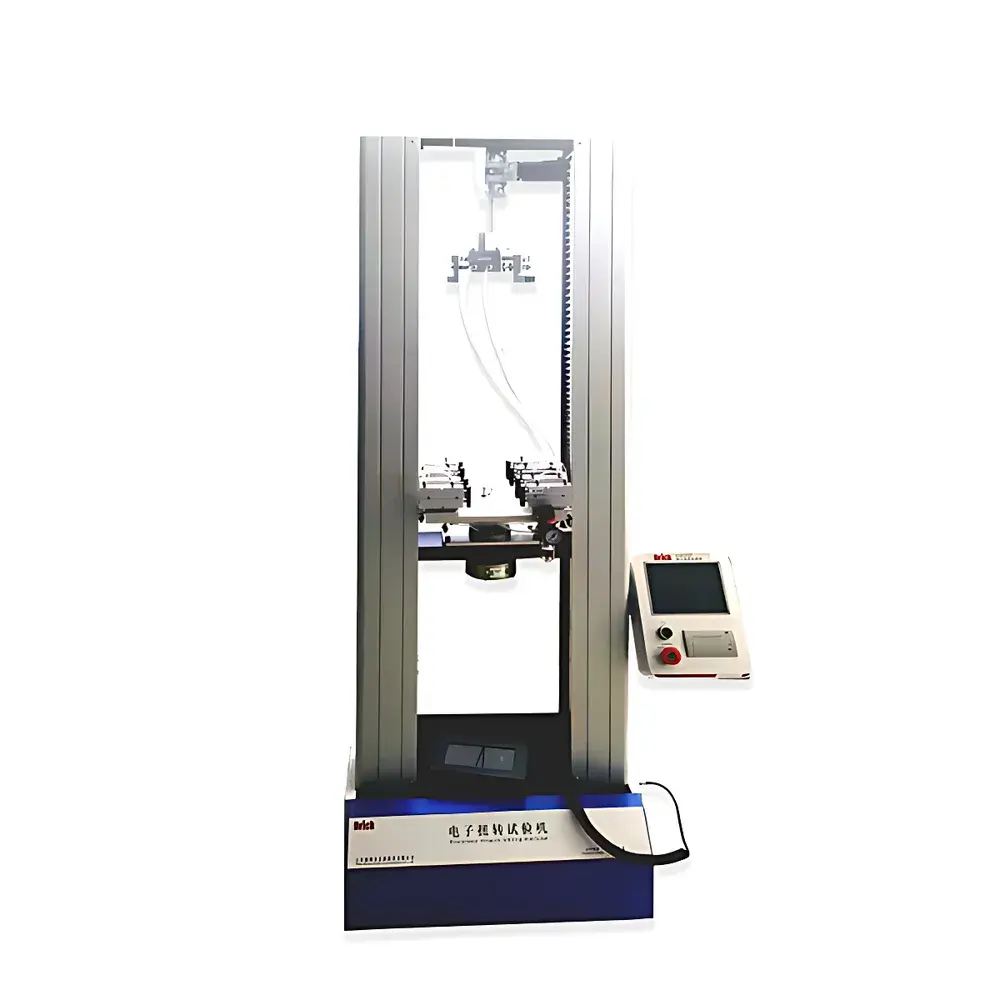
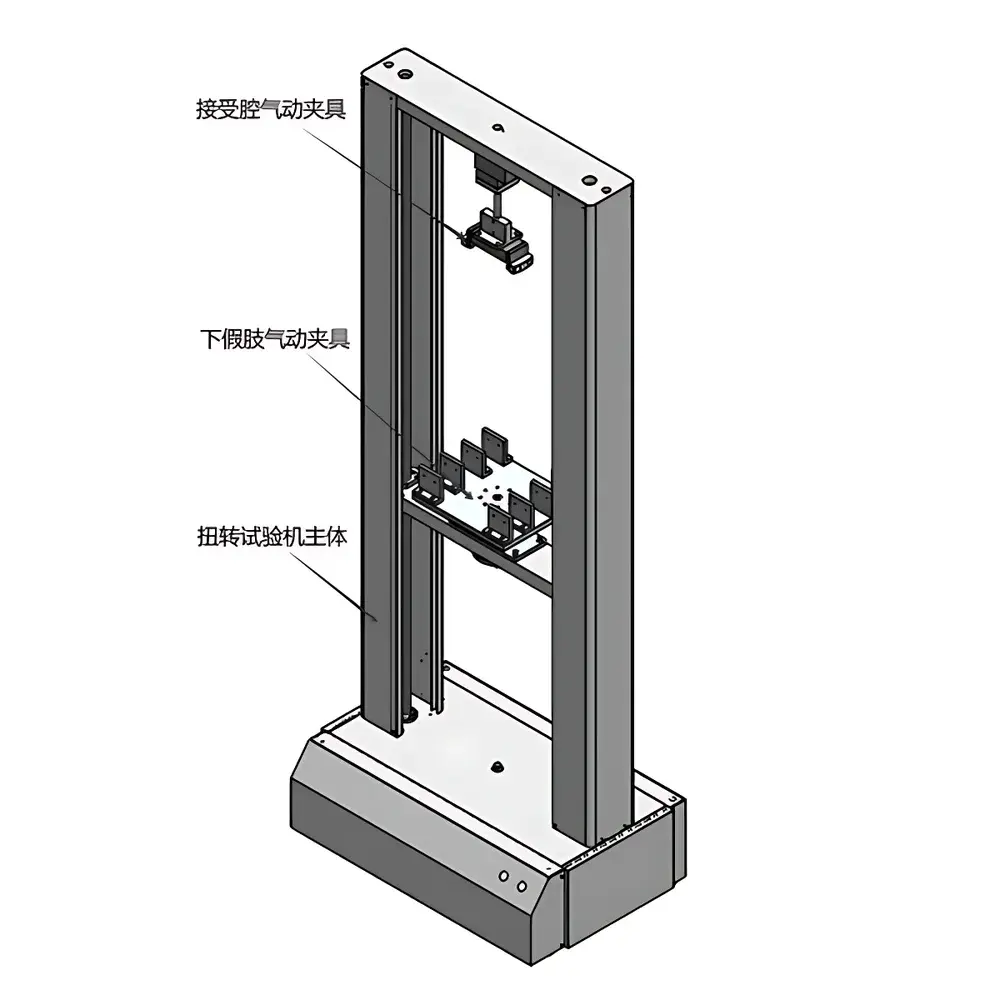
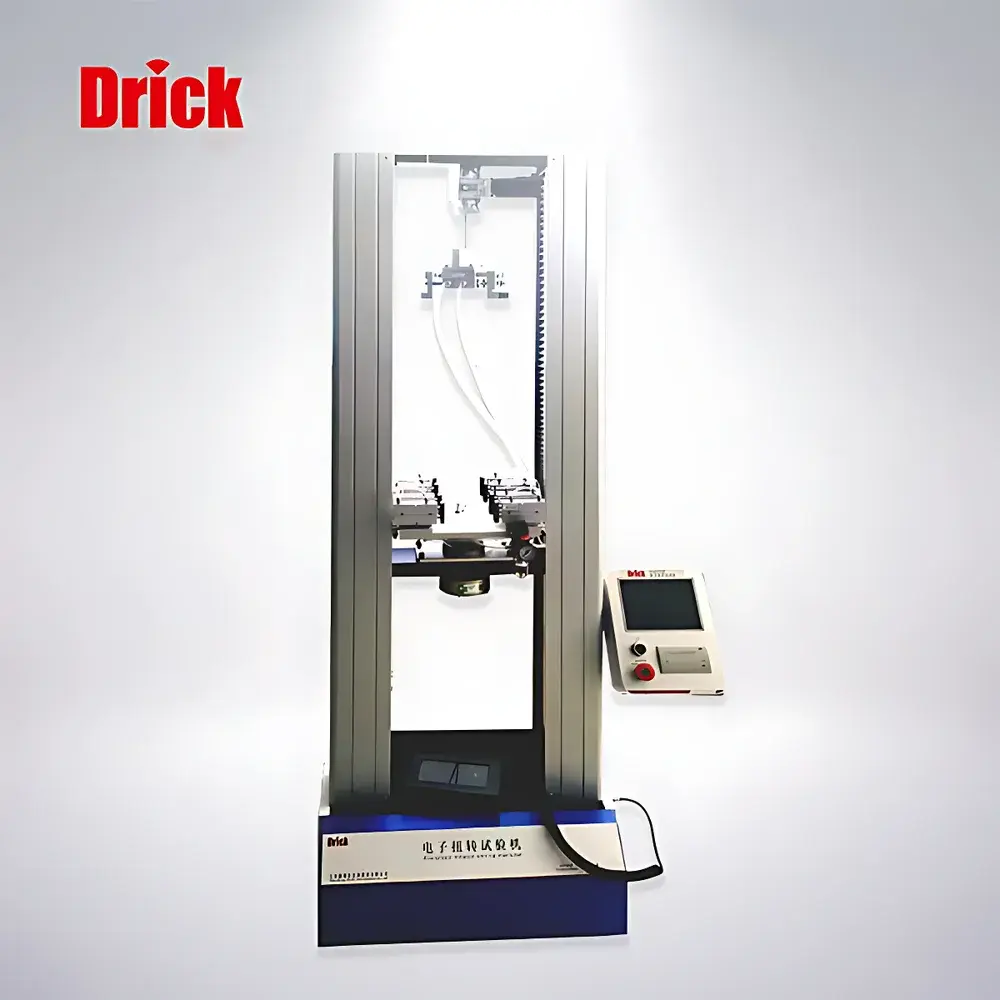
Drick DRK-107 Electronic Torsion Testing Machine for Lower-Limb Prostheses
| Brand | Drick |
|---|---|
| Origin | Shandong, China |
| Manufacturer Type | Direct Manufacturer |
| Country of Origin | China |
| Model | DRK-107 |
| Torque Measurement Range | 0–1000 N·m |
| Torsion Angle Range | 0–360° |
| Motor Power | ≤200 W |
Overview
The Drick DRK-107 Electronic Torsion Testing Machine is a purpose-built mechanical testing system engineered to evaluate the torsional stiffness, rotational fatigue resistance, and structural integrity of lower-limb prosthetic components—including transtibial (below-knee) and transfemoral (above-knee) prostheses. Designed in accordance with biomechanical loading profiles defined in ISO 10328:2016 (Prosthetics — Structural testing of lower-limb prostheses) and aligned with ASTM F2503 (Standard Practice for Marking Medical Devices and Other Items for Safety in the Magnetic Resonance Environment) for material traceability context, the DRK-107 applies controlled, repeatable torque loads about the longitudinal axis of the prosthetic pylon or foot-ankle assembly. Its core measurement principle relies on closed-loop servo-controlled angular displacement combined with high-fidelity strain-gauge-based torque transduction, enabling quantification of torque-angle hysteresis, yield onset, and post-cyclic residual deformation—critical parameters for ISO 15032-2 (Prosthetics — Dynamic testing of energy-storing feet) compliance assessment.
Key Features
- High-precision torsion actuation system integrating a stepper motor coupled with a high-ratio, low-backlash planetary gear reducer—ensuring smooth, jerk-free torque application across the full 0–360° angular range.
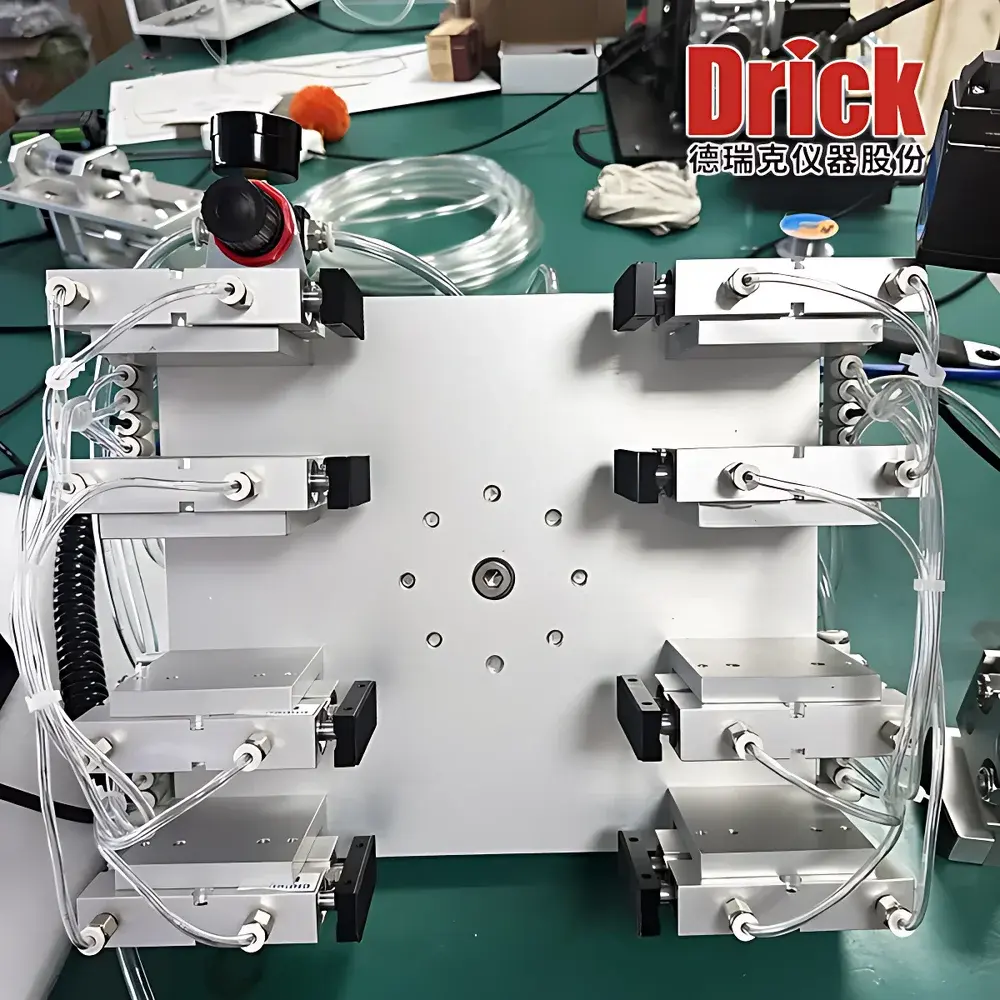
- Dual-axis alignment mechanism: precision-machined aluminum-steel hybrid frame with integrated linear guide rails and concentricity-adjustable fixture mounts, guaranteeing coaxial alignment between the test specimen’s anatomical axis and the machine’s rotational centerline (±0.1 mm radial deviation).
- Calibrated torque sensor with 0–1000 N·m full-scale capacity and factory-traceable calibration certificate compliant with ISO/IEC 17025 requirements for accredited testing laboratories.
- 7-inch industrial capacitive touchscreen HMI with intuitive icon-driven workflow navigation—supporting real-time display of instantaneous torque (±0.5% FS accuracy), peak torque capture, directional sign indication (+/−), and sensor health status (e.g., overload warning, zero drift alert).
- Programmable test protocols including single-cycle static twist, multi-cycle fatigue (up to 999 cycles), and stepwise angular increment testing—all configurable via on-device interface without external PC dependency.
Sample Compatibility & Compliance
The DRK-107 accommodates standard modular lower-limb prosthetic assemblies per ISO 10328 Annex B geometries, including carbon-fiber pylons, polycentric knee units, dynamic-response feet, and osseointegrated abutment interfaces. Fixture adaptability supports both male pyramid adapters (ISO 10328-defined 30 mm square) and custom mounting plates via T-slot rail integration. All mechanical and electrical design elements conform to IEC 61000-6-2 (immunity) and IEC 61000-6-4 (emission) standards. Data acquisition and storage meet GLP audit-trail prerequisites when operated under documented SOPs; optional CSV export enables traceable integration into LIMS environments supporting 21 CFR Part 11-compliant electronic records.
Software & Data Management
The embedded firmware implements deterministic real-time control with 100 Hz sampling of torque and angular position. Test data—including time-stamped torque-angle curves, cycle-by-cycle peak values, and deviation metrics—is stored locally on industrial-grade microSD (included) with automatic timestamped file naming (YYYYMMDD_HHMMSS_DRK107_XXX.csv). No proprietary software installation is required for basic operation; however, optional Windows-compatible desktop utility (v2.1+) provides advanced post-processing: hysteresis loop area calculation, stiffness slope regression (N·m/°), and comparative overlay of up to six test runs. Audit logs record all user-initiated parameter changes, start/stop events, and calibration history—retained for ≥12 months per internal memory buffer.
Applications
- Quality assurance during final assembly of commercial prosthetic systems prior to release.
- Comparative evaluation of new composite materials (e.g., thermoplastic vs. thermoset laminates) for torsional damping performance.
- Validation of design modifications to ankle joint mechanisms under simulated gait-phase torsional loads (e.g., late-stance rotation).
- Third-party conformity assessment for CE marking under MDR Annex II technical documentation requirements.
- Clinical research on long-term torsional degradation of socket-attachment interfaces in active-duty users.
FAQ
What standards does the DRK-107 support for prosthetic testing?
It is configured to execute test sequences referenced in ISO 10328:2016 Clause 7 (Torsional Loading) and ISO 15032-2 Annex A (Dynamic Torsion Protocol), with hardware-level repeatability meeting ±1.5% coefficient of variation across five replicate tests.
Can the machine perform bidirectional cyclic torsion?
Yes—user-defined asymmetric angle limits (e.g., +67.5° / −45.0°) and independent dwell times at each extremum are supported within the same test sequence.
Is torque sensor recalibration required onsite?
No. The integrated sensor is pre-calibrated at the factory with NIST-traceable reference standards; annual verification using certified torque wrenches or deadweight rigs is recommended per ISO 9001 maintenance schedules.
Does the system support external data acquisition synchronization?
Yes—TTL-level trigger output (BNC) is provided for synchronization with motion capture systems (e.g., Vicon, Qualisys) or EMG amplifiers during hybrid biomechanical studies.
What power supply specifications must be observed?
AC 220 V ±10%, 50 Hz single-phase input; dedicated 16 A circuit breaker recommended due to inrush current during motor startup.



