
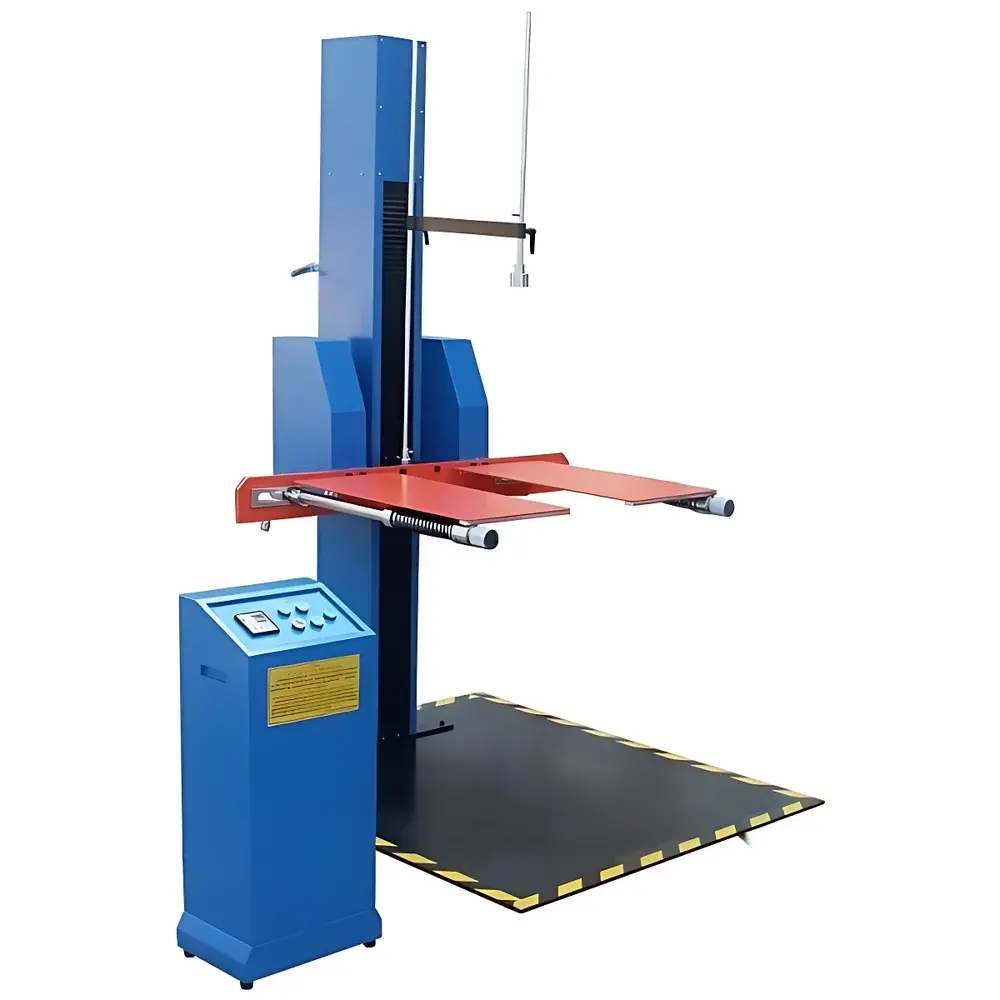
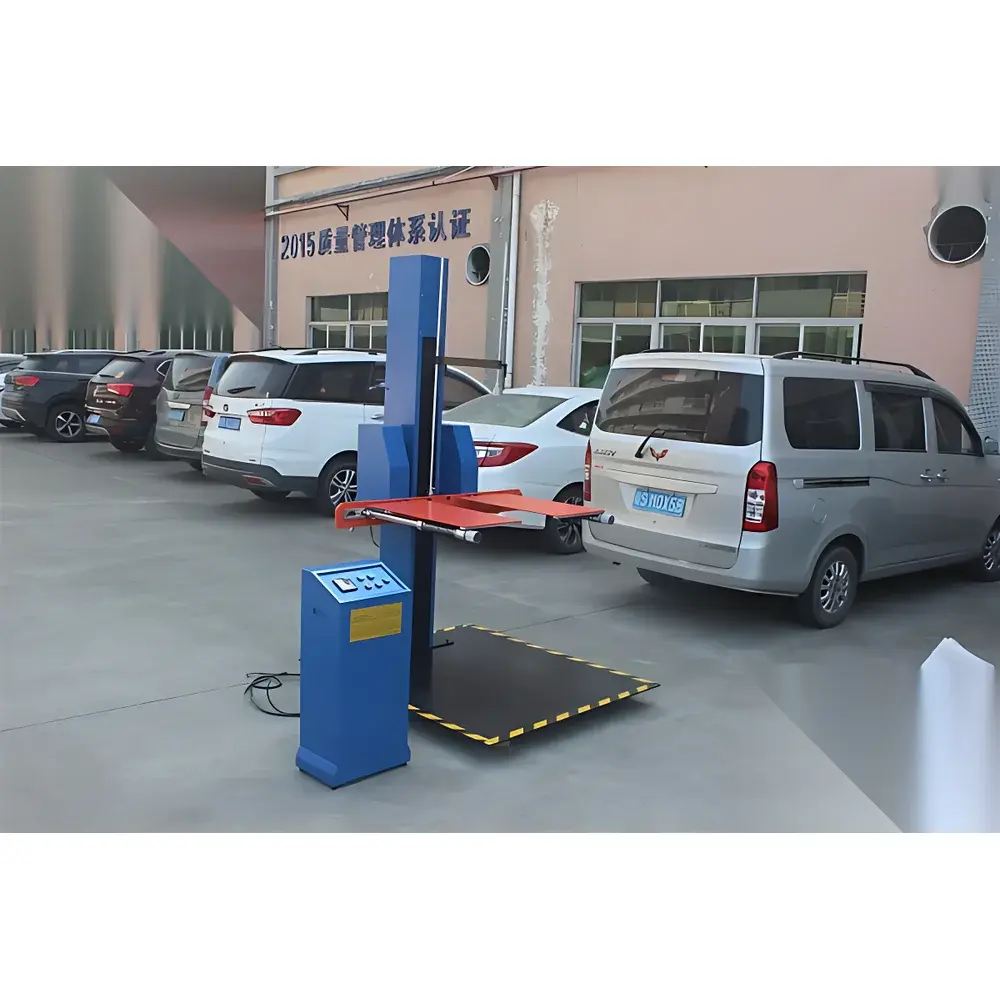
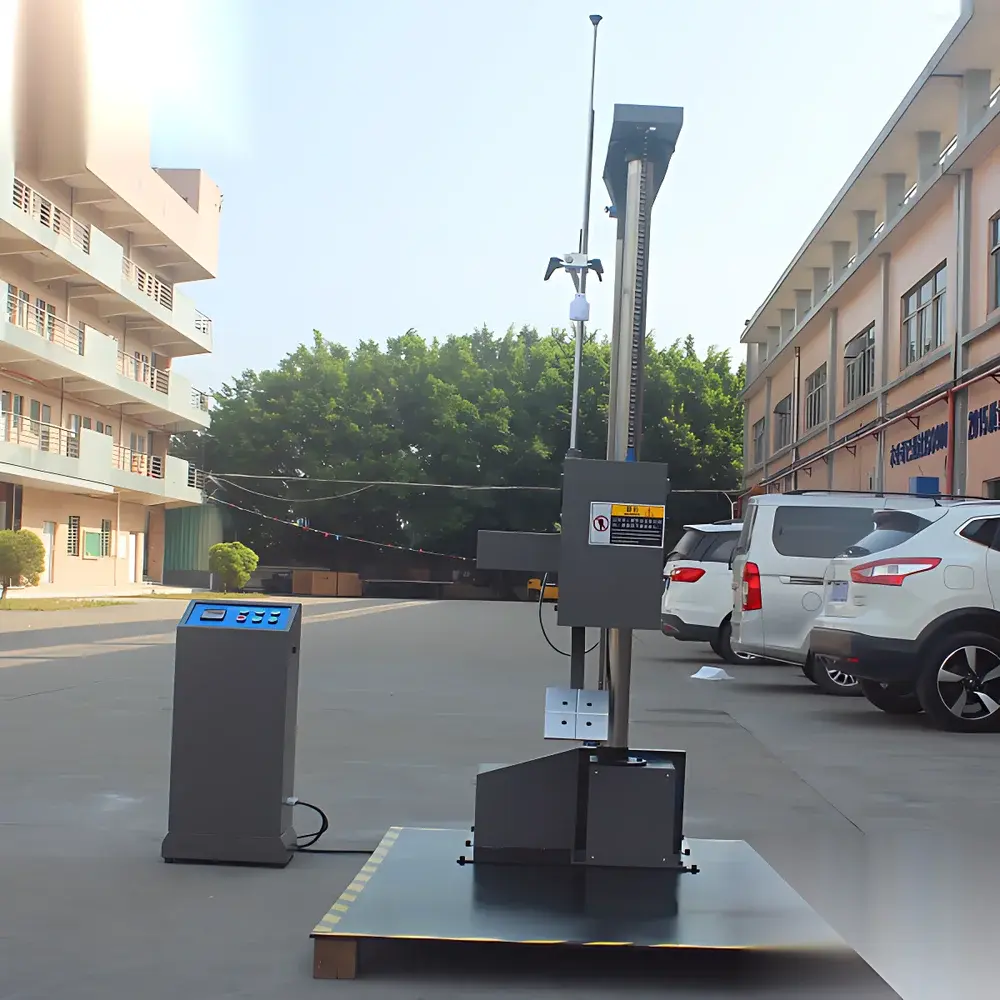
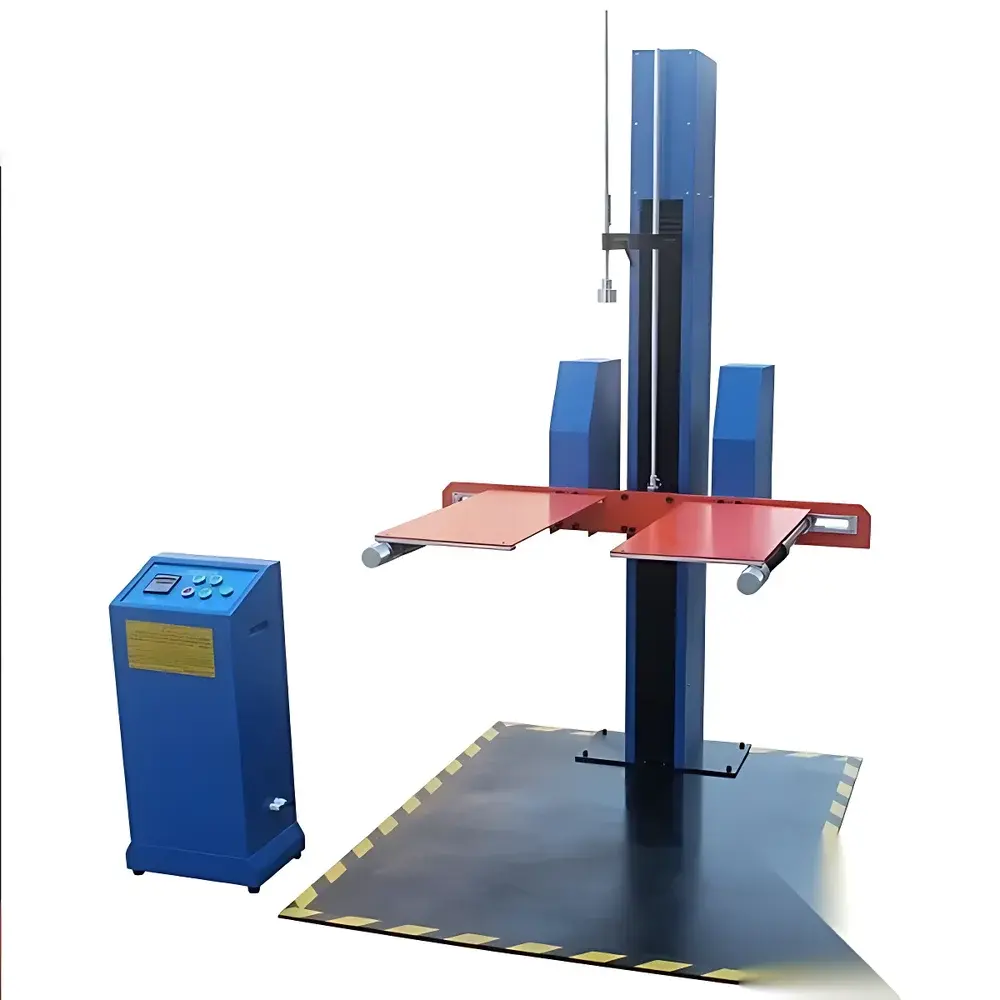
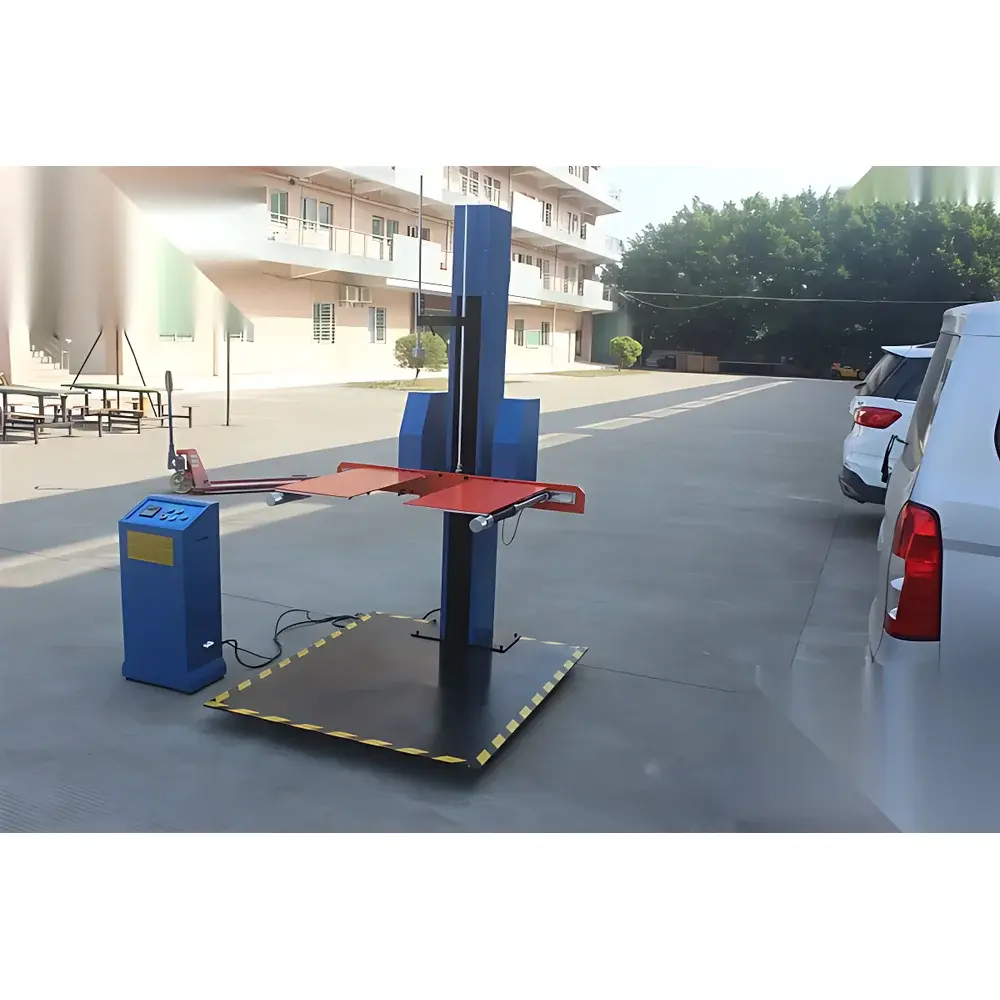
Drop Test Machine for Packaging Integrity Evaluation
| Brand | OEM |
|---|---|
| Origin | Imported |
| Manufacturer Type | Authorized Distributor |
| Price | USD 1,700 (FOB) |
| Compliance | GB/T 4857.5, ISO 2248:1985, GB/T 4857.1, GB/T 4857.2, GB/T 4857.17, GB/T 4857.18 |
Overview
The Drop Test Machine for Packaging Integrity Evaluation is a precision-engineered mechanical testing system designed to simulate real-world vertical impact conditions encountered during logistics handling and transportation. It operates on the principle of controlled free-fall impact—releasing a packaged unit from a predetermined height onto a rigid, horizontal impact surface (typically steel or concrete) to replicate floor-impact events during shipping, warehousing, or distribution. The machine enables standardized evaluation of package robustness by subjecting specimens to face, edge, and corner drop configurations in accordance with internationally recognized test protocols. Its core function is to quantify the threshold at which packaging systems fail under dynamic shock loading, supporting root-cause analysis of structural weaknesses, cushioning inefficiencies, or closure integrity issues. This data directly informs packaging optimization, material selection, and compliance validation for industrial supply chains operating under ISO, ASTM, and national regulatory frameworks.
Key Features
- Heavy-duty main column constructed from high-tensile alloy steel, precision ground and chromium-plated for long-term dimensional stability, corrosion resistance, and minimal deflection under load
- Custom-engineered Taiwan-made ST series heavy-duty roller chain drive system ensuring synchronized lifting and repeatable release dynamics
- Triple-mode drop configuration capability: programmable face-drop, edge-drop, and corner-drop orientations via adjustable specimen fixture and pivot mechanism
- Fully motorized lift-and-release architecture with integrated electromagnetic release solenoid—eliminating manual intervention and operator-induced variability
- Independent cradle separation design: patented support tray disengagement mechanism guarantees zero pre-impact constraint, enabling true free-fall kinematics and minimizing parasitic vibration transmission
- Digital height display with optical encoder feedback loop—provides real-time, traceable elevation readout with ±2% or ±10 mm accuracy relative to setpoint, compliant with GB/T 4857.5 verification requirements
- Modular base plate assembly compatible with standard ISO-certified impact surfaces (e.g., 20 mm thick hardened steel, Rockwell C55 minimum)
Sample Compatibility & Compliance
This drop tester accommodates rectangular, cubic, and irregularly shaped transport packages within dimensions up to 600 mm × 600 mm × 600 mm and mass up to 50 kg. Specimens must be fully assembled, sealed, and conditioned per GB/T 4857.2 (temperature/humidity stabilization) prior to testing. The system supports full implementation of the GB/T 4857 series—including test sequence definition per GB/T 4857.17 (test plan formulation) and quantitative parameter specification per GB/T 4857.18. It is also fully aligned with ISO 2248:1985 for vertical impact testing of complete, filled transport packages, and provides documented traceability for internal quality audits, third-party certification (e.g., ISTA, AAR), and regulatory submissions requiring GLP-compliant test records.
Software & Data Management
While hardware-controlled for operational simplicity and mechanical reliability, the system integrates seamlessly with external laboratory information management systems (LIMS) via RS-232 or optional USB-to-serial interface. Height setpoints, drop count, orientation mode, and timestamped event logs can be exported in CSV format for statistical process control (SPC) analysis. All test parameters are manually entered and verified prior to execution; no embedded firmware or proprietary software is required—ensuring compatibility with FDA 21 CFR Part 11–aligned environments where validated electronic records are mandated. Calibration certificates for the height encoder and mechanical release mechanism are provided upon installation and recommended annually per ISO/IEC 17025 guidelines.
Applications
- Validation of corrugated box compression strength and flute performance under impact loading
- Evaluation of protective foam inserts, molded pulp trays, and air-filled cushioning systems
- Assessment of closure integrity for consumer electronics, pharmaceutical secondary packaging, and e-commerce fulfillment units
- Comparative testing of alternative packaging materials (e.g., bioplastics, recycled fiberboards) against baseline benchmarks
- Root-cause investigation of field damage reports using replicated drop scenarios defined in failure analysis workflows
- Supporting ISTA 1A, 2A, and 3A test protocol execution when configured with certified impact surfaces and environmental conditioning
FAQ
What standards does this drop tester fully comply with?
It meets all mechanical and procedural requirements of GB/T 4857.5, ISO 2248:1985, GB/T 4857.1–4857.18, and serves as primary equipment for ISTA-certified test labs.
Can the machine perform sequential drop tests across multiple orientations without manual repositioning?
Yes—the fixture allows rapid, tool-free switching between face, edge, and corner configurations using indexed mounting points and alignment guides.
Is height calibration traceable to national metrology institutes?
The optical encoder system is supplied with a UKAS-accredited calibration certificate; field recalibration kits and procedures are included in the maintenance manual.
Does the system support variable drop heights for gradient testing?
Absolutely—height range spans 300 mm to 1500 mm in 1 mm increments, enabling progressive impact severity profiling per ASTM D5276 Annex A1.
What safety features prevent unintended release during setup?
Dual redundant interlocks: mechanical latch engagement sensor + PLC-monitored solenoid readiness signal—both must be confirmed before enable command is accepted.



