
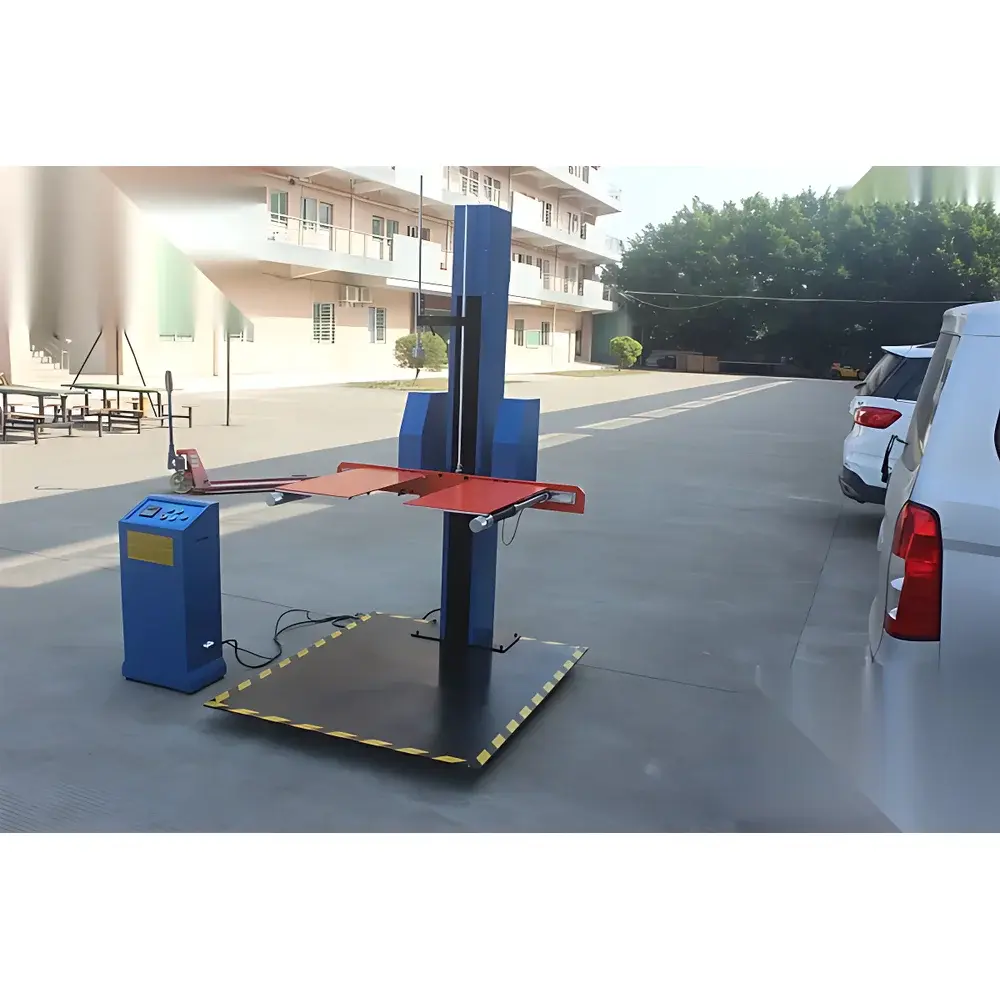
Drop Test Machine – Standard Vertical Impact Drop Tester
| Brand | Other Brands |
|---|---|
| Origin | Imported |
| Manufacturer Type | General Distributor |
| Price | USD 1,700 (approx.) |
| Compliance | GB/T 4857.5, ISO 2248:1985, GB/T 4857.1–4857.18 |
| Height Accuracy | ±2% or ±10 mm |
| Drive System | Electric lift & release |
| Drop Modes | Face, Edge, Corner |
| Height Display | Digital indicator with rotary encoder feedback |
| Frame Material | Precision-ground, chromium-plated high-grade steel shafts |
| Free-fall Separation | Controlled platform release mechanism |
| Structural Stability | Low-vibration, rigid column architecture |
Overview
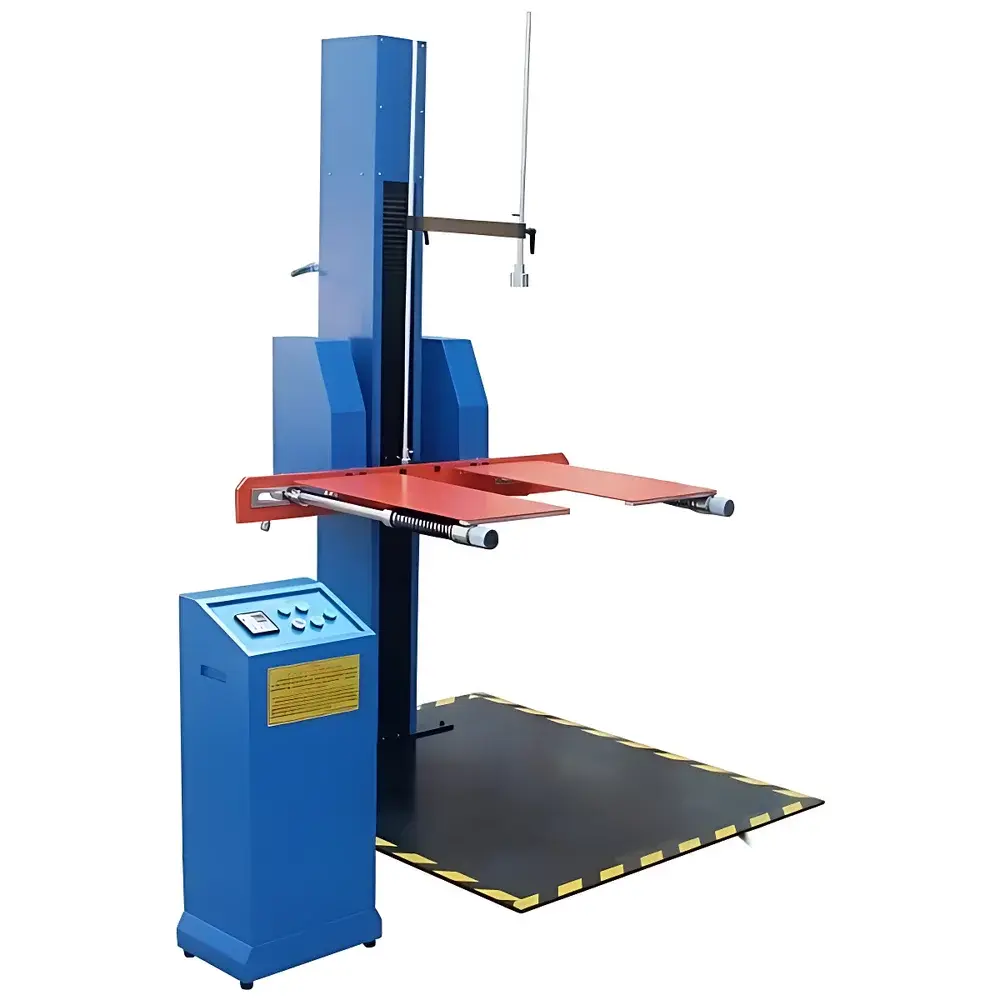
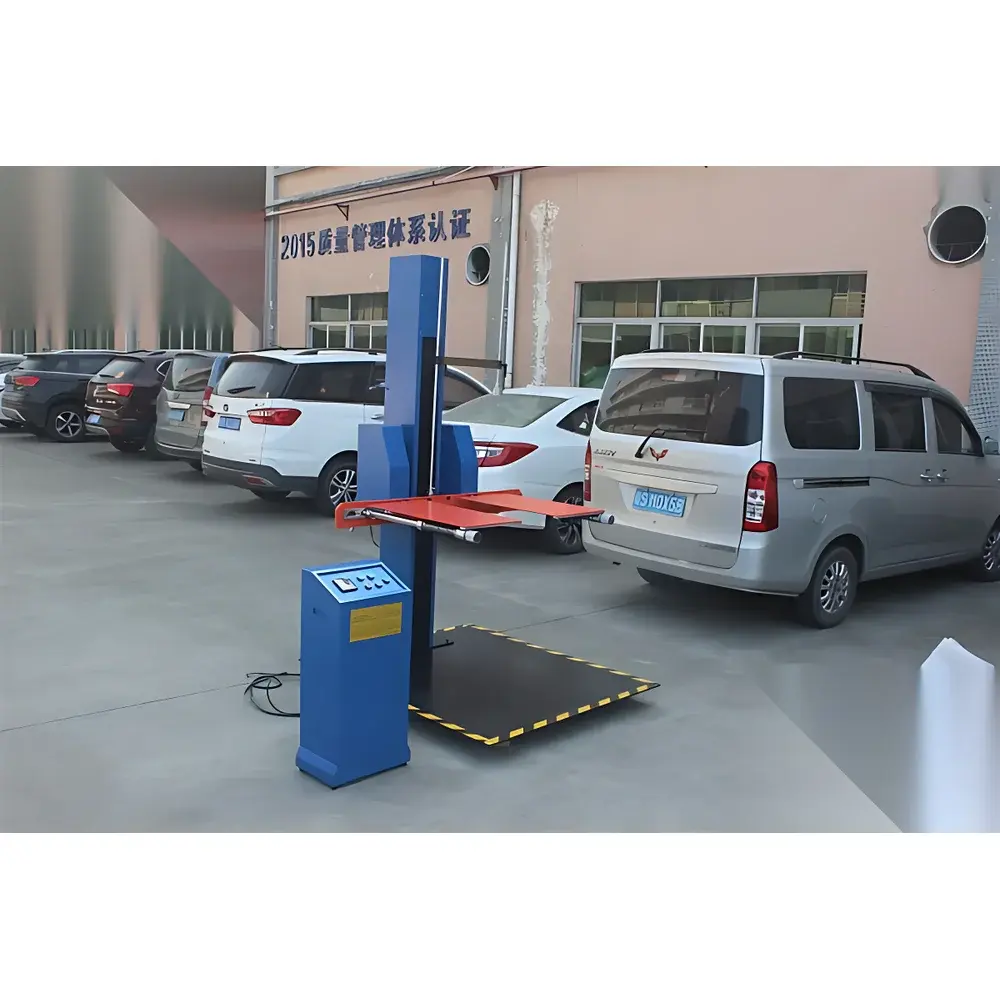
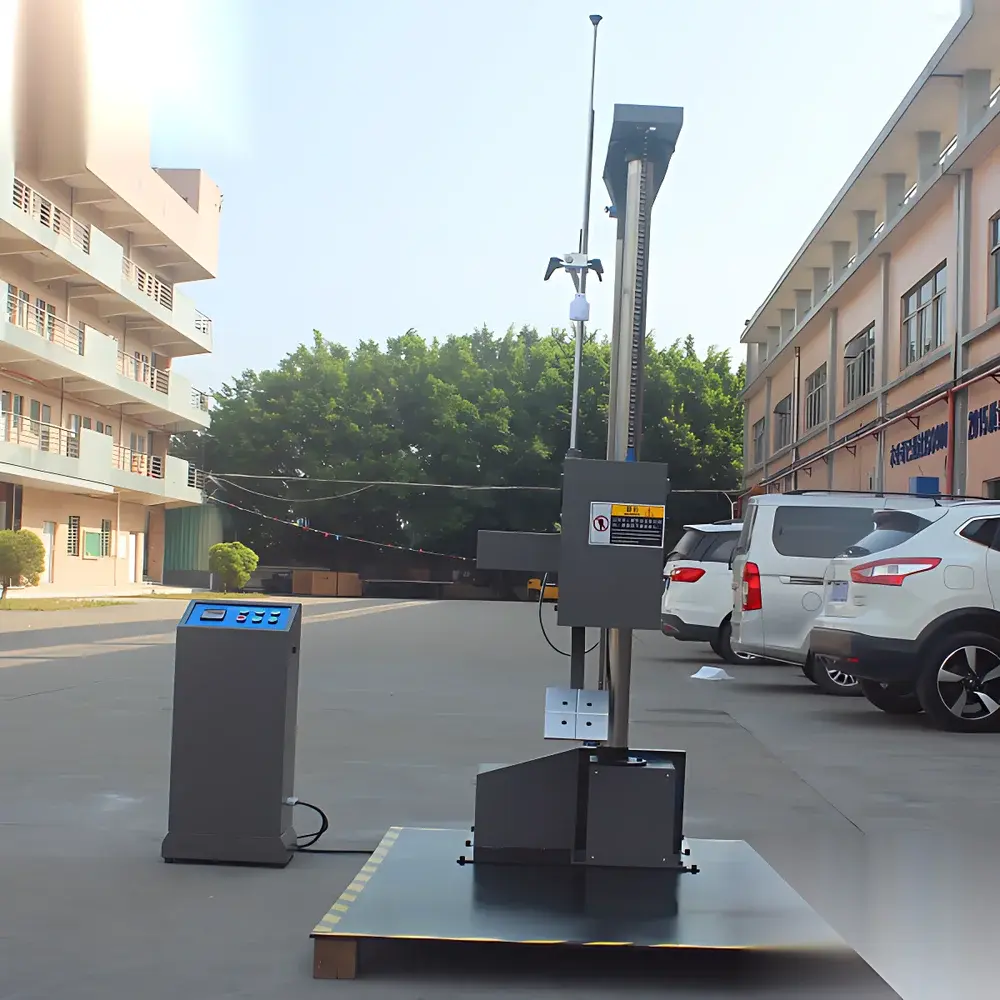
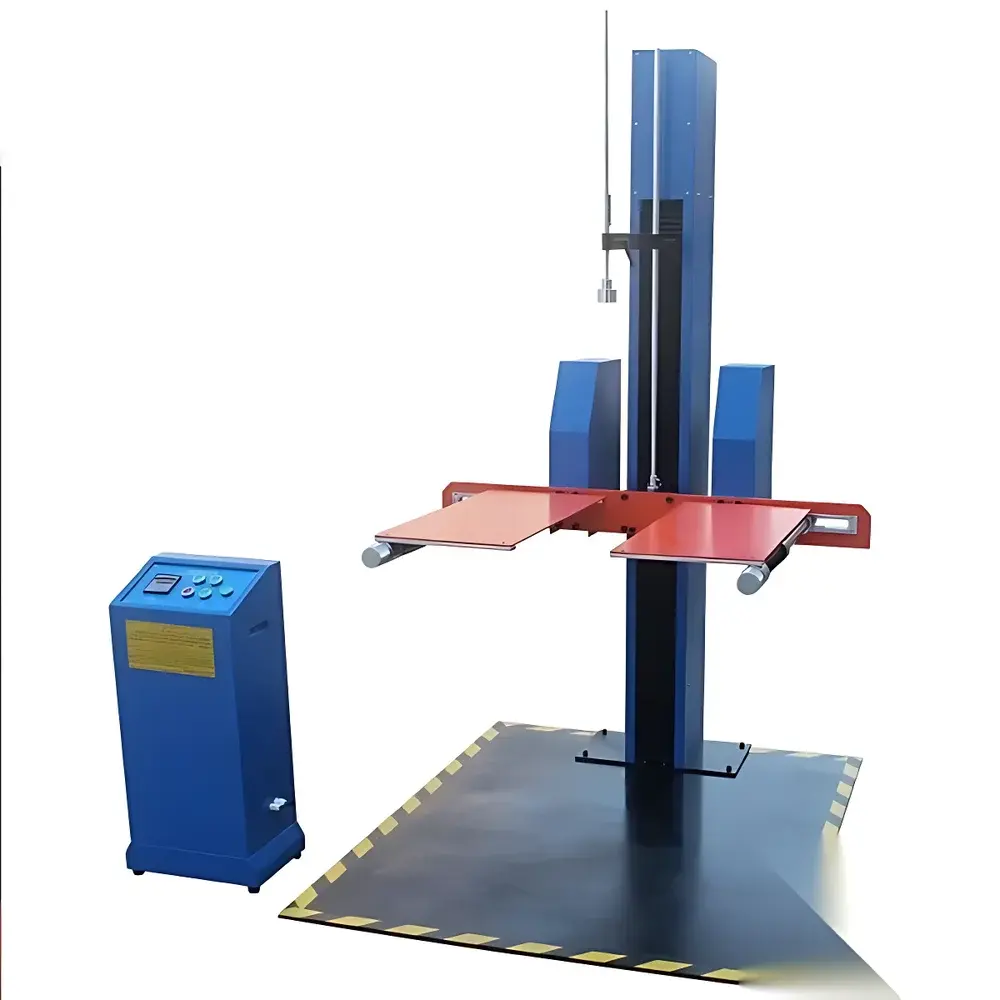
The Drop Test Machine is an engineered vertical impact testing system designed to evaluate the structural integrity and protective performance of packaged products under controlled free-fall conditions. It operates on the principle of gravitational acceleration, enabling standardized simulation of real-world handling hazards—including accidental drops during logistics, warehousing, and retail distribution. By subjecting fully assembled, filled shipping units to repeatable impacts from defined heights onto a rigid horizontal surface, the machine quantifies resistance to mechanical shock across three critical orientations: flat face, edge, and corner impact. This methodology aligns directly with internationally recognized transport packaging test protocols, providing objective data for package validation, design iteration, and compliance documentation.
Key Features
- Precision-engineered dual-column frame constructed from ground and chromium-plated high-strength steel shafts—ensuring long-term dimensional stability, corrosion resistance, and minimal deflection under load.
- Electrically actuated lifting, positioning, and release mechanism with programmable height setting and automatic reset—eliminating manual handling variability and enhancing operator safety.
- High-fidelity height measurement system integrating a digital LED display and rotary encoder feedback loop—guaranteeing drop height accuracy within ±2% or ±10 mm, whichever is greater, per GB/T 4857.5 requirements.
- Dedicated independent release mechanism that ensures clean, unimpeded separation between test specimen and support platform—preserving true free-fall dynamics and minimizing parasitic vibration or pre-impact torque.
- Triple-mode orientation capability (face, edge, corner) achieved via adjustable specimen fixture and orthogonal alignment guides—enabling full compliance with ISO 2248:1985 and GB/T 4857-series standards.
- Modular base plate with hardened steel impact surface and optional replaceable impact media (e.g., concrete, plywood, or rubber overlays) for application-specific energy absorption profiling.
Sample Compatibility & Compliance
This drop tester accommodates standard shipping containers, corrugated boxes, plastic crates, and molded tray-packaged goods with dimensions up to 600 mm × 600 mm × 600 mm and mass up to 50 kg. Its mechanical architecture supports both unit-load and individual-item testing configurations. The system satisfies mandatory regulatory frameworks for transport packaging evaluation, including but not limited to:
- GB/T 4857.5–2019 “Packaging—Basic tests for transport packages—Part 5: Vertical impact drop test”
- ISO 2248:1985 “Packaging—Complete, filled transport packages—Vertical impact test by dropping”
- GB/T 4857.1–4857.18 series covering marking conventions, environmental preconditioning (e.g., temperature/humidity conditioning per GB/T 4857.2), test plan development (GB/T 4857.17), and statistical interpretation guidelines (GB/T 4857.18)
All test procedures are fully compatible with GLP-aligned documentation workflows and support traceable audit trails when integrated with external data logging systems.
Software & Data Management
While this model operates as a standalone electromechanical tester without embedded firmware or touchscreen interface, it is fully compatible with third-party PC-based test management software via RS-232 or USB-to-serial adapters. Users may record drop sequence logs—including height, orientation, pass/fail status, visual inspection notes, and timestamped observations—in CSV or XML formats. When deployed in regulated environments (e.g., ISO 9001-certified packaging labs or FDA-audited medical device supply chains), the system supports 21 CFR Part 11-compliant electronic records when paired with validated software platforms offering user authentication, audit trail generation, and electronic signature functionality.
Applications
- Validation of primary and secondary packaging designs for consumer electronics, pharmaceuticals, and e-commerce fulfillment units.
- Comparative assessment of cushioning materials (e.g., EPS, EPE, molded pulp) under standardized impact severity levels.
- Root-cause analysis of field failure reports related to transit damage—correlating lab-induced damage patterns with real-world incident data.
- Supporting ISTA 1A, 2A, and 3A test protocol execution when combined with environmental preconditioning per ASTM D4332 and appropriate drop height selection logic.
- Training and internal QA certification programs for packaging engineers and logistics personnel on shock-resistance fundamentals.
FAQ
What standards does this drop tester comply with?
It meets GB/T 4857.5–2019, ISO 2248:1985, and the full GB/T 4857.1–4857.18 series for transport packaging performance testing.
Can the machine perform corner, edge, and face drops without reconfiguration?
Yes—its modular fixture system allows rapid, tool-free switching between all three impact orientations while maintaining geometric repeatability.
Is height calibration traceable to national metrology institutes?
The encoder-based height tracking system supports external verification using NIST-traceable laser distance meters or certified gauge blocks; calibration certificates are issued upon request.
What maintenance is required for long-term accuracy?
Annual verification of chain tension, encoder alignment, and platform levelness is recommended; lubrication of drive components every 500 cycles ensures consistent mechanical response.
Does the system include data export capability?
It features RS-232 output for integration with external PCs or PLCs—enabling automated logging, report generation, and LIMS connectivity when used with compliant software.



