
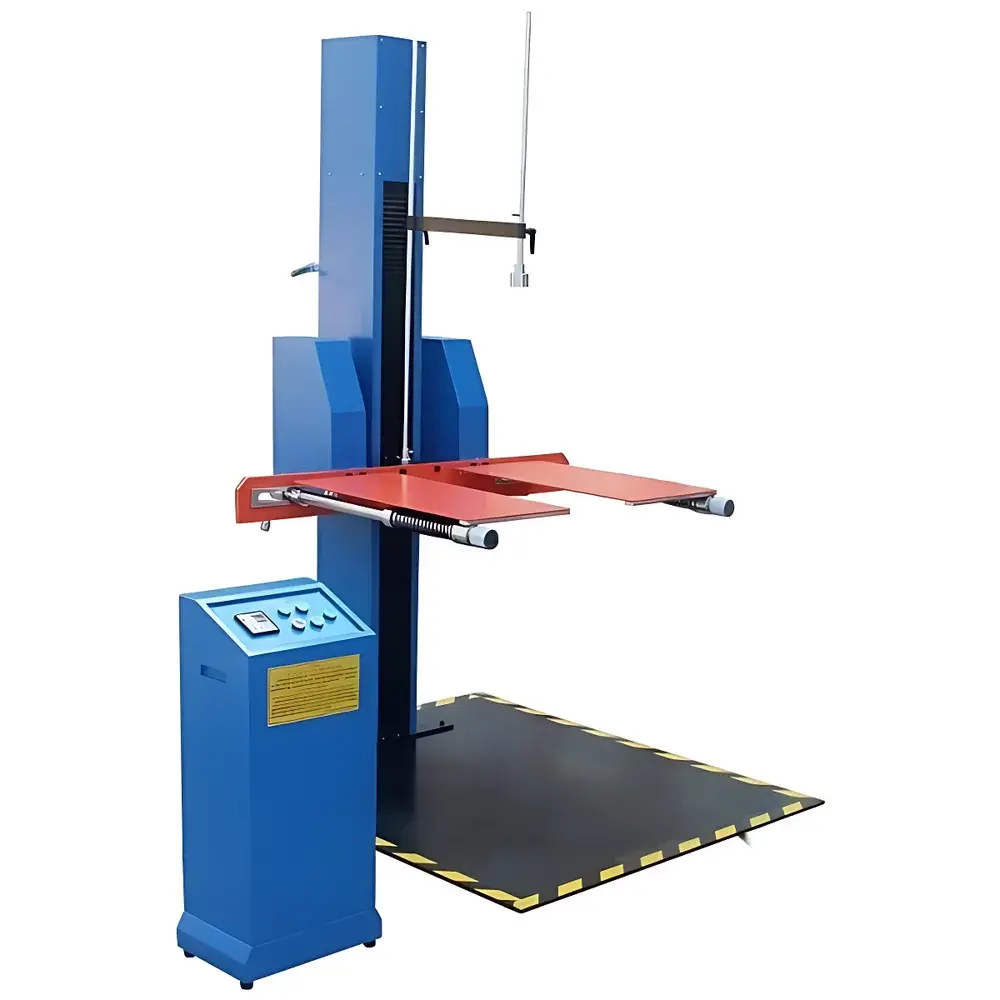
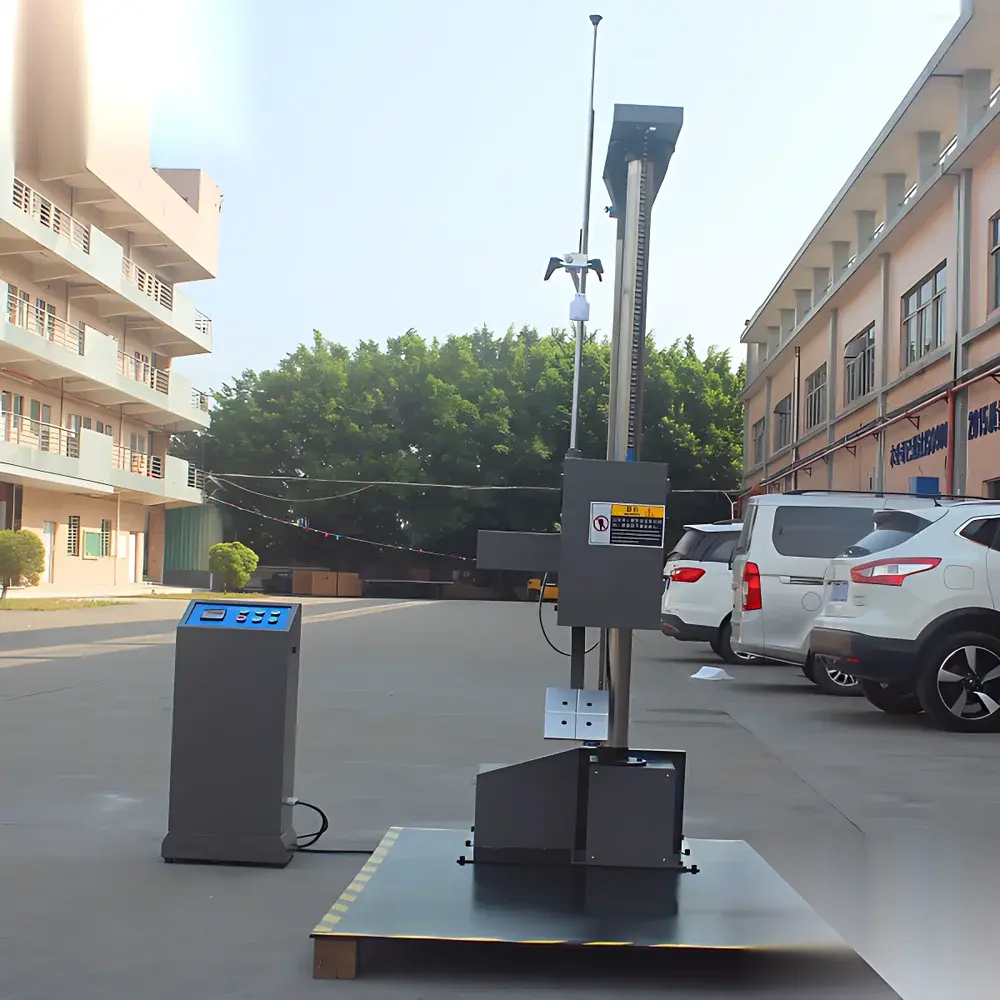
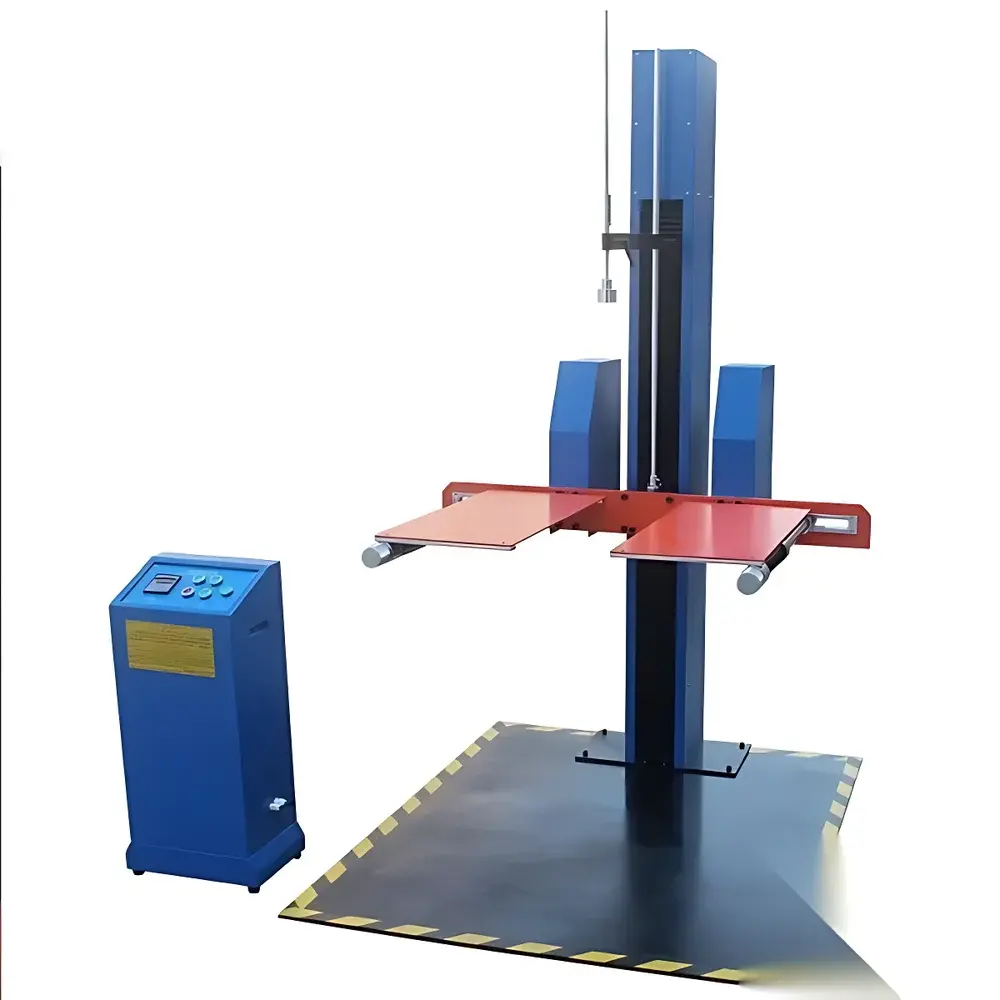
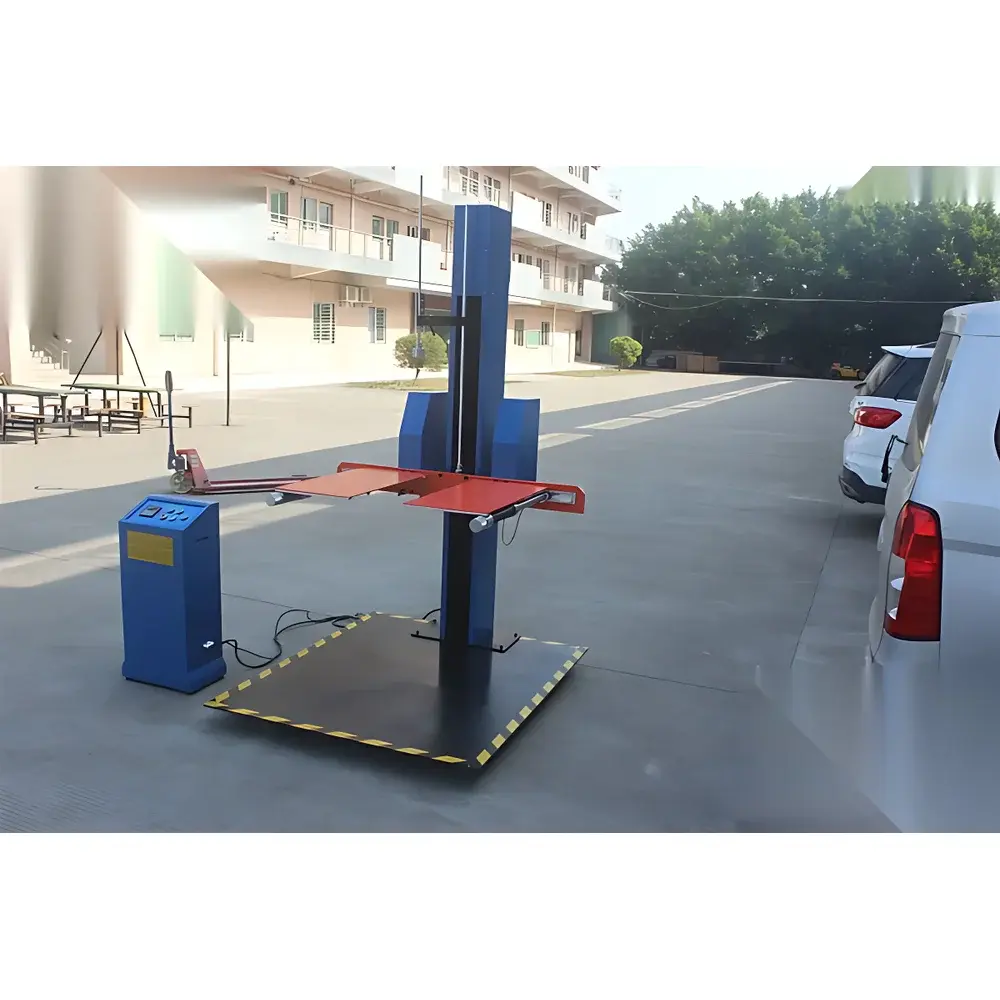
Drop Testing Machine – Standard Vertical Impact Drop Tester for Packaging Integrity Validation
| Key | Brand: OEM / Third-Party Manufacturer |
|---|---|
| Origin | Imported |
| Supplier Type | Authorized Distributor |
| Price | USD 1,700 (FOB) |
| Compliance | GB/T 4857.5, ISO 2248:1985, ASTM D5276 |
Overview
The Drop Testing Machine is an electromechanically controlled vertical impact testing system engineered for standardized evaluation of packaging integrity under free-fall conditions. It replicates real-world logistics hazards by subjecting fully assembled, filled transport packages to controlled drops from defined heights onto rigid horizontal surfaces—simulating impacts encountered during handling, loading/unloading, and transportation. Based on the Couette-type free-fall principle with gravity-driven acceleration, the machine delivers repeatable, traceable impact energy (J) proportional to mass × gravitational acceleration × drop height. Its core function is to quantify package robustness through failure mode analysis—including corner, edge, and face impacts—enabling empirical validation of cushioning performance, structural rigidity, and closure reliability prior to distribution.
Key Features
- Structural frame constructed from precision-ground, chromium-plated high-tensile steel columns—resistant to deformation, corrosion, and long-term mechanical fatigue.
- Custom-engineered drive chain assembly sourced from a certified Taiwanese motion control supplier, ensuring synchronized lift-and-release timing and minimal backlash.
- Triple-mode impact configuration: programmable selection between flat-face, edge, and corner drop orientations—each conforming to the geometric definitions in ISO 2248 and GB/T 4857.5.
- Integrated motorized lifting mechanism with dual-speed ascent/descent control, enabling precise positioning without manual intervention or mechanical jacking.
- Electromagnetically actuated release system that guarantees instantaneous, zero-contact separation between test specimen and support cradle—eliminating pre-impact friction or torque-induced rotational artifacts.
- Digital height measurement subsystem incorporating optical rotary encoder feedback and real-time LED display—calibrated to ±2% or ±10 mm accuracy across the full 300–1500 mm operational range.
Sample Compatibility & Compliance
The tester accommodates rectangular, cylindrical, and irregularly shaped transport packages weighing up to 100 kg and dimensions up to 1,200 mm × 1,000 mm × 1,000 mm (L×W×H). Test specimens must be fully assembled, sealed, and loaded to nominal shipping weight—including internal void-fill materials, primary containers, secondary cartons, and tertiary pallet configurations. The system meets mandatory requirements of GB/T 4857.5–2022 (replacing GB 4857.5), ISO 2248:1985, and ASTM D5276–21. It supports alignment with broader packaging performance frameworks including GB/T 4857.1 (marking conventions), GB/T 4857.2 (conditioning protocols), GB/T 4857.17 (test plan development), and GB/T 4857.18 (quantitative parameter specification). All test records are structured to satisfy GLP-aligned documentation practices for internal quality audits.
Software & Data Management
While the base configuration operates via embedded microcontroller logic with front-panel digital interface, optional PC-based software (sold separately) enables automated test sequencing, height logging, pass/fail flagging per drop event, and CSV-exportable reports compliant with FDA 21 CFR Part 11 Annex 11 requirements—including electronic signatures, audit trails, and user-access tiering. Height calibration certificates are traceable to national metrology institutes (NIM or equivalent) and include uncertainty budgets per ISO/IEC 17025.
Applications
- Validation of e-commerce shipping durability for consumer electronics, pharmaceuticals, and perishables.
- Design verification of corrugated fiberboard, molded pulp, foam-in-place, and honeycomb board packaging systems.
- Supplier qualification testing per IATF 16949 clause 8.4.2.2 for automotive component packaging.
- Regulatory submission support for medical device packaging per ISO 11607-1:2019 Annex C.
- Root cause analysis of field damage incidents using controlled replication of suspected impact vectors.
FAQ
What standards does this drop tester fully comply with?
It conforms to GB/T 4857.5–2022, ISO 2248:1985, and ASTM D5276–21 for vertical free-fall impact testing of transport packages.
Can it perform corner and edge drops with the same repeatability as face drops?
Yes—the cradle design incorporates three independent orientation fixtures, each mechanically referenced to ISO-defined corner/edge geometry and validated for ≤±1.5° angular deviation.
Is height calibration performed at the factory or required onsite?
A NIST-traceable calibration certificate is provided; annual recalibration is recommended and supported via authorized service partners.
Does the system support integration into a laboratory LIMS or MES environment?
Via optional RS-232/USB or Ethernet interface, raw height and trigger timestamps can be exported for ingestion into enterprise data platforms.
What maintenance intervals are specified for the drive chain and release mechanism?
Lubrication and tension verification every 500 operational cycles; electromagnetic release coil resistance testing every 12 months per preventive maintenance checklist.



