
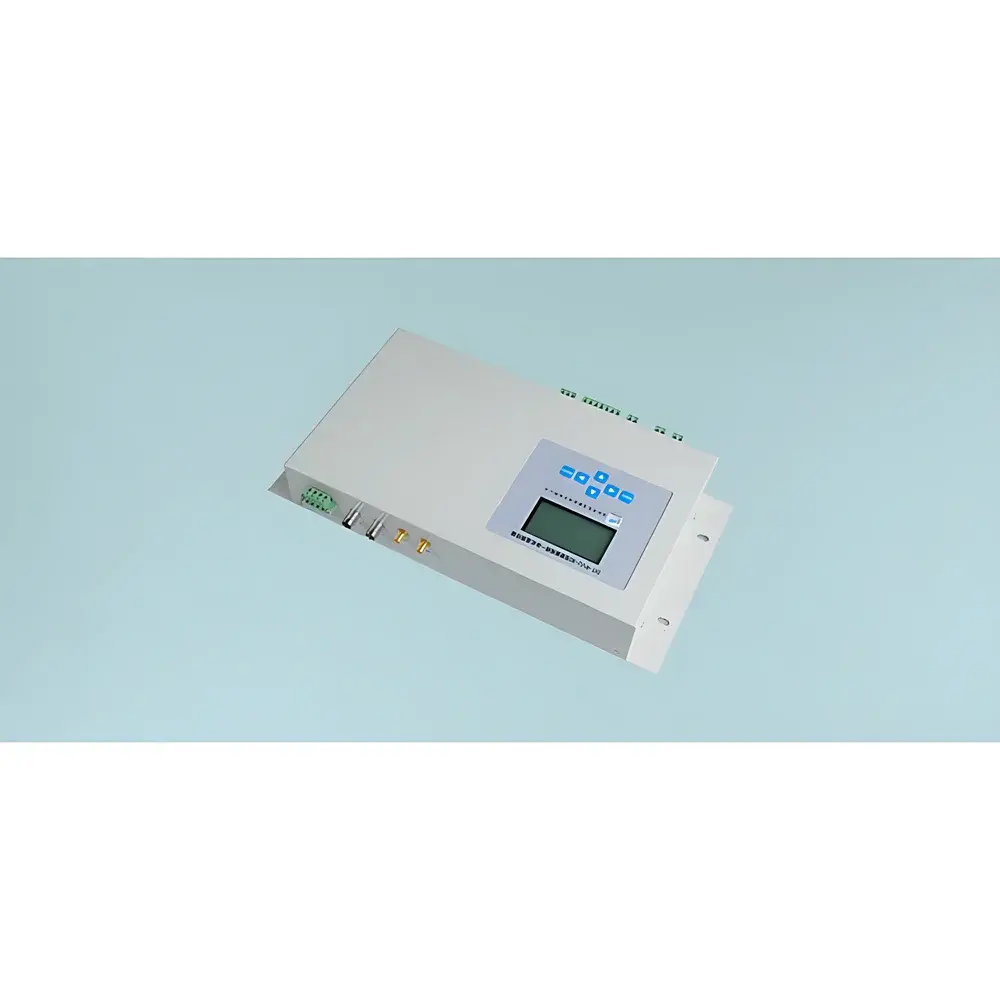
DSE DIT-RVU-90SW Reservoir Dynamic Monitoring Remote Terminal Unit (RTU)
| Brand | DSE |
|---|---|
| Origin | Shenzhen, China |
| Manufacturer Type | Authorized Distributor |
| Regional Category | Domestic (China) |
| Model | DIT-RVU-90SW |
| Pricing | Upon Request |
Overview
The DSE DIT-RVU-90SW is a purpose-built remote terminal unit (RTU) engineered for continuous, multi-parameter dynamic monitoring of reservoir infrastructure and hydrological conditions. Designed in accordance with China’s national technical specifications for water resources telemetry (SL 61–2003, SL 180–2015) and aligned with international best practices for critical infrastructure telemetry, the RVU-90SW integrates real-time hydrometeorological sensing, geotechnical monitoring, and visual surveillance into a single ruggedized edge device. Its core measurement architecture supports synchronized acquisition from analog, serial (RS-232/RS-485), and pulse-based sensors—including ultrasonic/radar water level transducers, tipping-bucket rain gauges, piezometric transducers for seepage pressure, inclinometers or GNSS receivers for surface deformation (via external interface), and specialized acoustic/vibration-based termite activity detectors. Data acquisition occurs at configurable intervals, with event-triggered reporting (e.g., rapid water level rise, rainfall threshold exceedance, seepage anomaly, or termite detection signal) ensuring operational responsiveness without compromising power efficiency.
Key Features
- Multi-sensor integration: Supports 1-channel rain gauge (pulse or analog), 1-channel water level sensor (float, serial, or analog), 2-channel serial camera inputs (JPEG/MJPEG over RS-485), 1-channel weirs/flume flow sensor (serial or analog), and 1-channel termite detection module (serial interface).
- Adaptive communication modes: Configurable self-reporting (low-power periodic transmission), polling-response (always-on GPRS readiness), or hybrid mode—enabling optimal trade-offs between battery life and data latency.
- GPRS-based secure telemetry: Transmits time-stamped sensor readings, image thumbnails, and alarm events to centralized SCADA or cloud-based water resource management platforms via encrypted UDP/TCP protocols.
- Robust data integrity mechanisms: Includes local cyclic storage (2-year capacity at default 15-minute logging interval), automatic data retransmission upon communication recovery (data gap filling), and timestamped audit trails for all configuration changes.
- Integrated solar charge controller: Built-in 20W MPPT regulator; compatible with external high-capacity controllers for extended off-grid deployments in remote reservoir sites.
- Local HMI: 128×64 dot-matrix LCD display with 6-key navigation for on-site parameter configuration, real-time value viewing, and manual entry of survey-grade deformation measurements (e.g., crack width, settlement benchmarks).
- Physical intrusion detection: Tamper-proof enclosure with door-open, solar panel disconnect, and rain gauge removal alarms—each triggering immediate GPRS alert dispatch to operations center.
Sample Compatibility & Compliance
The DIT-RVU-90SW interfaces with industry-standard hydrological and geotechnical sensors compliant with IEC 61000-4 EMC requirements and GB/T 19001 quality management systems. It supports Modbus RTU/ASCII protocol for third-party sensor integration and adheres to China’s Water Resources Department “Technical Specifications for Reservoir Safety Monitoring Systems” (SL 725–2016). While not certified to UL 61010 or ATEX standards, its IP67-rated enclosure and -25°C to +70°C operating range meet typical outdoor reservoir deployment requirements. All firmware updates and remote configurations are logged with user ID, timestamp, and command hash—supporting GLP-aligned traceability for regulatory audits.
Software & Data Management
The RTU operates with embedded Linux-based firmware supporting OTA (Over-The-Air) updates via GPRS. Configuration and diagnostics are managed through a web-based engineering interface accessible during active GPRS sessions. Data payloads follow standardized XML/JSON schemas compatible with common water data platforms (e.g., HydroServer, WISKI, or custom GIS-integrated dashboards). Audit logs record every parameter change, manual data entry, and alarm event with ISO 8601 timestamps and source identifiers. Optional integration with MQTT brokers enables seamless ingestion into IIoT architectures. All remote commands—including clock synchronization, sensor calibration offset adjustments, and reporting interval modifications—are authenticated via session tokens and validated against whitelisted IP ranges.
Applications
- Real-time reservoir operation: Water level tracking, flood forecasting, and release scheduling based on upstream rainfall accumulation and inflow rate trends.
- Dam safety surveillance: Correlation of pore-water pressure (seepage), surface displacement, and visual inspection imagery to identify early-stage structural anomalies.
- Pest-driven risk mitigation: Continuous acoustic monitoring for subterranean termite colony activity near embankment toe zones—a recognized precursor to internal erosion pathways.
- Municipal water resource governance: Deployment across distributed small-to-medium reservoir networks (e.g., Chongqing Municipal Small Reservoir Dynamic Supervision System, Lincang Reservoir Telemetry Network) to support provincial-level compliance reporting under China’s “Regulations on Reservoir Dam Safety Management.”
- Emergency response coordination: Instantaneous alarm dissemination upon sensor fault, power loss, or physical breach—enabling rapid field verification and incident escalation per predefined SOPs.
FAQ
Does the DIT-RVU-90SW support LTE-M or NB-IoT connectivity?
No—it is designed exclusively for GPRS (2G) networks to ensure broad rural coverage and long-term hardware lifecycle stability in China’s existing water telemetry infrastructure.
Can historical image data be retrieved remotely?
Yes—JPEG thumbnails (configurable resolution up to 640×480) are stored locally and retrievable via command-triggered batch download; full-resolution images require on-site SD card extraction.
What is the maximum supported solar panel wattage when using an external charge controller?
The unit’s RS-485 control interface supports third-party MPPT controllers rated up to 100W input; voltage compatibility must be verified against the RTU’s 12 VDC nominal supply specification.
Is firmware update rollback capability available?
Yes—dual firmware partitions enable atomic updates with automatic fallback to the prior stable version if boot validation fails.
How is time synchronization accuracy maintained across extended offline periods?
The onboard RTC maintains ±2 seconds/month drift; automatic NTP synchronization occurs during each GPRS session, with time correction applied to all buffered log entries retroactively.
Related Products







