
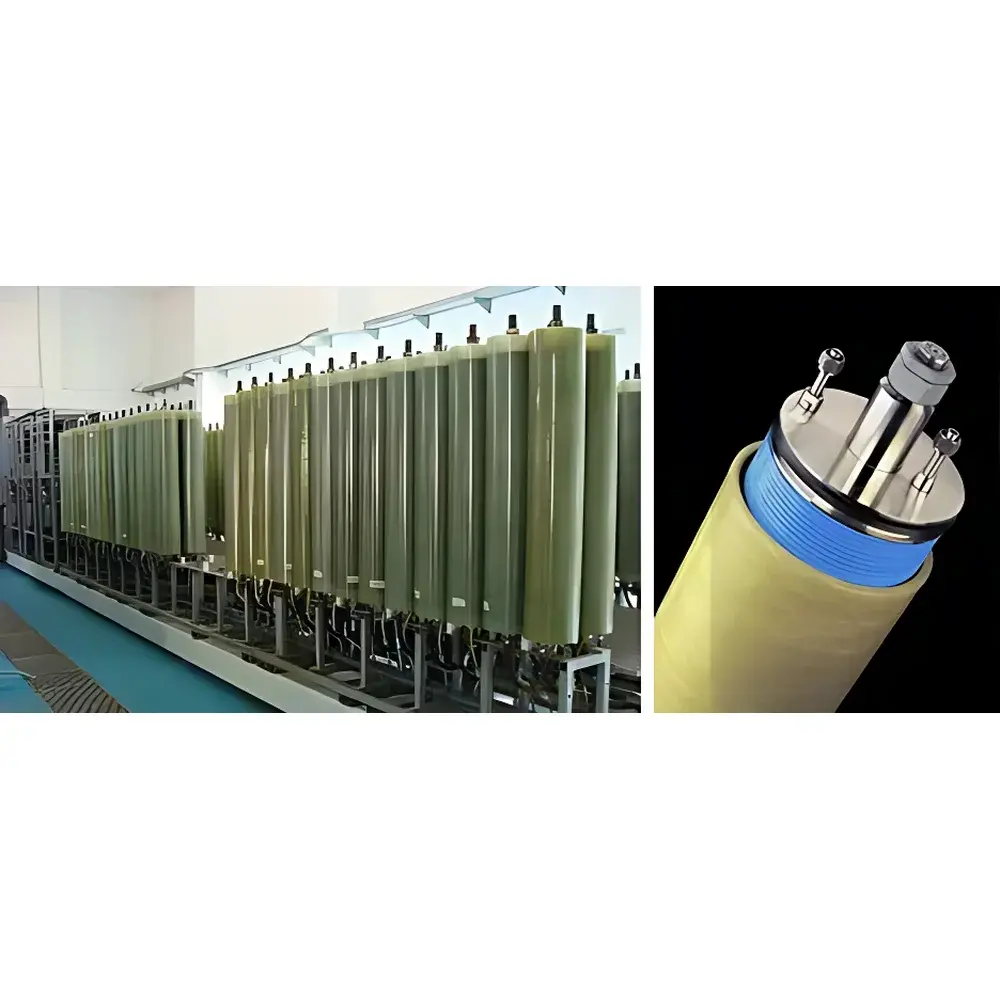
DTRO Membrane Column System by New Biolink
| Brand | New Biolink |
|---|---|
| Origin | Beijing, China |
| Manufacturer Type | Authorized Distributor |
| Country of Origin | China |
| Model | DTRO |
| Application | Industrial Wastewater Treatment & High-Salinity Liquid Purification |
| Membrane Configuration | Disc Tube Reverse Osmosis (DT-RO) |
| Feed Water SDI Tolerance | Up to 6.5 |
| Typical Recovery Rate | 75–90% |
| Effluent Conductivity | As low as 100 µS/cm |
| Design Service Life | 5–10 years |
| COD<sub>Cr</sub> Tolerance | 1,000–20,000 mg/L |
| Total Dissolved Solids (TDS) Tolerance | 1,000–20,000 mg/L |
| Operating Cost | < USD 0.30 per cubic meter (based on typical energy & consumables) |
Overview
The DTRO (Disc Tube Reverse Osmosis) Membrane Column System by New Biolink is an engineered solution for high-fouling, high-salinity, and high-COD industrial wastewater streams where conventional spiral-wound RO membranes fail. Unlike standard RO configurations, the DTRO design features a mechanically robust, open-channel flow path formed between stacked disc-shaped spacers and flat-sheet membranes mounted on a central pressure tube. This geometry enables turbulent crossflow under high-pressure operation (typically 50–90 bar), minimizing concentration polarization and particle deposition. The system operates on the principle of pressure-driven solvent (water) transport through semi-permeable polyamide thin-film composite membranes, rejecting dissolved ions, colloids, organics, heavy metals, ammonia nitrogen, and micropollutants with high selectivity. It is purpose-built for zero-liquid discharge (ZLD) pretreatment, landfill leachate polishing, seawater concentrate management, and advanced reuse of process effluents in chemical, pharmaceutical, and metal finishing industries.
Key Features
- Open-channel hydraulic architecture eliminates dead zones and resists fouling from suspended solids, colloids, or viscous organics.
- High SDI tolerance (up to 6.5) reduces or eliminates need for extensive upstream ultrafiltration or multimedia filtration.
- Modular column design allows scalable deployment—from pilot-scale testing to full plant integration—without redesigning feed distribution networks.
- Standardized 120 mm or 160 mm diameter membrane columns with stainless steel 316L housings ensure corrosion resistance in aggressive brine environments.
- Integrated hydraulic balancing across multiple columns maintains uniform flux distribution and extends membrane service life.
- Designed for continuous operation under variable feed quality; validated for long-term stability at >85% recovery in leachate applications.
Sample Compatibility & Compliance
The DTRO system processes complex aqueous matrices including landfill leachate, reverse osmosis concentrate, electroplating rinse water, coal gasification wastewater, and pharmaceutical manufacturing effluents. It complies with core functional requirements outlined in ISO 15839 (Water quality — Specifications for membrane filtration equipment), ASTM D4195 (Standard Practice for Testing Reverse Osmosis Systems), and EU Directive 2000/60/EC (Water Framework Directive) for treated effluent reuse standards. When integrated into validated GMP or GLP facilities, the system supports audit-ready documentation for FDA 21 CFR Part 11-compliant data integrity if paired with appropriate SCADA-level control software (e.g., Siemens Desigo CC or Rockwell FactoryTalk).
Software & Data Management
New Biolink provides optional PLC-based control interfaces (Siemens S7-1200 or Allen-Bradley Micro850) with Modbus TCP/RTU and OPC UA connectivity. Real-time monitoring includes feed/retentate/permeate pressure, flow rates, temperature, conductivity, pH, and transmembrane pressure differential. All operational parameters are timestamped and stored locally for ≥12 months; historical datasets export to CSV or integrate with enterprise MES/LIMS platforms via secure HTTPS API. Audit trails meet ALCOA+ principles (Attributable, Legible, Contemporaneous, Original, Accurate, Complete, Consistent, Enduring, Available) when deployed with electronic signature-enabled HMI firmware.
Applications
- Landfill leachate treatment to meet discharge limits per EPA Method 1664B and China’s GB 16889-2008.
- Concentrate polishing in seawater desalination plants to enable brine minimization prior to thermal evaporation or crystallization.
- ZLD systems for textile dyeing, petrochemical refining, and battery manufacturing wastewater containing recalcitrant organics and multivalent ions.
- Reuse of cooling tower blowdown and process rinse water in semiconductor fabrication cleanrooms (meeting SEMI F57 purity benchmarks).
- Pre-concentration step ahead of evaporators or mechanical vapor recompression (MVR) units to reduce thermal load and energy consumption.
FAQ
What is the maximum allowable feed TDS for stable DTRO operation?
Typical design limit is 20,000 mg/L TDS; however, performance validation requires site-specific feed characterization—including scaling potential (Langelier Saturation Index), silica saturation, and organic fouling index (OFI).
Can DTRO replace evaporation in all ZLD applications?
No—it serves as a high-recovery pre-concentrator; final solids separation still requires thermal or crystallization technologies for complete volume reduction.
Is chemical cleaning required? How frequently?
Yes; citric acid (pH 2.5–3.0) and sodium hydroxide (pH 11–12) clean-in-place (CIP) cycles are performed every 2–6 weeks depending on feed composition and operating flux.
Does the system support remote diagnostics?
Yes—via optional 4G/LTE gateway with encrypted MQTT telemetry; firmware updates and alarm notifications are configurable through New Biolink’s cloud portal.
What documentation is provided for regulatory submissions?
Factory acceptance test (FAT) reports, membrane material compliance certificates (NSF/ANSI 61, REACH), pressure vessel ASME U-stamp documentation (for custom-engineered housings), and IQ/OQ protocol templates are included.
Related Products



