
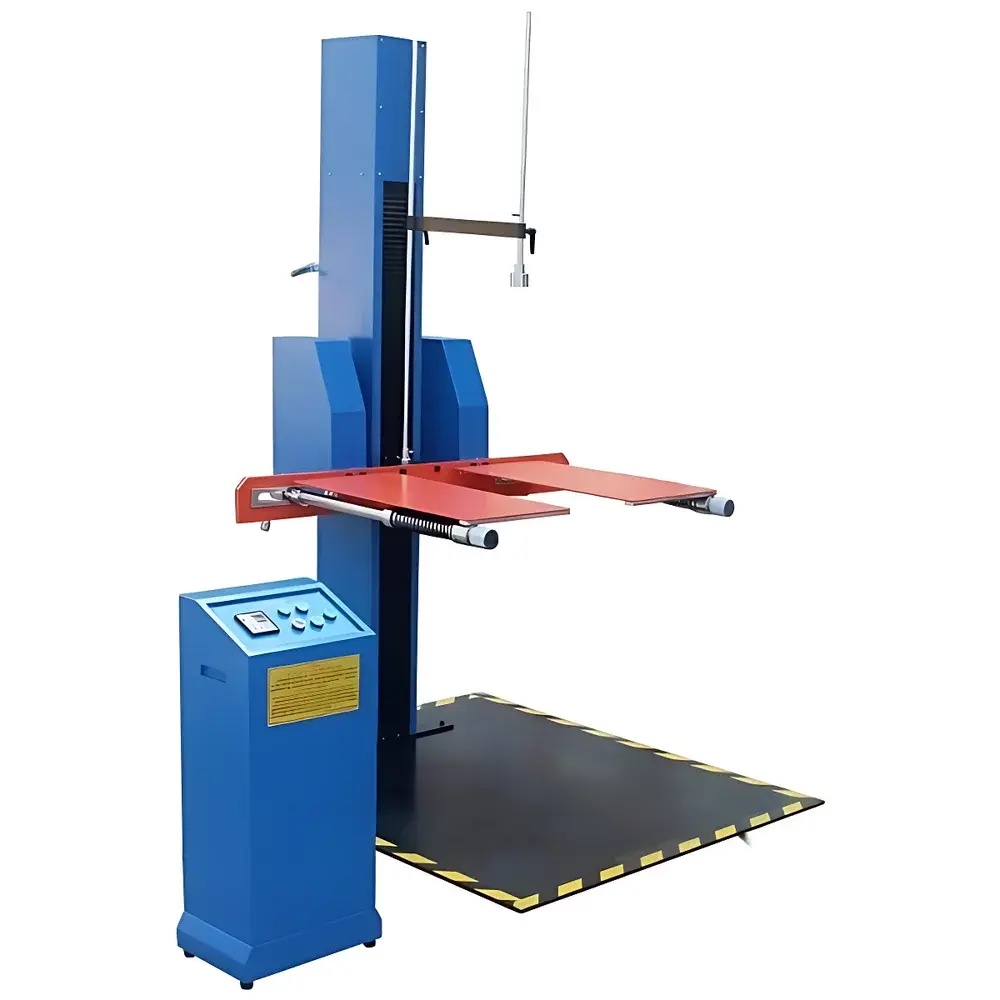
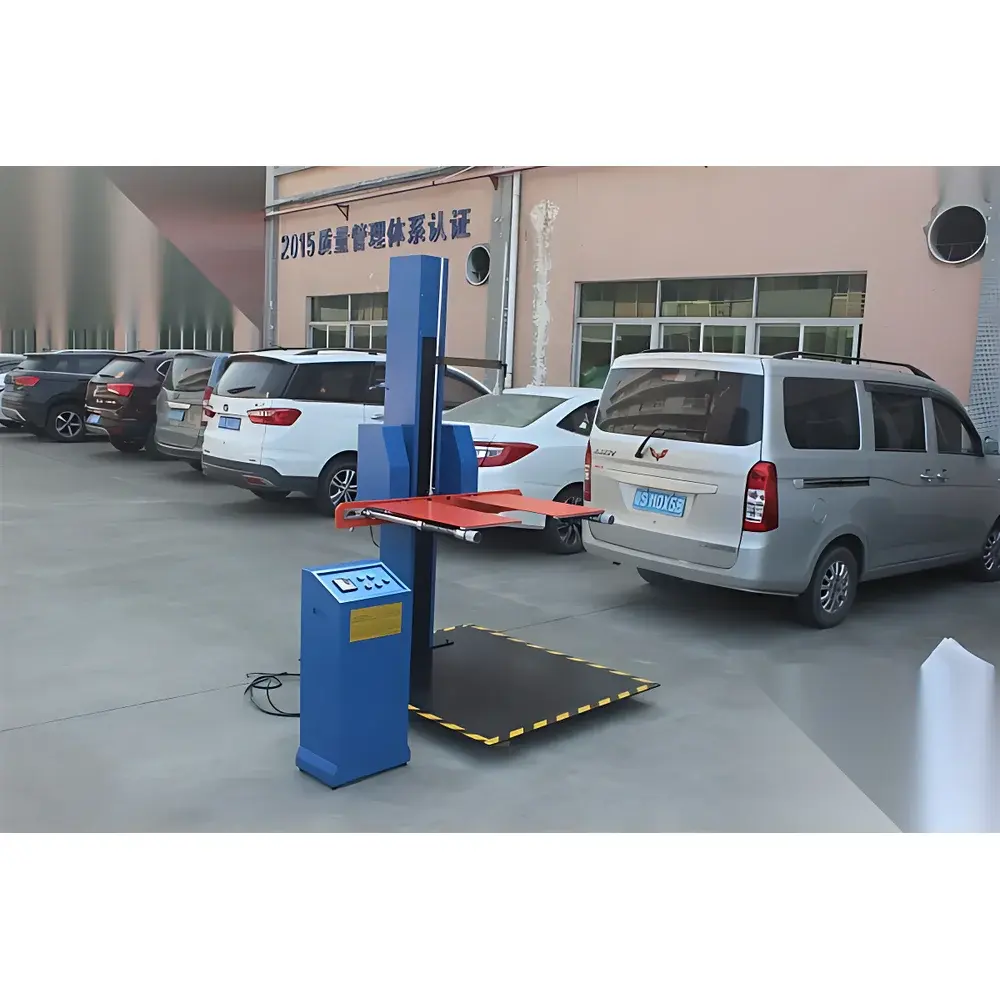
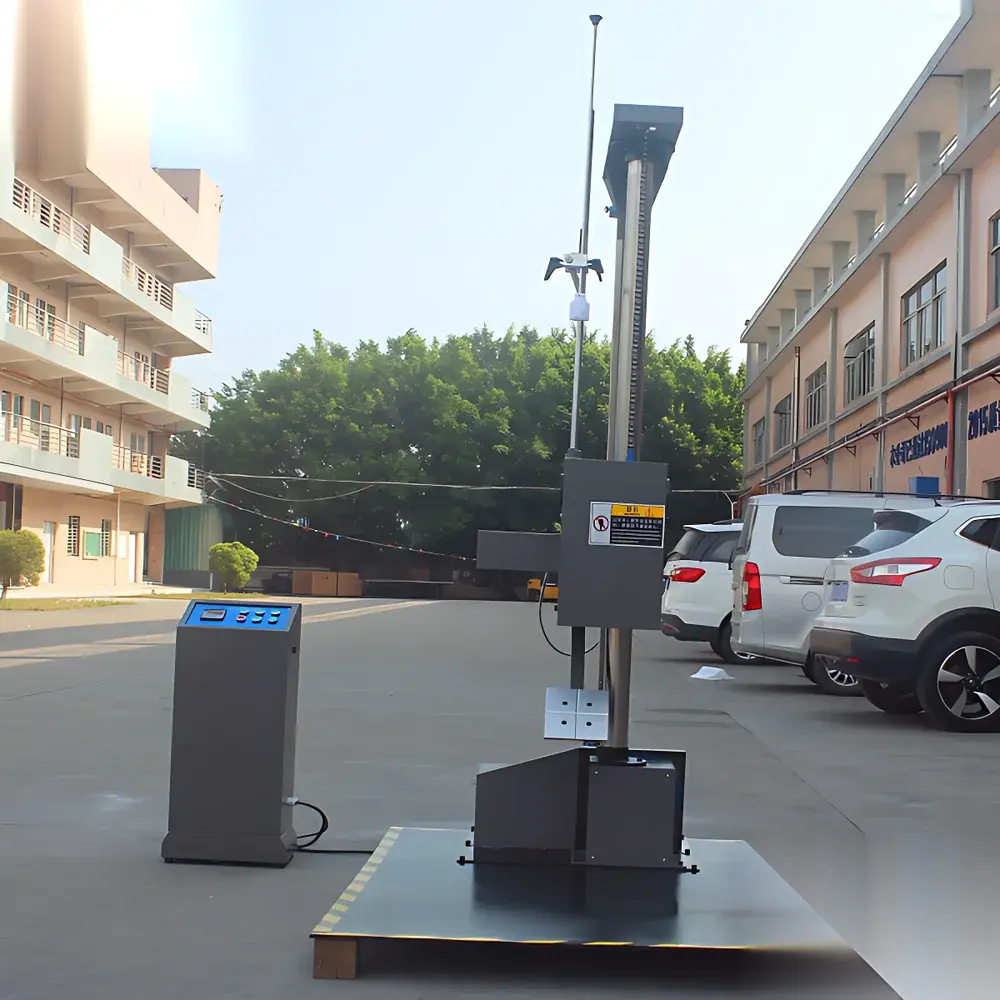
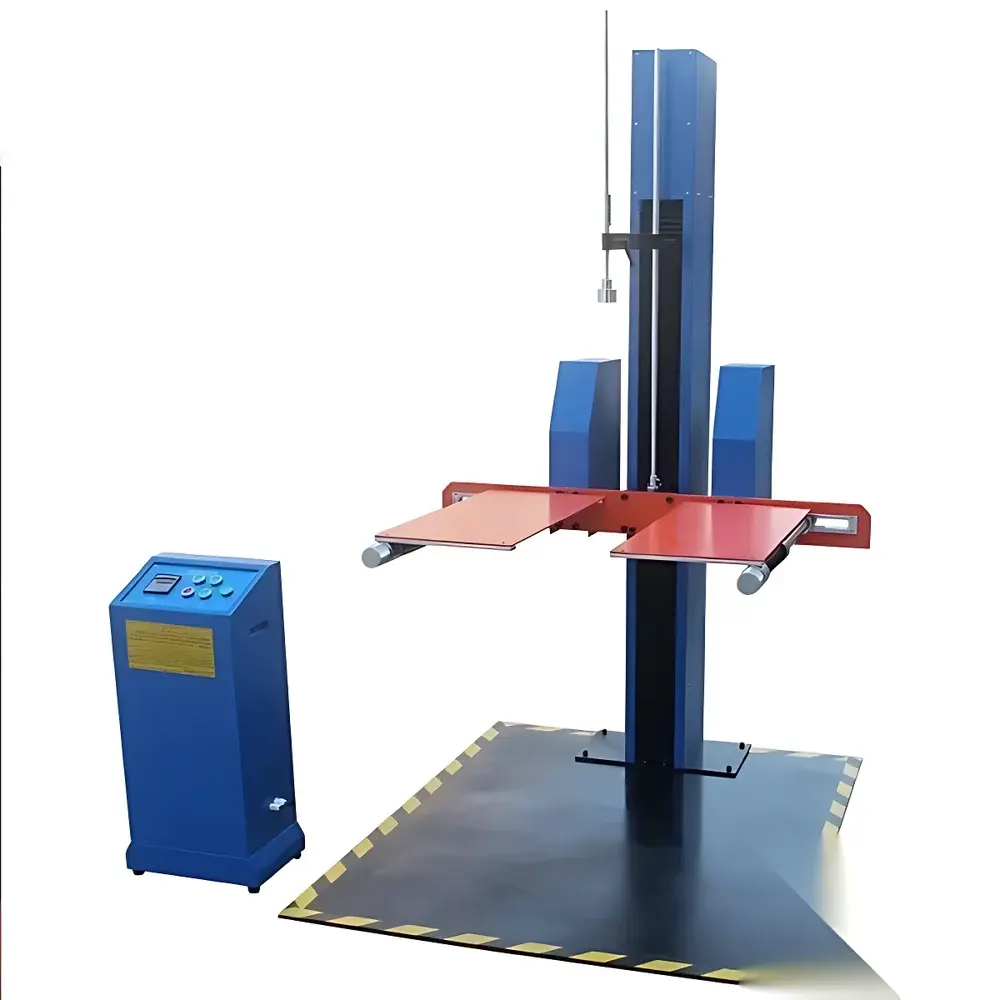
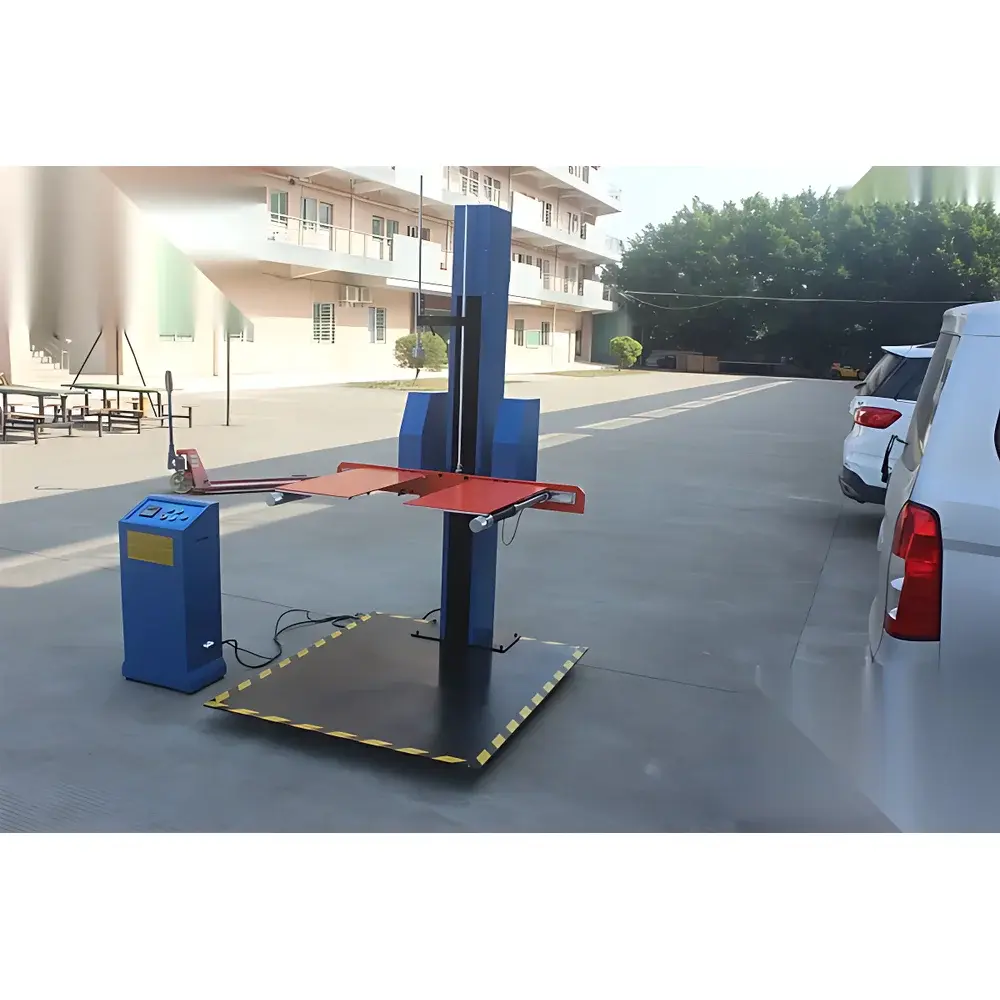
Dual-Arm Drop Testing Machine
| Brand | Other Brands |
|---|---|
| Origin | Imported |
| Manufacturer Type | General Distributor |
| Price | USD 1,700 (approx.) |
| Compliance | GB/T 4857.5, ISO 2248:1985, GB/T 4857.1/2/17/18 |
| Height Accuracy | ±2% or ±10 mm |
| Drive System | Electric lifting & release |
| Drop Modes | Face, Edge, Corner |
| Frame Material | Precision-ground chromed steel columns |
| Lifting Mechanism | Taiwan-made ST custom chain drive |
| Release Mechanism | Free-fall separation with minimal vibration |
| Height Measurement | Digital height indicator with rotary encoder tracking |
| Safety Features | Emergency stop, guard interlock, mechanical limit switches |
Overview
The Dual-Arm Drop Testing Machine is an electromechanically actuated impact simulation system engineered for standardized evaluation of package integrity under vertical free-fall conditions. It operates on the principle of controlled gravitational acceleration, enabling precise reproduction of real-world shipping and handling impacts—including face, edge, and corner drops—on fully assembled, unitized, or palletized packaging systems. Designed in strict accordance with internationally harmonized test protocols—including GB/T 4857.5 (China’s national adoption of ISO 2248:1985) and supplementary standards governing test specimen conditioning (GB/T 4857.2), labeling conventions (GB/T 4857.1), test plan formulation (GB/T 4857.17), and quantitative data requirements (GB/T 4857.18)—this machine delivers repeatable, auditable, and traceable drop performance data essential for packaging validation, design iteration, and regulatory documentation.
Key Features
- Robust dual-column structural frame fabricated from high-tensile, precision-ground steel shafts with electroplated chromium surface finish—ensuring dimensional stability, corrosion resistance, and long-term repeatability across thousands of drop cycles.
- Taiwan-sourced ST-series heavy-duty roller chain drive system, specifically engineered for synchronized vertical travel of dual lifting arms—minimizing lateral sway and maintaining orthogonal alignment during ascent and release.
- True three-mode drop capability: independent mechanical positioning enables accurate orientation for face-down, edge-first, and corner-leading impacts without manual reconfiguration or fixture swapping.
- Fully electric operation: integrated motorized lifting, programmable height setting, and solenoid-triggered release mechanism eliminate operator variability and reduce cycle time by >40% compared to manual lever systems.
- Zero-contact separation design: load platform disengages cleanly from test specimens at release point, ensuring unimpeded free-fall trajectory and eliminating parasitic damping or rebound interference.
- Digital height monitoring via rotary encoder feedback loop coupled with LED-display height indicator—calibrated to meet ±2% relative error or ±10 mm absolute tolerance per GB/T 4857.5 Clause 5.3.2.
- Integrated safety architecture including dual-channel emergency stop circuitry, photoelectric guard interlocks, and mechanical upper/lower travel limit switches compliant with IEC 60204-1.
Sample Compatibility & Compliance
This machine accommodates a wide range of transport packaging configurations—from single-unit consumer goods boxes (up to 100 kg, 800 × 600 × 600 mm footprint) to industrial pallet loads (with optional base plate extension kit). Specimen mounting utilizes standardized clamping interfaces compatible with ASTM D6344 and ISO 2248 test specimen preparation guidelines. All operational parameters—including drop height, orientation, and repetition count—are documented in accordance with GLP principles and support 21 CFR Part 11-compliant electronic record generation when paired with validated external data acquisition software. Test reports generated using this system satisfy audit requirements for ISO 9001:2015 clause 8.5.1 (Control of production and service provision) and ISTA-certified packaging qualification programs.
Software & Data Management
While the base configuration features embedded digital height control without onboard data logging, the system includes RS-232 and analog voltage output ports for integration with third-party SCADA platforms or LIMS environments. When interfaced with compliant laboratory software (e.g., LabArchives, TrackWise, or custom Python-based acquisition tools), operators can automatically timestamp each drop event, associate metadata (operator ID, ambient temperature/humidity per GB/T 4857.2, specimen ID), and export CSV-formatted datasets for statistical process control (SPC) analysis—including Weibull failure modeling and cumulative damage assessment. Audit trails comply with FDA 21 CFR Part 11 requirements when deployed with electronic signature-capable middleware.
Applications
- Validation of primary and tertiary packaging systems for electronics, pharmaceuticals, medical devices, and e-commerce fulfillment.
- Root-cause analysis of field failures through correlation of lab-induced damage modes (crush, seam rupture, lid detachment) with observed in-transit defects.
- Supporting Design for Logistics (DfL) initiatives by quantifying the effect of cushioning material density, corrugated board grade, and closure method on drop survivability.
- Pre-shipment compliance testing for Amazon Packaging Support Program (APSP), Walmart Sustainable Packaging Playbook, and EU Directive 94/62/EC packaging waste reduction targets.
- Internal quality assurance workflows requiring documented evidence of packaging robustness prior to launch of new SKUs or regional market entries.
FAQ
What standards does this machine directly support?
It is mechanically and functionally aligned with GB/T 4857.5–2008 (identical to ISO 2248:1985), and its dimensional tolerances, release mechanism timing, and height measurement accuracy satisfy all normative clauses in that standard.
Can it perform sequential drop testing per ISTA 3A or 3E protocols?
Yes—when used with externally documented test sequences and manually adjusted orientations between drops; however, automated multi-orientation sequencing requires optional robotic end-effector integration.
Is calibration certification included with purchase?
A factory-issued dimensional verification report is provided; full metrological calibration against NIST-traceable height standards must be performed annually by an accredited third-party lab per ISO/IEC 17025.
What maintenance intervals are recommended?
Chain tension inspection every 200 operational hours; chromium column surface cleaning with non-abrasive solvent monthly; encoder calibration verification quarterly.
Does it support variable drop height ramping for progressive damage analysis?
Yes—the digital height controller allows discrete stepwise height increments (minimum 5 mm), enabling systematic determination of critical failure thresholds via up-and-down staircase testing per ASTM E1820 Annex A5.
Related Products



