
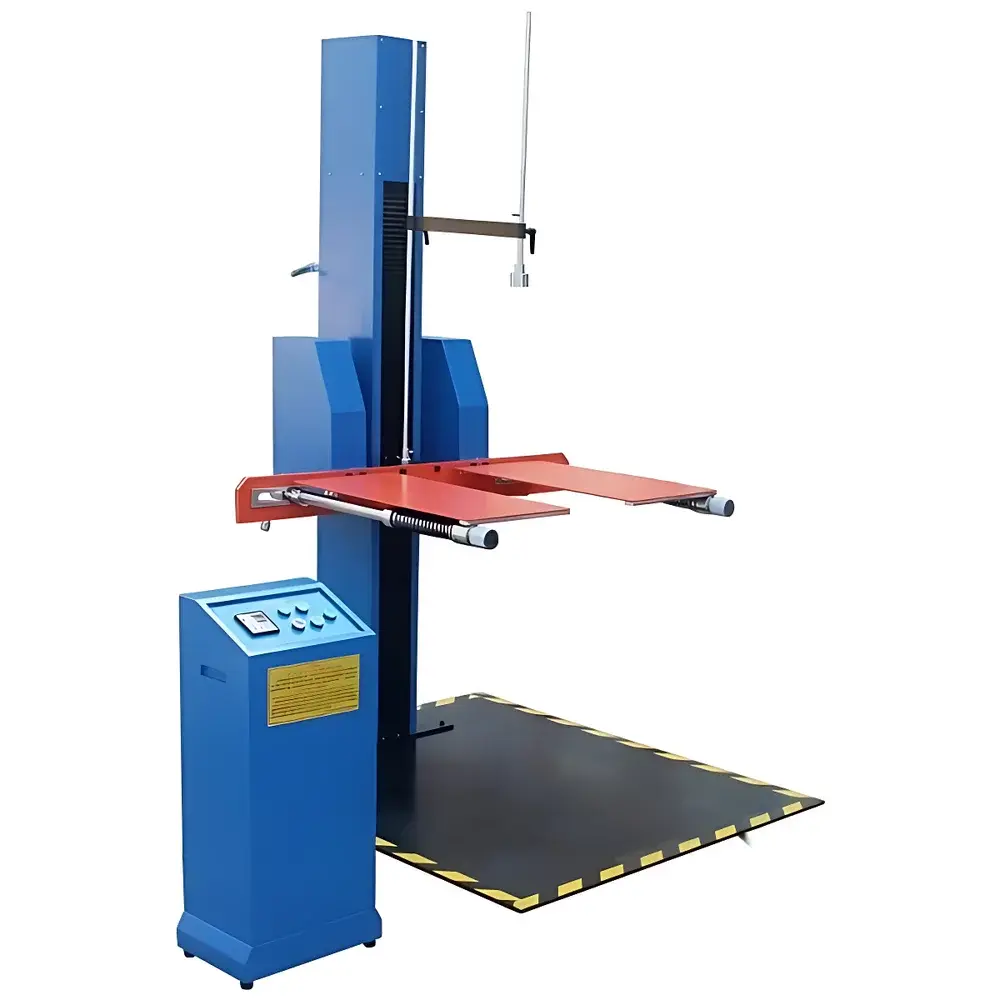
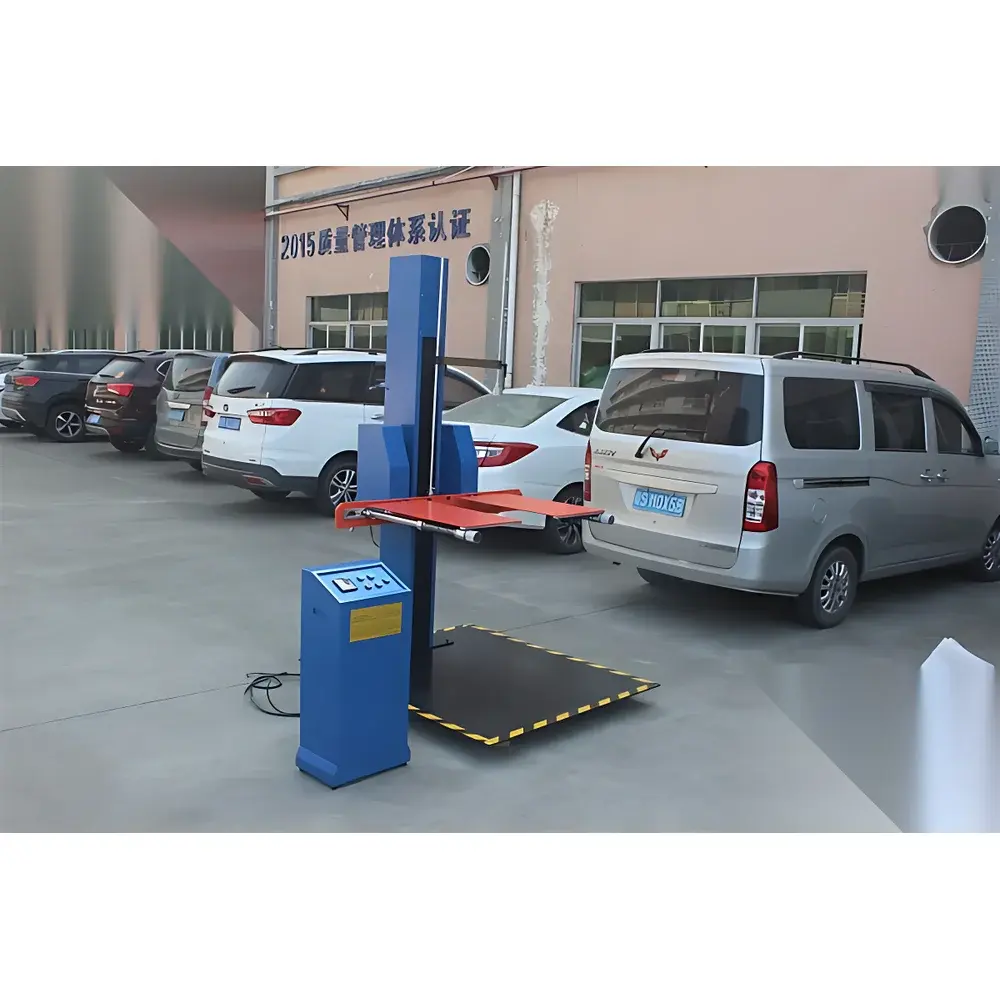
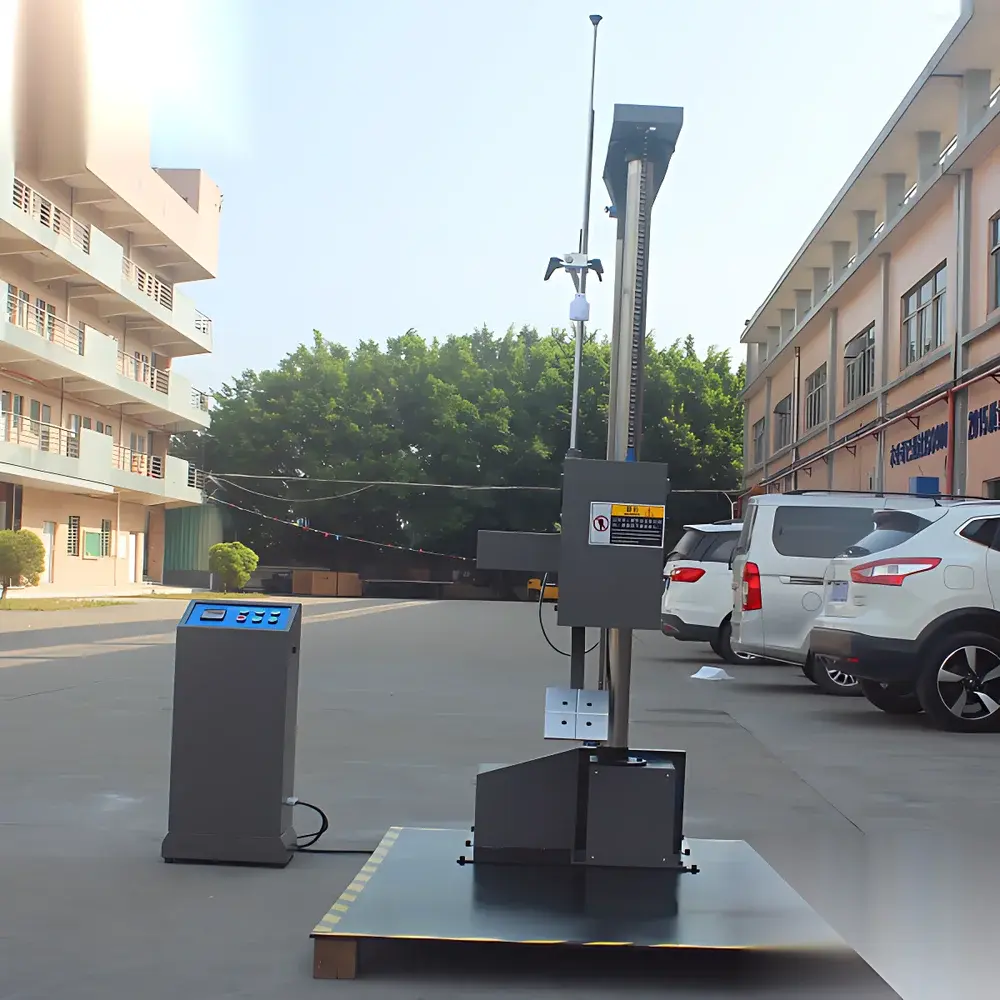
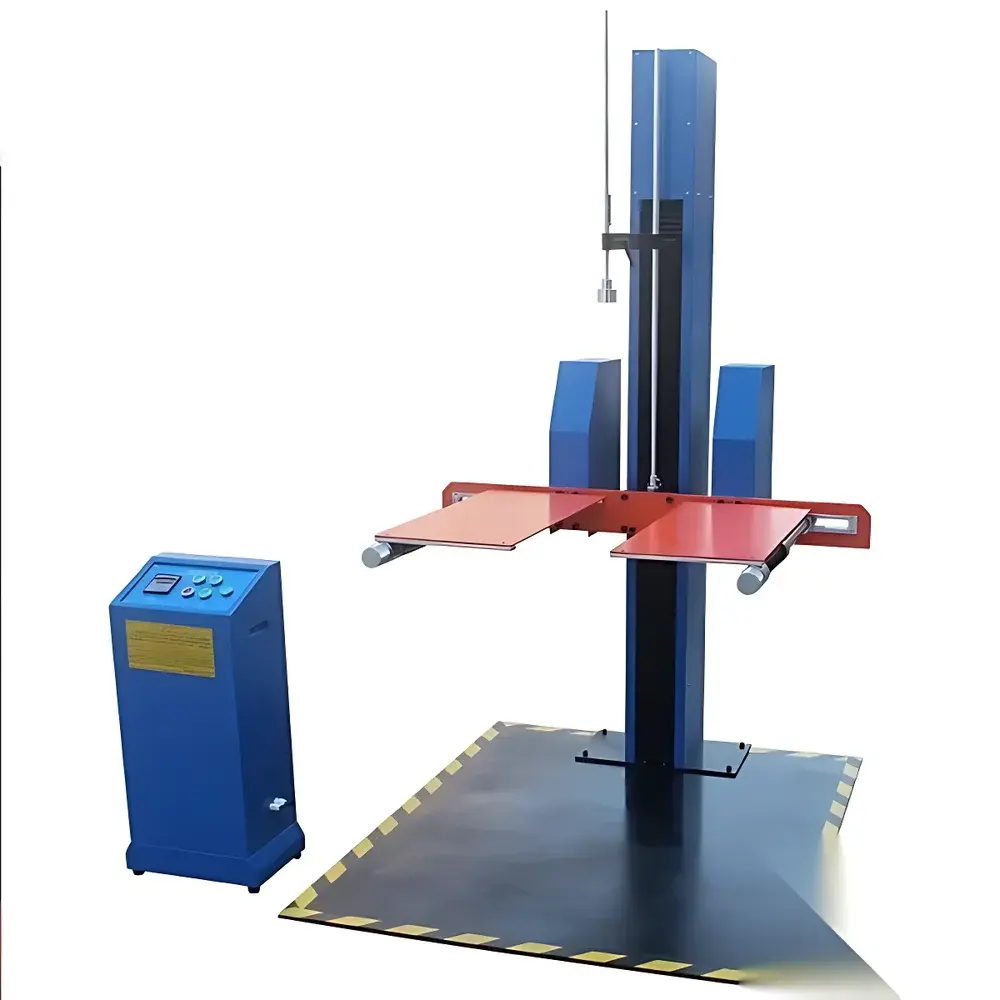
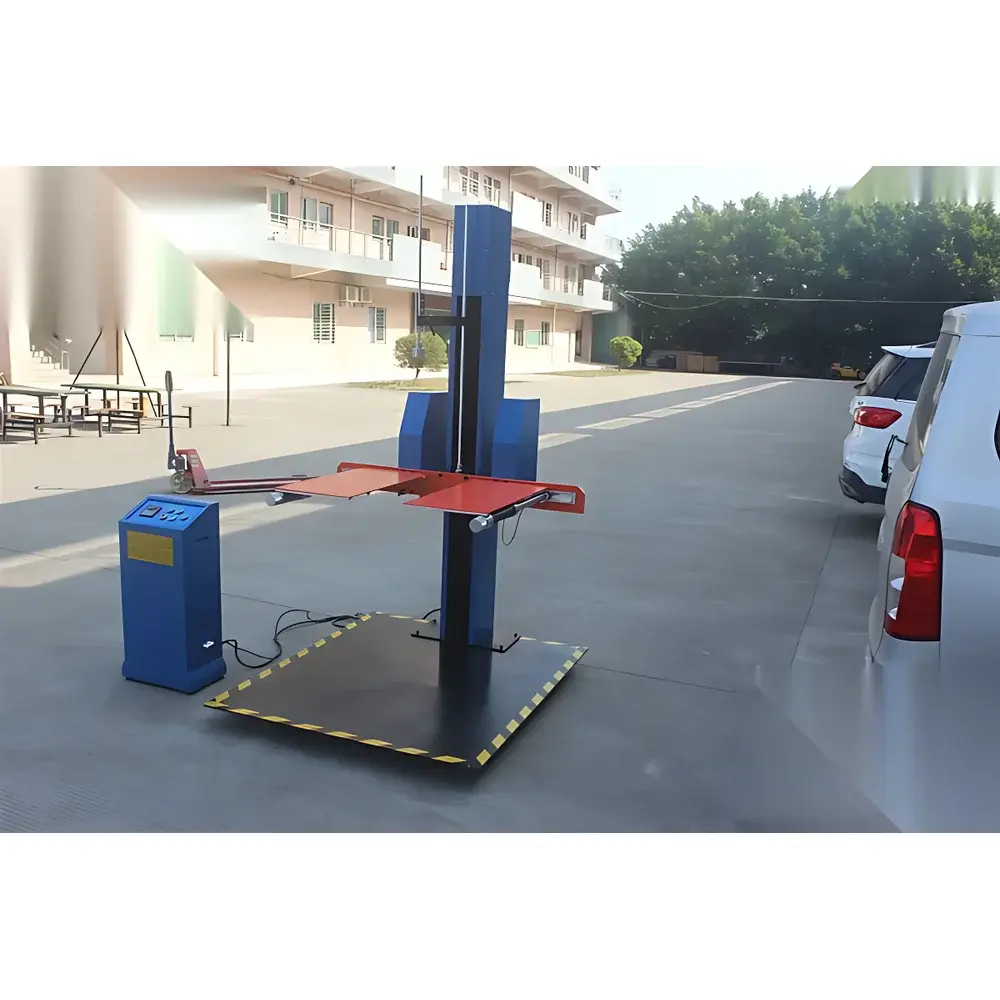
Dual-Wing Drop Testing Machine
| Brand | Other Brands |
|---|---|
| Origin | Imported |
| Manufacturer Type | General Distributor |
| Price | USD 1,700 (approx.) |
| Compliance | GB/T 4857.5, ISO 2248:1985, GB/T 4857.1, GB/T 4857.2, GB/T 4857.17, GB/T 4857.18 |
Overview
The Dual-Wing Drop Testing Machine is a precision-engineered mechanical impact tester designed to evaluate the structural integrity and shock resistance of packaged products under controlled vertical free-fall conditions. It operates on the principle of gravitational acceleration, releasing test specimens from predefined heights to simulate real-world handling, transportation, and distribution impacts. Unlike single-point drop testers, this dual-wing configuration enables systematic, repeatable evaluation of three critical impact orientations—face, edge, and corner—within a single integrated frame. The machine adheres strictly to internationally recognized packaging performance testing standards, including ISO 2248:1985 and GB/T 4857.5, ensuring data compatibility for regulatory submissions, quality audits, and comparative benchmarking across global supply chains.
Key Features
- Dual-wing mechanical release mechanism enabling independent, synchronized face/edge/corner drop sequences without manual repositioning
- Electromechanical lifting, release, and reset system with programmable height positioning and automatic cycle control
- High-precision digital height indicator coupled with rotary encoder-based position feedback, achieving ±2% or ±10 mm accuracy relative to set height
- Hydraulic damping buffer system integrated into the base structure to minimize residual vibration, extend service life, and ensure operator safety
- Single-arm, dual-column rigid frame fabricated from custom-specified high-tensile steel, precision ground and chromium-plated for dimensional stability and corrosion resistance
- Free-release carrier design ensures complete decoupling between specimen support platform and test item at moment of release—eliminating parasitic torque and guaranteeing true free-fall dynamics
- Adjustable impact surface alignment: angular deviation between drop plane and base plate ≤ 5°, verified per ISO 2248 Annex B
Sample Compatibility & Compliance
The machine accommodates standard transport packaging units up to 100 kg and dimensions of 800 mm × 600 mm × 600 mm (W × D × H). It supports rigid, semi-rigid, and flexible primary and secondary packaging configurations—including corrugated boxes, plastic crates, foam-lined cartons, and shrink-wrapped pallet loads. All operational procedures and calibration protocols align with GLP principles for laboratory testing. Test reports generated using this equipment meet documentation requirements for ISO/IEC 17025-accredited laboratories and are admissible in FDA-regulated packaging validation dossiers when paired with traceable height verification and environmental conditioning per GB/T 4857.2.
Software & Data Management
While the base configuration operates via embedded electromechanical controls, optional RS-232 or USB interface modules enable integration with external PC-based test management software. This facilitates automated logging of drop height, sequence order, impact orientation, and timestamp metadata. Audit trails comply with FDA 21 CFR Part 11 requirements when deployed with validated software platforms supporting electronic signatures and user-access controls. Height calibration records, maintenance logs, and test run summaries can be exported in CSV or PDF format for internal QA review or third-party certification bodies.
Applications
- Validation of shipping container performance for e-commerce fulfillment centers
- Pre-shipment qualification of medical device packaging per ISO 11607-1
- Comparative analysis of cushioning material efficacy (e.g., EPS, molded pulp, air pillows)
- Root cause investigation of field damage incidents through controlled replication of drop scenarios
- Development-stage testing of consumer electronics enclosures, automotive components, and industrial instrumentation housings
- Supporting ISTA 1A, 2A, and 3A test protocols when combined with environmental preconditioning per GB/T 4857.2
FAQ
What standards does this machine directly support?
It is fully compliant with GB/T 4857.5 and ISO 2248:1985 for vertical impact drop testing, and references GB/T 4857.1 (labeling), GB/T 4857.2 (conditioning), GB/T 4857.17 (test planning), and GB/T 4857.18 (quantitative test design).
Can it perform sequential multi-orientation drops without manual intervention?
Yes—the dual-wing actuation system allows pre-programmed sequences of face → edge → corner drops at identical or varying heights, minimizing operator variability.
Is height calibration traceable to national metrology institutes?
The encoder-based height measurement system supports NIST-traceable calibration using certified gauge blocks and laser interferometry; calibration certificates are issued upon request.
What maintenance intervals are recommended for long-term repeatability?
Lubrication of guide columns and inspection of hydraulic dampers every 500 cycles; annual verification of encoder linearity and release timing consistency using high-speed motion capture.
Does it support non-standard drop angles beyond vertical?
No—this model is engineered exclusively for vertical free-fall per ISO 2248. For inclined or tumble testing, complementary equipment such as incline impact testers or rotational drop simulators is required.
Related Products



