
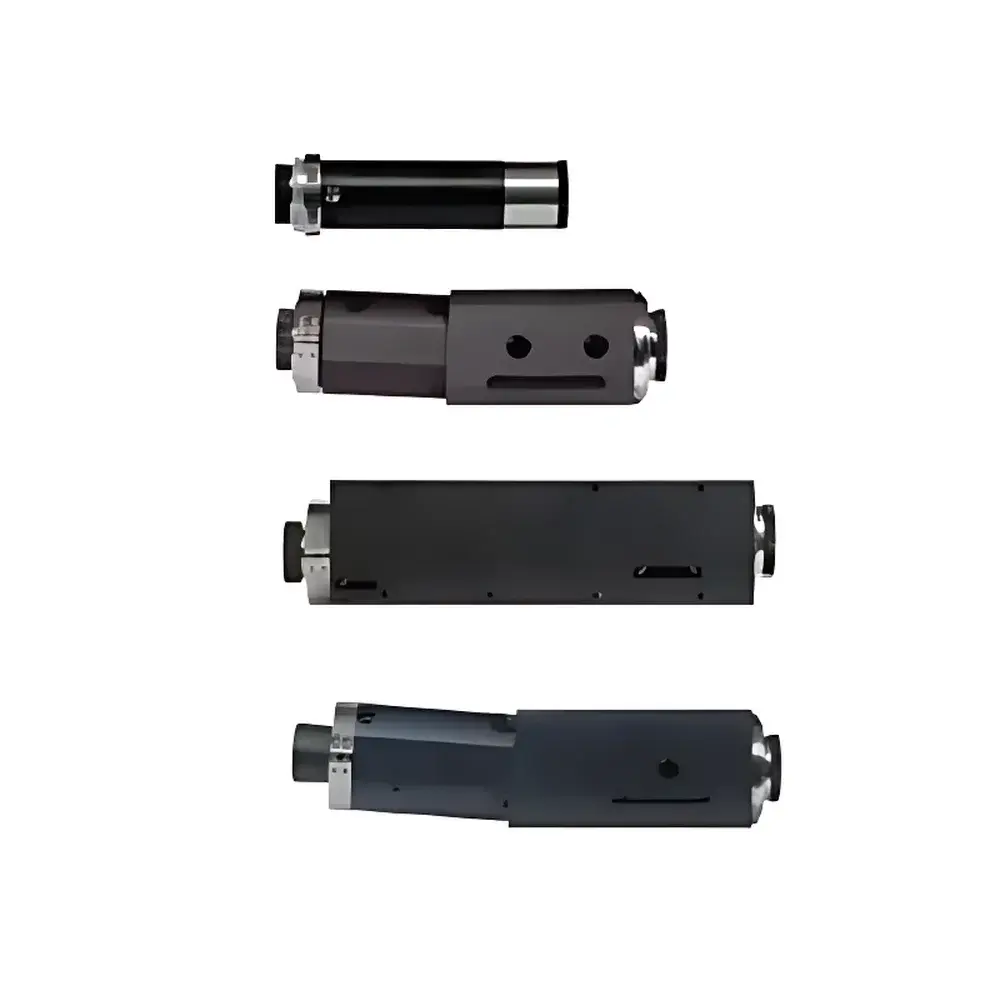
Dualix Spectral Imaging Imspector Series Transmission Grating-Based Hyperspectral Imaging Module
| Brand | Dualix Spectral Imaging |
|---|---|
| Origin | Sichuan, China |
| Model | Imspector V10 / V10H / V10E / N17E / N25E / M50M |
| Spectral Range | 400–1000 nm (VNIR), 900–1700 nm (NIR), 1000–2500 nm (SWIR), 3.0–5.0 µm (MWIR) |
| Spectral Resolution | 2.8–35 nm (model-dependent) |
| Spatial Resolution | <40 µm to <9 µm (rms, model-dependent) |
| Slit Width Options | 18–150 µm (selectable) |
| Slit Length | 9.8–19 mm |
| Optical Interface | Standard C-mount or custom M43/M23 (MWIR) |
| F-number | f/2.0 (NIR/SWIR/MWIR models) |
| Stray Light | <0.5% |
| Throughput Efficiency | >50% (VNIR/NIR/SWIR), >65% (MWIR) |
| Housing Material | Anodized Aluminum |
| Operating Mode | Push-broom scanning with external CCD/InGaAs/MCT camera |
| Environmental Rating | Sealed optical path for dust resistance |
| Compliance | Designed for ISO/IEC 17025-aligned lab environments |
Overview
The Dualix Spectral Imaging Imspector Series is a family of transmission grating-based push-broom hyperspectral imaging modules engineered for high-fidelity spectral-spatial data acquisition across ultraviolet-visible-near-infrared (UV-VNIR), short-wave infrared (SWIR), and mid-wave infrared (MWIR) spectral domains. Unlike filter-wheel or tunable-filter systems, the Imspector employs a fixed transmissive diffraction grating in collimated beam geometry, enabling simultaneous dispersion of incident light along one spatial axis while preserving orthogonal spatial information from the scene. This optical architecture delivers continuous, contiguous spectral sampling without mechanical wavelength scanning—ensuring high radiometric stability, temporal coherence, and minimal photonic loss. Each module is optimized for integration with scientific-grade area-scan or line-scan cameras via standardized C-mount (VNIR/NIR/SWIR) or custom M43/M23 interfaces (MWIR), supporting both laboratory benchtop deployment and ruggedized airborne or ground-based remote sensing platforms.
Key Features
- Transmission grating optics with aberration-corrected, all-refractive design—eliminating ghosting, astigmatism, and geometric distortion (e.g., pincushion/trapezoidal errors <1 µm RMS in V10E variant)
- Hermetically sealed optical path prevents contamination from ambient dust and humidity—critical for long-term field operation and industrial inline monitoring
- Modular slit assembly with interchangeable widths (18–150 µm) and lengths (9.8–19 mm), enabling optimization of spectral resolution vs. signal-to-noise ratio per application
- High optical throughput (>50% typical; >65% in MWIR configuration) achieved through anti-reflective coated fused silica (VNIR), CaF₂ (NIR), ZnSe (SWIR), and Ge (MWIR) substrates
- Thermally stable aluminum housing with precision-machined kinematic mounts—designed for passive thermal equilibrium in uncooled operation or compatibility with active temperature stabilization
- Push-broom acquisition architecture compatible with synchronization signals (TTL/RS-422) for precise motion compensation in UAV, conveyor, or gimbal-mounted deployments
Sample Compatibility & Compliance
The Imspector series accommodates diverse sample geometries—from microscopic tissue sections on glass slides to large-area outdoor terrain—through selection of appropriate fore-optics (e.g., telecentric lenses, wide-angle objectives, or telescope couplers). Its modular interface enables direct coupling to silicon-based CCD/CMOS (400–1000 nm), InGaAs (900–1700 nm), extended-InGaAs (1000–2500 nm), or cooled MCT (3.0–5.0 µm) detectors. All variants are designed to meet optical performance requirements referenced in ASTM E131 (Standard Terminology Relating to Molecular Spectroscopy), ISO 18566 (Hyperspectral imaging for food quality), and EN 16749 (Remote sensing data quality assurance). When paired with validated acquisition software, the system supports audit trails, electronic signatures, and raw-data immutability—fulfilling documentation prerequisites under FDA 21 CFR Part 11 and EU Annex 11 for regulated analytical workflows.
Software & Data Management
Imspector modules operate seamlessly with industry-standard hyperspectral processing environments including ENVI, MATLAB Hyperspectral Toolbox, Python-based scikit-image/hyperspy, and Dualix’s proprietary SpectraView Suite. The latter provides real-time preview, non-uniformity correction (NUC), dark current subtraction, spectral calibration (using Hg/Ar lamp references), and radiometric normalization against calibrated reflectance standards (e.g., Spectralon®). All raw data are stored in interoperable formats (BSQ/BIL/BIP ENVI headers, HDF5, or TIFF stacks) with embedded metadata compliant with the NASA HDF-EOS and ISO 19115 geospatial standards. For GxP environments, optional IQ/OQ/PQ documentation packages and 21 CFR Part 11-compliant user access control modules are available upon request.
Applications
- Quality Control & Process Monitoring: Real-time defect detection in solar cell wafers, pharmaceutical tablet coating uniformity, printed electronics layer thickness, and textile dye consistency
- Agricultural Phenotyping: Quantitative assessment of chlorophyll content, water stress indices (NDWI, PRI), pesticide residue mapping, and early disease symptom detection in leaves and fruit surfaces
- Environmental Remote Sensing: Oil spill identification and thickness estimation on marine surfaces, microplastic classification in coastal sediments, and vegetation species discrimination in heterogeneous landscapes
- Cultural Heritage Analysis: Non-invasive pigment identification in historical manuscripts and paintings, counterfeit currency verification via spectral signature matching, and salt efflorescence mapping on masonry structures
- Biomedical Research: Label-free tissue characterization in histopathology, fluorescence lifetime correlation in cell cultures, and spectral unmixing of hemoglobin/oxyhemoglobin in cutaneous vascular studies
- Defense & Security: Concealed material detection (e.g., explosives precursors, camouflaged objects) using MWIR emissivity contrast and atmospheric window exploitation
FAQ
What camera interfaces are supported?
Standard C-mount is provided for VNIR, NIR, and SWIR models; MWIR variants (M50M) use custom M43 or M23 flange interfaces to accommodate cooled MCT focal plane arrays.
Is radiometric calibration included?
Each unit ships with factory-measured slit function and relative spectral response data; absolute radiometric calibration requires optional NIST-traceable integrating sphere or lamp-based reference kits.
Can the Imspector be used in airborne platforms?
Yes—its compact form factor, low mass (300 g to 1.5 kg), shock-rated housing, and TTL synchronization capability make it suitable for UAV, helicopter, and fixed-wing aircraft integration.
How is spectral calibration performed?
Using mercury-argon emission lamps or laser lines; calibration coefficients are stored in ENVI-compatible header files and applied during data ingestion.
Does the system support real-time processing?
Raw frame rates up to 300 Hz (V10E, 1k×1k sensor) enable onboard FPGA-accelerated band math and anomaly detection when interfaced with compatible frame grabbers.
What environmental conditions are recommended for optimal performance?
Operating temperature range: 10–40 °C; relative humidity: <80% non-condensing; vibration: MIL-STD-810G compliant for ground vehicle mounting.






