
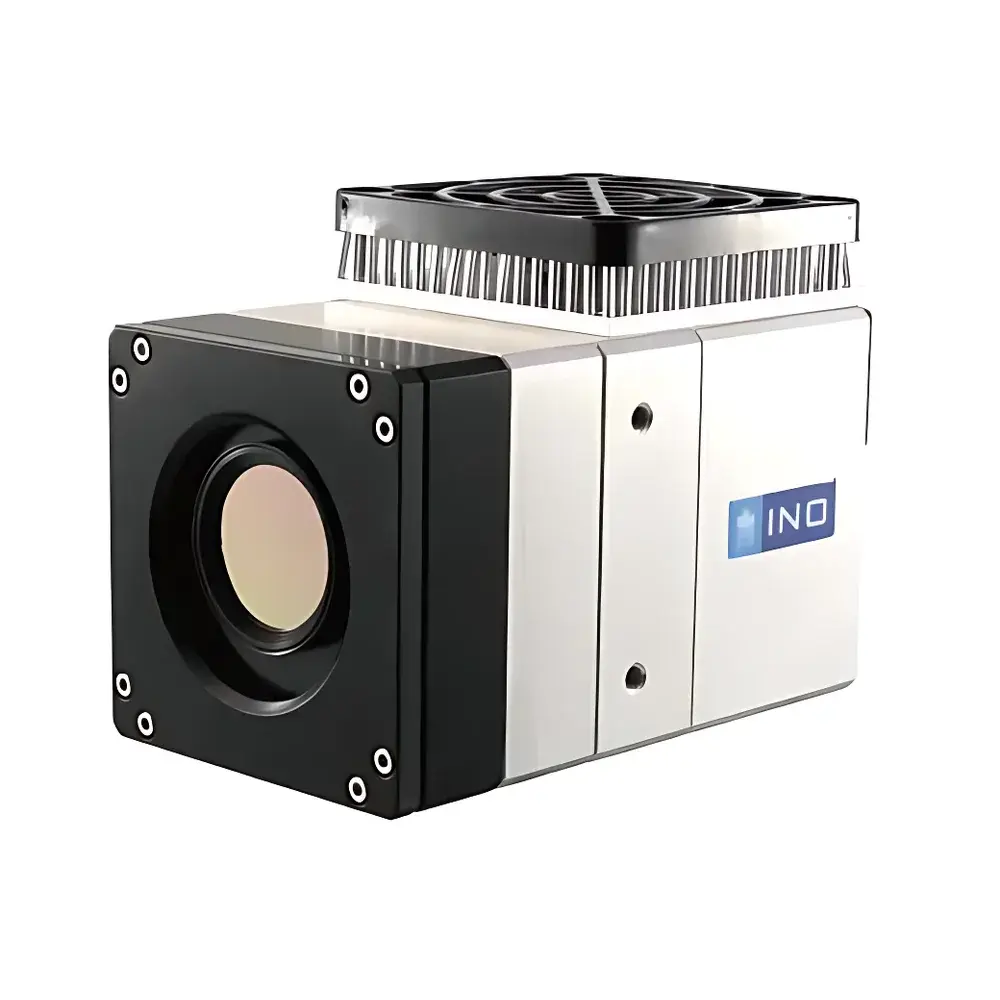
Dualix Spectral Imaging MICROXCAM Mid-Infrared Fingerprint Region Hyperspectral Imaging System
| Brand | Dualix Spectral Imaging |
|---|---|
| Origin | Sichuan, China |
| Manufacturer Type | Authorized Distributor |
| Country of Origin | China |
| Model | MICROXCAM |
| Imaging Modality | 3D Hyperspectral Imaging |
| Platform Compatibility | Ground-based & Airborne Deployment |
| Spectral Range | 500–1450 cm⁻¹ (7–20 µm) |
| Detector Technology | Uncooled Microbolometer Array with Gold-Black Broadband Absorber |
| Spectral Resolution | <16 cm⁻¹ (typical, configurable via integrated MEMS Fabry–Pérot tunable filter) |
| Spatial Resolution | ≤ 1.5 mrad IFOV (dependent on lens focal length and working distance) |
| Field of View (TFOV) | 12° × 9° (standard lens) |
| Frame Rate | Up to 25 Hz full-frame spectral cube acquisition |
| Data Output Format | Standard ENVI-compatible .hdr/.dat, IEEE 754 float32 |
Overview
The Dualix Spectral Imaging MICROXCAM is a purpose-engineered mid-infrared (MIR) hyperspectral imaging system optimized for operation in the molecular “fingerprint region” (500–1450 cm⁻¹, or 7–20 µm). Unlike near-infrared (NIR) or visible-range systems, the MICROXCAM leverages fundamental vibrational absorption bands—arising from C–H, O–H, N–H, C=O, C–O, and C–N stretching and bending modes—to deliver chemically specific spatial mapping. Its core architecture integrates an uncooled microbolometer focal plane array (FPA) with a monolithic MEMS-based Fabry–Pérot tunable filter (FP-TF), enabling rapid, step-scan spectral acquisition without moving parts or cryogenic cooling. This design eliminates the size, power, and operational constraints typical of Fourier-transform infrared (FTIR) benchtop systems, making the MICROXCAM suitable for field-deployable, real-time chemical imaging applications where molecular specificity—not just spectral contrast—is required.
Key Features
- Native operation in the 500–1450 cm⁻¹ fingerprint region—covering fundamental vibrational transitions critical for organic compound identification
- Uncooled VOx microbolometer array (640 × 512 pixels) with proprietary gold-black broadband absorber, enhancing responsivity by ≥2× across 0.4–14 µm
- MEMS-driven Fabry–Pérot interferometer with programmable spectral step resolution (down to 4 cm⁻¹), enabling adaptive spectral sampling
- Modular optical interface supporting interchangeable lenses (f/1.4, 12°–45° TFOV) and optional external cold shielding for high-dynamic-range outdoor use
- Ruggedized aluminum chassis rated IP54; operational temperature range: −10 °C to +50 °C; shock/vibration compliant per MIL-STD-810G
- Real-time onboard spectral cube generation (up to 25 Hz at 64 spectral bands) with embedded radiometric calibration and non-uniformity correction (NUC)
Sample Compatibility & Compliance
The MICROXCAM supports non-contact, label-free analysis of solid, semi-solid, and particulate samples—including pharmaceutical tablets, polymer composites, agricultural produce, soil substrates, and biological tissues—without sample preparation. Its MIR spectral fidelity enables compliance with analytical requirements outlined in ASTM E1421 (Standard Practice for Describing and Measuring Performance of Fourier Transform Infrared (FT-IR) Spectrometers), ISO 18380 (Optics and photonics — Spectral imaging — Terminology and performance parameters), and USP (Near-Infrared Spectroscopy), with appropriate method validation. While not inherently 21 CFR Part 11-compliant, its data export architecture (ENVI, HDF5, TIFF stacks) facilitates integration into validated GxP environments when deployed with qualified LIMS or ELN platforms supporting audit trails and electronic signatures.
Software & Data Management
The system ships with Dualix Spectral Studio—a cross-platform (Windows/Linux) application supporting acquisition control, spectral preprocessing (dark current subtraction, flat-field correction, atmospheric compensation), and chemometric analysis (PCA, PLS-DA, hierarchical clustering, spectral library matching against NIST/EPA/IRUG reference sets). All raw and processed data are stored with embedded metadata (GPS, IMU, exposure time, filter position, calibration coefficients) conforming to the HDF5-based Spatio-Spectral Data Interchange (SSDI) v1.2 specification. Export options include CSV (per-pixel spectra), GeoTIFF (georeferenced chemical maps), and MATLAB/Python-readable .mat/.npz files. API access (C/C++, Python SDK) enables integration into automated QA/QC workflows and custom machine learning pipelines.
Applications
- Pharmaceutical Manufacturing: Real-time detection of polymorphic forms, excipient distribution heterogeneity, and coating uniformity in tablet production lines
- Precision Agriculture: In-field mapping of crop stress biomarkers (e.g., lignin/carbohydrate ratios, nitrogen status) via leaf surface MIR reflectance
- Food Safety: Identification of adulterants (e.g., melamine in dairy, Sudan dyes in spices) and spoilage metabolites (e.g., short-chain fatty acids) in packaged goods
- Materials Science: Spatially resolved characterization of polymer degradation, filler dispersion, and interfacial adhesion in composites
- Forensics & Defense: Standoff detection of explosives residues, chemical warfare agent simulants, and illicit drug precursors on surfaces or in aerosol plumes
FAQ
What distinguishes the fingerprint region (500–1450 cm⁻¹) from NIR spectroscopy?
The fingerprint region corresponds to fundamental vibrational modes with high bond-specificity and low spectral overlap, enabling unambiguous molecular identification—unlike NIR, which relies on weaker overtones and combinations with broad, overlapping bands.
Does the MICROXCAM require liquid nitrogen or thermoelectric cooling?
No. It uses an uncooled microbolometer detector with gold-black absorber technology, eliminating cryogenic infrastructure while maintaining sufficient signal-to-noise ratio (SNR > 150:1 at 1000 cm⁻¹) for quantitative imaging.
Can it be mounted on UAVs or mobile ground platforms?
Yes. Its mass (<2.1 kg), low power consumption (<12 W), and integrated IMU/GPS interface support airborne deployment per DO-160 Section 21 environmental test profiles.
How is spectral calibration maintained under field conditions?
Each acquisition includes embedded blackbody reference frames; factory calibration is traceable to NIST SRM 2036 (blackbody radiator), and field recalibration can be performed using portable cavity sources (e.g., Micron Optics IR-BCAL).
Is raw hyperspectral data compatible with third-party chemometrics software?
Yes. All exported data adhere to ENVI header conventions and include wavelength, radiance, and geometry metadata—fully interoperable with Unscrambler, Pirouette, MATLAB Statistics Toolbox, and scikit-learn.





