Duling C2-AGS-11 Multi-Channel Temperature and Humidity Data Logger with LTE Connectivity and LBS Positioning
| Brand | Duling |
|---|---|
| Origin | Anhui, China |
| Model | C2-AGS-11 |
| Instrument Type | Multi-Channel Data Logger |
| Temperature Range | -40°C to +65°C |
| Humidity Range | 0–99% RH |
| Temp. Accuracy | ±0.5°C |
| RH Accuracy | ±5% RH |
| Internal Sensor | SHT30 |
| External Probe Support | NTC |
| Logging Interval | 2 s – 24 h (adjustable) |
| Memory Capacity | ≥60,000 records |
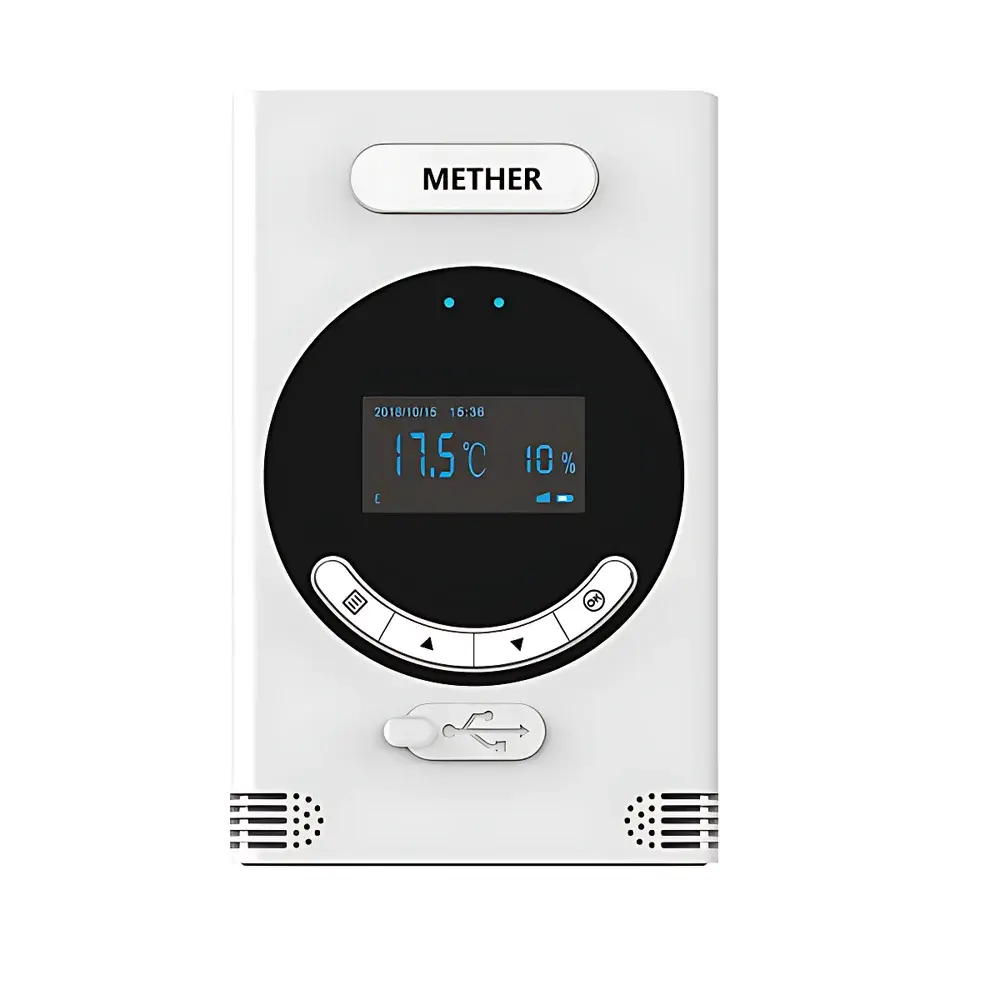
| Display | 1.3″ OLED (128×64 px) |
| Power | 5000 mAh Li-Polymer battery |
| Connectivity | USB Mass Storage (offline), Virtual COM Port (online), Nano-SIM (China Mobile/Unicom), LBS-based positioning (≤300 m typical accuracy) |
Overview
The Duling C2-AGS-11 is a rugged, multi-channel temperature and humidity data logger engineered for continuous environmental monitoring in cold chain logistics, pharmaceutical storage, vaccine transport, and laboratory sample integrity management. It operates on a dual-sensing architecture: an integrated SHT30 digital sensor provides high-stability internal ambient measurement, while optional external NTC probes enable point-specific monitoring of product surfaces, refrigerated containers, or insulated packaging. The device captures time-stamped environmental data at user-defined intervals—from as frequent as every 2 seconds up to once per 24 hours—ensuring granular resolution for critical validation studies or coarse-grained logging for long-haul shipments. Its embedded LTE module (Nano-SIM compatible with China Mobile and China Unicom networks) enables periodic status reporting and alarm-triggered notifications via SMS or cloud-uploaded logs. Location awareness is provided through LBS (Location-Based Services), leveraging cellular tower triangulation to log approximate geographic coordinates—supporting audit trails for route verification and compliance with WHO GDP and ICH guidelines for temperature-sensitive product distribution.
Key Features
- Multi-channel capability: Simultaneous monitoring of internal ambient conditions (via SHT30) and one or more external NTC probe inputs for distributed sensing.
- Dual-mode USB interface: Functions as a mass storage device when powered off—enabling direct PDF/TXT report export without software; switches to virtual COM port mode when powered on for real-time configuration and firmware updates via dedicated PC utility.
- High-capacity non-volatile memory: Stores ≥60,000 timestamped temperature/humidity records with automatic overwrite protection and cyclic buffer management.
- Low-power OLED display: 1.3-inch monochrome OLED (128×64 resolution) with configurable backlight, supporting on-device review of current readings, min/max values, alarm status, and battery level.
- Configurable alert system: Visual (LED indicator) and audible (piezoelectric buzzer) alarms triggered by user-defined thresholds for temperature excursion, humidity deviation, low battery, or communication failure.
- Extended operational autonomy: 5000 mAh rechargeable Li-polymer battery supports up to 12 months of typical logging (30-min interval) under moderate thermal conditions; battery health and remaining capacity are logged and reported.
Sample Compatibility & Compliance
The C2-AGS-11 is designed for deployment across diverse cold chain environments—including refrigerated trucks, cold rooms, insulated shippers, and portable vaccine carriers—without requiring external power infrastructure. Its compact form factor (113 × 74 × 23.5 mm with protective sleeve) ensures compatibility with standard ISO container mounting brackets and IATA-compliant packaging inserts. While not certified to ATEX or IECEx standards for hazardous locations, it meets GB/T 18268.1–2010 (IEC 61326-1) for electromagnetic compatibility in industrial environments. Data integrity aligns with principles outlined in FDA 21 CFR Part 11 for electronic records when used with validated configuration workflows and audit-trail-enabled software tools. The device supports traceable calibration documentation per ISO/IEC 17025 requirements when deployed with accredited third-party calibration services.
Software & Data Management
Data retrieval and configuration are managed via Windows-compatible desktop software, which supports batch export in CSV, PDF, and plain-text formats. All exported files include embedded metadata: device ID, sensor serial numbers, logging interval, UTC timestamps, and firmware version. The software enforces password-protected parameter settings and maintains local configuration history for version control. For enterprise integration, raw binary logs can be parsed using documented ASCII protocol over virtual COM port, enabling ingestion into LIMS, MES, or custom IoT platforms. Alarm events are timestamped and stored with contextual sensor data, facilitating root-cause analysis during quality investigations. No cloud service subscription is required; however, optional MQTT or HTTP POST endpoints may be configured for automated telemetry forwarding to private servers.
Applications
- Vaccine and biologics distribution: Continuous validation of thermal exposure during last-mile delivery, meeting WHO PQS and CDC VFC program requirements.
- Pharmaceutical warehouse monitoring: Mapping of temperature gradients across racking zones and validation of HVAC performance during seasonal load variations.
- Food safety logistics: Real-time tracking of chilled/frozen cargo across intermodal transport legs, supporting HACCP plan verification and FSMA 21 CFR Part 117 compliance.
- Research specimen transport: Monitoring of cryogenic shipping containers carrying clinical trial samples, with LBS-assisted geofencing alerts for unauthorized route deviations.
- Environmental chamber qualification: Supplemental logging during IQ/OQ/PQ protocols where primary control systems lack independent verification capability.
FAQ
Does the C2-AGS-11 support GPS positioning?
No. It uses LBS (cellular tower triangulation) only, with typical location accuracy within 300 meters depending on local base station density.
Can external sensors be calibrated independently?
Yes. NTC probe offsets can be adjusted individually in the configuration utility to compensate for unit-to-unit variance or drift, following documented calibration procedures.
Is the device suitable for use in freezer environments below -20°C?
Yes. The specified operating range extends to -40°C; however, battery discharge rate increases significantly below -10°C, and LCD responsiveness may slow temporarily.
How is data security handled during USB export?
Files are stored unencrypted on the internal FAT32 volume. Users are advised to apply organizational encryption policies at the host system level prior to archival or transmission.
What happens if the SIM card loses network coverage?
The device continues logging locally without interruption. Once connectivity resumes, it transmits buffered alarms and uploads recent logs based on preconfigured retry logic and time windows.