
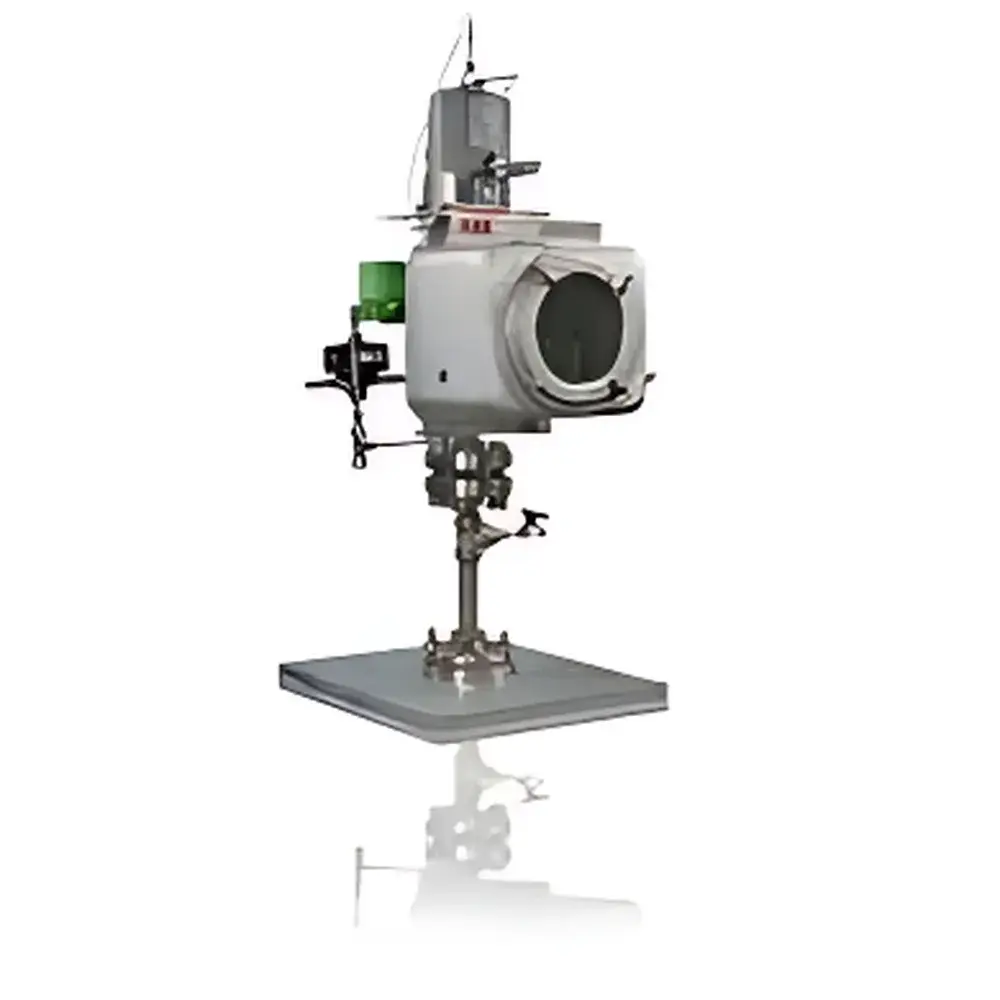
Dynamic Reflux Sampler DRS2170
| Origin | USA |
|---|---|
| Manufacturer Type | Authorized Distributor |
| Origin Category | Imported |
| Model | DRS2170 |
| Pricing | Upon Request |
Overview
The Dynamic Reflux Sampler DRS2170 is an engineered, intrinsically safe sampling interface designed for continuous, high-integrity sample acquisition from demanding process streams in petroleum refining and petrochemical production. It operates on the principle of dynamic reflux conditioning—where a portion of the hot, pressurized process stream is continuously diverted, subjected to controlled condensate removal via thermally stabilized reflux cooling, followed by particulate filtration—all within a single, compact, field-mounted housing. This architecture eliminates the need for external chillers, knock-out pots, or multi-stage filtration skids, significantly reducing sample transport lag time and phase separation artifacts. The DRS2170 is specifically configured for integration upstream of gas chromatographs (GC), UV-Vis spectrophotometers, mass spectrometers (MS), and other online analyzers requiring chemically stable, particle-free, and dew-point-controlled gas or vapor-phase samples.
Key Features
- Integrated dynamic reflux condensation: Enables selective removal of condensable hydrocarbons (e.g., C4–C8 saturates and olefins) while preserving volatile analytes (e.g., H2, CH4, C2H4, C2H2) for accurate GC quantification.
- In-line sintered metal particulate filter (5 µm absolute rating): Installed downstream of the reflux zone to capture entrained catalyst fines, coke particles, or rust scale without flow restriction or pressure drop drift.
- Precision temperature control: Dual-zone PID-regulated heating (up to 200 °C) and active reflux cooling (adjustable setpoint from −10 °C to +60 °C) ensure consistent sample phase state and prevent wall condensation in transfer lines.
- Automated purge-and-clean cycle: Programmable nitrogen or instrument air flush sequence removes residual condensate and particulates from the reflux chamber and filter, minimizing maintenance frequency and downtime.
- ATEX/IECEx Zone 1 and Class I Div 1 certified: Constructed with 316 stainless steel wetted parts, explosion-proof housings, and intrinsically safe signal interfaces compliant with EN 60079-0, -11, and -26.
- Modular mounting design: Direct flange-mount capability (ANSI 150–600# RF or RTJ) onto process headers or bypass taps; includes thermal insulation jacket and vibration-dampened support brackets.
Sample Compatibility & Compliance
The DRS2170 accommodates aggressive feedstocks including naphtha cracker off-gas, FCCU regenerator flue gas, ethylene pyrolysis effluent, acetylene synthesis streams, and ammonia synthesis loop gas. It maintains sample integrity under operating conditions up to 10 bar(g) and 450 °C inlet temperature. All wetted materials meet NACE MR0175/ISO 15156 for sour service, and surface finish complies with ASME BPE 2022 for low-particulate leaching. The system supports compliance with ASTM D1945 (gas analysis by GC), ISO 6974 (natural gas composition), and USP for method validation in regulated environments. Full audit trail logging and user-access controls align with FDA 21 CFR Part 11 requirements when integrated with validated SCADA or DCS platforms.
Software & Data Management
While the DRS2170 is a hardware-only sampling module, its analog and digital I/O ports (4–20 mA, Modbus RTU/TCP, HART 7) enable seamless integration with distributed control systems and analyzer management software (e.g., Emerson DeltaV, Honeywell Experion, Yokogawa CENTUM VP). Temperature setpoints, purge timing, and fault diagnostics are configurable via front-panel keypad or remote HMI. Optional firmware upgrade supports OPC UA connectivity for time-synchronized data tagging and predictive maintenance alerts based on thermal gradient anomalies and filter differential pressure trends.
Applications
- Real-time monitoring of light hydrocarbon distribution in naphtha cracking units
- Continuous sulfur compound profiling (H2S, COS, mercaptans) in FCCU main fractionator overheads
- Online ethylene purity assurance in cracker off-gas trains prior to cryogenic separation
- Acetylene concentration tracking in calcium carbide hydrolysis reactors
- Hydrogen-to-nitrogen ratio control in ammonia synthesis loops using GC-FID/TCD
- Trace oxygen and moisture detection in polymer-grade ethylene transfer lines
FAQ
Does the DRS2170 require external refrigeration or chilled water supply?
No—it uses thermoelectric (Peltier) and resistive heating elements for fully self-contained reflux temperature control.
Can it handle hydrogen sulfide (H2S) concentrations above 1,000 ppm?
Yes—wetted components are NACE-compliant, and the reflux design minimizes corrosion by removing liquid-phase acid condensates before they contact downstream sensors.
Is calibration traceable to NIST standards?
Temperature and pressure transmitters supplied with the unit are individually calibrated and certified to NIST-traceable standards; field recalibration intervals follow ISO/IEC 17025 guidelines.
What is the maximum allowable particulate loading for reliable operation?
Up to 100 mg/m³ for particles ≤10 µm; higher loadings require optional pre-filter knockout drum installation upstream.
How is hazardous area certification documented for regulatory audits?
Each unit ships with full ATEX/IECEx certificate of conformity, equipment dossier (including drawings, material certs, and test reports), and a declaration of conformity per EU Directive 2014/34/EU.





