
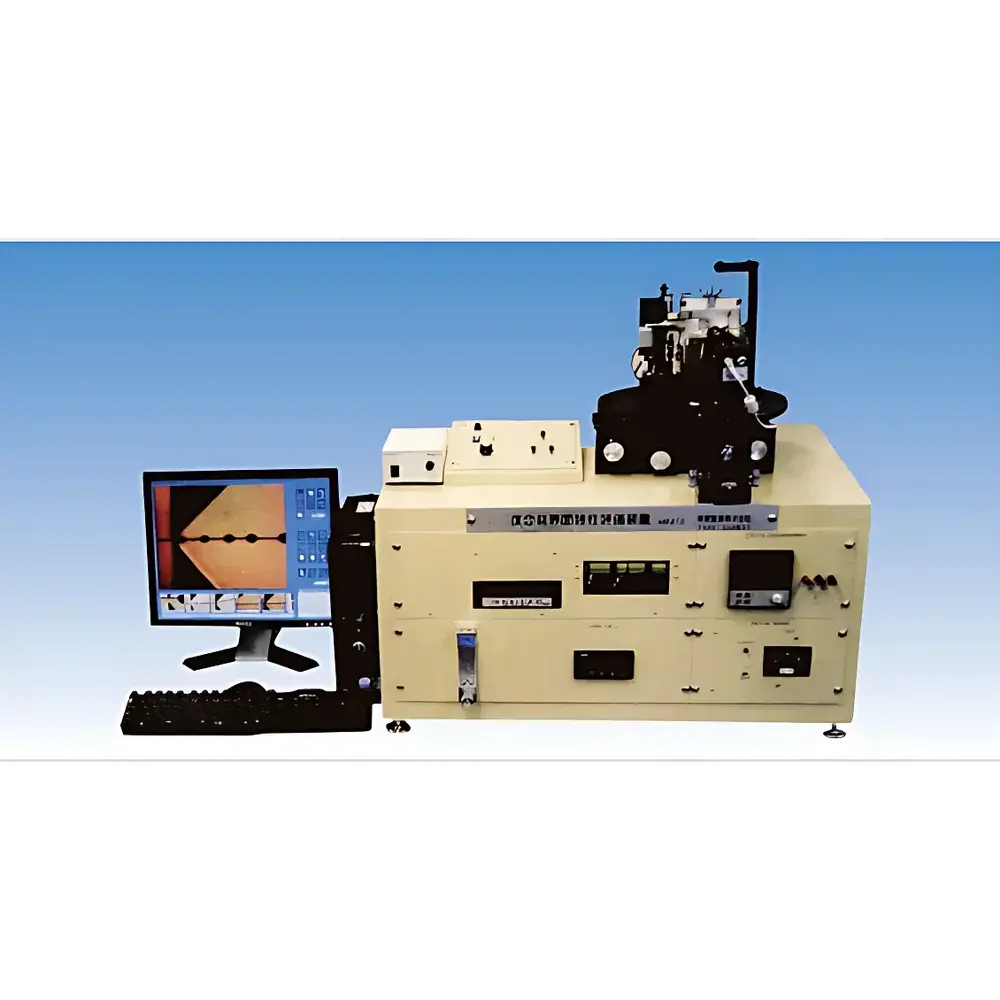
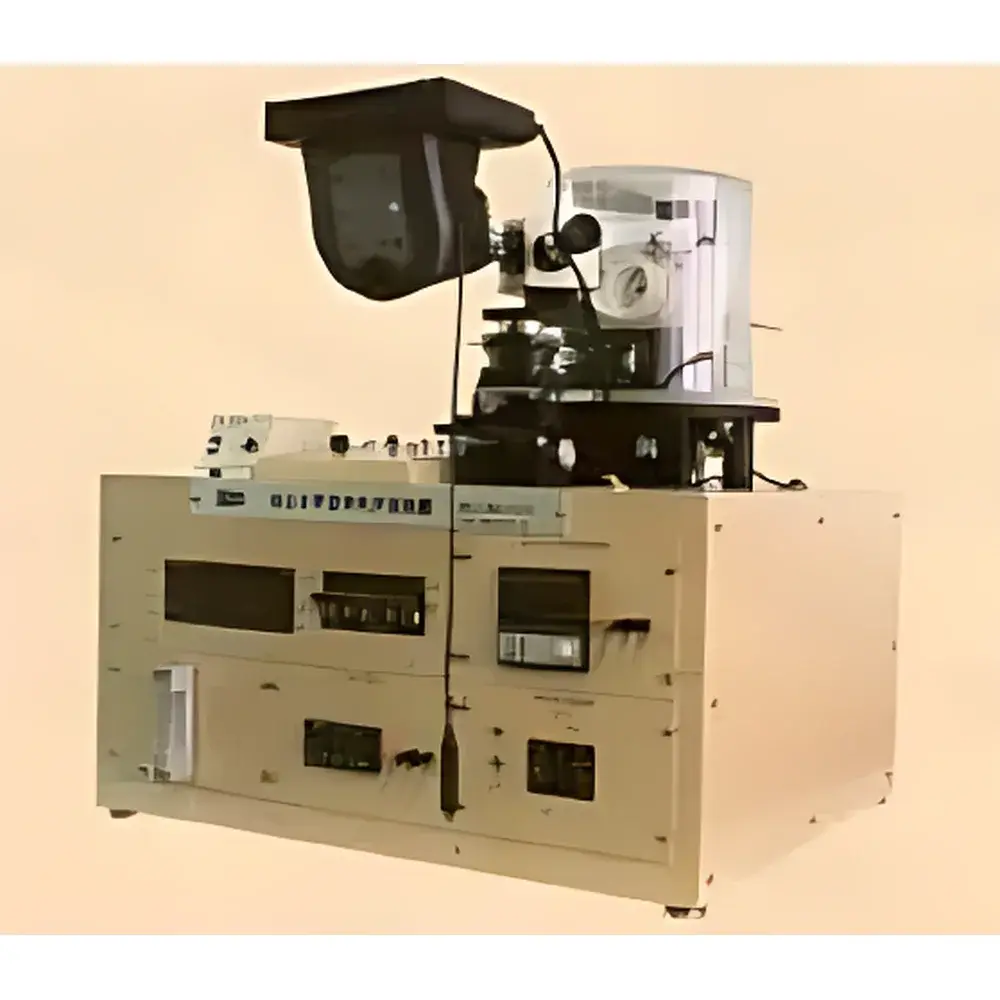
East荣 HM410 Interfacial Property Evaluation System for Fiber-Reinforced Composites
| Origin | Japan |
|---|---|
| Manufacturer Type | Authorized Distributor |
| Origin Category | Imported |
| Model | HM410 |
| Pricing | Available Upon Request |
Overview
The East荣 HM410 Interfacial Property Evaluation System is a precision-engineered instrument designed to quantify the interfacial shear strength (IFSS) between individual reinforcing fibers and their surrounding polymer or elastomeric matrix — a critical parameter governing load transfer efficiency, crack propagation resistance, and overall mechanical integrity in fiber-reinforced composites. Based on the single-fiber fragmentation test (SFFT) and micro-droplet debonding methodology, the HM410 employs controlled tensile loading of a resin-encapsulated single fiber while simultaneously capturing high-resolution real-time deformation via integrated optical microscopy and CCD imaging. The system operates under programmable thermal and atmospheric conditions, enabling IFSS evaluation across industrially relevant processing and service environments — from ambient conditions up to 400 °C in air or inert nitrogen atmosphere.
Key Features
- Single-fiber interfacial characterization platform compliant with ASTM D7264/D3410 principles for interfacial property assessment;
- Thermally regulated test chamber supporting precise temperature control from room temperature to 400 °C;
- Dual-atmosphere capability: configurable operation in ambient air or nitrogen-purged environment to prevent oxidative degradation during high-temperature testing;
- High-resolution optical subsystem comprising calibrated microscope optics and synchronized CCD camera for in-situ visualization of fiber/matrix debonding, crack initiation, and interfacial slip;
- Motorized displacement stage with sub-micron positioning resolution and programmable crosshead speed range of 0.06 mm/min to 5 mm/min;
- Low-force tensile actuator with maximum load capacity of 500 gf (4.905 N), optimized for micro-scale mechanical response without fiber buckling or premature fracture;
- Rigid aluminum-alloy frame with vibration-damped base, ensuring mechanical stability during long-duration creep or rate-dependent measurements.
Sample Compatibility & Compliance
The HM410 accommodates a broad spectrum of reinforcement fibers including but not limited to E-glass, S-glass, PAN-based carbon, aramid (e.g., Kevlar®), polyethylene (UHMWPE), ceramic (e.g., SiC, Al₂O₃), and metallic (e.g., stainless steel, tungsten) filaments with diameters ≥5 µm. Compatible matrices include thermosetting resins (epoxy, phenolic, BMI), thermoplastics (PEEK, PA6, PPS), and elastomers (silicone, natural rubber). All operational parameters adhere to ISO 11359-2 (thermomechanical analysis) and ASTM D3379 (tensile properties of single filament yarns) frameworks. The system supports GLP-compliant data acquisition when paired with validated software modules, and its architecture permits integration into FDA 21 CFR Part 11–aligned workflows through optional electronic signature and audit trail packages.
Software & Data Management
The HM410 operates via dedicated Windows-based control software featuring real-time force–displacement curve plotting, synchronized video timestamping, and automated detection of interfacial failure events (e.g., first debonding, pull-out onset). Raw data are stored in HDF5 format with embedded metadata (temperature, atmosphere, speed, calibration coefficients). Export options include CSV, MATLAB .mat, and universal ASCII formats compatible with third-party analysis tools (e.g., OriginLab, Python SciPy). Software logs maintain full traceability per test sequence, including operator ID, calibration history, environmental settings, and version-controlled firmware identifiers — essential for ISO/IEC 17025-accredited laboratories.
Applications
- Quantification of interfacial adhesion improvement following fiber surface treatments (plasma, silane, ozone);
- Evaluation of matrix formulation effects on interfacial bonding (e.g., toughening agents, coupling additives);
- Thermo-oxidative aging studies of fiber/matrix interfaces under accelerated conditions;
- Validation of multiscale composite models requiring experimentally derived IFSS boundary conditions;
- Quality assurance of specialty fibers in aerospace-grade prepreg manufacturing;
- Academic research on interfacial failure mechanisms in bio-based or recycled fiber composites.
FAQ
What fiber diameter range is supported by the HM410?
The system is optimized for single filaments with diameters from 5 µm upward; sub-5 µm fibers may require custom fixtures and validation of grip integrity.
Can the HM410 perform tests under vacuum?
No — the standard configuration supports only ambient air or nitrogen-purged environments; vacuum compatibility requires optional chamber retrofitting and pressure-rated optics.
Is the force transducer calibrated traceable to NIST or JCSS standards?
Yes — each unit ships with a certificate of calibration traceable to JCSS (Japan Calibration Service System), with optional NIST-traceable recalibration services available.
Does the software support automated pass/fail criteria based on IFSS thresholds?
Yes — user-defined acceptance limits can be configured per material batch, triggering visual alerts and report annotations upon deviation.
What maintenance intervals are recommended for the optical and mechanical subsystems?
Optical path cleaning and focus verification every 200 hours; mechanical drive lubrication and load cell zero-check every 6 months or 1,000 cycles — documented in the included Maintenance Logbook module.



