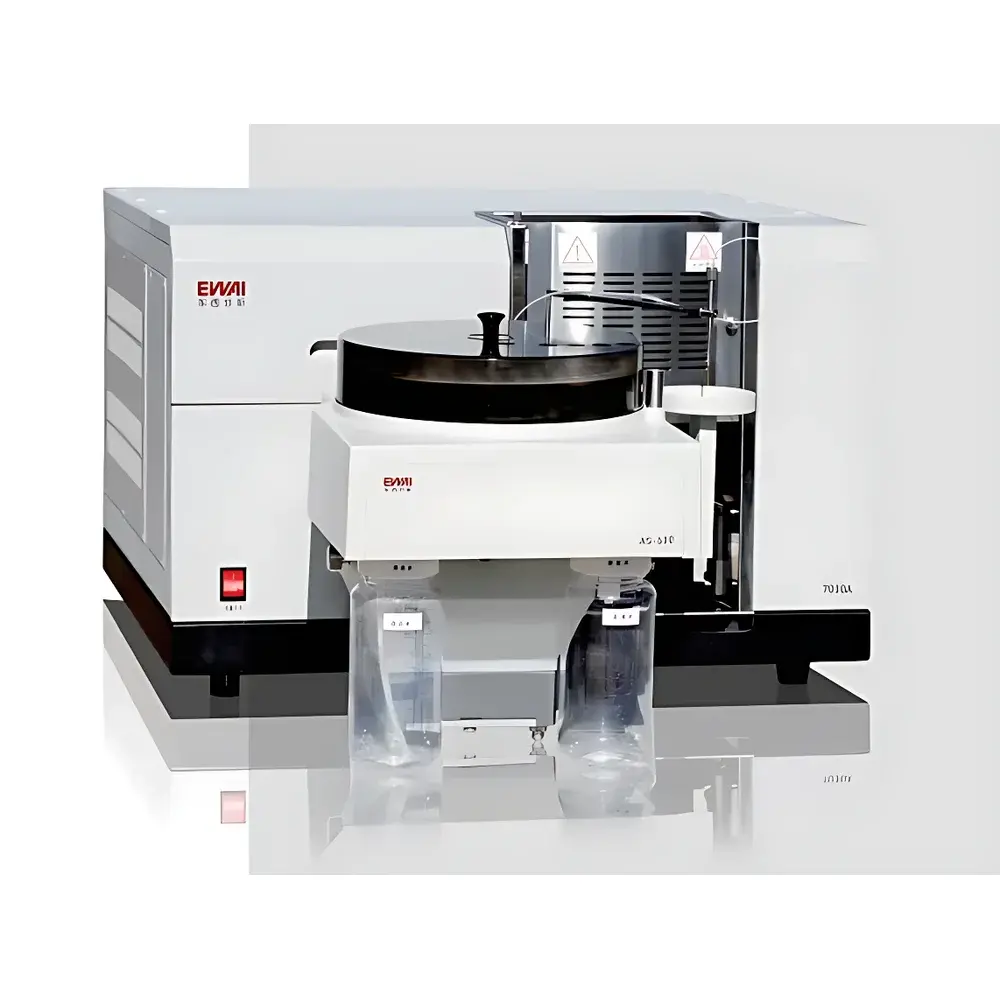
East & West Analysis AA-7030A Medical Atomic Absorption Spectrometer
| Brand | East & West Analysis |
|---|---|
| Origin | Beijing, China |
| Manufacturer Type | Direct Manufacturer |
| Regional Classification | Domestic (China) |
| Model | AA-7030A |
| Pricing | Available Upon Request |
Overview
The East & West Analysis AA-7030A Medical Atomic Absorption Spectrometer is a dedicated flame atomic absorption spectrophotometer engineered for high-throughput elemental quantification in clinical laboratory environments. It operates on the principle of flame atomic absorption spectroscopy (FAAS), wherein liquid samples are nebulized into a fine aerosol, atomized in an air-acetylene flame, and exposed to element-specific hollow cathode lamp radiation. Absorbance at characteristic wavelengths—such as 324.7 nm for Cu, 213.9 nm for Zn, 248.3 nm for Fe, 422.7 nm for Ca, and 285.2 nm for Mg—is measured to determine elemental concentrations via Beer–Lambert law calibration. Designed explicitly for medical diagnostics, the AA-7030A delivers rapid, reproducible results for essential trace and macro-minerals in serum, plasma, whole blood, and urine—supporting routine nutritional assessment, metabolic disorder screening, and therapeutic monitoring.
Key Features
- Rapid multi-element analysis: Simultaneous quantification of Cu, Zn, Fe, Ca, and Mg within 2–4 seconds per sample using sequential wavelength scanning with optimized lamp current and slit width settings.
- Automated flame ignition system: Integrated piezoelectric spark igniter eliminates external ignition tools; activation requires only a single press of the ignition button.
- Comprehensive safety architecture: Includes flame failure detection, acetylene flow regulation with real-time leak monitoring, dual-stage electromagnetic shut-off valves (activated upon power loss or air pressure drop below 0.25 MPa), and explosion-resistant burner head design compliant with IEC 61010-1 safety standards.
- Unattended operation capability: Auto-sampler integration supports batch processing of up to 120 samples; instrument initiates aspiration, atomization, measurement, and data logging without manual intervention.
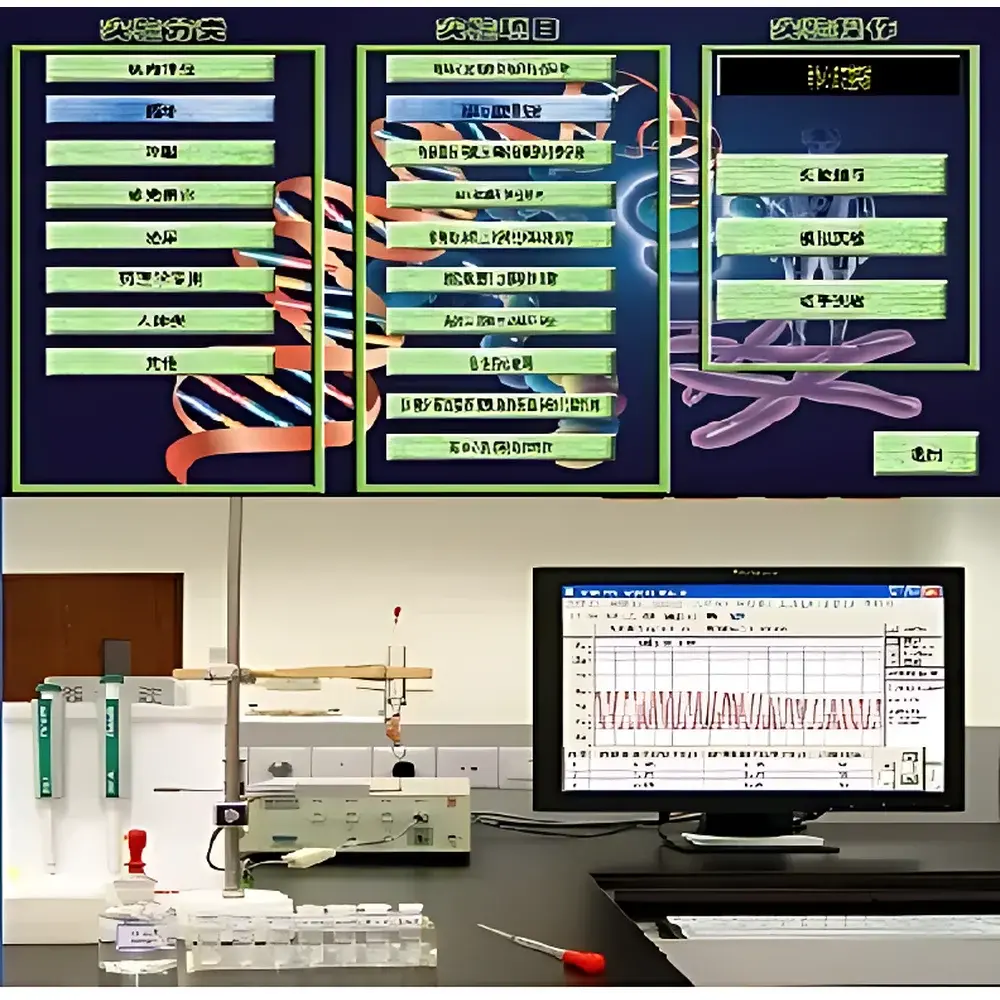
- Dedicated clinical software environment: Windows XP-based control platform with validated instrument driver modules, audit-trail-enabled parameter logging, and electronic signature support aligned with GLP and CLIA pre-analytical documentation requirements.
Sample Compatibility & Compliance
The AA-7030A accepts standard 13 × 100 mm borosilicate glass tubes and polypropylene microtubes (0.5–2.0 mL volume). Sample introduction is compatible with acid-digested biological matrices, diluted serum/plasma (1:10–1:50 with 0.2% v/v HNO₃), and calibrated aqueous standards traceable to NIST SRM 3100 series. The system meets ISO/IEC 17025:2017 requirements for testing laboratories, supports method validation per CLSI EP28-A3c guidelines, and enables full compliance with CAP checklist ANP.40300 (elemental analysis) and COLA Standard LAB.2.3.1 (instrument safety and calibration verification).
Software & Data Management
The proprietary WinXP-based software provides integrated patient record management with HL7 v2.5.1 message support for seamless bidirectional interfacing with LIS and HIS systems—including ADT, ORU, and ACK message types. All analytical sessions generate timestamped, user-attributed raw absorbance files (.raw), processed concentration reports (.pdf/.xls), and audit logs containing instrument status, lamp hours, gas pressures, and calibration history. Data export conforms to ASTM E1384-15 (standard guide for electronic data exchange in clinical laboratories) and includes optional 21 CFR Part 11-compliant configuration packages with role-based access control, electronic signatures, and immutable audit trails.
Applications
- Quantitative determination of serum copper and zinc in Wilson’s disease and acrodermatitis enteropathica screening.
- Iron status evaluation via serum iron and total iron-binding capacity (TIBC) correlation in anemia workups.
- Calcium and magnesium profiling in critical care units for electrolyte imbalance assessment and renal function monitoring.
- Therapeutic drug monitoring of elemental co-factors in patients receiving long-term parenteral nutrition.
- Quality assurance in reference laboratories performing proficiency testing under CAP or RCPA schemes.
FAQ
What sample volume is required for routine analysis?
Typical analysis uses 0.5–1.0 mL of properly diluted biological fluid; minimum aspirated volume per reading is 50 µL.
Does the AA-7030A support graphite furnace attachment for trace-level analysis?
No—the AA-7030A is configured exclusively for flame AAS; it does not accommodate GF-AAS accessories or platform modifications.
Is method validation documentation provided with the system?
Yes—factory-installed methods include performance verification reports for precision (RSD ≤ 2.5% at mid-range), linearity (r² ≥ 0.999 over 0.1–5.0 mg/L), and carryover (< 0.5%) per CLSI EP10-A3.
Can the software be upgraded to Windows 10 or later?
The control software is validated for Windows XP SP3; migration to newer OS platforms requires formal revalidation and is not supported under standard warranty terms.
What maintenance intervals are recommended for clinical use?
Daily: Nebulizer cleaning and burner head inspection. Weekly: Acetylene regulator calibration check. Quarterly: Hollow cathode lamp energy verification and optical alignment verification per manufacturer SOP-AA7030A-MNT-04.