
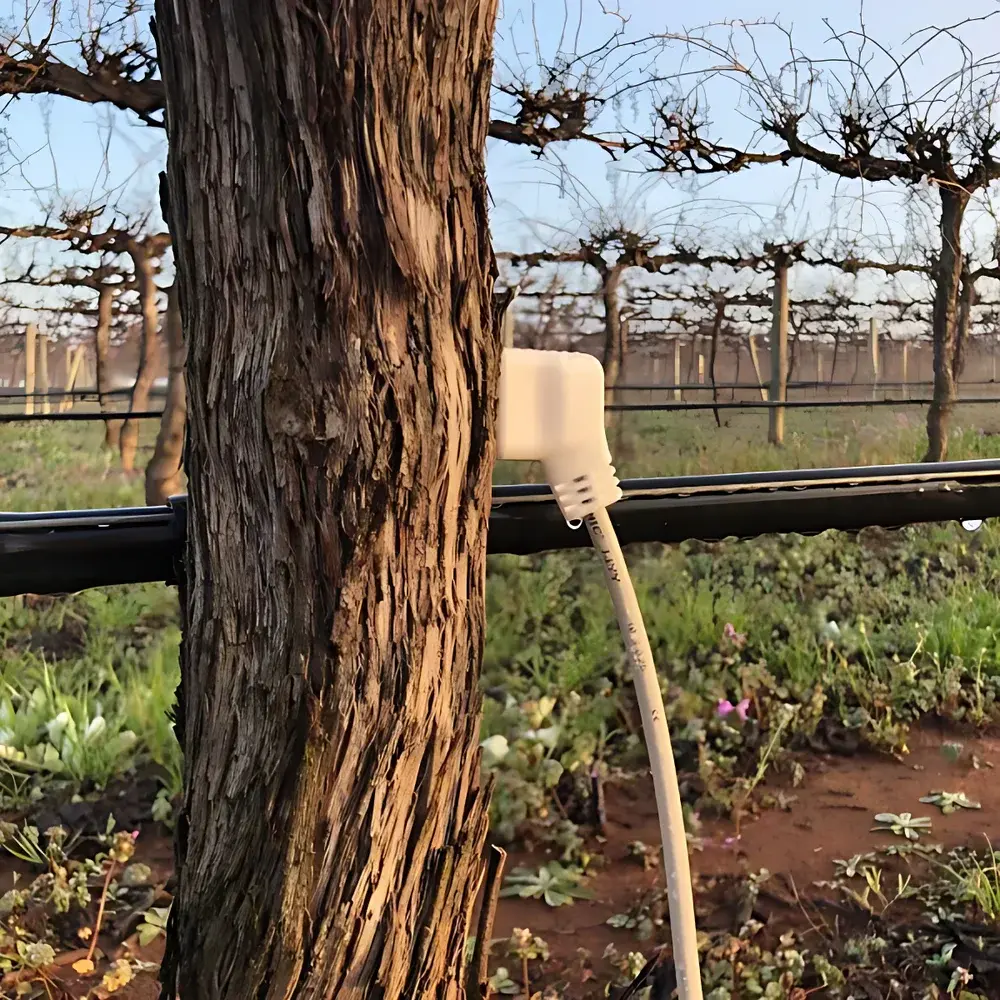
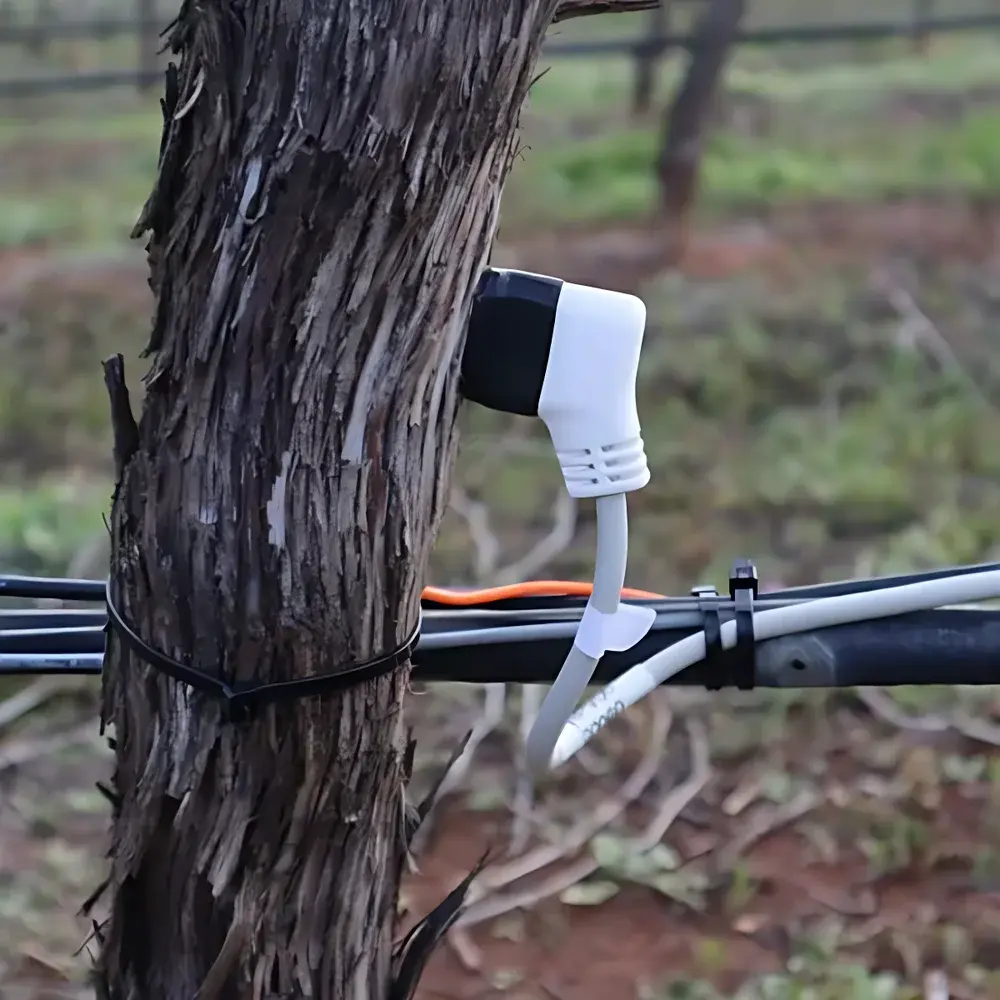
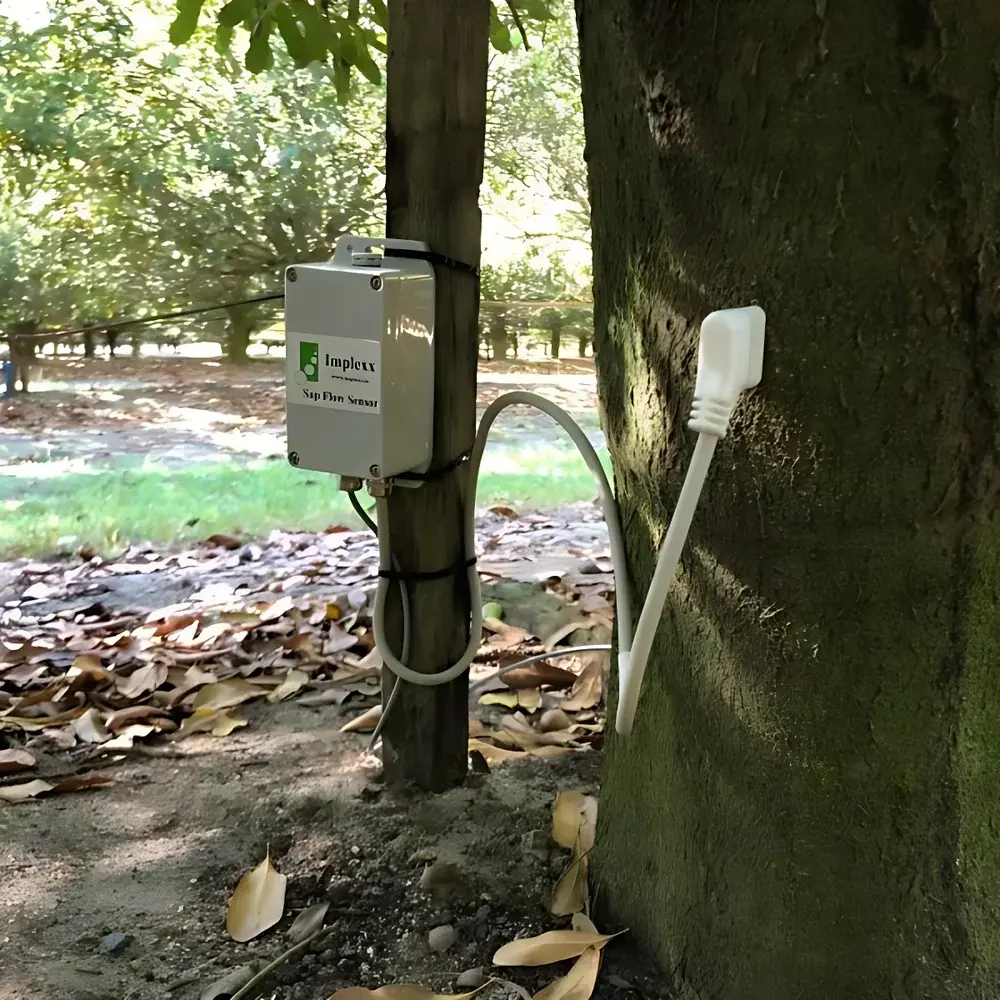
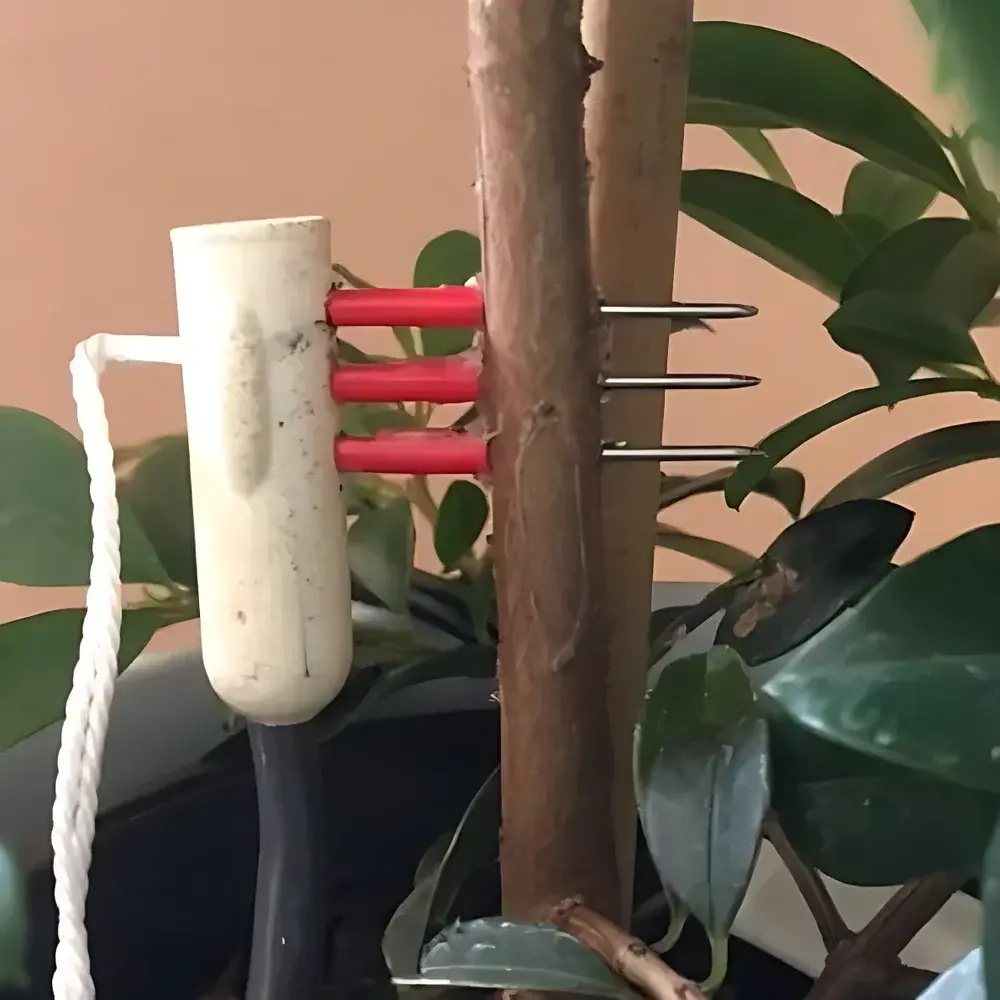
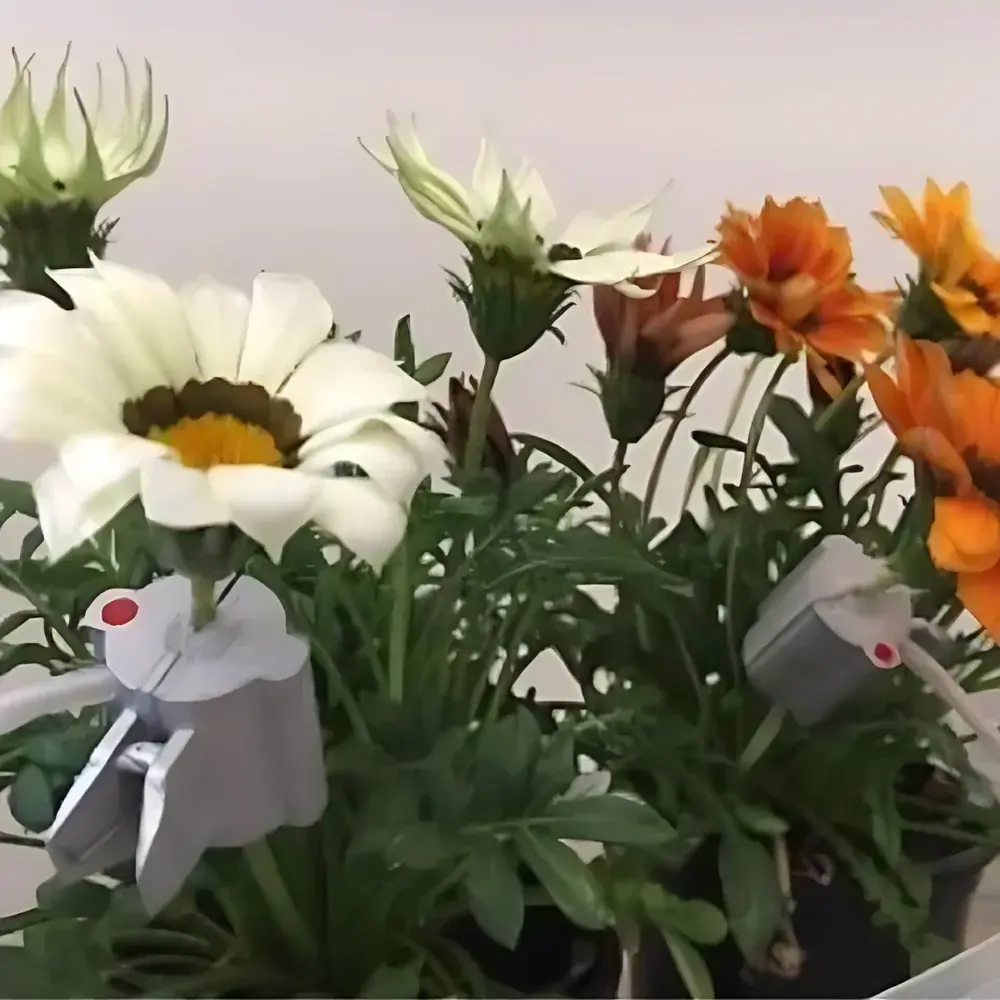
Edaphic HPV-06 Heat Pulse Velocity Stem Flow Sensor
| Brand | Edaphic |
|---|---|
| Origin | Australia |
| Model | HPV-06 |
| Measurement Principle | Heat Pulse Velocity (HPV) |
| Flow Range | –200 to +1000 cm/hr (heat velocity) |
| Resolution | 0.001 cm/hr |
| Accuracy | ±0.1 cm/hr |
| Probe Diameter | φ1.3 mm |
| Probe Length | 30 mm |
| Thermistor Positions | 10 mm (outer), 20 mm (inner) |
| Inter-probe Spacing | 6 mm |
| Operating Temperature Range | –30 to +70 °C |
| Response Time | 200 ms |
| Heater Resistance | 39 Ω |
| Energy Input | 400 J/m |
| Power Supply | 12 V DC |
| Output Signal | SDI-12 |
| Cable Length | 5 m (max. 60 m) |
Overview
The Edaphic HPV-06 Heat Pulse Velocity Stem Flow Sensor is a high-precision, field-deployable instrument engineered for continuous, non-invasive quantification of sap flow velocity in woody and herbaceous plant stems. It operates on the well-established heat pulse velocity (HPV) principle—where a controlled thermal pulse is introduced into the xylem tissue via a linear heater, and the resulting temperature rise is measured at two or more axial positions using precision thermistors. By calculating the transit time of the heat front between sensors, the sensor derives sap velocity in cm/hr—a parameter directly proportional to transpiration-driven water movement under steady-state conditions. Designed for integration into long-term ecological monitoring networks and physiological research platforms, the HPV-06 delivers robust performance across diverse species and stem diameters (optimized for stems ≥6 mm), with calibrated sensitivity to both low-flow (e.g., night-time reverse flow) and high-flow regimes (e.g., midday peak transpiration). Its compact probe geometry (φ1.3 mm × 30 mm) minimizes vascular disruption while ensuring mechanical stability in situ.
Key Features
- True heat pulse velocity methodology compliant with ASTM D7928-17 and ISO 13041-2 guidelines for sap flow instrumentation.
- High-resolution measurement capability: 0.001 cm/hr resolution with ±0.1 cm/hr absolute accuracy over full range (–200 to +1000 cm/hr).
- Dual thermistor configuration (outer/inner positions at 10 mm and 20 mm) enables differential thermal profiling and improved signal-to-noise ratio in heterogeneous xylem tissues.
- Optimized probe geometry: 1.3 mm diameter stainless-steel probes with 6 mm inter-probe spacing ensure minimal cambial damage and reproducible insertion depth.
- Wide operational temperature range (–30 to +70 °C) and fast thermal response (200 ms) support deployment across temperate, arid, and tropical field sites.
- SDI-12 digital output protocol ensures plug-and-play compatibility with industry-standard data loggers including Campbell Scientific CR1000X, CR300, and third-party systems supporting SDI-12 v1.3.
- Low-power design (12 V DC, <150 mW average draw) enables solar-powered operation in remote locations without grid access.
Sample Compatibility & Compliance
The HPV-06 is validated for use in stems of diameter ≥6 mm, including but not limited to Quercus robur, Pinus sylvestris, Eucalyptus globulus, Zea mays, and Solanum lycopersicum. Probe insertion follows standardized protocols outlined in Granier (1985) and Burgess et al. (2001), with calibration corrections applied for wood density, xylem anatomy, and radial sap flux gradients. The sensor complies with environmental protection requirements per IEC 60529 (IP67-rated connector housing), and its materials meet RoHS Directive 2011/65/EU restrictions on hazardous substances. For regulatory traceability in GLP/GMP-aligned agricultural trials, the HPV-06 supports audit-ready metadata tagging—including timestamped calibration logs, probe orientation flags, and thermal drift compensation coefficients—when paired with CR1000X firmware v6.0+.
Software & Data Management
Raw SDI-12 outputs are parsed using Edaphic’s open-source StemFlow Toolkit (Python 3.8+, MIT License), which implements real-time heat pulse transit time extraction, temperature normalization, and conversion to volumetric sap flux density (Js, g H2O·m–2·s–1) using user-defined wood-specific parameters (e.g., sapwood depth, thermal diffusivity). Data files conform to CF-NetCDF v1.8 conventions and include embedded provenance metadata (sensor ID, installation date, GPS coordinates, operator signature). When integrated with Campbell Scientific’s LoggerNet v5.5 or PC400 software, HPV-06 measurements automatically synchronize with co-deployed microclimate sensors (e.g., net radiation, vapor pressure deficit) to enable multivariate transpiration modeling. All firmware updates and calibration certificates are digitally signed and verifiable via SHA-256 hash archives hosted on Edaphic’s secure repository.
Applications
- Long-term forest hydrology studies assessing stand-level water use efficiency under climate variability.
- Controlled-environment phenotyping of drought-tolerant cultivars in growth chambers and greenhouses.
- Validation of eddy covariance tower-based evapotranspiration (ET) estimates across heterogeneous canopies.
- Rootstock-scion interaction analysis in perennial horticulture (e.g., viticulture, orchard systems).
- Calibration and ground-truthing of satellite-derived vegetation stress indices (e.g., TCI, PRI).
- Soil-plant-atmosphere continuum (SPAC) modeling requiring high-temporal-resolution boundary condition inputs.
FAQ
What is the minimum recommended stem diameter for reliable HPV-06 measurements?
The HPV-06 is validated for stems ≥6 mm in diameter. For smaller stems (<6 mm), consider the SF-4M or SF-5M series, which employ optimized thermal geometry for reduced radial conduction error.
Does the HPV-06 require periodic recalibration in the field?
No routine recalibration is required; however, annual verification against a reference thermal source (e.g., NIST-traceable dry-block calibrator) is recommended for GLP-compliant deployments.
Can the HPV-06 detect reverse sap flow (e.g., nighttime root pressure-driven flow)?
Yes—the bidirectional range (–200 to +1000 cm/hr) and sub-millimeter resolution allow unambiguous identification and quantification of nocturnal reverse flow events when installed with proper axial alignment.
Is cable length extension beyond 60 m supported?
Signal integrity degrades beyond 60 m due to SDI-12 bus capacitance limits; for longer runs, install an SDI-12 repeater module (e.g., METER Group EM50-R) or switch to RS-485-based telemetry infrastructure.
How does the HPV-06 handle thermal noise from solar heating of the stem surface?
The dual thermistor placement (10 mm outer, 20 mm inner) enables subtraction of conductive surface heating artifacts, and firmware-based moving-average filtering suppresses diurnal thermal drift without compromising temporal resolution.




