
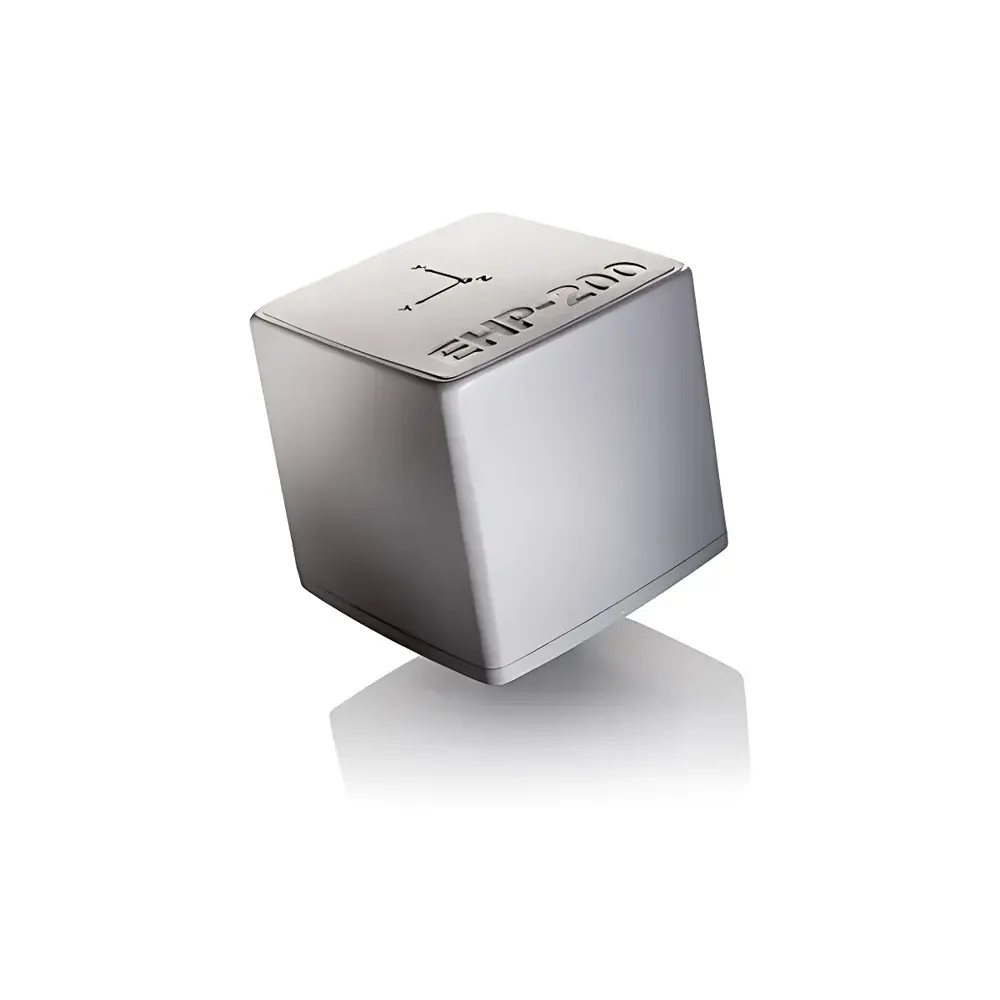
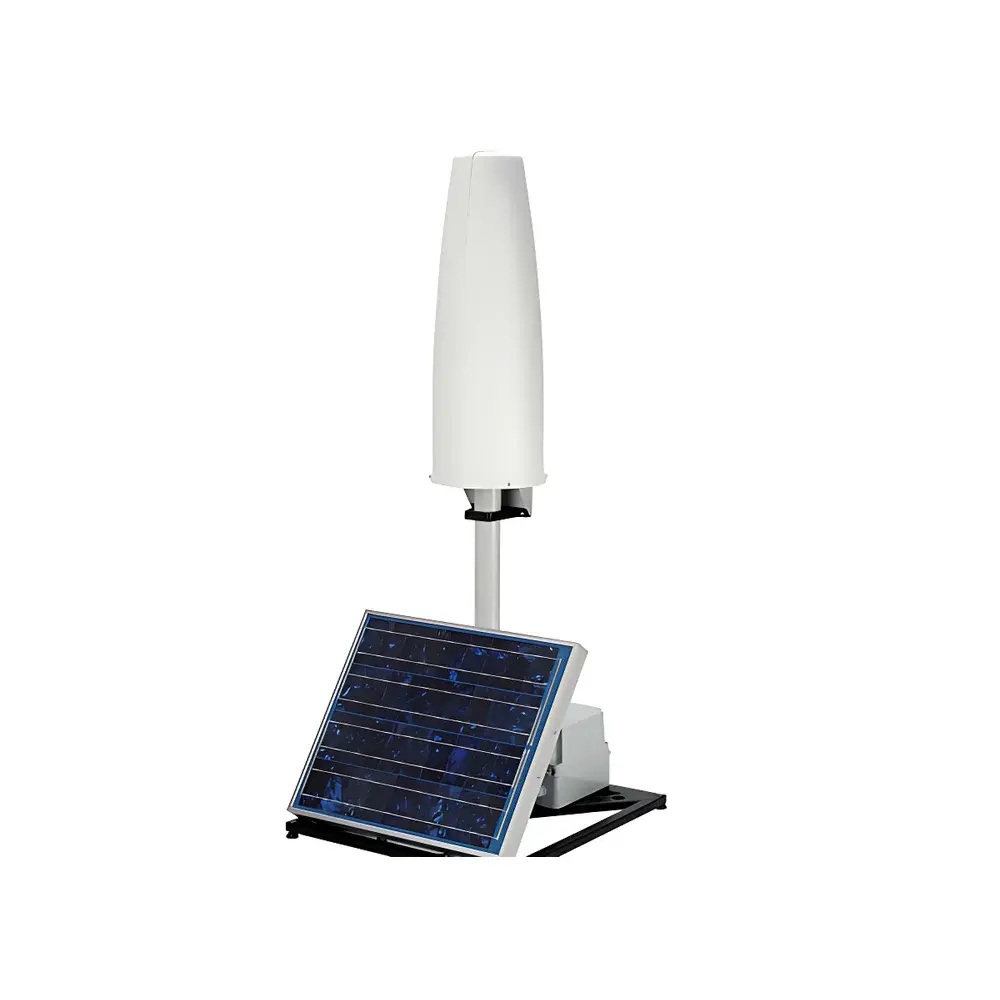
EHP-200A Electromagnetic Field Analyzer for Selective-Frequency Measurement in Long, Medium & Short Wave Bands
| Frequency Range | 3 kHz – 30 MHz |
|---|---|
| Electric Field Range | 0.02–1000 V/m |
| Magnetic Field Range | 0.6 mA/m – 300 A/m |
| Resolution Bandwidth | 1 kHz (min) |
| Dynamic Range | 80 dB |
| Battery Life | Up to 12 h (rechargeable Li-ion) |
| Probe Dimensions | 92 × 92 × 109 mm |
| Compliance | Designed for IEC 61786-1, IEEE C95.3, and EN 50492 assessment workflows |
Overview
The EHP-200A Electromagnetic Field Analyzer is a precision-selective frequency instrument engineered for quantitative, triaxial isotropic measurement of electric (E) and magnetic (H) field components across the 3 kHz to 30 MHz spectrum—encompassing long-wave (LF), medium-wave (MF), and short-wave (HF) bands. It operates on the principle of orthogonal sensor coupling within a single compact probe head, minimizing field perturbation through optimized geometric symmetry and low-intrusion dielectric housing. Unlike broadband integrators, the EHP-200A performs real-time frequency-domain analysis using a built-in digital spectrum engine with 1 kHz minimum resolution bandwidth (RBW), enabling identification and amplitude quantification of individual spectral lines—critical for source attribution, compliance verification, and near-field characterization. Its integrated dual-sensor architecture simultaneously acquires E- and H-field data at each frequency bin, supporting post-acquisition wave impedance calculation (Z = E/H) without external calibration or manual interpolation.
Key Features
- Triaxial isotropic electric and magnetic field sensors co-located within a single ruggedized probe (92 × 92 × 109 mm), eliminating spatial misalignment errors and ensuring consistent orientation-independent measurements
- Selective-frequency spectral analysis with programmable RBW down to 1 kHz and 80 dB dynamic range, enabling discrimination of narrowband emitters (e.g., AM broadcast carriers, LF time signals) from broadband noise
- Optical fiber interface for galvanically isolated remote operation—preventing ground-loop interference and preserving measurement integrity during in-situ surveys near high-power transmitters
- Rechargeable lithium-ion battery supporting continuous operation for up to 12 hours, validated under ISO/IEC 17025 traceable discharge profiles
- External auxiliary input port for synchronized spectral analysis of auxiliary signals (e.g., reference clock outputs, modulated trigger sources)
- Real-time field vector summation and RMS computation per frequency bin, compliant with IEC 61786-1 Annex B methodology for exposure assessment
Sample Compatibility & Compliance
The EHP-200A is validated for use in occupational and environmental electromagnetic field (EMF) assessment scenarios where regulatory limits are defined by frequency-weighted exposure quantities (e.g., E-field strength in V/m, H-field strength in A/m). It meets technical requirements for measurement uncertainty evaluation per IEC 62110 and supports assessment against ICNIRP 2020, IEEE C95.1-2019, and national standards including GB 8702–2014 (China) and BGV B11 (Germany). Its triaxial isotropy performance is certified to ±0.5 dB up to 30 MHz under free-space conditions, verified using NIST-traceable TEM cell and calibrated dipole reference systems. The instrument’s mechanical design conforms to IP54 ingress protection and MIL-STD-810G shock/vibration specifications, ensuring operational reliability in outdoor broadcast site audits and industrial facility walk-throughs.
Software & Data Management
Field data acquisition and post-processing are managed via PC-based software compliant with GLP principles: full audit trail logging (user actions, configuration changes, calibration timestamps), electronic signature support, and 21 CFR Part 11–ready export formats (CSV, XML, PDF reports with embedded metadata). Spectral datasets include timestamped GPS coordinates (when paired with optional GNSS module), ambient temperature/humidity annotations, and user-defined measurement notes. Software enables automatic limit comparison against customizable exposure tables—including simultaneous dual-limit evaluation (occupational vs. general public), spectral line labeling, and wave impedance contour mapping for near-field boundary identification per EN 50492.
Applications
- Occupational EMF Safety Assessment: Quantitative verification of compliance with exposure limits in proximity to induction heaters, RF sealers, MF broadcasting amplifiers, and power-line communication (PLC) infrastructure—where both E and H fields contribute significantly to induced current models
- Broadcast Transmitter Monitoring: Field-strength mapping around AM/LW/MW antenna arrays; directional pattern validation; far-field/near-field transition zone delineation; and harmonic emission screening per ITU-R SM.326
- Wave Impedance Characterization: Calculation of local Zλ = |E|/|H| across frequency bins to distinguish reactive near-field dominance (Z ≪ 377 Ω) from radiative far-field behavior (Z ≈ 377 Ω)—essential for antenna modeling and shielding effectiveness estimation
- RFID & Security System Evaluation: Measurement of stray field emissions from LF/HF RFID readers (125 kHz, 13.56 MHz), walk-through metal detectors, and EAS gate systems to verify electromagnetic compatibility and avoid interference with medical devices or sensitive instrumentation
FAQ
What distinguishes selective-frequency measurement from broadband measurement in EMF assessment?
Selective-frequency analysis isolates individual spectral components, enabling identification of dominant emitters and accurate application of frequency-dependent exposure limits. Broadband instruments integrate total energy across a band, potentially masking hazardous narrowband signals or overestimating risk in mixed-spectrum environments.
Can the EHP-200A be used for compliance testing per ICNIRP or FCC guidelines?
Yes—the instrument’s traceable calibration, isotropic response, and spectral resolution meet the technical prerequisites outlined in ICNIRP 2020 Annex D and FCC OET Bulletin 65 Supplement B for frequency-selective survey instrumentation.
Is external calibration required before field deployment?
The EHP-200A is supplied with a factory calibration certificate valid for 12 months. For ISO/IEC 17025–accredited applications, annual third-party calibration against NIST-traceable standards is recommended, with documented uncertainty budgets per ANSI C63.4.
How does optical fiber remote control improve measurement accuracy?
It eliminates conductive coupling between the analyzer and host PC, preventing ground-loop currents and common-mode noise that distort low-level magnetic field readings—particularly critical below 1 MHz where ambient interference dominates.
Does the device support automated report generation for regulatory submissions?
Yes—software includes configurable templates aligned with national reporting frameworks (e.g., Germany’s BNetzA Formular 12, UK HSE EMF Report Format), with embedded digital signatures and version-controlled revision history.







