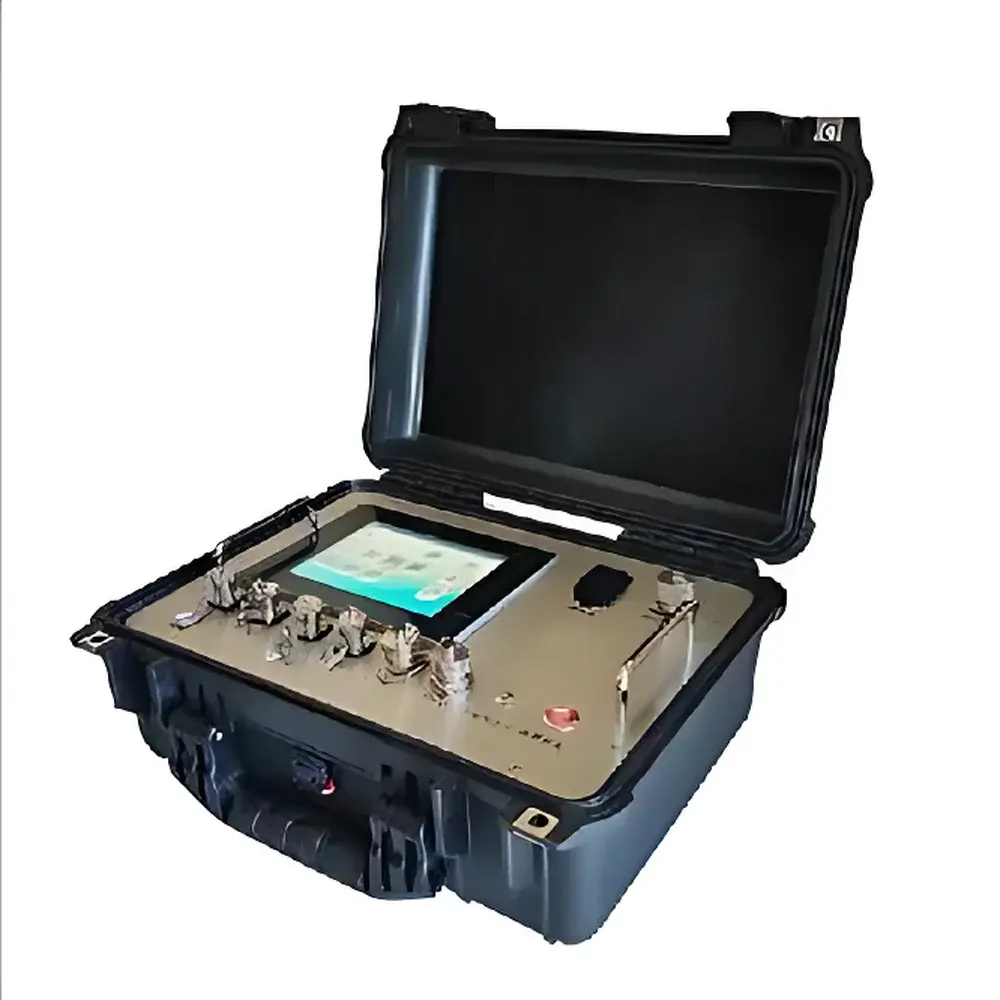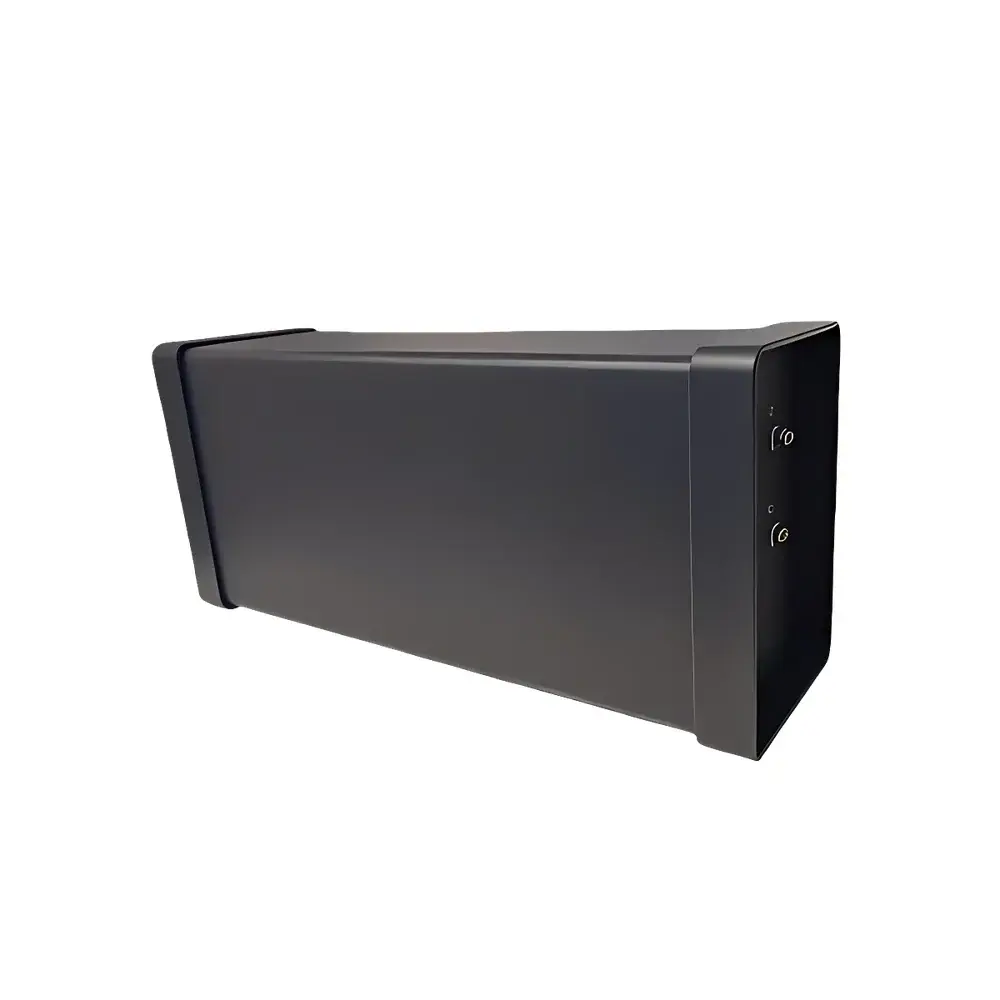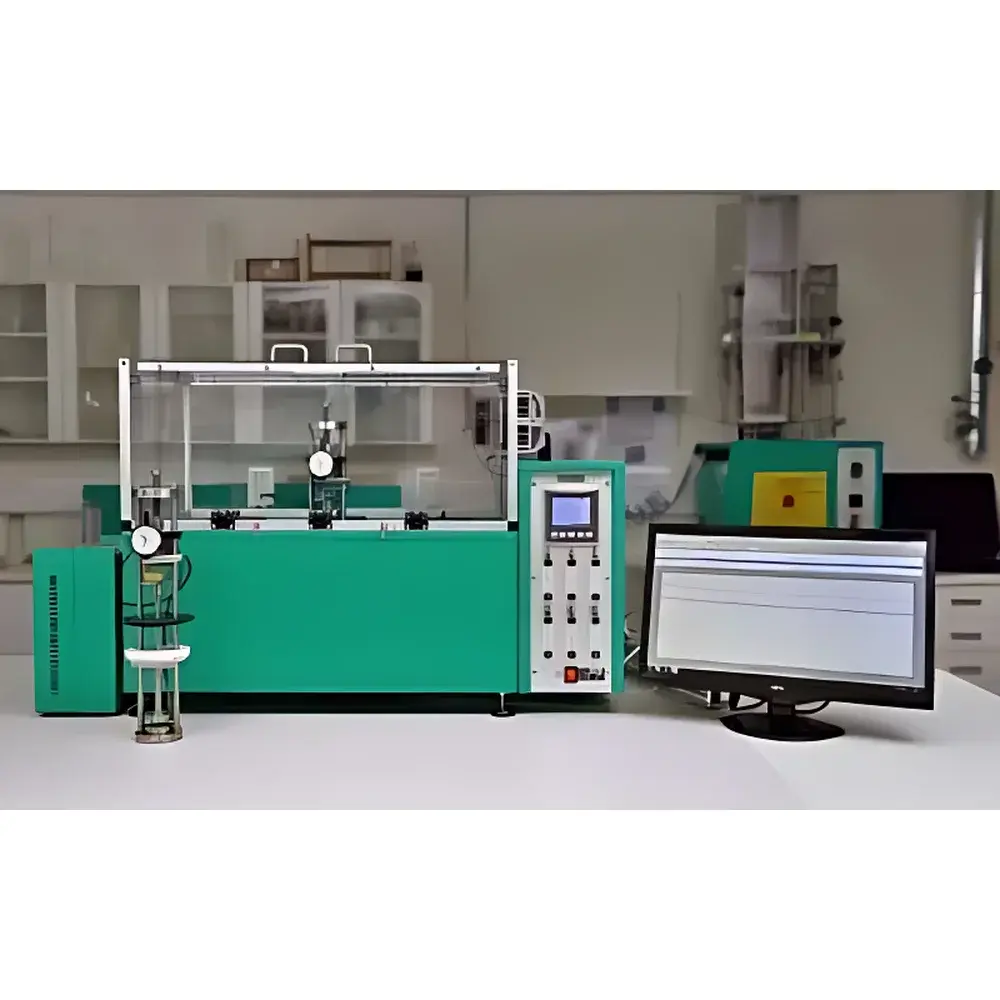
Elastocon EB 02 Stress Relaxation Tester
| Brand | Elastocon |
|---|---|
| Origin | Sweden |
| Model | EB 02 |
| Force Range (Compression) | 500 / 1000 / 2000 N (Standard: 1000 N) |
| Force Range (Tension) | 100 N |
| Force Accuracy | ±0.1% of full scale |
| Force Resolution (Compression) | 0.05 / 0.1 / 0.2 N |
| Force Resolution (Tension) | 0.01 N |
| Dimensions (Ø × H) | 120 × 450 mm |
| Weight | 4.5 kg |
| Construction Material | Stainless steel |
| Temperature Sensor | Pt 100, 1/3 DIN class |
| Temperature Range | Up to 200 °C (HT version: up to 300 °C) |
Overview
The Elastocon EB 02 Stress Relaxation Tester is a precision-engineered instrument designed for quantitative evaluation of viscoelastic stress decay in elastomeric and thermoplastic materials under constant strain conditions. Based on the fundamental principle of stress relaxation—where a material held at fixed deformation exhibits time-dependent reduction in internal stress—the EB 02 delivers high-reproducibility force-time profiles essential for characterizing long-term mechanical stability, compression set resistance, and creep recovery behavior. It operates in strict accordance with ISO 3384 (rubber—determination of stress relaxation in compression), ISO 6914 (rubber—determination of stress relaxation in tension), and ASTM D6147 (standard test method for stress relaxation of vulcanized rubber). Its modular architecture enables seamless integration with environmental chambers, supporting accelerated aging protocols under controlled thermal conditions.
Key Features
- Stainless-steel structural frame ensures dimensional stability, corrosion resistance, and long-term calibration integrity in laboratory and QC environments.
- High-resolution load cell system with selectable force ranges (500 N, 1000 N, or 2000 N compression; 100 N tension) and sub-millinewton resolution (down to 0.01 N in tension, 0.05 N in compression) enables accurate capture of low-magnitude relaxation events in soft compounds and thin specimens.
- Pt 100 temperature sensor (1/3 DIN tolerance class) provides traceable, linear thermal feedback across the operating range—from ambient up to 200 °C standard, extendable to 300 °C with the HT configuration—ensuring compliance with thermal preconditioning requirements in ISO and ASTM methods.
- Compact cylindrical footprint (Ø120 × H450 mm) and lightweight design (4.5 kg) facilitate benchtop deployment, easy relocation between testing stations, and compatibility with standard aging ovens and climate chambers.
- Zero-drift mechanical loading mechanism minimizes parasitic torque and lateral forces, preserving specimen alignment during prolonged tests (up to 1000+ hours).
Sample Compatibility & Compliance
The EB 02 accommodates standardized test pieces per ISO 3384 (cylindrical compression specimens, typically Ø6.0–29.0 mm × H6.3–12.5 mm) and ISO 6914 (dumbbell-shaped tensile specimens per ISO 37). Its dual-mode capability supports both compression and tension configurations without hardware reconfiguration. All measurement protocols adhere to GLP-aligned documentation practices: force and temperature data are timestamped, logged at user-defined intervals (1 s to 3600 s), and stored with metadata including operator ID, sample ID, test standard reference, and environmental chamber serial number. The system meets foundational requirements for audit readiness under ISO/IEC 17025 and supports traceability to national standards via factory calibration certificates (NIST-traceable where applicable).
Software & Data Management
While the EB 02 operates as a stand-alone analog/digital hybrid instrument, it interfaces with Elastocon’s optional PC-based control and analysis software suite. This platform enables real-time visualization of stress decay curves, automatic calculation of key parameters—including initial stress (σ₀), residual stress (σₜ), relaxation modulus ratio (σₜ/σ₀), and characteristic relaxation time τ—using exponential or stretched exponential fitting models. Export formats include CSV, Excel, and PDF reports compliant with internal QA workflows. Raw data files retain native timestamping and sensor calibration coefficients, satisfying FDA 21 CFR Part 11 requirements when deployed with electronic signature and audit trail modules.
Applications
- Quality control of vulcanized rubber compounds for automotive seals, gaskets, and vibration dampers.
- Formulation development of thermoplastic elastomers (TPEs) and silicone elastomers requiring precise compression set prediction.
- Evaluation of crosslink density evolution during thermal aging studies (e.g., post-cure behavior, oxidative degradation kinetics).
- Validation of material performance against OEM specifications (e.g., Ford WSK-M4D485-B, GMW15635, VW TL226).
- Research into time-temperature superposition (TTS) modeling and construction of master curves for viscoelastic property prediction.
FAQ
Can the EB 02 be used outside an environmental chamber?
Yes—it functions autonomously at ambient temperature for baseline stress relaxation measurements. However, thermal conditioning per ISO 3384 or ASTM D6147 requires external chamber integration.
Is calibration certification included with delivery?
Each unit ships with a factory calibration certificate referencing NIST-traceable force and temperature standards. Optional UKAS-accredited calibration is available upon request.
What specimen geometries are supported for tension testing?
The tension fixture accepts ISO 37 Type 1, 2, or 4 dumbbell specimens, with clamping optimized for widths up to 10 mm and thicknesses from 1–4 mm.
Does the system support automated multi-sample sequencing?
No—EB 02 is a single-station tester. Sequential testing requires manual specimen change and reset; however, its rapid setup (<60 s per specimen) maintains throughput efficiency in routine QC labs.
How is temperature uniformity verified during combined chamber–tester operation?
Users are advised to perform independent thermal mapping of the chamber cavity using calibrated Pt 100 probes at multiple locations adjacent to the specimen zone, per ISO 188 Annex B guidelines.