
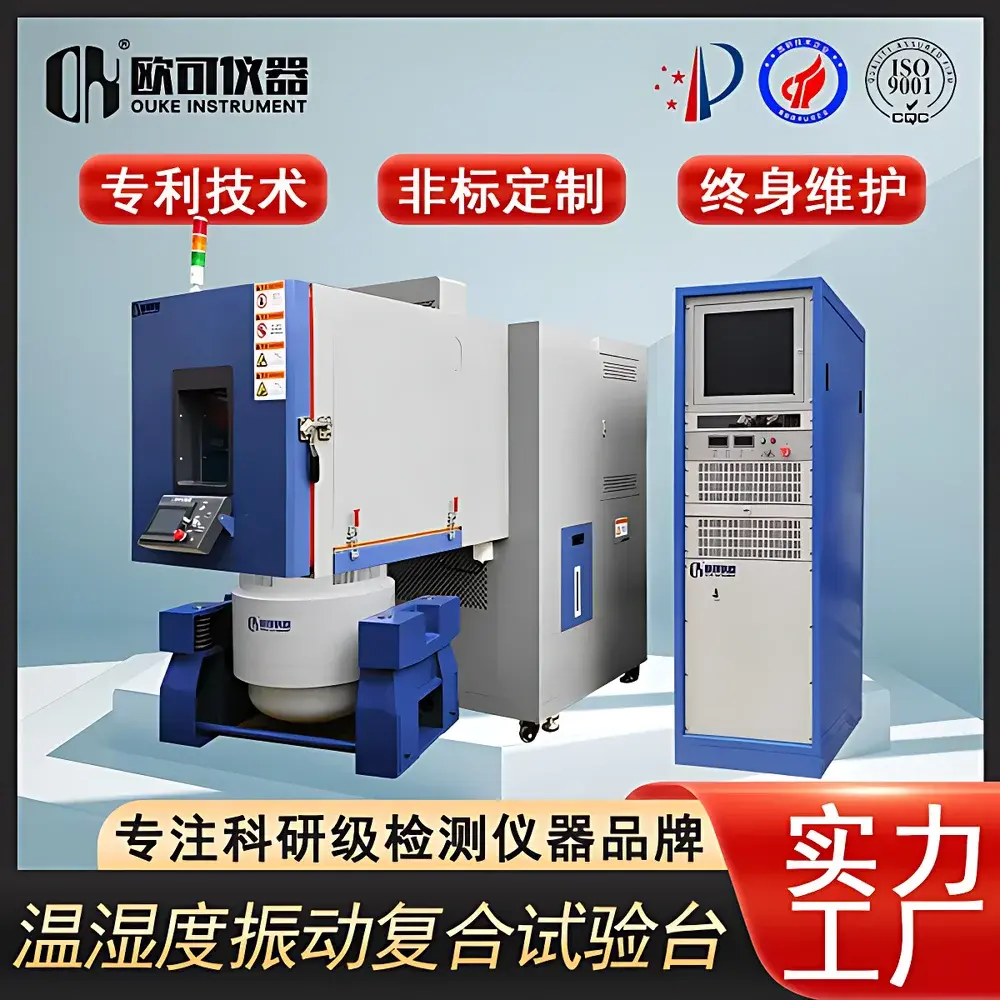
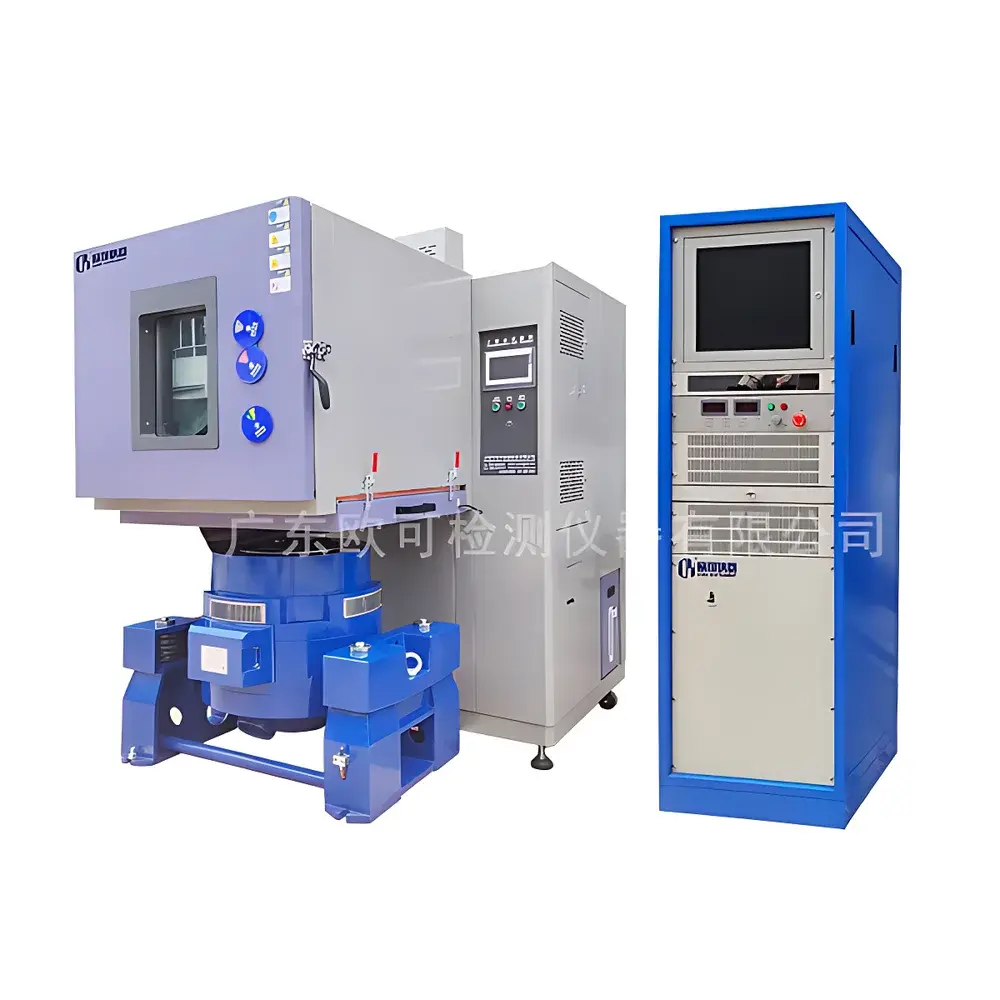
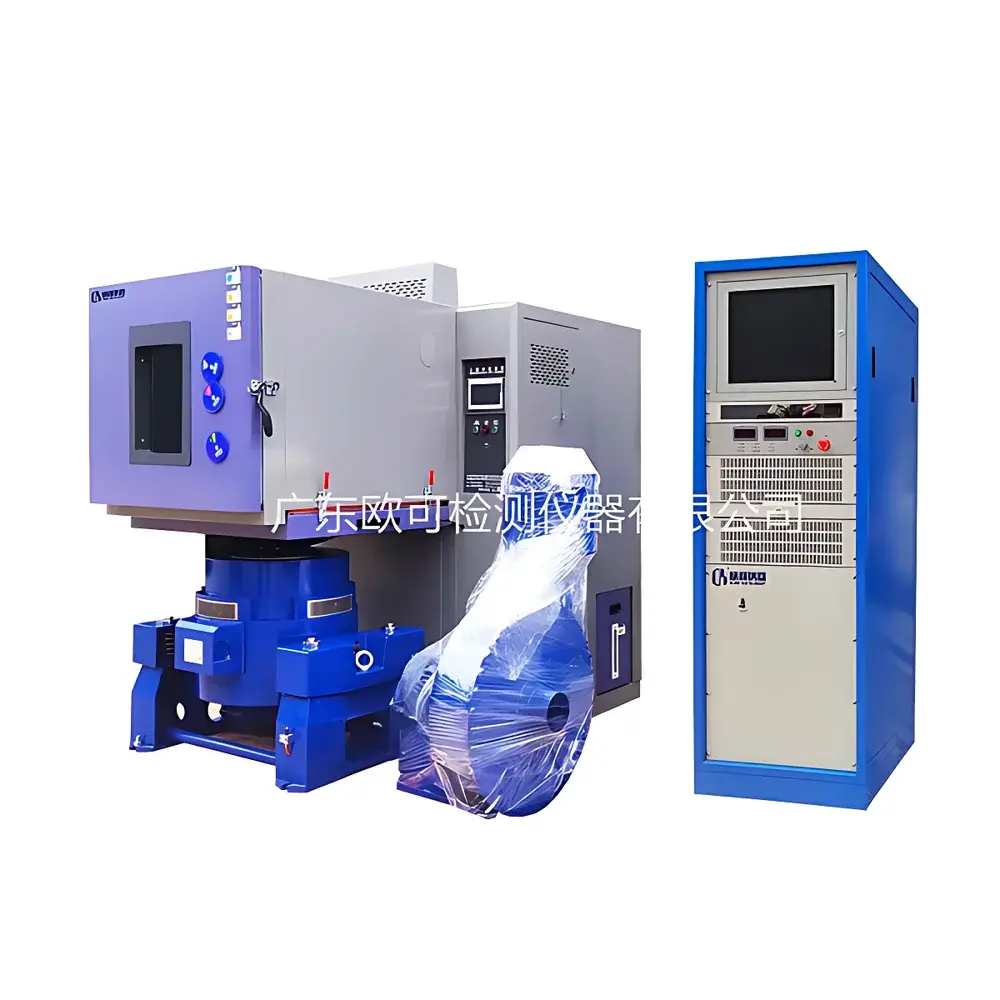
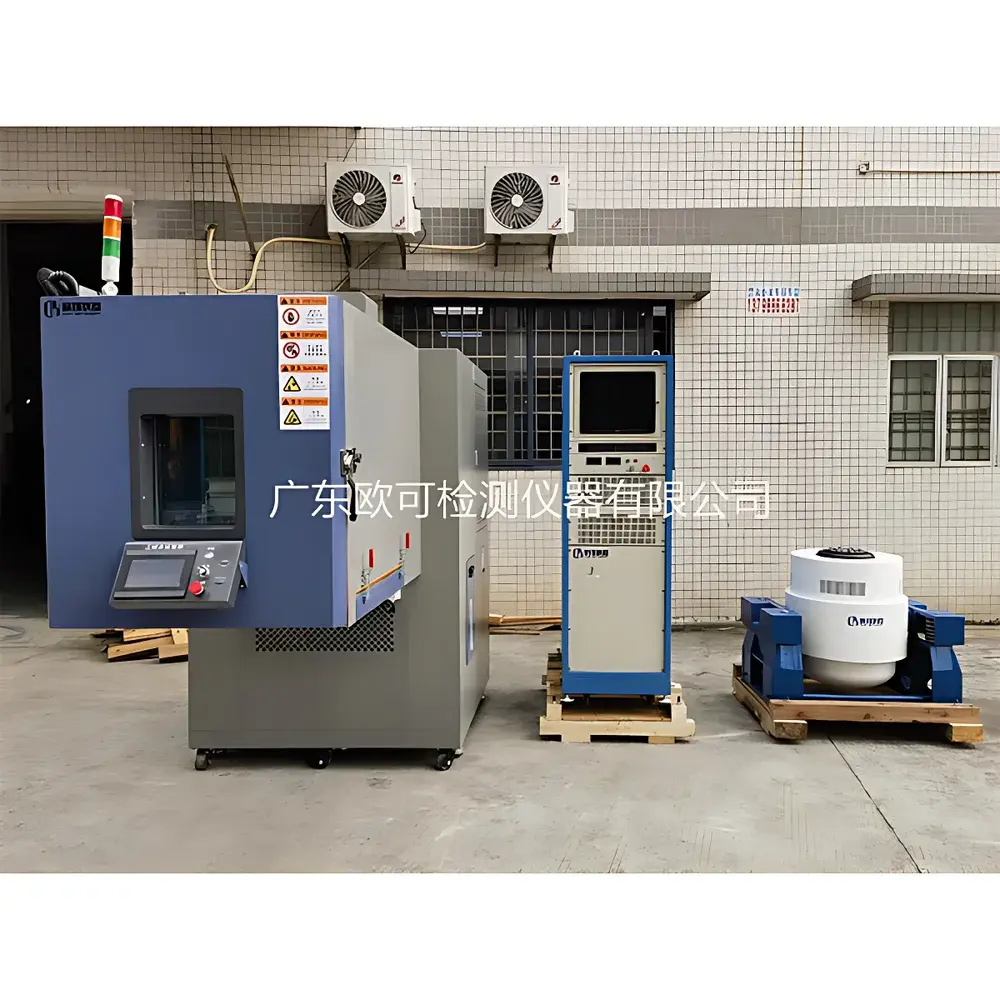
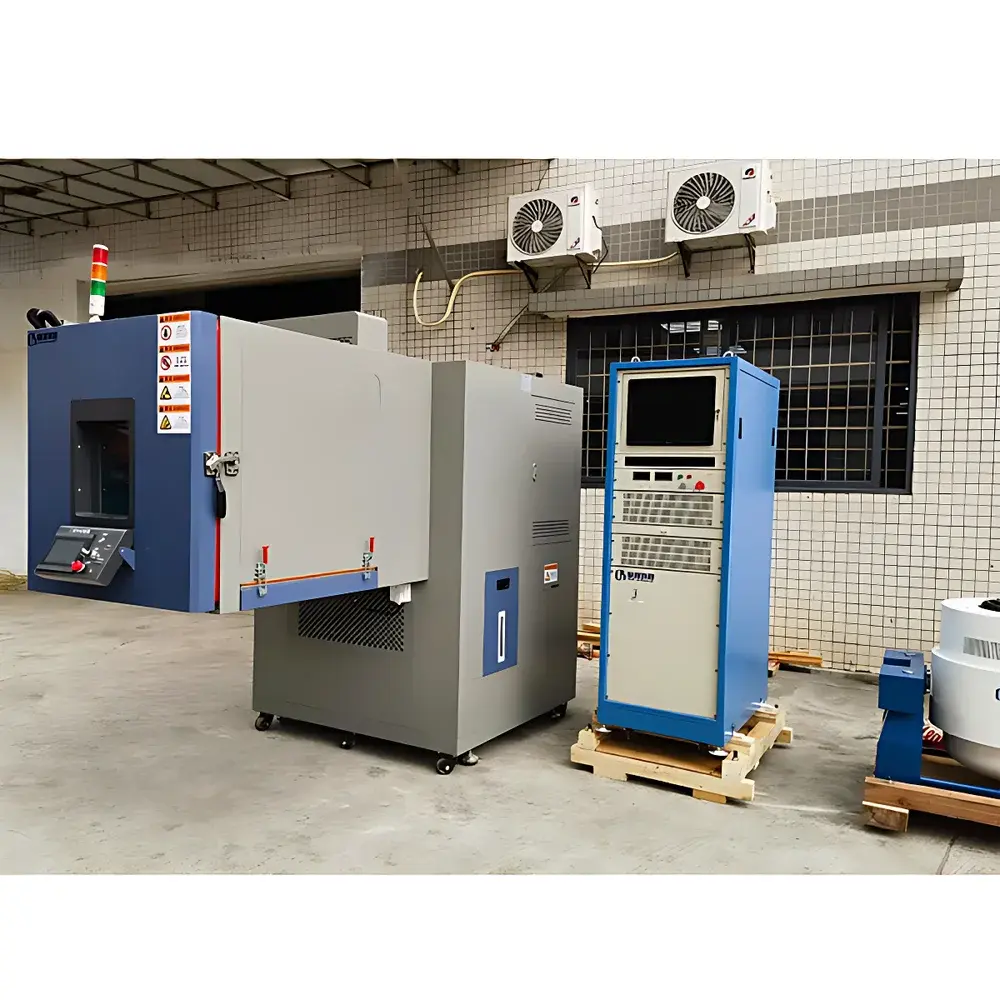
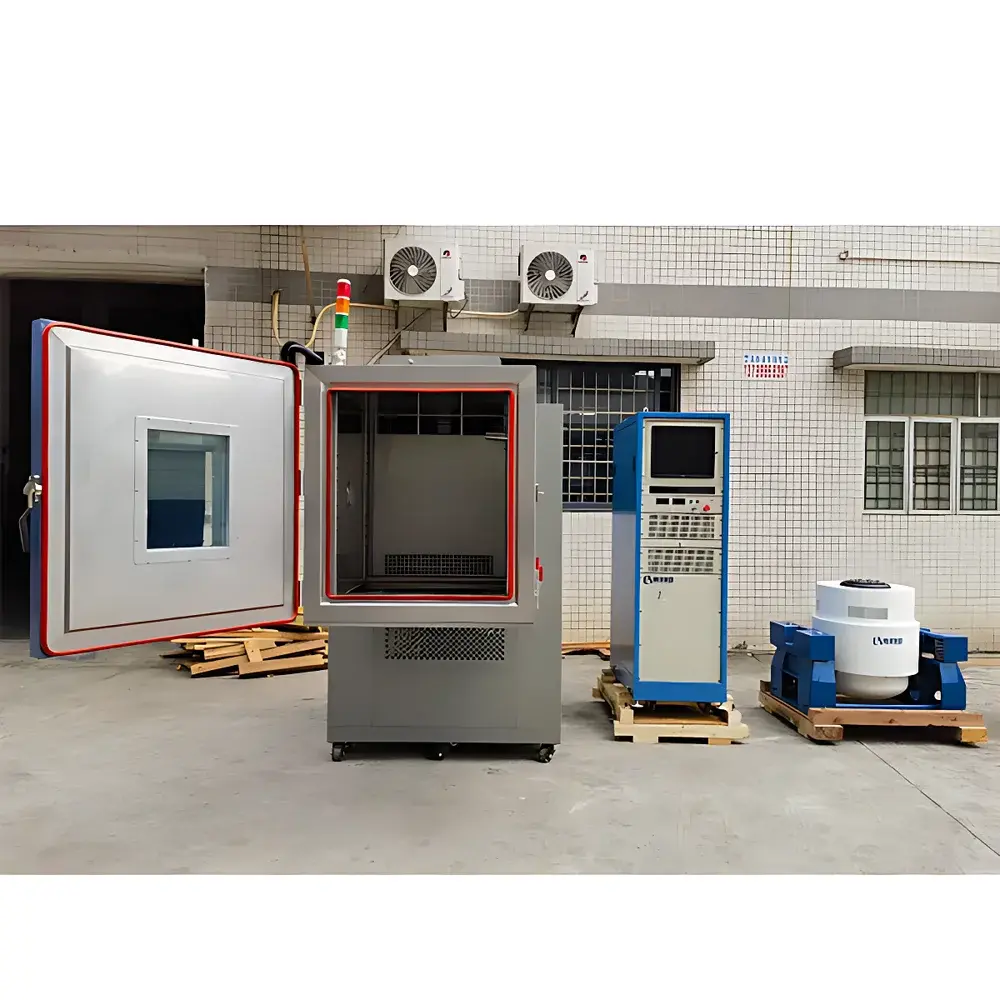
OK Electric Combined Temperature-Humidity-Vibration Test Chamber OK-ZTH-1005
| Brand | OK Instruments |
|---|---|
| Origin | Guangdong, China |
| Manufacturer Type | Direct Manufacturer |
| Product Origin | Domestic (China) |
| Model | OK-ZTH-1005 |
| Temperature Range | −70 °C to +150 °C |
| Humidity Range | 20–98 %RH at 20–85 °C |
| Temperature Ramp Rate | 5 / 10 / 15 °C/min |
| Temperature Uniformity | ≤ ±0.5 °C |
| Standard Load Capacity | 15 kg aluminum mass with 350 W internal heat dissipation |
Overview
The OK Electric Combined Temperature-Humidity-Vibration Test Chamber OK-ZTH-1005 is an integrated environmental simulation system engineered for precision reliability testing under concurrent thermal, hygroscopic, and mechanical stress conditions. It operates on the fundamental principle of multi-stress coupling—where temperature cycling, controlled humidity exposure, and electrodynamic vibration are simultaneously applied to replicate real-world operational and transportation environments. Unlike sequential single-stress tests, this chamber enables true synergistic stress application, essential for identifying latent failure mechanisms that only emerge under combined loading. Its design adheres to core principles of environmental engineering and reliability physics, supporting test protocols aligned with MIL-STD-810H, IEC 60068-2 series, and ISO 16750-4 for automotive electronics. The chamber’s structural integrity, dynamic sealing architecture, and thermally isolated vibration interface ensure metrological stability even during high-acceleration random vibration profiles across extreme temperature-humidity boundaries.
Key Features
- Electrodynamic vibration system integrated beneath the climatic chamber via a reinforced bottom-mount configuration, minimizing thermal and mechanical cross-coupling.
- High-strength stainless-steel chamber structure with fatigue-resistant welds and vibration-damped mounting interfaces to prevent long-term structural degradation.
- Dynamic dual-seal door system and vibration-tolerant cable feedthroughs maintain chamber integrity under continuous 5–1000 Hz random vibration while preserving humidity containment and thermal insulation performance.
- Triple-stage refrigeration with cascade compressor technology enables stable operation from −70 °C to +150 °C; humidity control employs precision steam injection and chilled mirror dew-point sensing for traceable RH accuracy.
- Programmable multi-segment test profiles support synchronized ramp-hold-vibrate sequences—for example, applying broadband random vibration during a 60 °C/95 %RH dwell or executing thermal shock cycles with superimposed sine sweeps.
- Real-time multi-channel data acquisition interface supports external sensors (e.g., thermocouples, strain gauges, voltage monitors) for in-situ functional monitoring of DUTs under stress.
Sample Compatibility & Compliance
The OK-ZTH-1005 accommodates standard test specimens up to 15 kg mounted on aluminum mass plates, with provisions for custom fixture integration and electrical/optical feedthroughs. All internal materials—including insulation, gaskets, and vibration interface components—are selected for chemical inertness, low outgassing, and dimensional stability across −70 °C to +150 °C. The system complies with electromagnetic compatibility (EMC) requirements per EN 61326-1 and meets safety standards under IEC 61010-1. It supports audit-ready test documentation for GLP and GMP environments when paired with optional 21 CFR Part 11-compliant software modules, including electronic signatures, audit trails, and user-access controls.
Software & Data Management
The embedded controller runs OK’s proprietary TestSuite Pro v4.x platform, offering intuitive graphical programming of complex multi-axis test profiles. Users define time-based sequences combining temperature ramps, humidity setpoints, and vibration spectra (sine, random, shock, or mixed-mode), with synchronization tolerances down to ±100 ms. Data logging records all chamber parameters (temperature, RH, acceleration PSD, drive voltage) at configurable intervals (10 Hz standard, up to 1 kHz optional). Export formats include CSV, MATLAB .mat, and industry-standard ASAM MDF 4.2. Optional network integration enables remote monitoring, alarm notification via SMTP/SNMP, and centralized fleet management across multiple OK chambers in shared lab infrastructures.
Applications
- Automotive: Validation of ECUs, battery modules, and ADAS sensors under combined desert heat (+85 °C/95 %RH) and road-induced vibration (ISO 16750-3 Class C).
- Aerospace: Full-mission profile simulation—from ground-level thermal soak and takeoff climb (−40 °C) to cruise turbulence (random vibration at 0.04 g²/Hz, 20–2000 Hz) and landing thermal recovery.
- Consumer Electronics: Accelerated life testing of smartphones and wearables under body-heat-mimicking conditions (37 °C/60 %RH) with walking-induced 3-axis vibration (0.5 g RMS, 1–100 Hz).
- Packaging & Logistics: Evaluation of cold-chain integrity for pharmaceutical shipments exposed to maritime humidity (85 %RH), refrigerated transport temperatures (2–8 °C), and truck-bed vibration spectra (SAE J2452).
- Industrial IoT Devices: Reliability screening of edge controllers subjected to factory-floor thermal transients and machinery-borne vibration harmonics.
FAQ
What distinguishes a three-combined test chamber from sequential single-stress testing?
Sequential testing cannot reproduce stress interaction effects—such as moisture diffusion accelerated by thermal expansion or crack propagation enhanced by vibratory loading. Only simultaneous application reveals coupled failure modes critical for field-relevant reliability assessment.
Can the OK-ZTH-1005 support HALT-style high-acceleration stress profiling?
While optimized for environment-realistic combined stress, its vibration system delivers up to 100 gpk peak acceleration and rapid thermal ramp rates (15 °C/min), enabling modified HALT protocols when used with appropriate DUT preconditioning and failure detection strategies.
Is low-pressure (altitude) capability available as an upgrade?
The OK-ZTH-1005 platform supports optional vacuum integration to extend functionality into four-combined testing (temperature/humidity/vibration/low pressure), compliant with MIL-STD-810H Method 500.7 for high-altitude avionics validation.
How is calibration traceability maintained across all three subsystems?
Temperature and humidity sensors are NIST-traceable platinum RTDs and chilled-mirror hygrometers; vibration transducers are certified per ISO 16063-21. Annual calibration kits and third-party verification services are available through OK’s global service network.
Does the system support automated pass/fail decision logic during runtime?
Yes—via programmable limit monitoring with user-defined thresholds on monitored channels (e.g., DUT current draw, signal dropout, or thermal runaway), triggering immediate test suspension and event-logged fault reporting.



