
Electromagnetic Fixed-Frequency Vibration Shaker
| Key Features | Electromagnetic excitation |
|---|---|
| Max. load capacity | 100 kg |
| Frequency range | 1–600 Hz (standard), up to 5000 Hz (optional) |
| Max. acceleration | 20 g |
| Adjustable amplitude | 0–5 mm peak-to-peak |
| Power | 2.2 kW / 3.8 kW |
| Input voltage | 220 V / 380 V AC |
| Platform dimensions | 50 cm × 50 cm (customizable) |
| Unit footprint options | 50×20×50 cm, 50×25×20 cm, 50×25×50 cm (dual-platform configurations available) |
Overview
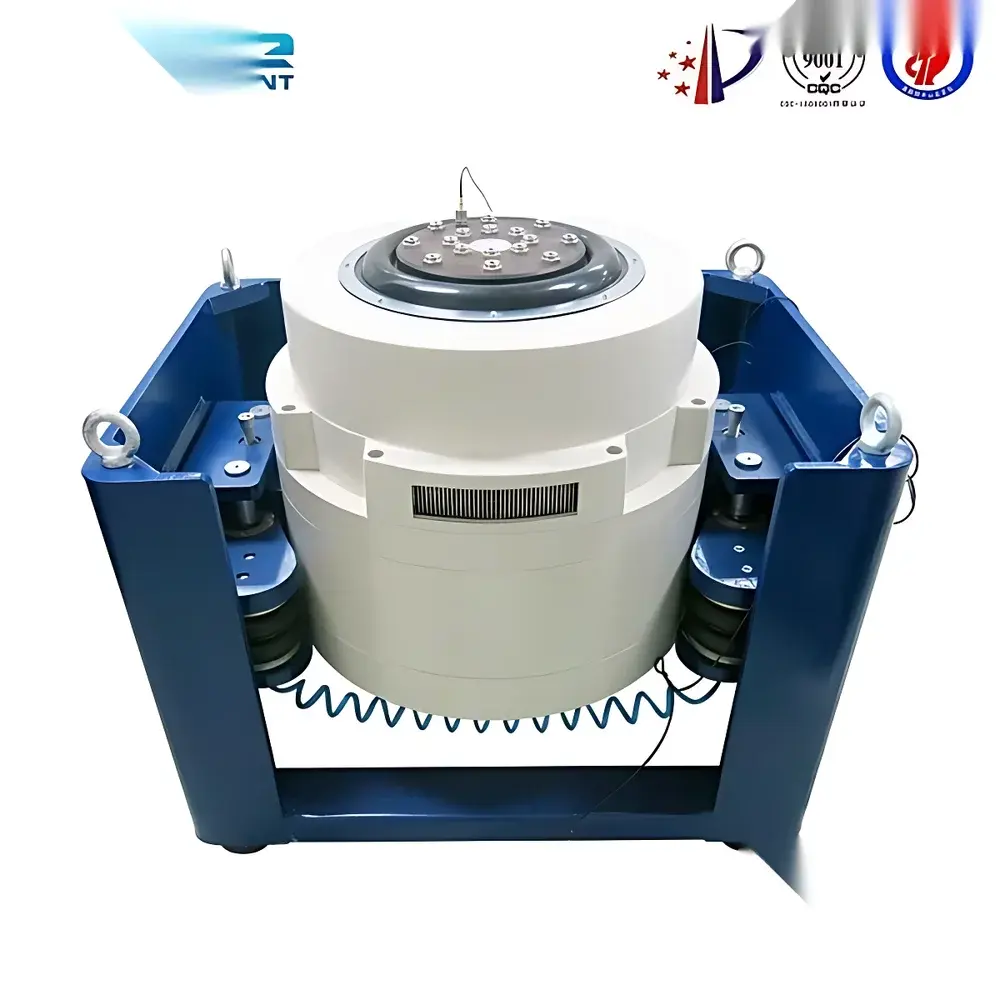
The Electromagnetic Fixed-Frequency Vibration Shaker is an engineered test system designed for controlled mechanical stress evaluation of packaged goods, electronic assemblies, automotive components, and industrial products under simulated transport and service-life vibration conditions. Based on electromagnetic excitation principles, the shaker generates precise, repeatable sinusoidal motion without hydraulic or pneumatic dependencies—ensuring low maintenance, high energy efficiency, and long-term calibration stability. Its core function is fatigue testing via sustained fixed-frequency excitation, enabling detection of latent structural weaknesses, solder joint failures, fastener loosening, and packaging integrity issues before field deployment. Unlike broadband random shakers, this system prioritizes deterministic, regulatory-aligned sine testing—commonly specified in ASTM D999, ISTA 3A/3E, MIL-STD-810H Method 514.7 (sine sweep & dwell), and ISO 13373-2 for machinery health monitoring validation.
Key Features
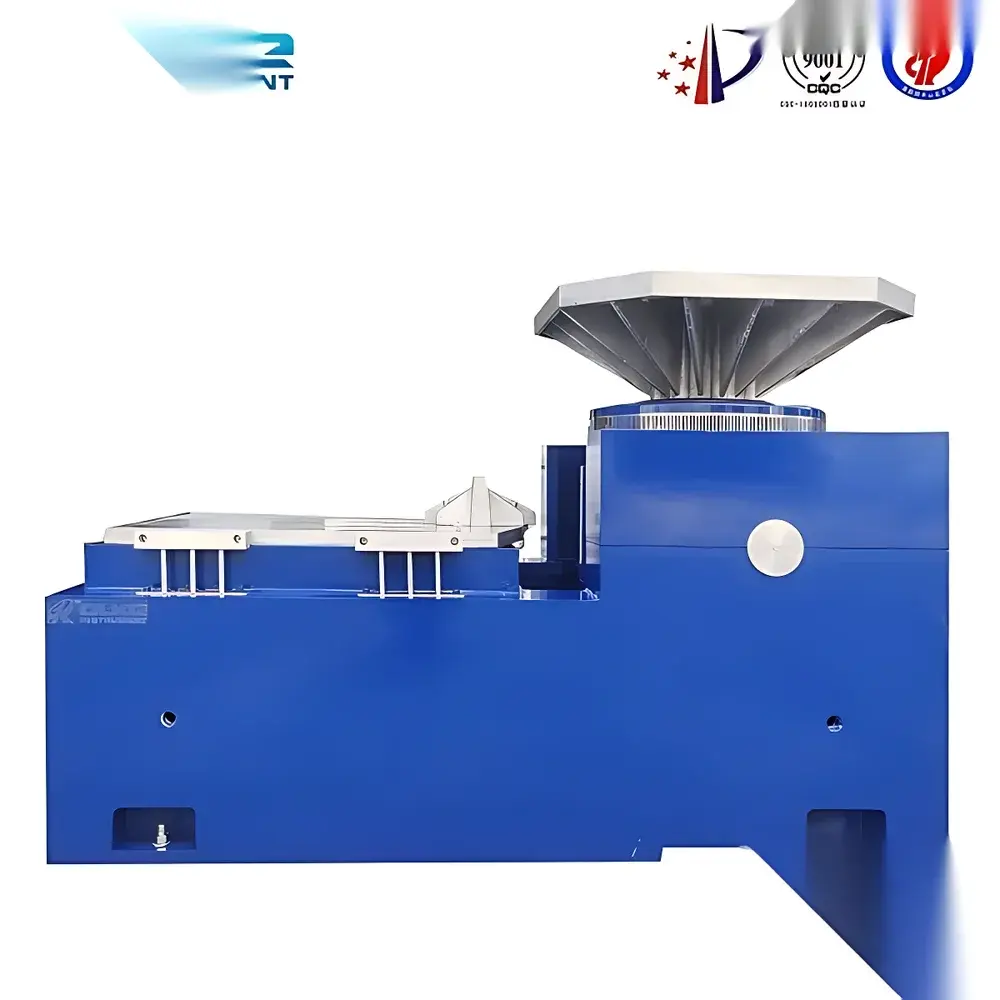
- High-Rigidity Aluminum-Magnesium Alloy Platform: Precision die-cast construction with anodized surface treatment ensures exceptional stiffness-to-weight ratio, extended service life, and corrosion resistance in laboratory and production environments.
- Reinforced Threaded Inserts: Stainless steel or alloy-lined M6/M8 threaded inserts provide superior pull-out resistance, eliminate thread stripping during repeated fixture mounting, and maintain torque consistency across thousands of test cycles.
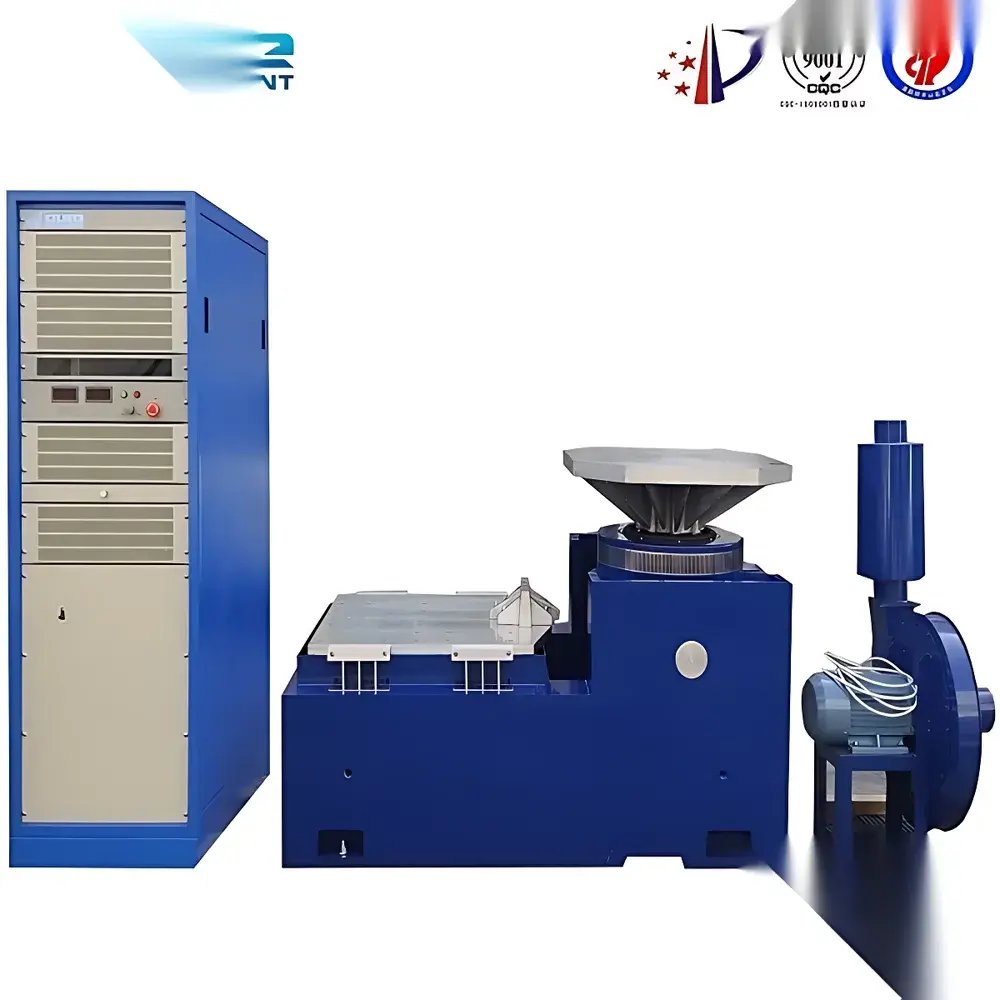
- Dual-Display Real-Time Monitoring: Simultaneous digital readouts for frequency (Hz) and rotational speed (RPM) eliminate manual conversion errors and support immediate operator verification without menu navigation.
- Multi-Mode Excitation Control: Supports fixed-frequency sine, amplitude-modulated sine, programmable multi-segment profiles (up to 15 steps, 65,500 s max per segment), logarithmic sweep, and time-based dwell testing—all accessible via front-panel interface or optional RS-485 remote command.
- Isolation-Optimized Mechanical Design: Integrated high-damping elastomeric isolation feet suppress floor-borne resonance, mitigate structural transmission to building foundations, and comply with facility vibration control requirements per ISO 2631-2.
- Scalable Power & Configuration Options: Available in 2.2 kW and 3.8 kW variants; standard 50 cm × 50 cm test surface; custom platform geometries (including dual-platform arrangements) accommodate oversized or multi-unit DUTs.
Sample Compatibility & Compliance
This shaker accommodates a broad range of sample types—from small PCB subassemblies (≤5 kg) to full shipping cartons (up to 100 kg gross weight). Fixture adaptability is enhanced by standardized T-slots and modular mounting patterns. The system meets fundamental electromagnetic compatibility (EMC) requirements per EN 61326-1 and safety standards per IEC 61000-6-2/6-4. While not pre-certified to specific transportation standards, its traceable amplitude and frequency accuracy—verified using NIST-traceable laser vibrometry—supports internal qualification against ISTA, ASTM, and customer-specific test plans. For regulated industries (e.g., medical devices, aerospace), the optional RS-485 interface enables audit-ready data logging compatible with 21 CFR Part 11-compliant software platforms when paired with validated third-party acquisition systems.
Software & Data Management
Native operation requires no external PC; all test parameters are configured directly on the embedded controller. For advanced traceability, the RS-485 serial interface supports Modbus RTU protocol, enabling integration with LabVIEW, MATLAB, or custom SCADA environments. When connected to a validated host system, users can perform remote start/stop, real-time waveform streaming, automated report generation (PDF/CSV), and long-term trend analysis. All test logs—including start time, duration, frequency setpoint, amplitude, acceleration, and pass/fail status—are timestamped and stored with user-defined identifiers. Audit trail functionality (user login, parameter changes, emergency stops) is implemented at the host software level, aligning with GLP and GMP documentation expectations.
Applications
- Transportation simulation for consumer electronics packaging per ISTA 3A and ASTM D4169
- Early-life failure screening (burn-in vibration) of automotive ECUs and sensors
- Structural integrity validation of battery modules under sinusoidal dwell conditions
- Quality assurance of printed circuit board assemblies prior to conformal coating
- Verification of adhesive bond strength in composite enclosures
- Calibration reference for accelerometers and vibration transducers (using known amplitude/frequency inputs)
FAQ
What is the maximum payload capacity and how is it verified?
The shaker is rated for 100 kg static load and dynamic load under 20 g peak acceleration at frequencies ≤600 Hz. Payload limits are determined per ISO 5347-12 and confirmed through modal analysis of the moving coil assembly and suspension system.
Can this unit perform random vibration testing?
No. This model is specifically engineered for deterministic sine-based excitation only. Random vibration capability requires a separate electrodynamic shaker with closed-loop power amplifier and dedicated controller (e.g., LDS V875 + SCADAS).
Is calibration certification included with purchase?
A factory calibration report (traceable to national metrology institutes) is provided. Full ISO/IEC 17025-accredited calibration is available as an optional service through authorized third-party labs.
What environmental conditions are required for safe operation?
Ambient temperature: 10–35 °C; relative humidity: ≤80% non-condensing; installation on a rigid, vibration-isolated concrete floor with minimum thickness of 30 cm and reinforcement mesh.



