
Electromagnetic Vertical Vibration Shaker System for Shock and Vibration Testing
| Tabletop Dimensions | 500 × 500 mm |
|---|---|
| Vibration Axis | Vertical (Z-axis only) |
| Maximum Load Capacity | 100 kg |
| Frequency Range | 1–400 Hz |
| Sweep Frequency Range | 1–400 Hz |
| Displacement Amplitude | 0–5 mm peak-to-peak |
| Maximum Acceleration | 20 g (peak) |
| Time Control Resolution | 1 second, programmable up to 1 year |
| Waveforms | Sine, Half-sine |
| Amplifier Power Rating | 2.2 kW |
| Input Voltage | 220 V ±10% AC, 50/60 Hz |
| Maximum Current Draw | 5 A |
| Frequency Display Resolution | 0.01 Hz |
| Overall Dimensions (H×W×D) | 160 × 500 × 500 mm |
| Compliance | CE-marked |
Overview
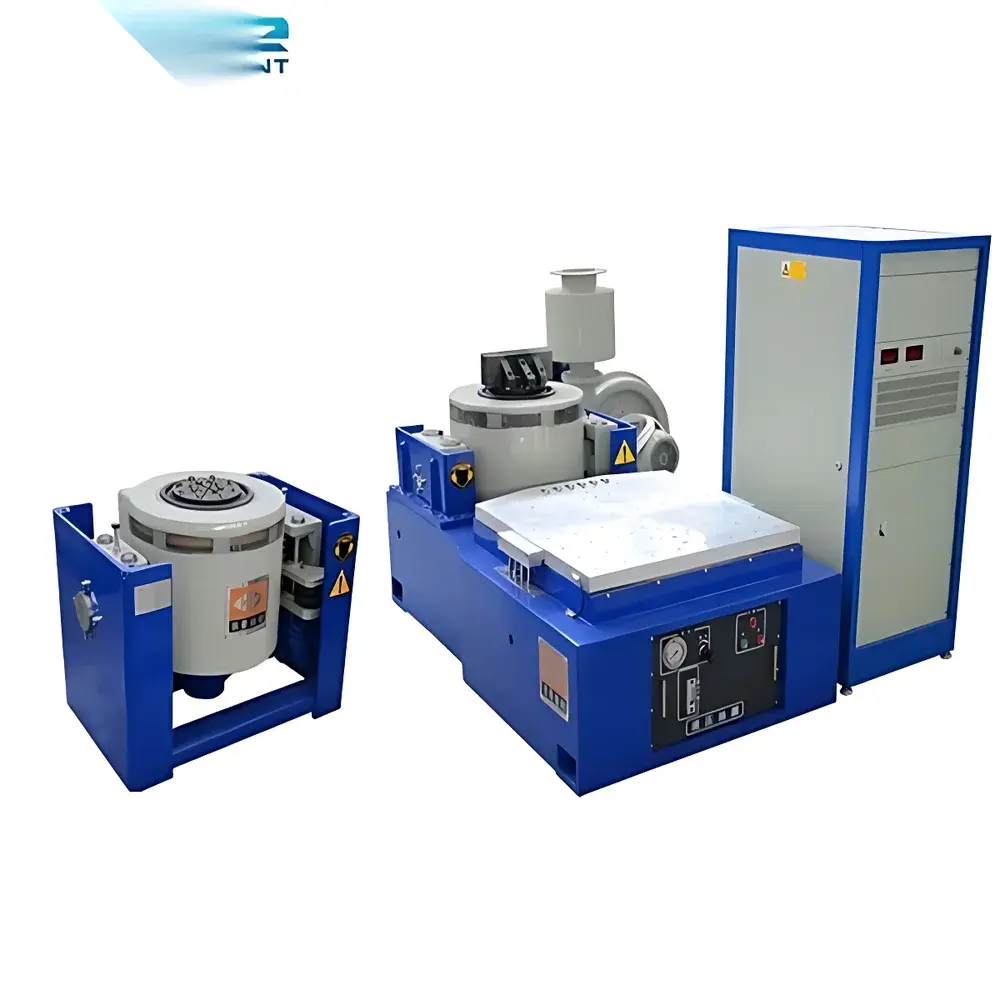
The Electromagnetic Vertical Vibration Shaker System is a precision-engineered electrodynamic shaker designed for controlled sinusoidal and shock vibration testing in laboratory and industrial quality assurance environments. Based on Lorentz force actuation principles, the system delivers repeatable, traceable excitation profiles across a broad frequency spectrum (1–400 Hz), enabling rigorous evaluation of mechanical integrity, fatigue resistance, and resonance behavior under simulated operational or environmental stress conditions. Its vertical-only configuration provides high-fidelity single-axis excitation ideal for component-level qualification, packaging validation, and early-life failure detection—particularly where gravity-aligned dynamic loading replicates real-world transport, mounting, or service conditions. The system complies with internationally recognized test standards including ISO 20283-2 (mechanical vibration of packaged products), MIL-STD-810H Method 514.8 (vibration), and ASTM D999 (vibration testing of shipping containers), supporting audit-ready test documentation when integrated with compliant data acquisition software.
Key Features
- Digital frequency display with 0.01 Hz resolution ensures precise parameter verification and calibration traceability.
- Low-noise synchronous belt drive mechanism minimizes acoustic interference during sensitive measurements and extends maintenance intervals.
- Linear guide rail sample mounting interface enables rapid, repeatable fixture installation with mechanical alignment repeatability better than ±0.1 mm.
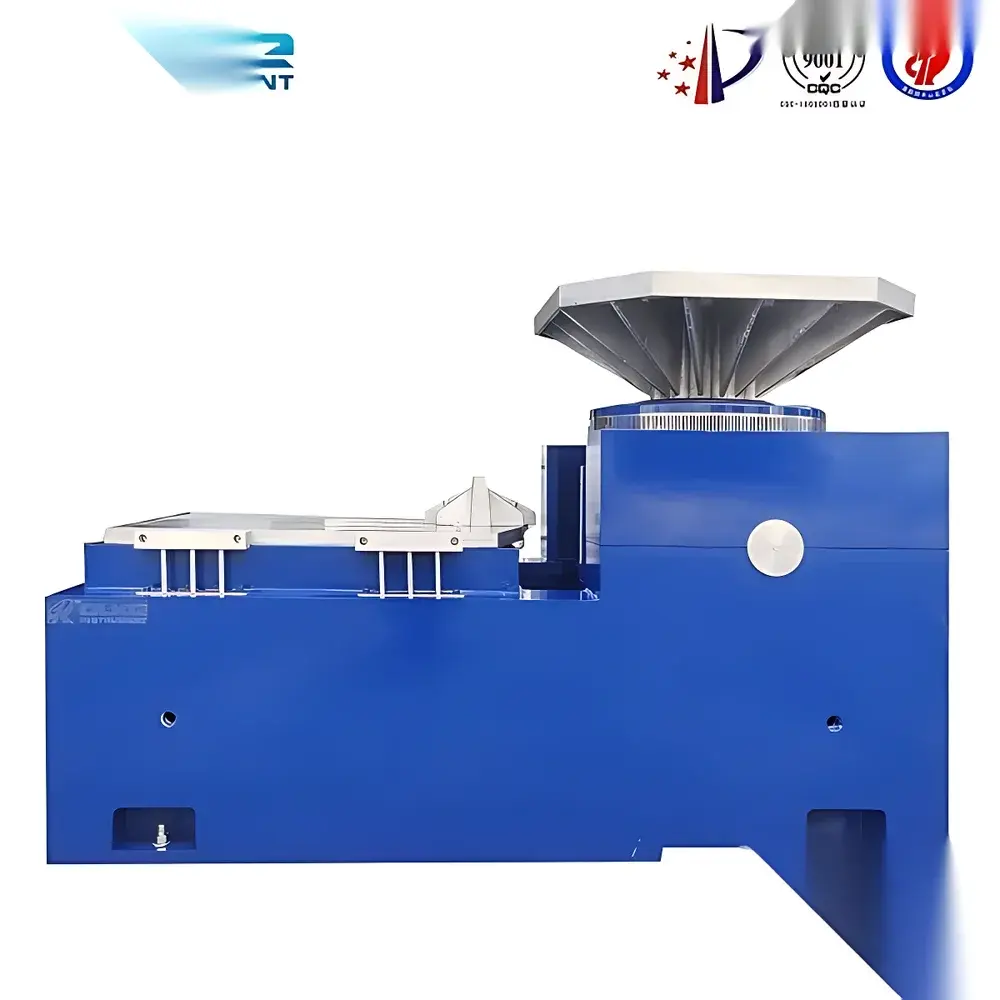
- Heavy-duty structural base incorporating reinforced C-channel steel frame and elastomeric isolation pads guarantees stable operation at maximum acceleration (20 g) without floor coupling or resonance amplification.
- Thermally protected 2.2 kW power amplifier delivers consistent output across the full frequency and displacement range, with built-in overcurrent (5 A limit) and thermal shutdown safeguards.
- Programmable test duration from 1 second to 365 days supports both short-duration shock simulations and long-term endurance profiling.
Sample Compatibility & Compliance
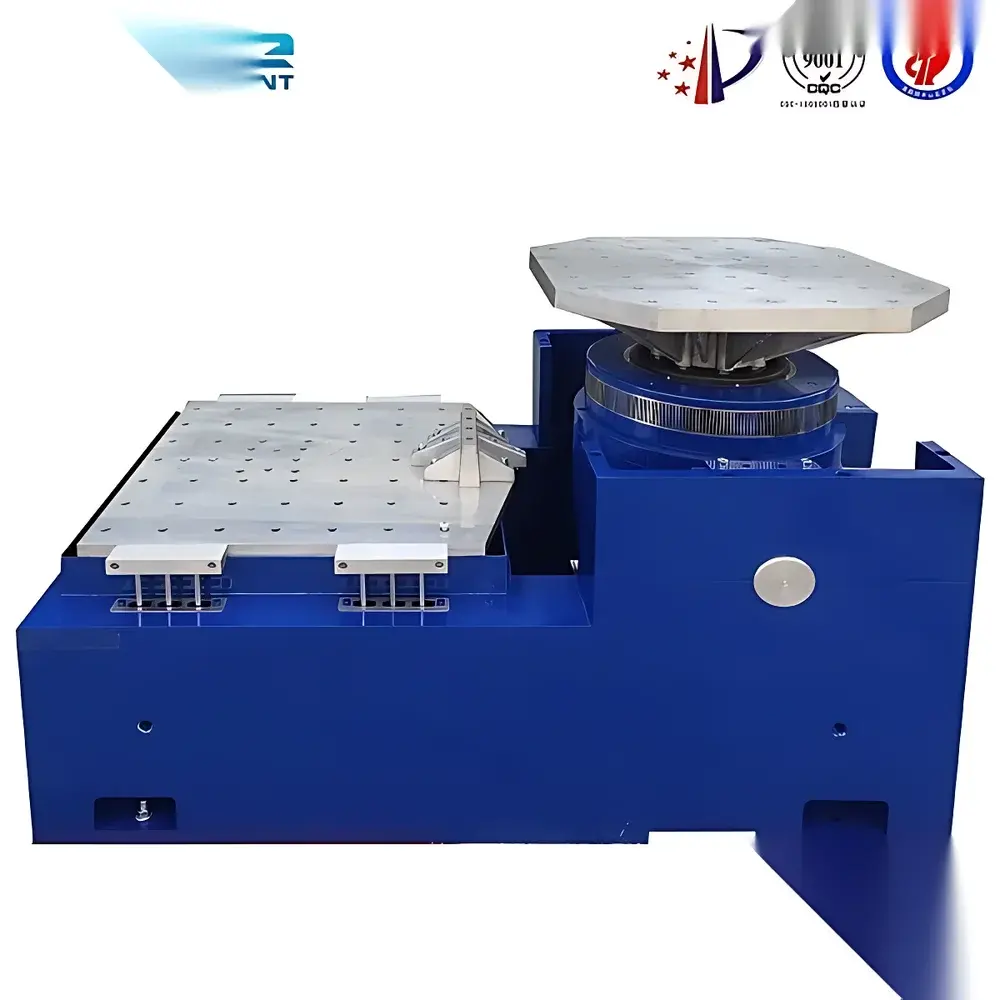
The shaker accommodates test specimens up to 100 kg mass on its rigid 500 × 500 mm aluminum tabletop, which features standardized T-slot patterns (M6) for universal fixture integration. While optimized for vertical (Z-axis) excitation, custom configurations—including multi-axis motion platforms and extended stroke actuators—are available upon engineering review. All units are CE-marked and supplied with factory calibration certificates traceable to national metrology institutes. The system meets electromagnetic compatibility (EMC) requirements per EN 61326-1 and safety standards per EN 61000-6-2/6-4. When operated within specified limits, it satisfies vibration test protocol requirements for aerospace (SAE ARP4754A), automotive (ISO 16750-3), and medical device (IEC 60601-1) applications.
Software & Data Management
The shaker operates standalone via front-panel controls or integrates with third-party control software (e.g., Vibration Research VR9500, m+p VibControl, or NI LabVIEW-based systems) via analog voltage input (±10 V) and TTL trigger I/O. Optional USB/RS-232 interfaces support remote parameter setting, real-time waveform monitoring, and automated test sequencing. Data logging adheres to GLP/GMP principles: timestamps, operator ID, test profile metadata, and raw acceleration/displacement waveforms are exportable in CSV or UFF58 formats. For regulated industries, optional 21 CFR Part 11-compliant software packages provide electronic signatures, audit trails, and role-based access control—ensuring full compliance during FDA, ISO 13485, or AS9100 audits.
Applications
This system serves critical roles in product development and conformance testing across multiple sectors: structural durability assessment of printed circuit board assemblies (PCBAs) under harmonic excitation; drop-shock simulation using half-sine pulse generation for consumer electronics; modal analysis of automotive interior components; qualification of avionics enclosures per DO-160 Section 8; and accelerated life testing of electromechanical relays and connectors. It is routinely deployed in R&D labs, contract test houses, and Tier-1 supplier QC departments to validate design robustness prior to field deployment—reducing warranty claims and improving time-to-market.
FAQ
Is three-axis (X-Y-Z) vibration capability available?
Yes—while the standard configuration is vertical-only, triaxial electromagnetic shaker systems with independent axis control are offered as engineered solutions. Contact our application engineering team for payload-specific feasibility review.
What calibration services are included?
Each unit ships with a NIST-traceable calibration certificate covering frequency response, displacement linearity, and acceleration sensitivity at 10, 50, 100, and 200 Hz. Annual recalibration kits and certified field service are available.
Can this shaker perform random vibration testing?
No—the standard model supports only deterministic waveforms (sine, half-sine). Random vibration requires an upgraded controller and broadband amplifier; please inquire about the VR9500-compatible variant.
What mounting options exist for non-standard payloads?
Custom inertial mass adapters, isolation plates, and low-resonance fixture plates (aluminum, magnesium, or steel) can be fabricated to ISO 5344 specifications upon request.
Does the system meet MIL-STD-810H requirements?
Yes—when operated within published limits and paired with compliant control software, it satisfies Method 514.8 (vibration) and Method 516.8 (shock) test profiles for equipment qualification.



