
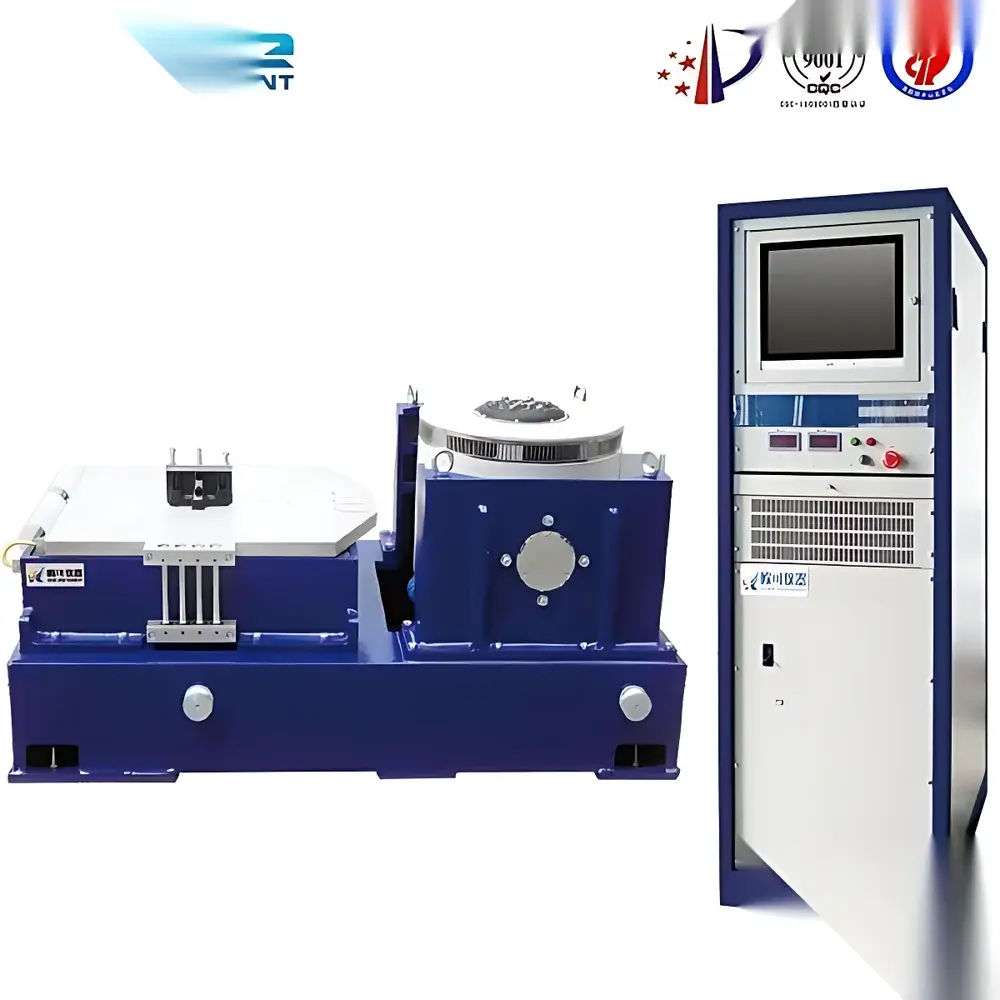
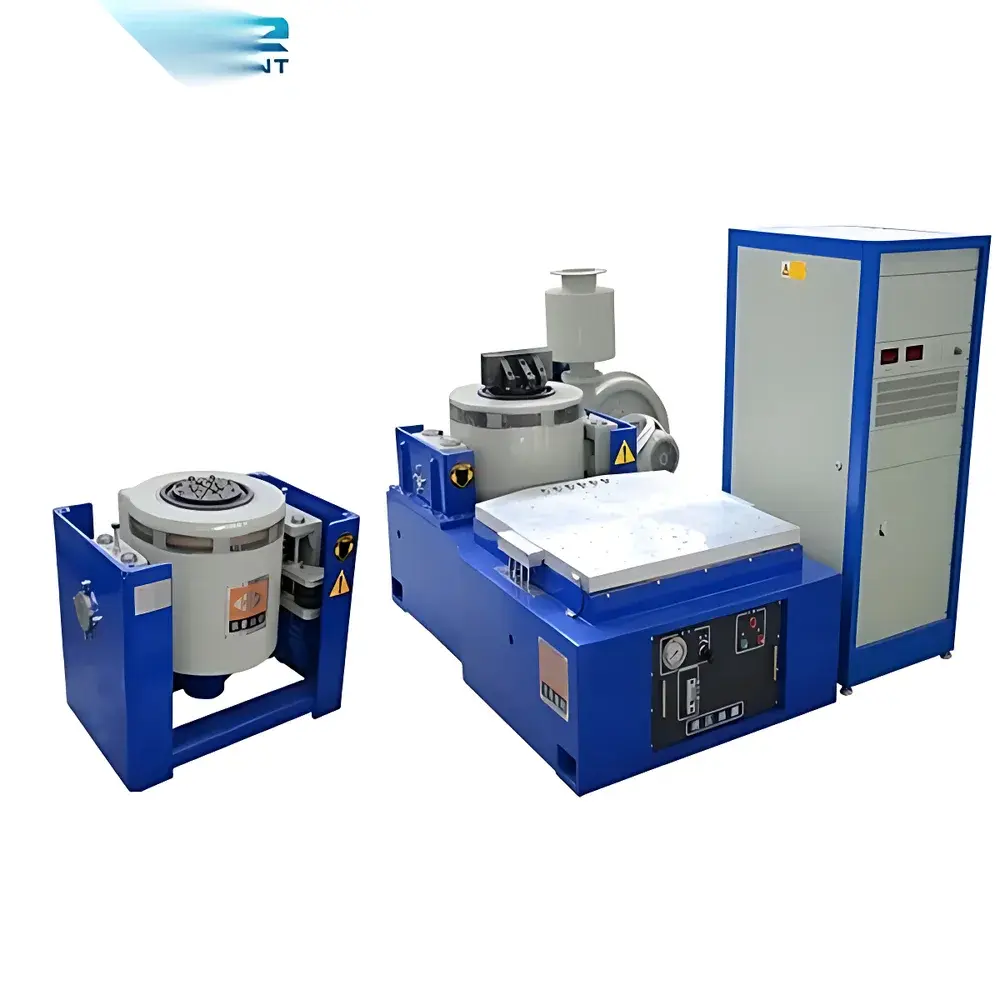
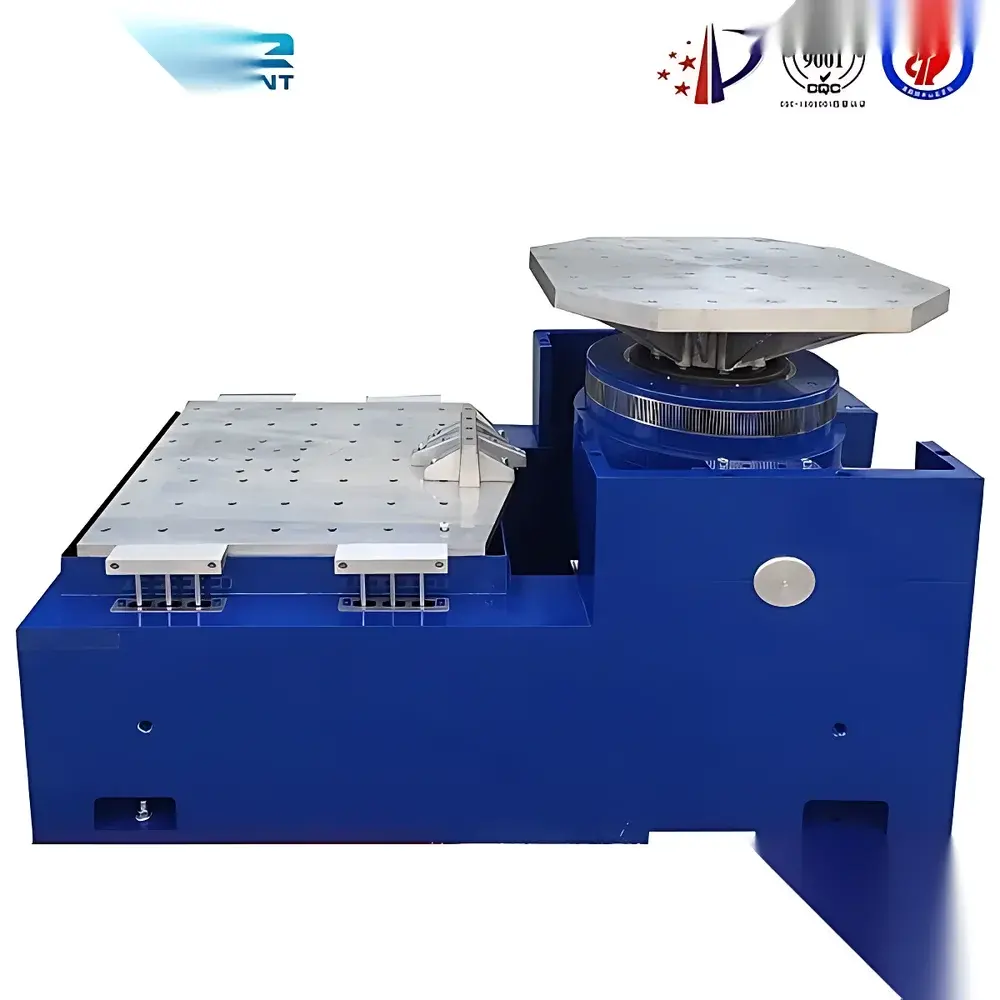
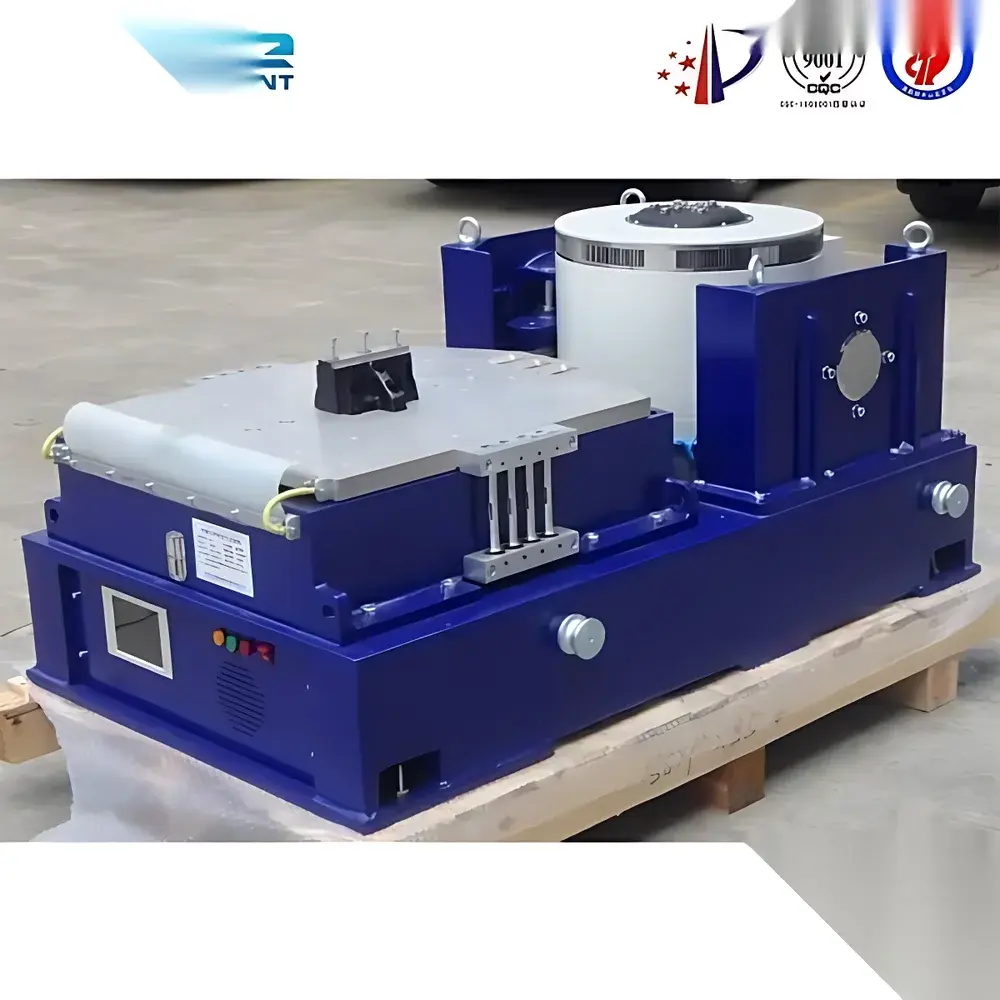
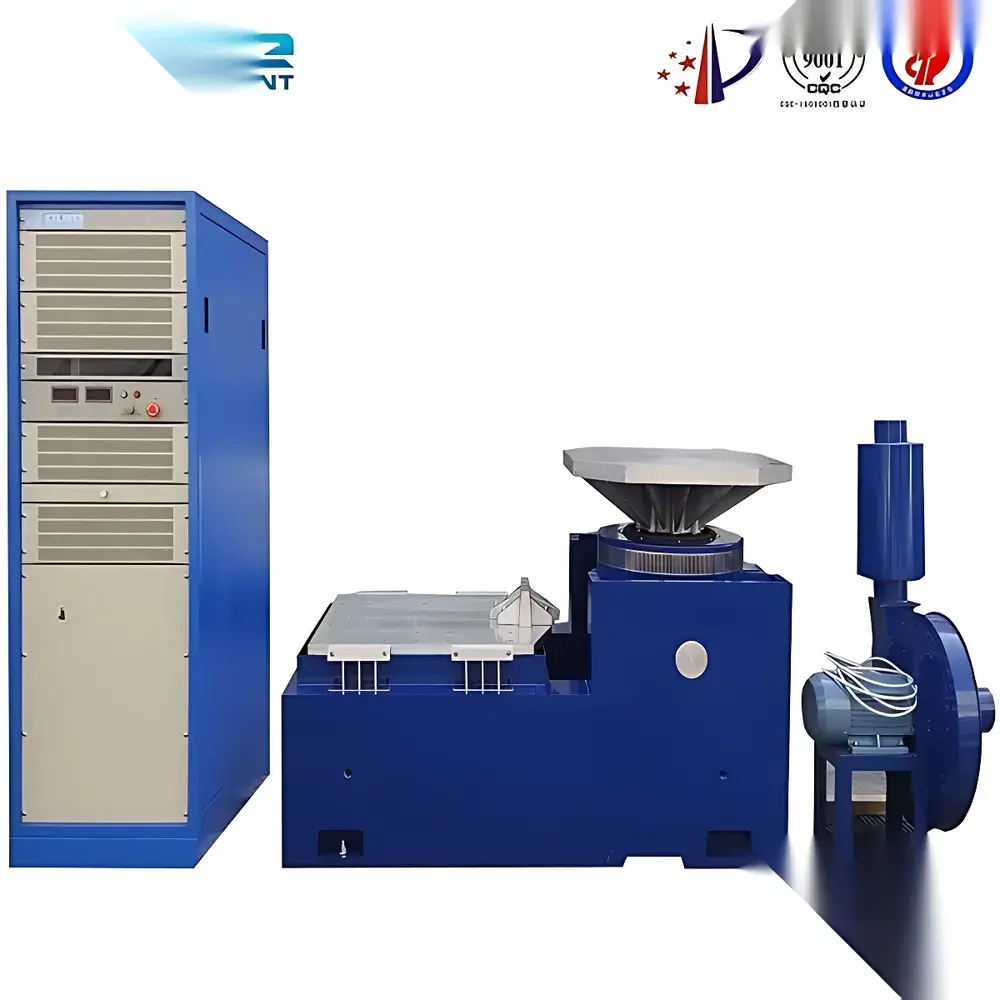
Electromagnetic Vibration Shaker System
| Key | Brand: Other Brands |
|---|---|
| Origin | Imported |
| Manufacturer Type | Authorized Distributor |
| Price | USD 21,000 (FOB) |
| Sinusoidal Force Range | 1.96–156.8 kN |
| Random Force Range | 1.6–156.8 kN |
| Frequency Range | 2–4000 Hz |
| Moving Coil Mass | 2–160 kg |
| Max Acceleration | 1000 m/s² |
| Max Displacement (Peak-to-Peak) | 51 mm |
| Max Velocity | 2 m/s |
| Table Diameter | Φ110–Φ590 mm |
| Cooling | Forced Air (Noise ≤80 dB(A)) |
| Compliance | Designed to meet ISO 10816-1, IEC 60068-2-6, MIL-STD-810H, and ASTM D999 vibration test standards |
Overview
The Electromagnetic Vibration Shaker System is a high-performance electrodynamic shaker platform engineered for precision simulation of mechanical vibration environments in laboratory and industrial testing applications. Operating on the principle of Lorentz force actuation—where alternating current applied to a moving coil within a static magnetic field generates controlled inertial excitation—the system delivers repeatable, traceable, and metrologically sound vibratory inputs across a broad frequency spectrum (2 Hz to 4000 Hz). It is purpose-built for sine sweep, random vibration, classical shock (half-sine, trapezoidal, sawtooth), and resonance dwell testing, supporting critical stages of product development including design verification, environmental stress screening (ESS), reliability growth testing (RGT), and qualification per international standards such as IEC 60068-2-64 (random vibration) and MIL-STD-810H Method 514.8. Its electromagnetic architecture ensures zero hydraulic fluid dependency, minimal thermal drift, and high phase fidelity—making it suitable for closed-loop control applications requiring real-time waveform replication and spectral integrity.
Key Features
- Multi-mode excitation capability: Fully integrated support for sinusoidal, random (PSD-controlled), transient shock, and resonant dwell profiles via digital controller interface.
- Optimized moving coil assembly: Lightweight, high-conductivity aluminum alloy coil with reinforced suspension geometry enables high acceleration output (up to 1000 m/s²) while maintaining mechanical linearity and thermal stability.
- Dual magnetic circuit design: Symmetrically arranged permanent magnet arrays minimize stray flux, improve magnetic field uniformity (>92% homogeneity over active coil volume), and reduce eddy current losses in the armature structure.
- Pneumatic isolation & load-bearing system: Central air spring support combined with lateral pivot-mounted auxiliary air dampers provides superior low-frequency response (<5 Hz) and decouples base motion from reaction mass, enhancing test repeatability.
- Customizable magnesium-alloy extension table: High stiffness-to-weight ratio platform available in diameters from Φ110 mm to Φ590 mm; surface flatness maintained within ±5 µm over full span; tapped mounting holes conforming to ISO 2631-1 and ASTM E1437 patterns.
- Low-noise forced-air cooling: Proprietary axial-flow blower with optimized duct geometry and acoustic lining maintains coil temperature below 120°C during sustained 100% duty cycle operation; acoustic emission limited to ≤80 dB(A) at 1 m distance.
Sample Compatibility & Compliance
This shaker system accommodates a wide range of test specimens—from microelectronic components (PCBs, MEMS sensors) to automotive ECUs, aerospace avionics modules, and full-scale industrial enclosures—when paired with appropriate fixtures and slip tables. All standard configurations comply with mechanical interface requirements defined in ISO 5344 (shaker mounting dimensions), ISO 10816-1 (vibration severity assessment), and IEC 60068-2-80 (climatic and dynamic combined testing). Optional transducer kits enable simultaneous measurement of acceleration, velocity, displacement, and force at the control point and response points, satisfying data traceability requirements under GLP and GMP frameworks. System calibration certificates are provided per ISO/IEC 17025-accredited procedures, with uncertainty budgets documented for each force and motion channel.
Software & Data Management
The system integrates with industry-standard real-time vibration control software (e.g., Vibration Research VR9500 or m+p VibControl), supporting IEEE 1451.4-compliant TEDS sensor recognition, multi-axis MIMO control, and closed-loop PSD shaping with convergence thresholds down to ±0.5 dB. Raw time-history data is recorded in ASAM MDF4 format, enabling interoperability with MATLAB, Python (via asammdf), and NI DIAdem. Audit trails—including operator ID, test profile revision, calibration timestamp, and environmental chamber synchronization metadata—are retained in accordance with FDA 21 CFR Part 11 requirements when configured with electronic signature modules. Exported reports include FFT spectra, waterfall plots, kurtosis-enhanced shock response spectra (SRS), and fatigue damage metrics derived from Miner’s rule or rainflow counting algorithms.
Applications
- Environmental stress screening (ESS) of printed circuit board assemblies prior to field deployment
- Reliability qualification of automotive infotainment systems per LV-124 and GMW3172 specifications
- Vibration fatigue life prediction of structural weldments using power spectral density (PSD)-driven time-domain synthesis
- Modal analysis and operational deflection shape (ODS) mapping of rotating machinery housings
- Shock survivability validation of medical devices under IEC 60601-1 Clause 9.4.2
- Transport simulation testing aligned with ASTM D999 (truck trailer vibration profiles) and ISTA 3A
- Development of vibration isolation mounts through swept-sine transmissibility characterization
FAQ
What is the maximum payload capacity for each model?
Payload limits depend on both moving mass and required acceleration profile. For example, OK-ES-100 supports up to 100 kg at 1000 m/s² peak acceleration; however, for tests demanding >50 mm peak-to-peak displacement, recommended payload is reduced to maintain stroke margin and avoid coil bottoming.
Can this shaker be integrated with climatic chambers?
Yes—standard flanged interfaces (ISO-KF or CF) allow vacuum-tight coupling to environmental chambers. Optional thermal break adapters and extended armature rods maintain performance across −70°C to +150°C ambient conditions.
Is third-party calibration certification included?
Each unit ships with a factory calibration report compliant with ISO 17025. Accredited on-site calibration services are available upon request, including traceable verification of force, acceleration, and displacement channels against NIST-traceable reference standards.
What controller hardware is supported?
The shaker is compatible with Ethernet-based controllers from Vibration Research, m+p International, and Crystal Instruments. Analog I/O (±10 V) and digital trigger interfaces (TTL) ensure backward compatibility with legacy control systems.
Are custom fixture design services offered?
Yes—engineering support includes modal analysis of proposed fixtures, finite element modeling (FEM) of mounting interfaces, and dynamic amplification factor (DAF) evaluation to ensure fixture-induced resonances remain outside the test spectrum.



