
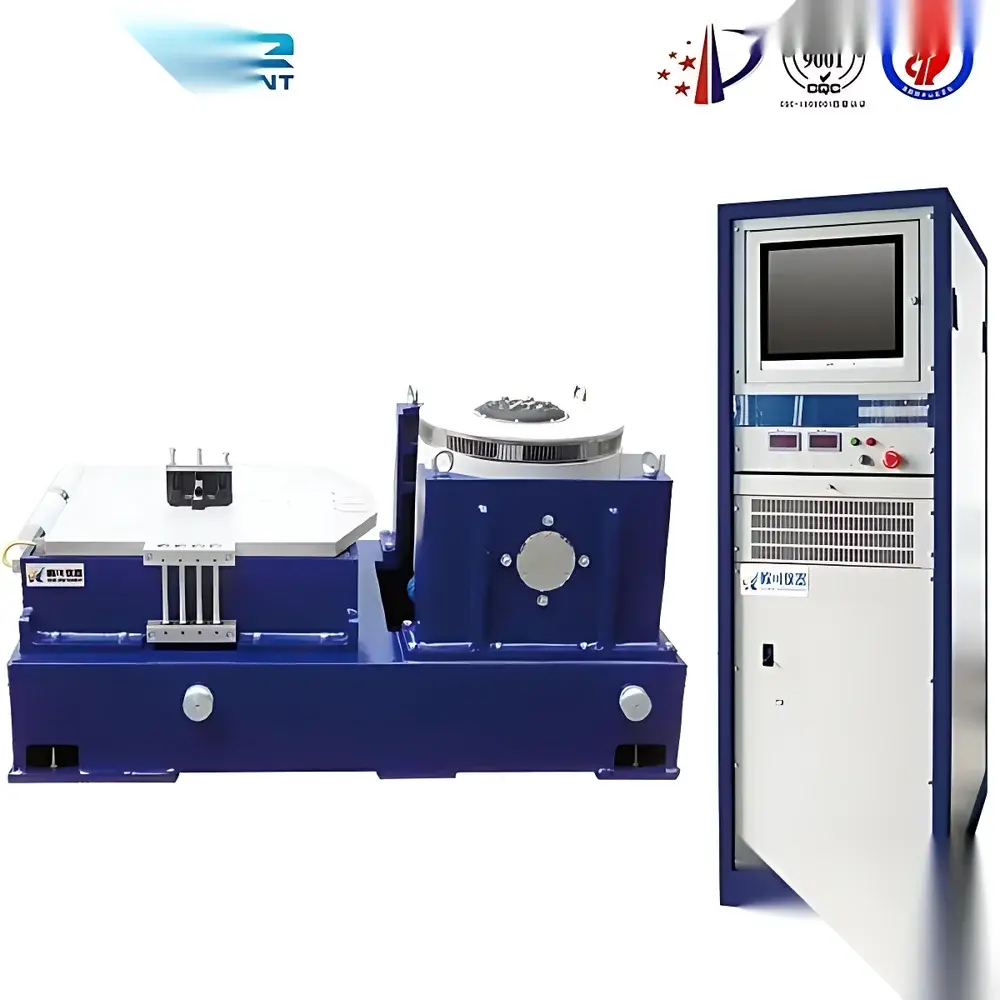
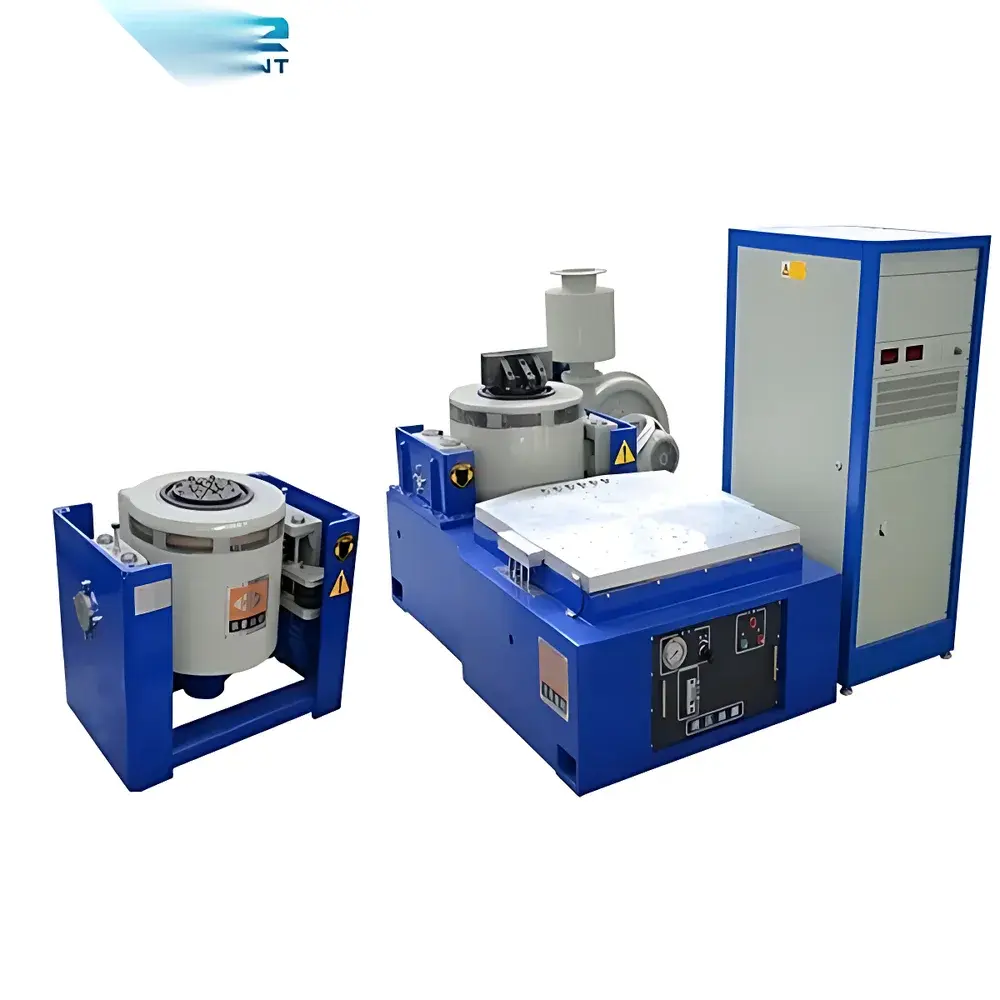
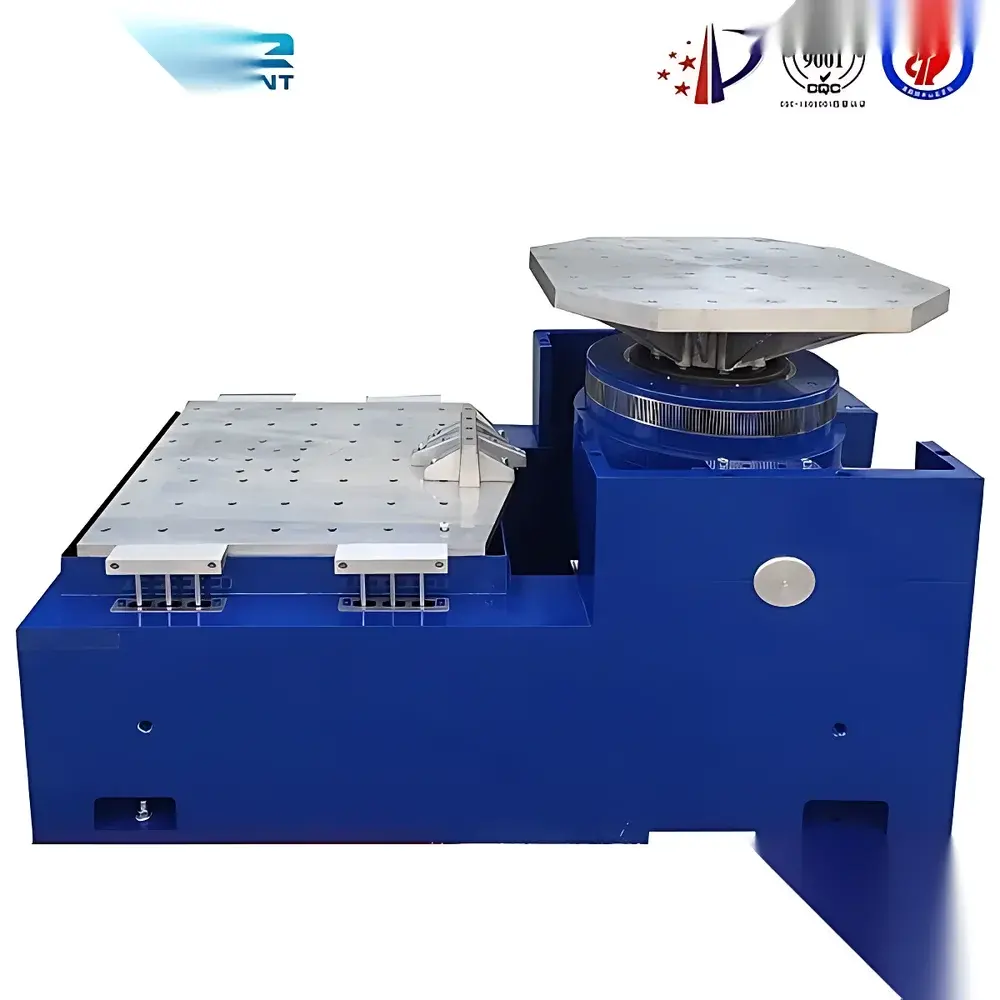
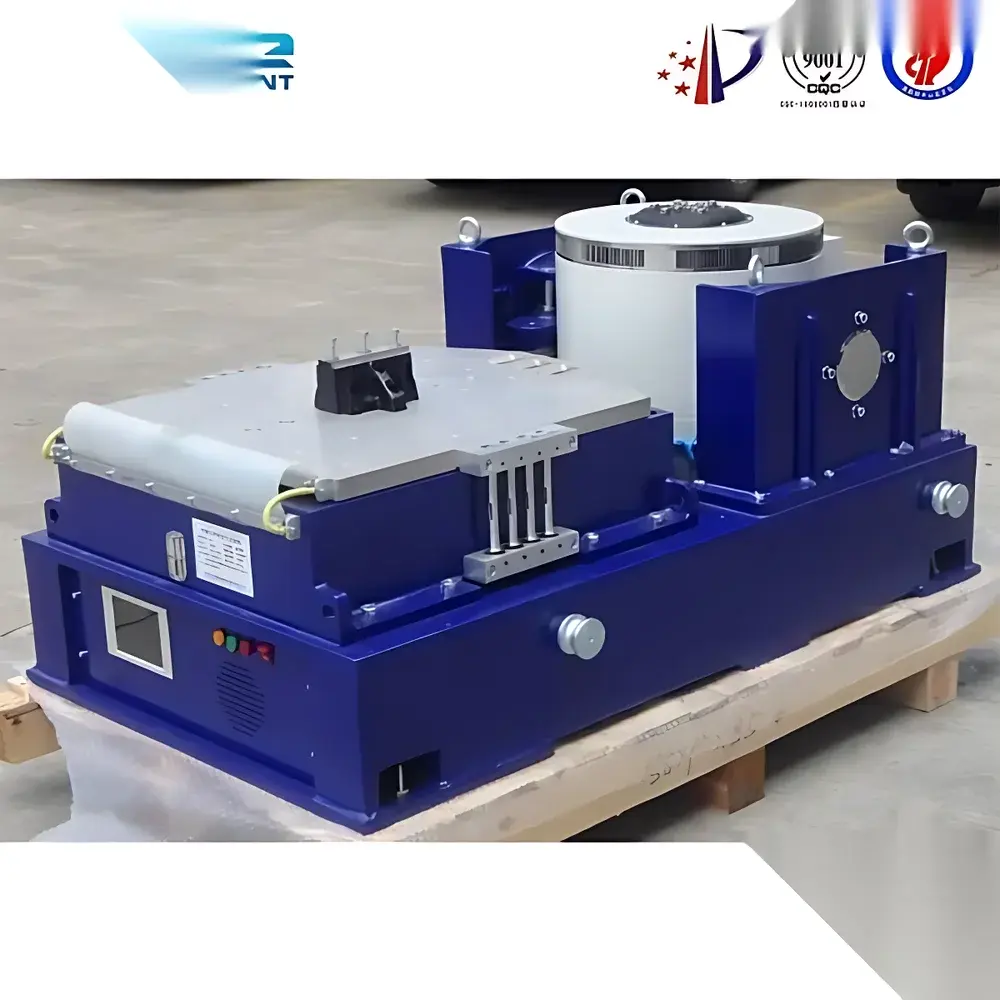
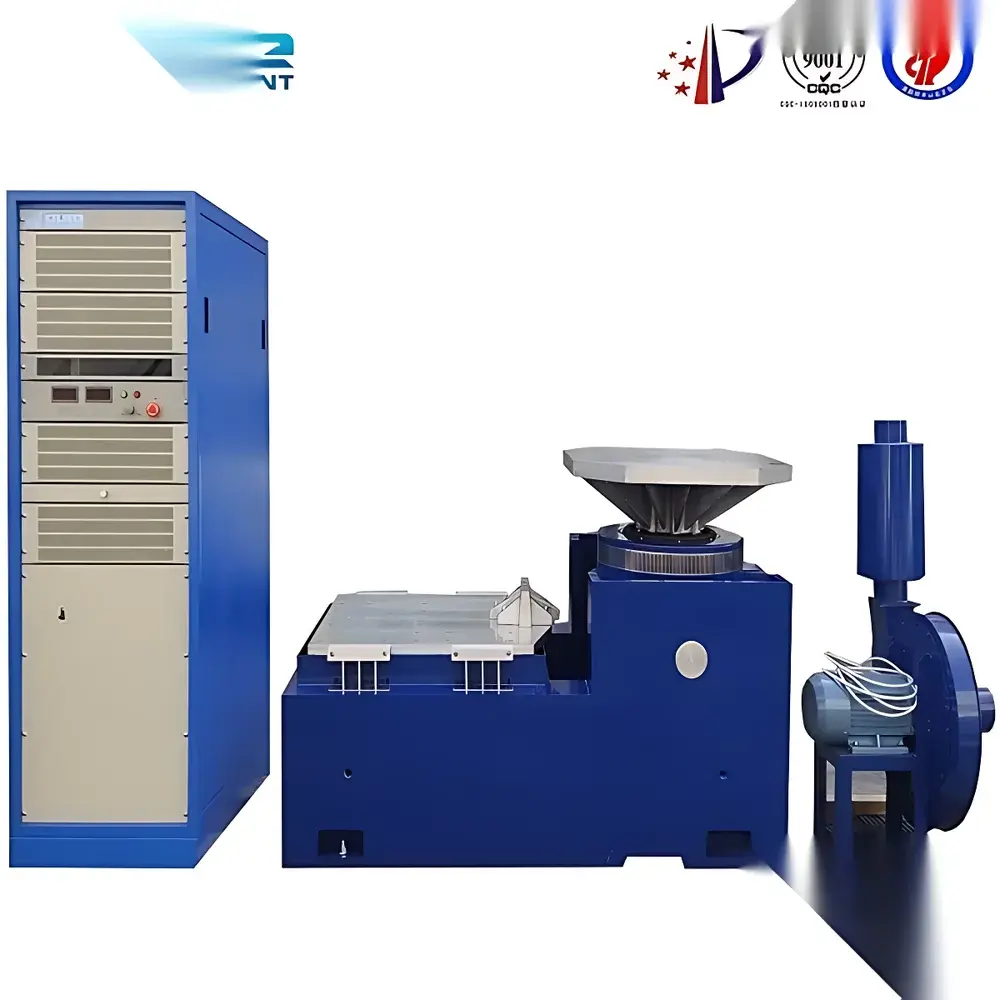
Electromagnetic Vibration Shaker System
No specifications available.
Overview
The Electromagnetic Vibration Shaker System is a precision-engineered electrodynamic testing platform designed for controlled mechanical excitation of test specimens under sinusoidal, random, and shock vibration profiles. Operating on the principle of Lorentz force actuation—where current-carrying conductors within a static magnetic field generate proportional inertial forces—the system delivers high-fidelity acceleration waveforms traceable to international metrological standards. It is widely deployed in reliability engineering, environmental stress screening (ESS), HALT/HASS development, and qualification testing per IEC 60068-2, MIL-STD-810, and ISO 16750. Its core function is to accelerate failure mechanisms by subjecting electronic assemblies, automotive components, aerospace substructures, and industrial enclosures to representative transport and operational vibration spectra—thereby enabling early defect detection, design validation, and compliance verification prior to field deployment.
Key Features
- Multi-mode excitation capability: fully programmable sinusoidal sweep, broadband random vibration (PSD synthesis), classical shock pulses (half-sine, trapezoidal, sawtooth), and transient event simulation
- Optimized moving-coil assembly constructed from lightweight, high-conductivity aluminum alloy—engineered for thermal stability and mechanical integrity at peak acceleration levels
- High-load-capacity pneumatic center isolator with low-frequency resonance suppression (<3 Hz), ensuring stable base isolation and extended low-end frequency response
- Patented dual-magnetic-circuit architecture minimizing stray flux leakage while maximizing magnetic field uniformity across the air gap—critical for force linearity and harmonic distortion control
- Modular magnesium-aluminum expansion platforms available in standard and custom configurations; optimized for modal rigidity, mass efficiency, and broad-band dynamic transmission
- Integrated low-noise forced-air cooling system featuring aerodynamically refined ducting and variable-speed EC fans—acoustic emission maintained ≤80 dB(A) at 1 m distance during continuous operation
Sample Compatibility & Compliance
The shaker accommodates test articles ranging from small PCBs and sensors (≤1 kg) to large automotive modules and avionics racks (up to 160 kg, depending on model). Horizontal and vertical extension tables—including both square and circular configurations—are certified for flatness tolerance ≤±5 µm over full surface area and natural frequency ≥2 kHz (for SP-series) or ≥1 kHz (for CZ-series), ensuring minimal modal interference up to specified upper frequency limits. All systems comply with CE Machinery Directive 2006/42/EC, EMC Directive 2014/30/EU, and are compatible with GLP/GMP audit requirements when integrated with validated controller software. Test reports generated support traceability to ISO/IEC 17025-accredited laboratories and satisfy documentation requirements for FDA 21 CFR Part 11–compliant environments when paired with appropriate data acquisition and audit trail modules.
Software & Data Management
Control and analysis are performed via industry-standard real-time vibration control software supporting IEEE 1451.4-compliant transducer calibration, closed-loop feedback using laser Doppler vibrometer or IEPE accelerometers, and automated test sequencing. The platform supports import/export of common formats including Sine, Random (PSD), Shock, and Time History files (e.g., .udf, .wav, .mat). Built-in data logging captures raw time-series acceleration, velocity, displacement, drive voltage/current, and thermal sensor readings at user-defined sampling rates up to 102.4 kHz. All datasets include embedded metadata (test ID, operator, timestamp, configuration parameters) and are exportable in CSV, HDF5, or ASAM MDF4 formats for downstream analysis in MATLAB, Python (SciPy/Pandas), or commercial FEA post-processors. Optional 21 CFR Part 11 add-ons provide electronic signatures, role-based access control, and immutable audit trails for regulated industries.
Applications
- Environmental stress screening (ESS) of printed circuit board assemblies (PCBAs) and solder joint reliability assessment
- Automotive component qualification per ISO 16750-3 (mechanical loads) and SAE J1211 (vibration durability)
- Aerospace structural testing per RTCA DO-160 Section 8 (vibration) and MIL-STD-810H Method 514.8
- Consumer electronics drop-and-vibration correlation studies for handheld devices and wearables
- Modal analysis and transfer function measurement using swept-sine or burst-random excitation
- Calibration and verification of accelerometers, gyroscopes, and inertial measurement units (IMUs)
FAQ
What is the typical delivery lead time for custom-configured shaker systems?
Lead times range from 12–20 weeks depending on model selection, platform customization, and integration scope—including controller firmware validation and factory acceptance testing (FAT).
Can this system perform multi-axis vibration testing?
The base unit is single-axis (vertical or horizontal); however, it can be integrated into orthogonal or triaxial shaker stacks using precision alignment fixtures and synchronized multi-channel controllers—subject to mechanical coupling analysis and modal decoupling verification.
Is remote operation and monitoring supported?
Yes—via secure Ethernet/IP interface with RESTful API support, allowing integration into centralized lab management systems (LIMS) or Industry 4.0 infrastructure with TLS 1.2 encryption and OAuth2 authentication.
Are calibration certificates included with shipment?
Each system ships with a NIST-traceable as-delivered calibration certificate covering force output linearity (±1.5% FS), acceleration amplitude accuracy (±2% FS), and frequency response flatness (±0.5 dB from 5 Hz–2 kHz).
What maintenance intervals are recommended for long-term reliability?
Preventive maintenance is advised every 1,000 operating hours or annually—whichever occurs first—and includes coil resistance verification, suspension spring inspection, cooling system filter replacement, and magnetic gap clearance check using non-contact gauging tools.



