
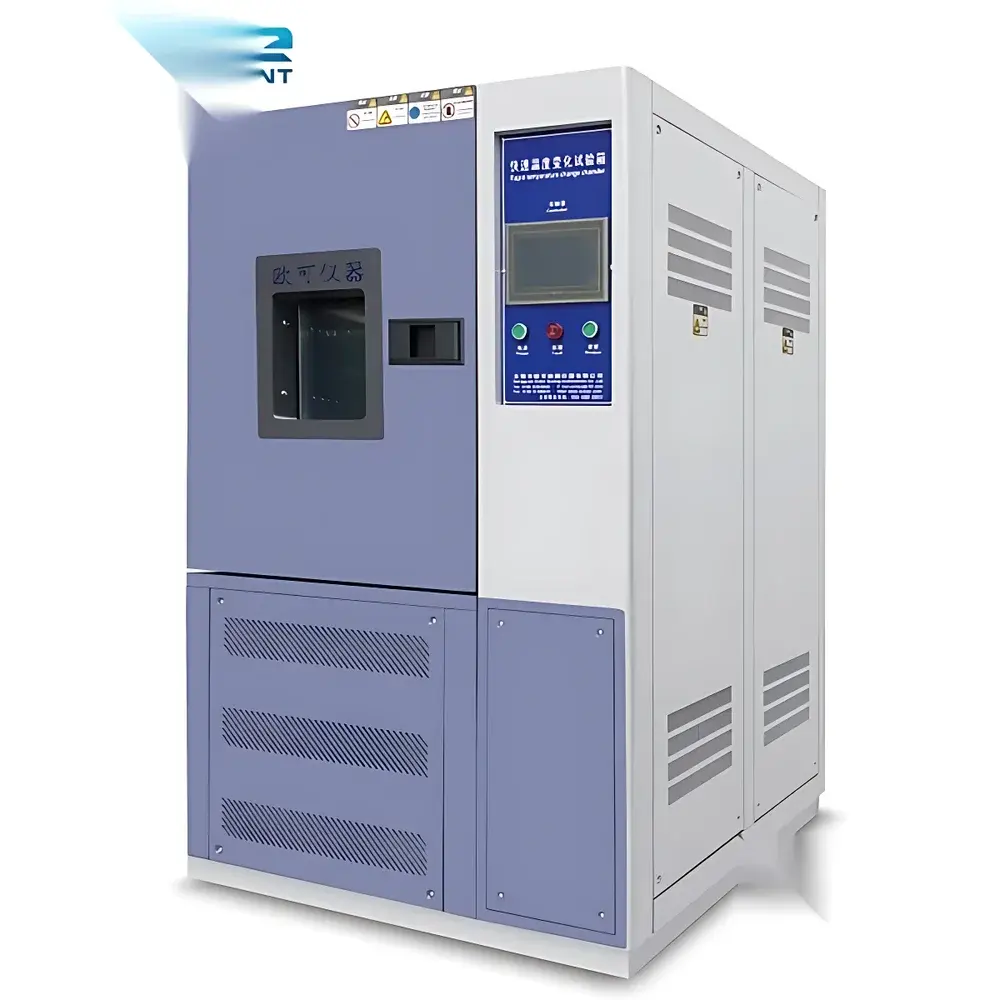
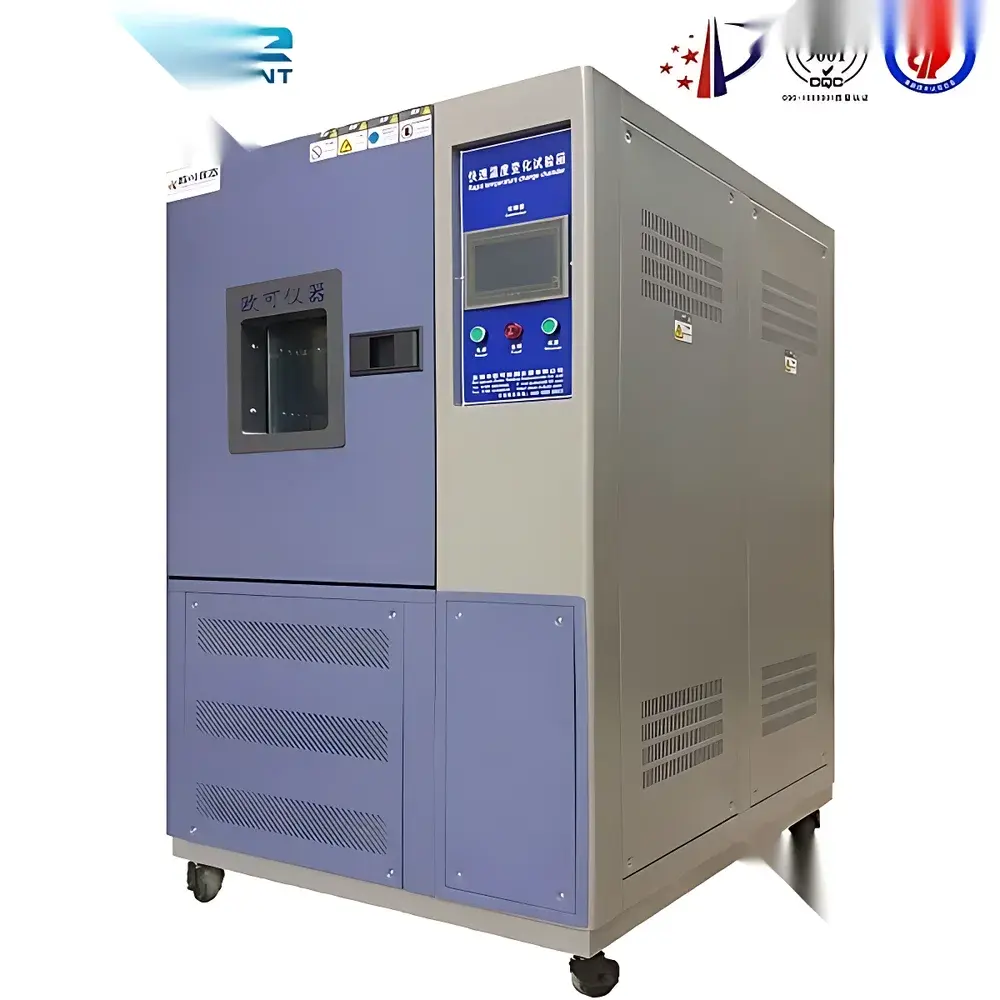
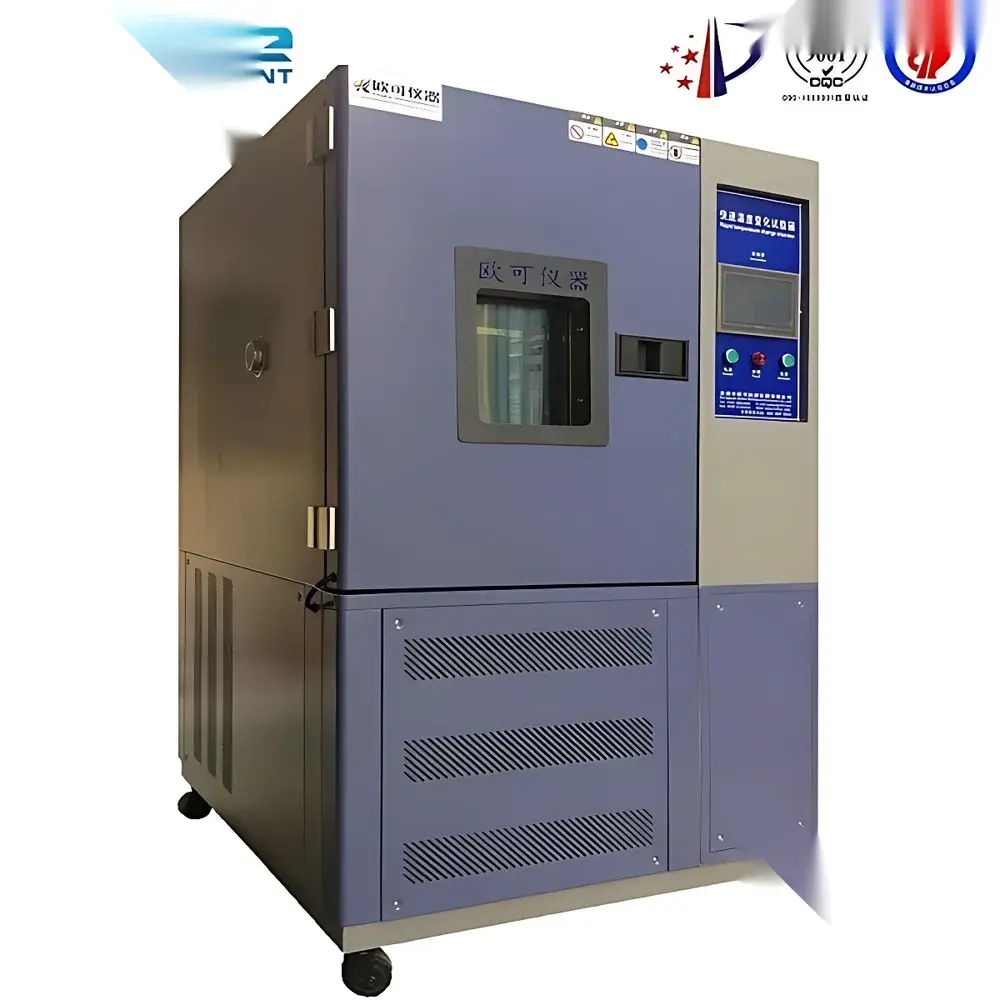
Electronic Components Rapid Temperature Cycling Chamber
| Brand | Other Brands |
|---|---|
| Origin | Imported |
| Manufacturer Type | General Distributor |
| Price | USD 2,650 (approx.) |
Overview
The Electronic Components Rapid Temperature Cycling Chamber is a precision-engineered environmental test chamber designed to evaluate the thermal reliability and operational integrity of electronic components under dynamically changing temperature conditions. Based on the principle of controlled forced-air convection and dual-stage refrigeration, it delivers rapid, repeatable, and programmable temperature transitions—typically achieving ramp rates of up to 15°C/min (dependent on load and setpoint range)—to simulate real-world thermal stress encountered during manufacturing, storage, transport, and field operation. Unlike standard thermal shock chambers with liquid media or mechanical actuators, this unit employs an optimized air-circulation architecture combined with independent heating and cooling circuits, enabling high-fidelity simulation of temperature cycling profiles defined in industry standards such as JEDEC JESD22-A104 (Temperature Cycling), MIL-STD-810H Method 503.7, and IEC 60068-2-14. Its primary function is not merely to expose samples to extremes, but to quantify parametric drift, solder joint fatigue, interfacial delamination, and latent failure mechanisms arising from repeated coefficient-of-thermal-expansion (CTE) mismatch stresses.
Key Features
- Structural integrity: CNC-machined outer frame with seamless SUS304 brushed stainless steel exterior and mirror-finish SUS304 interior lining—resistant to corrosion, easy to clean, and compliant with ISO 14644-1 Class 8 cleanroom-compatible surface requirements.
- Optical monitoring: Large double-layer tempered glass observation window with embedded heating element to prevent condensation; integrated LED lighting ensures continuous visibility of test specimens during extreme low-temperature operation.
- Thermal isolation: 80–100 mm thickness of high-density fiberglass insulation; dual-lip, high-tensile silicone rubber gasket at door seal—validated to maintain ≤0.5 K/h heat leakage rate at –40°C ambient.
- Interface flexibility: 50 mm diameter cable port on left side wall, fitted with removable blanking plate and optional feedthrough connectors for power/signal lines—compatible with external data loggers, bias supplies, or in-situ electrical testers.
- Safety redundancy: Independent mechanical over-temperature cut-off circuit (non-software dependent), activated at user-defined threshold ±2°C tolerance—certified per IEC 61000-6-2 EMC immunity and UL 61010-1 safety requirements.
Sample Compatibility & Compliance
The chamber accommodates PCB assemblies, bare dies, discrete semiconductors (ICs, diodes, MOSFETs), passive components (capacitors, resistors, inductors), lithium-ion battery cells, LED modules, and automotive-grade ECUs. Internal dimensions support standard JEDEC trays (e.g., 330 × 230 × 30 mm) and allow simultaneous testing of multiple DUTs under identical thermal transients. All operational parameters—including ramp rate, dwell time, cycle count, and setpoint accuracy—are traceable to NIST-traceable PT100Ω sensors calibrated per ISO/IEC 17025. The system supports audit-ready documentation for GLP, GMP, and IATF 16949 quality management systems, with optional RS-232/RS-485 interfaces enabling integration into centralized MES or LIMS platforms.
Software & Data Management
Controller options include the TIME880 color touchscreen HMI (with bilingual UI and real-time trend display) or a dedicated PID-based digital controller with auto-tuning capability. Both support programmable multi-step profiles (up to 99 segments), password-protected parameter locking, and automatic data logging at configurable intervals (1–60 sec). Optional thermal printout provides hard-copy records of setpoints, actual chamber temperature, and alarm events—formatted to meet FDA 21 CFR Part 11 requirements when paired with timestamped digital signatures. Raw sensor data (4–20 mA analog output) and serial telemetry can be streamed to third-party SCADA or Python-based analysis tools via Modbus RTU or ASCII protocol.
Applications
- Qualification testing of AEC-Q200 passive components under accelerated thermal cycling protocols.
- Evaluation of solder joint reliability in lead-free assemblies per IPC-9701.
- Pre-conditioning of battery cells prior to electrochemical impedance spectroscopy (EIS).
- Validation of thermal interface material (TIM) performance under cyclic loading.
- Failure mode analysis (FMA) of optoelectronic packages exposed to diurnal temperature swings.
FAQ
What is the typical temperature range supported by this chamber?
Standard configuration operates from –40°C to +150°C; extended-range models available upon request.
Can the chamber be integrated with automated optical inspection (AOI) systems?
Yes—via the 50 mm port and RS-232 interface, enabling synchronized triggering of imaging hardware during thermal transitions.
Is calibration certification included with delivery?
A factory calibration report (traceable to national standards) is provided; on-site ISO/IEC 17025 accredited calibration is available as an add-on service.
Does the system comply with JEDEC JESD22-A104 test method requirements?
Yes—the chamber’s ramp rate linearity, temperature uniformity (±1.5°C across working volume), and dwell stability meet all mandatory criteria specified in Rev. E.
What maintenance schedule is recommended for long-term reliability?
Compressor oil inspection every 12 months; condenser coil cleaning quarterly; gasket integrity check biannually—full preventive maintenance checklist supplied with manual.



