
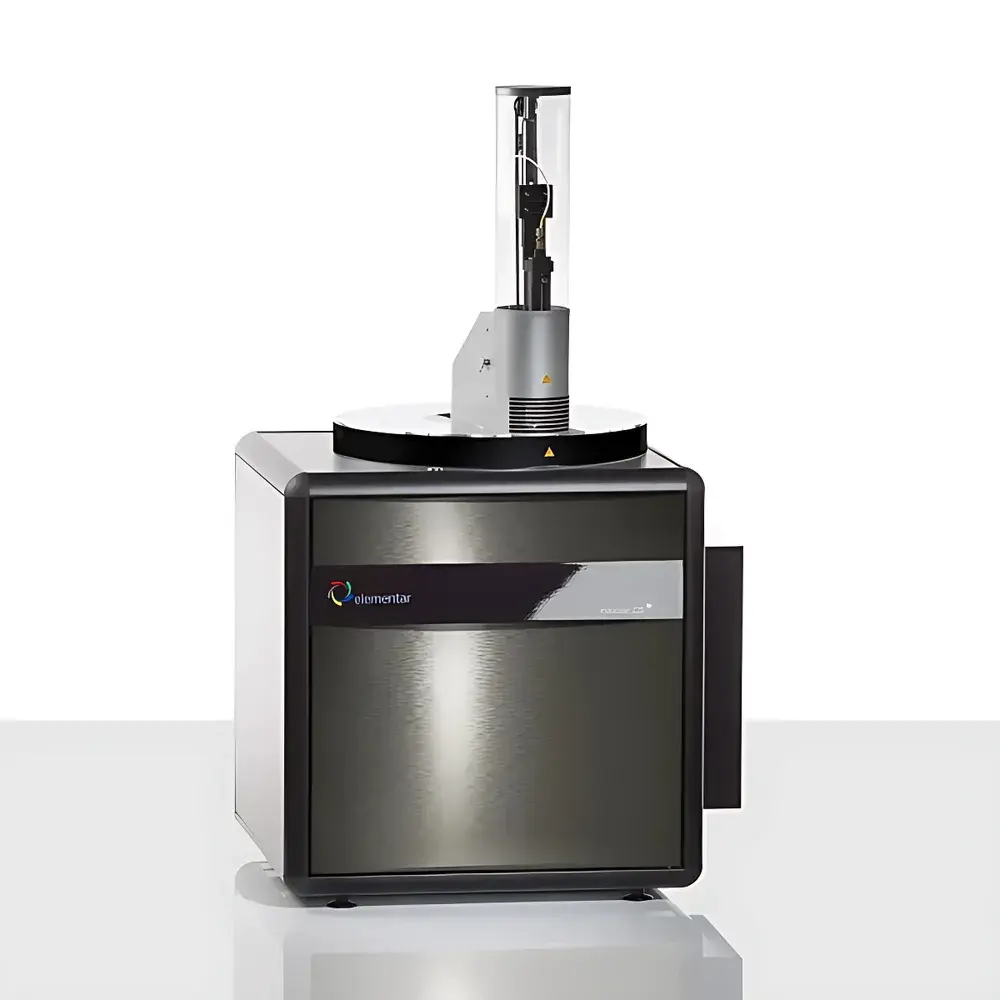
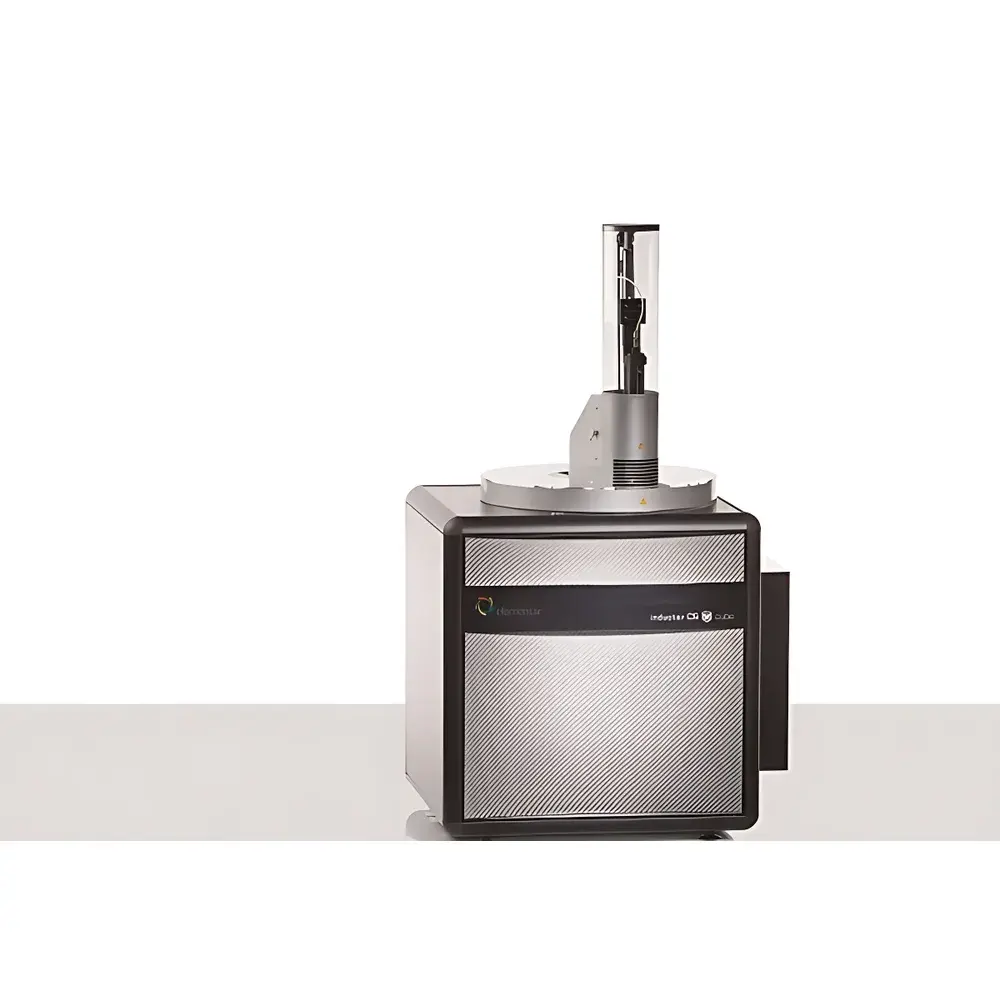
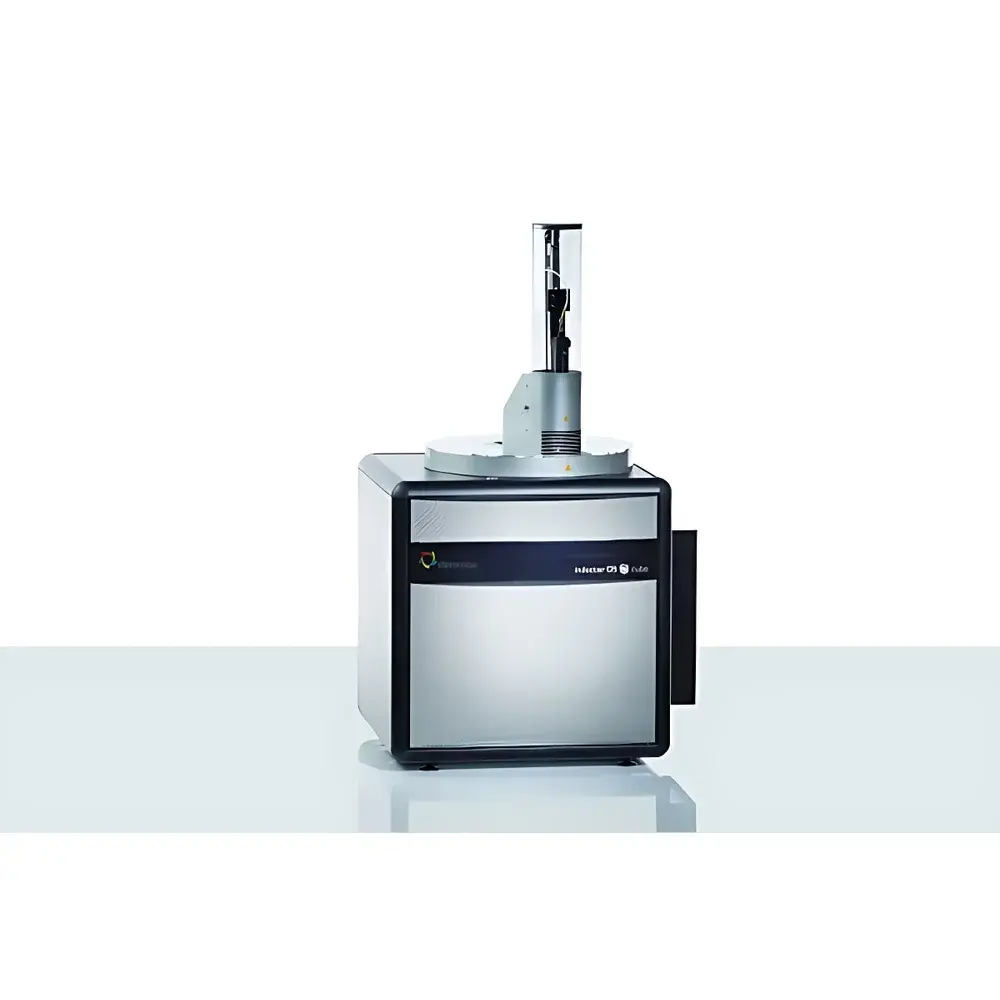
Elementar inductar CS cube Carbon-Sulfur Analyzer
| Brand | Elementar |
|---|---|
| Origin | Germany |
| Model | inductar CS cube |
| Measurement Principle | Infrared Absorption |
| Heating System | High-Frequency Induction Furnace |
| Sample Introduction | Top-loading |
| Detection Method | Dual-stage IR detection with catalytic oxidation |
| Automation Options | Manual loading or 89-position automated sampler |
| Software | Multi-language (including Chinese), LIMS-compatible, GLP/GMP-ready with audit trail capability |
| Compliance | Designed to support ISO 15350, ASTM E1019, and USP <231> for C/S determination in metals and inorganic materials |
| Sample Types | Steel, cast iron, copper, refractory metals, other metals and inorganic materials |
Overview
The Elementar inductar CS cube is a high-precision carbon-sulfur analyzer engineered for trace-level quantification of total carbon (C) and sulfur (S) in metallic and inorganic solid samples. It operates on the principle of high-frequency induction combustion followed by dual-stage non-dispersive infrared (NDIR) absorption spectroscopy. In this process, a precisely weighed sample is introduced from the top into a high-purity quartz combustion tube housed within a solid-state high-frequency induction furnace. Under controlled oxygen-rich atmosphere, the sample is instantaneously combusted at temperatures exceeding 1,800 °C, converting all carbon and sulfur species into CO, CO₂, and SO₂. A catalytic oxidation stage then ensures complete conversion of CO to CO₂ and SO₂ to SO₃. The resulting gas stream passes through selective IR cells: the first detects SO₂ concentration; after removal of SO₃ via chemical scrubbing, the second measures CO₂ concentration. This two-step IR detection architecture enables independent, high-fidelity quantification of both elements across wide dynamic ranges — from sub-ppm to several weight percent — without cross-interference.
Key Features
- Top-loading sample introduction design minimizes ash carryover and particulate contamination, enhancing system longevity and analytical reproducibility.
- Long-life solid-state high-frequency induction furnace delivers stable, repeatable thermal energy with no consumable coils or moving parts.
- Dual NDIR detectors with optimized optical path lengths and temperature-stabilized reference cells ensure high sensitivity and low drift over extended operation.
- Integrated catalytic oxidation and SO₃ removal module guarantees stoichiometric completeness and eliminates spectral overlap between sulfur and carbon signals.
- Flexible sample handling: supports manual loading for rapid method development or quality control verification, as well as optional 89-position robotic autosampler for unattended, high-throughput analysis.
- Modular gas purification system includes CO₂ and H₂O traps, metal oxide desiccants, and fine particulate filters to maintain detector integrity and baseline stability.
Sample Compatibility & Compliance
The inductar CS cube is validated for routine analysis of a broad spectrum of conductive and semi-conductive inorganic matrices, including low-alloy and stainless steels, gray and ductile cast irons, copper and copper alloys, nickel-based superalloys, titanium, molybdenum, tungsten, and other refractory metals. Its combustion protocol meets the requirements of internationally recognized standards such as ISO 15350 (determination of carbon and sulfur in steel and cast iron), ASTM E1019 (standard test methods for determining carbon, sulfur, nitrogen, and oxygen in steel and iron alloys), and USP (heavy metals and related impurities testing). Instrument firmware and software are architected to support 21 CFR Part 11 compliance, including electronic signatures, secure user authentication, and immutable audit trails — essential for regulated environments operating under GLP or GMP frameworks.
Software & Data Management
Control and data acquisition are managed via Elementar’s proprietary inductar software platform, available in English, German, French, Spanish, Japanese, and Simplified Chinese. The interface provides intuitive workflow navigation, real-time gas signal visualization, customizable calibration curve management (linear, quadratic, or multi-point), and automatic blank correction. All analytical sequences — including weighing integration via RS232/USB-connected analytical balances, barcode-driven sample identification, and direct export to LIMS via ASTM E1384-compliant XML or CSV formats — are configurable without scripting. Raw data files retain full metadata (operator ID, timestamp, instrument parameters, calibration history), and report generation complies with ISO/IEC 17025 documentation requirements.
Applications
This analyzer serves critical roles across metallurgical R&D, incoming raw material inspection, production process control, and failure analysis laboratories. Typical use cases include monitoring carbon segregation in continuous-cast billets, verifying sulfur content in bearing steels to prevent hot shortness, certifying ultra-low carbon levels (<10 ppm) in nuclear-grade zirconium alloys, and validating sulfur removal efficiency during secondary steelmaking. Its robustness and repeatability also make it suitable for certification of CRMs (Certified Reference Materials) used in interlaboratory comparison studies coordinated by national metrology institutes.
FAQ
What sample mass range is recommended for optimal precision?
Typical sample masses range from 0.1 g to 1.0 g, depending on expected C/S concentration and matrix type. Automatic mass normalization is applied during calculation.
Is carrier gas purity critical for accurate results?
Yes. High-purity oxygen (≥99.995%, hydrocarbon-free) is required for combustion; helium or argon (≥99.999%) is used as carrier gas. Gas lines must be stainless steel with electropolished interior surfaces.
Can the instrument be integrated into an existing laboratory network?
Yes. Ethernet connectivity supports remote diagnostics, centralized software updates, and seamless data routing to enterprise databases via OPC UA or custom API endpoints.
How often does the IR detector require recalibration?
Under normal operation, detector response stability exceeds 6 months; annual factory recalibration is recommended to maintain traceability to NIST-traceable gas standards.
Does the system support analysis of non-metallic inorganic samples such as ceramics or slags?
Yes — provided samples are homogeneous, free of volatile binders, and compatible with high-temperature oxidative combustion. Matrix-matched calibration standards are advised.
Related Products




