
ELIAS FAI300 PDF-to-Bubble-Chart Automation Software
| Brand | ELIAS (Germany) |
|---|---|
| Origin | Germany |
| Manufacturer Type | Authorized Distributor |
| Import Status | Imported |
| Model | FAI300 |
| Price | USD 2,800 (approx.) |
Overview
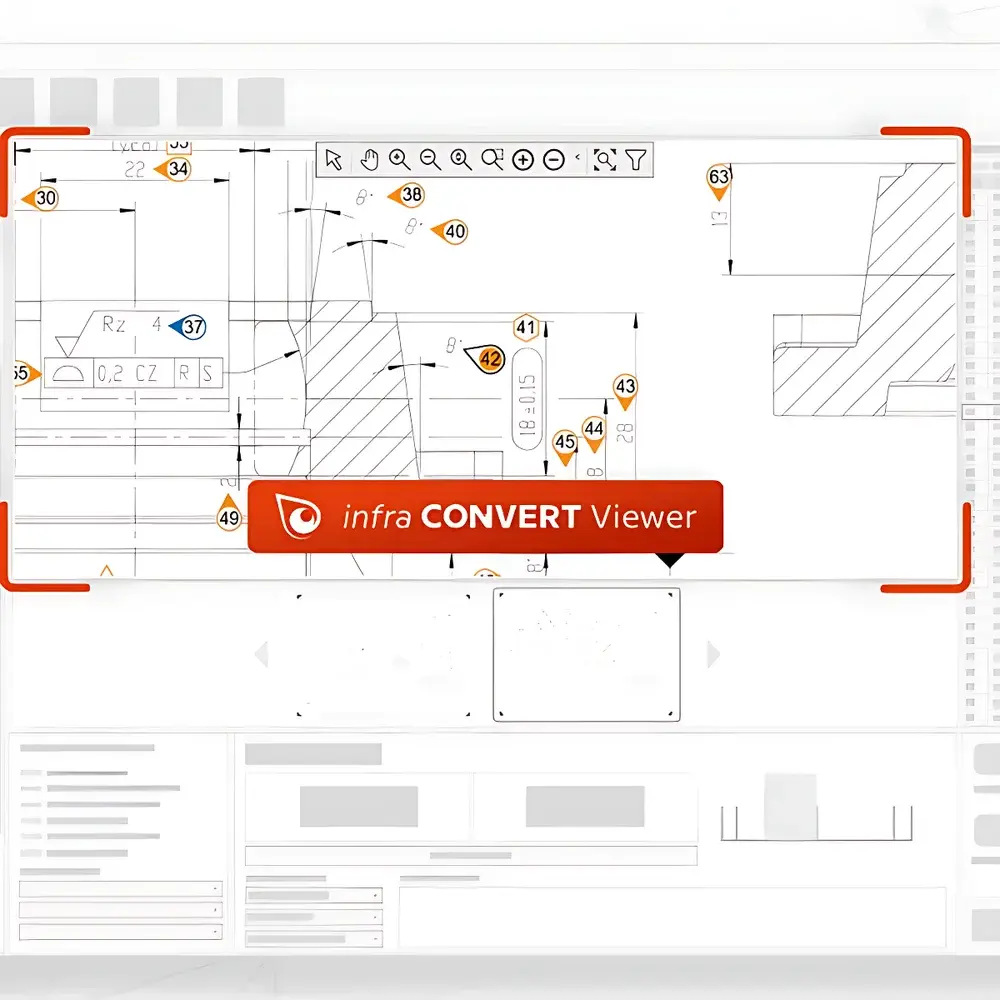
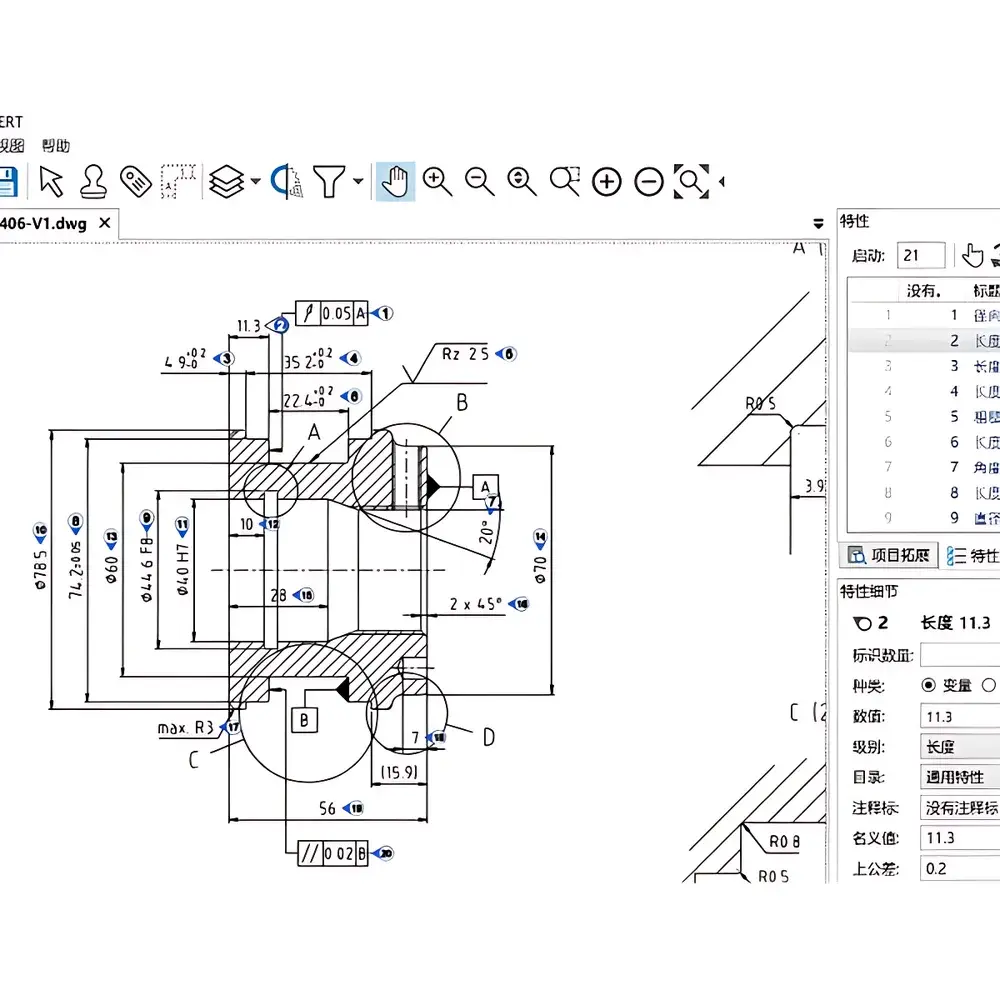
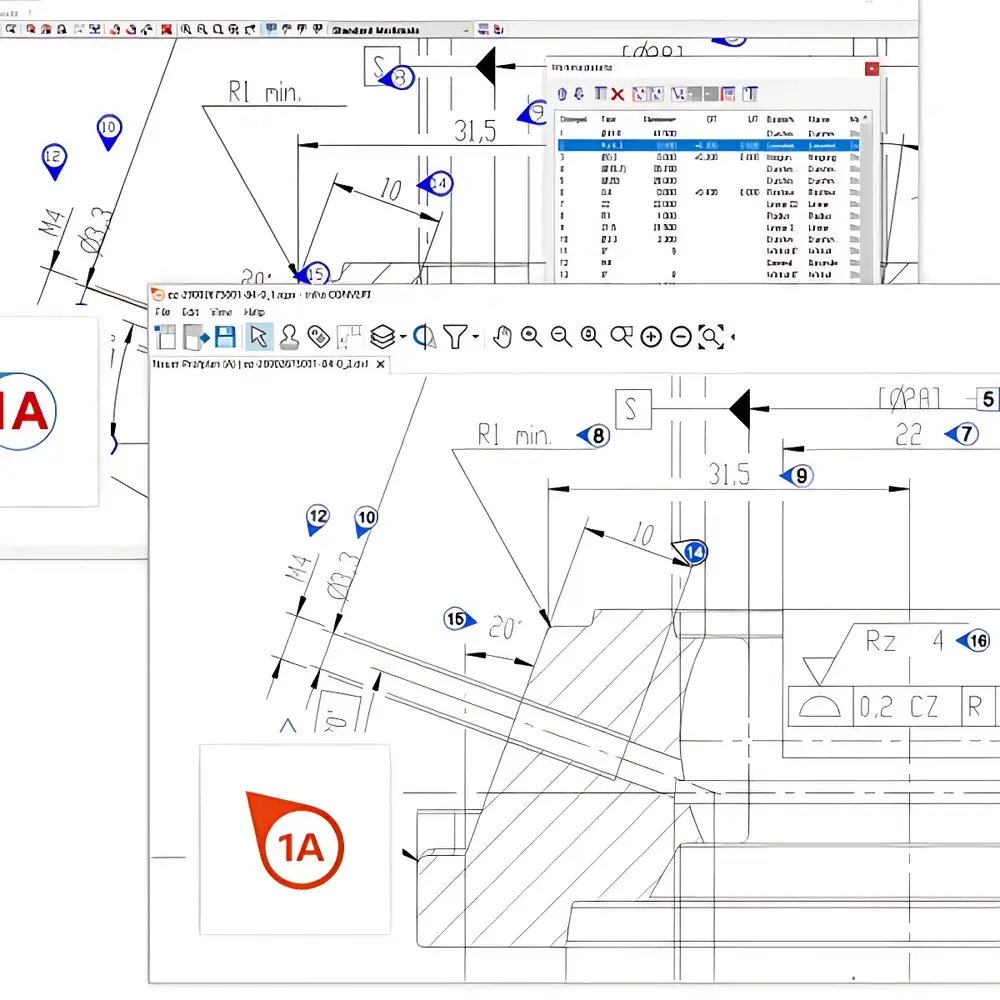
The ELIAS FAI300 is a purpose-built engineering data processing software solution developed in Germany for automated extraction, annotation, and traceable documentation of dimensional and geometric quality information from technical drawings. It implements rule-based optical character recognition (OCR), vector geometry parsing, and semantic pattern matching to convert static CAD-derived or scanned engineering documents—including native DWG/DXF files and embedded-font PDFs—into structured metrological datasets. The core functionality centers on generating ISO/ASME-compliant bubble charts (also known as inspection callout diagrams), where each annotated feature (e.g., hole position, surface finish symbol, GD&T frame) is linked to its corresponding tolerance specification, measurement method, and inspection sequence. Designed for integration into quality management systems compliant with ISO 9001, IATF 16949, and AS9100, the FAI300 supports auditable version-controlled workflows, eliminating manual transcription errors and reducing time-to-inspection-plan from days to minutes.
Key Features
- Automated feature detection and bubble annotation with >90% recognition accuracy for embedded-text PDFs and native CAD formats (DWG, DXF, IGES)
- Multi-format input support: vector (DWG, DXF, IGES, PDF with embedded fonts) and raster (TIF, JPG, BMP, GIF, PNG)
- One-click generation of inspection-ready bubble charts in PDF, SVG, DXF, and DWG formats—with preserved layer structure and scalable vector output
- Integrated tolerance database referencing DIN ISO 2768, ISO 286, ISO 1101, ANSI Y14.5, and customer-defined standards
- Version-aware document management: side-by-side comparison of drawing revisions, automatic delta highlighting, and synchronized bubble chart updates
- Export of fully traceable inspection plans in XLSX, CSV, JSON, and DFD (Design for Inspection) formats—compatible with CMM programming environments and MES integration
- Customizable annotation templates and Excel-based plan layouts via user-defined DFD templates
- Native multilingual UI (English and Chinese language packs included); context-sensitive icon-driven interface optimized for metrology engineers and QA technicians
Sample Compatibility & Compliance
The FAI300 processes engineering documentation across mechanical, automotive, aerospace, and medical device manufacturing domains. Input compatibility includes legacy and modern CAD exports, scanned blueprints with OCR-capable text embedding, and hybrid raster-vector PDFs generated by Autodesk, SolidWorks, PTC Creo, and Siemens NX. All output artifacts—including bubble charts and inspection plans—retain full traceability to source drawing revision, timestamp, and user identity. The software adheres to data integrity principles outlined in FDA 21 CFR Part 11 (electronic records/signatures) when deployed with audit trail logging enabled. It supports GLP/GMP-aligned workflows through configurable user roles, electronic signature capture, and immutable revision history export.
Software & Data Management
Data handling follows a non-destructive, reference-based architecture: original drawings remain unaltered, while all annotations, tolerances, and inspection logic are stored in an encrypted SQLite metadata repository. Version control leverages SHA-256 hashing of input files to detect changes and trigger automatic reprocessing. The integrated project manager enables batch processing of multi-sheet assemblies, cross-referencing of parent-child part relationships, and hierarchical plan generation. Export modules include direct OLE automation for Excel and RESTful API endpoints for ERP/MES synchronization (e.g., SAP QM, Siemens Teamcenter). Audit logs record every action—including bubble placement, tolerance assignment, and plan export—with ISO/IEC 17025-compatible timestamps and operator IDs.
Applications
The FAI300 is deployed in first-article inspection (FAI) preparation, PPAP documentation, supplier quality audits, internal process validation, and regulatory submission packages (e.g., FDA 510(k), CE Technical Files). Typical use cases include rapid conversion of OEM engineering releases into shop-floor inspection work instructions, generation of CMM probe path inputs from annotated features, alignment of GD&T callouts with VDA 6.3 process audits, and creation of training materials for dimensional verification teams. Its efficiency gains—up to 70% reduction in inspection planning cycle time—are validated across Tier-1 automotive suppliers and ISO 13485-certified medical device manufacturers.
FAQ
Does FAI300 require a CAD license to process DWG or DXF files?
No. FAI300 uses its own lightweight geometry parser and does not depend on AutoCAD or third-party CAD runtimes.
Can bubble charts be edited after generation?
Yes. All annotations are fully editable within the FAI300 environment; changes propagate automatically to linked inspection plans and exported deliverables.
Is cloud deployment supported?
The standard configuration is on-premises Windows installation (Windows 10/11, 64-bit); private-cloud virtualization (VMware/Hyper-V) is certified, but SaaS hosting is not offered due to data sovereignty requirements in regulated industries.
How are custom GD&T symbols or proprietary tolerancing rules handled?
Users can extend the built-in tolerance library via XML-based rule definitions, enabling support for enterprise-specific standards, legacy specifications, or customer-mandated formats.
What level of IT infrastructure support is required?
Minimal: no database server required; local storage only; compatible with standard corporate AD authentication and Group Policy enforcement.