
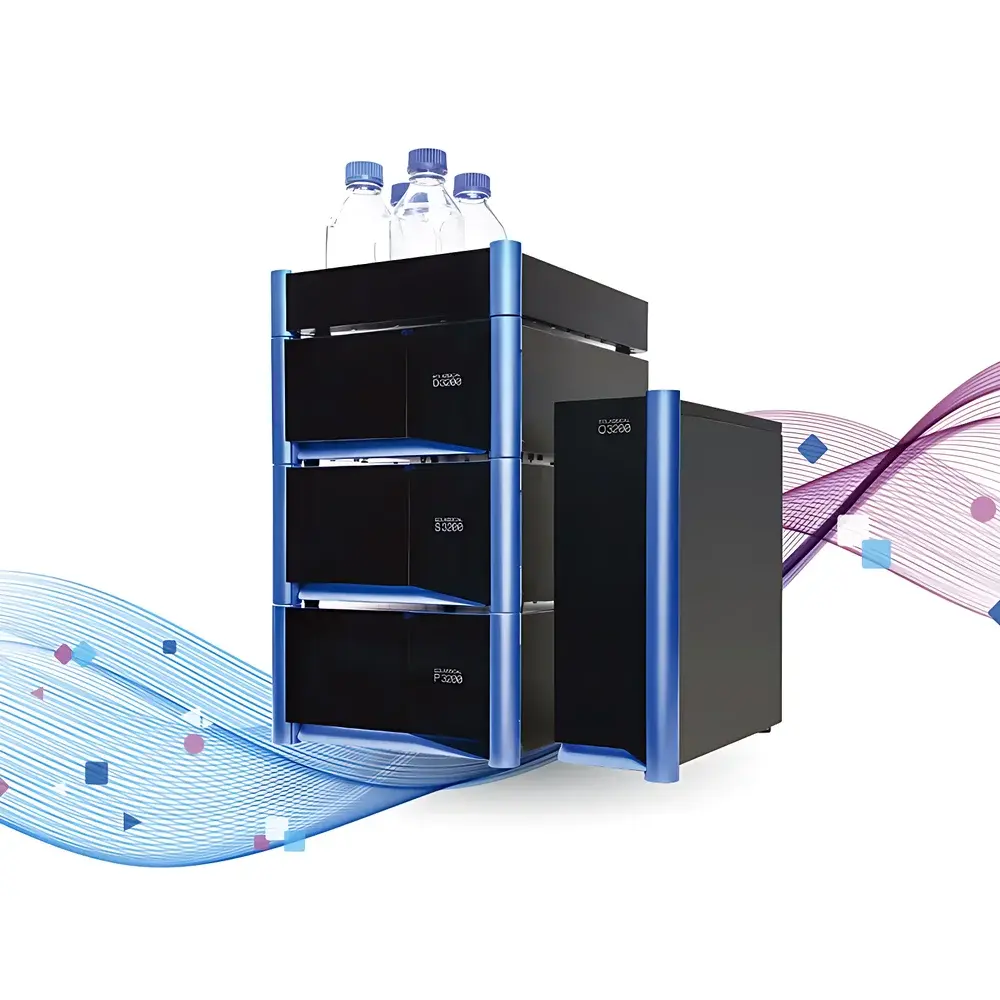
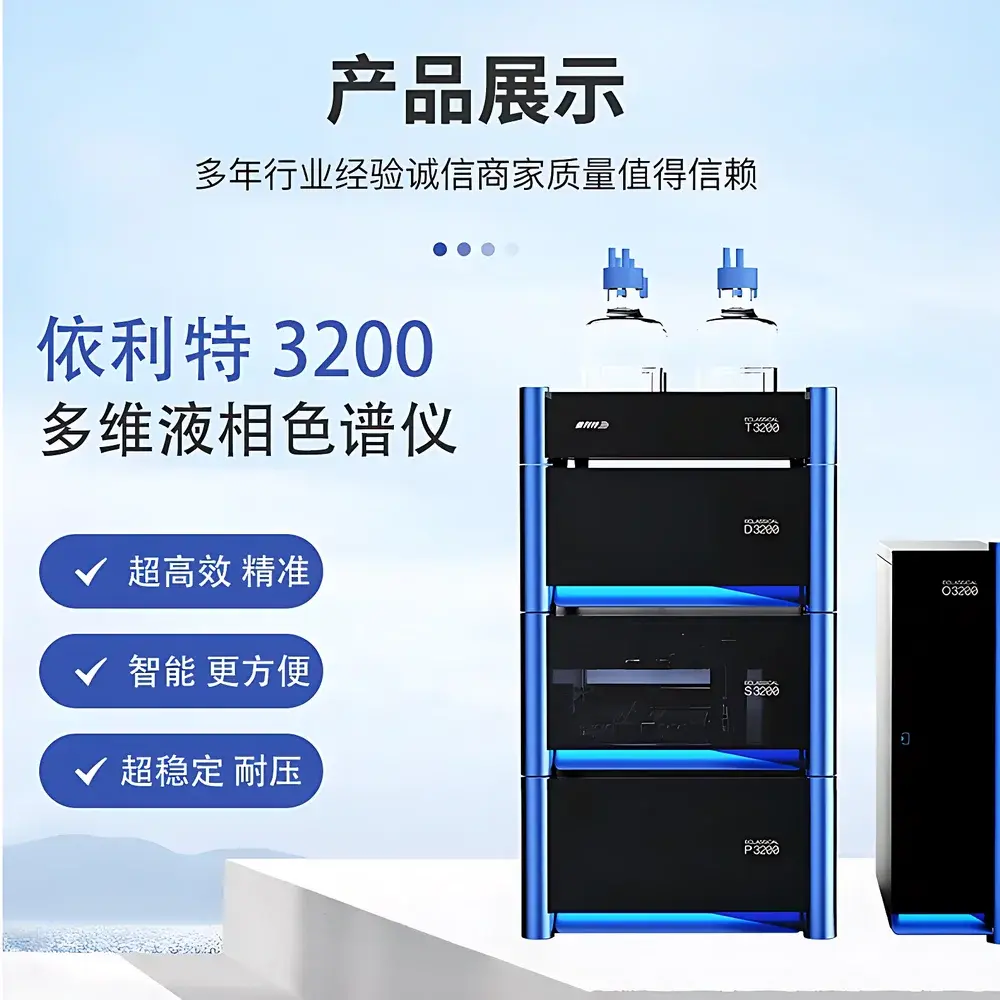
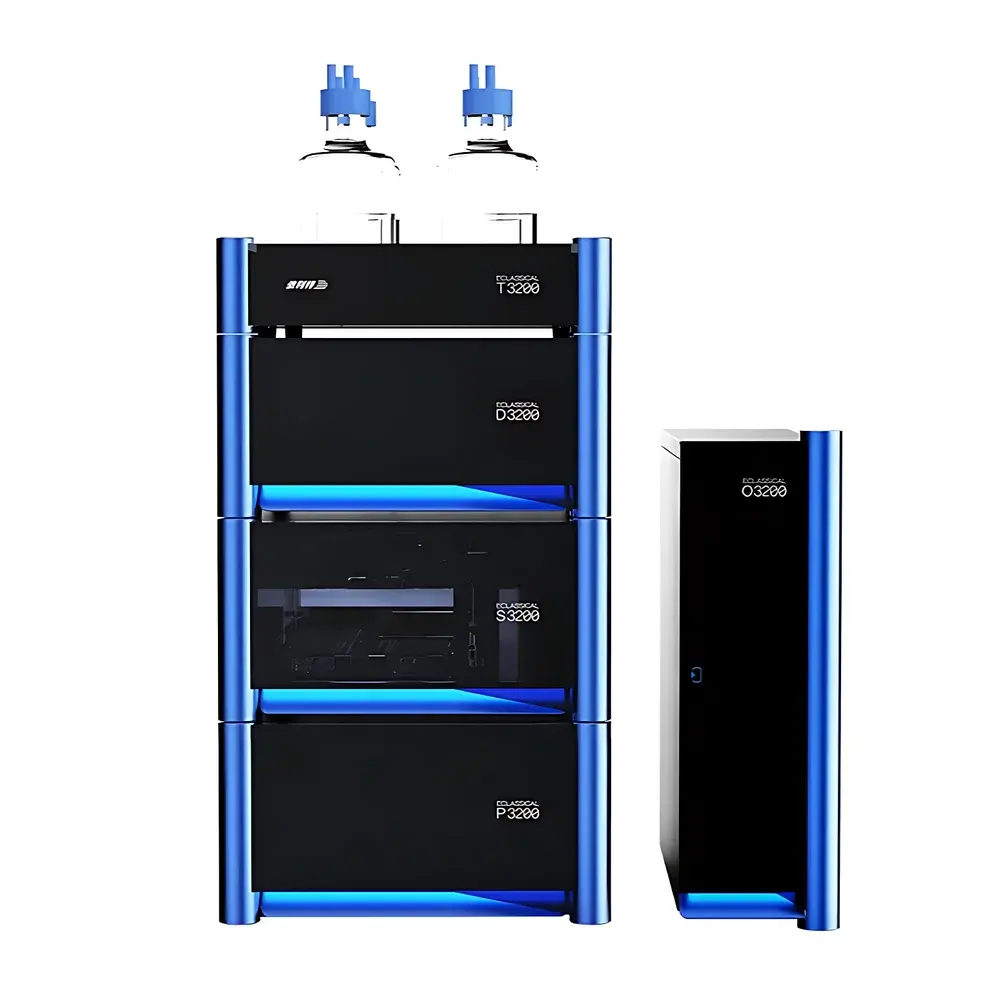
Elite 3200 Multidimensional Liquid Chromatograph
| Brand | Elite |
|---|---|
| Origin | Liaoning, China |
| Manufacturer Type | OEM Manufacturer |
| Instrument Type | Multidimensional Liquid Chromatograph |
| Flow Rate Range | 0.001–10.000 mL/min |
| Maximum Pressure | 130 MPa |
| Column Oven Temperature Range | 4–85 °C |
| UV-Vis Wavelength Range | 190–800 nm |
| Detector Options | UV-Vis with Optimized Flow Cell & Fixed-Angle Optical Path, Optional DAD (Diode Array Detector) |
| Valve Configuration | Supports Two 2-Position/6-Port or 2-Position/10-Port Switching Valves |
| Column Capacity | Up to Six Columns Simultaneously Temperature-Controlled |
Overview
The Elite 3200 Multidimensional Liquid Chromatograph is an integrated high-pressure liquid chromatography platform engineered for method robustness, analytical flexibility, and regulatory-compliant operation in pharmaceutical QC, clinical research, and complex natural product analysis. Built upon a dual-gradient, multidimensional separation architecture, the system employs orthogonal column chemistries—typically coupling reversed-phase with hydrophilic interaction (HILIC), size-exclusion (SEC), or chiral selectivity—to achieve enhanced peak capacity and resolution of co-eluting analytes. Its core fluidic design adheres to principles of low-dispersion solvent delivery and minimized dwell volume, enabling precise gradient formation under ultra-high pressure (up to 130 MPa) and sub-microliter injection precision. The system supports both comprehensive 2D-LC (LC×LC) and heart-cutting (mLC) configurations, facilitating automated fraction transfer between first- and second-dimension columns without manual intervention.
Key Features
- Integrated solvent switching module with real-time flow proportioning control, enabling on-line mobile phase modulation without external mixing hardware.
- Proprietary pulse-dampening mixer and low-dead-volume gradient blender, reducing baseline ripple to < ±0.05% RSD and improving gradient reproducibility across extended run times.
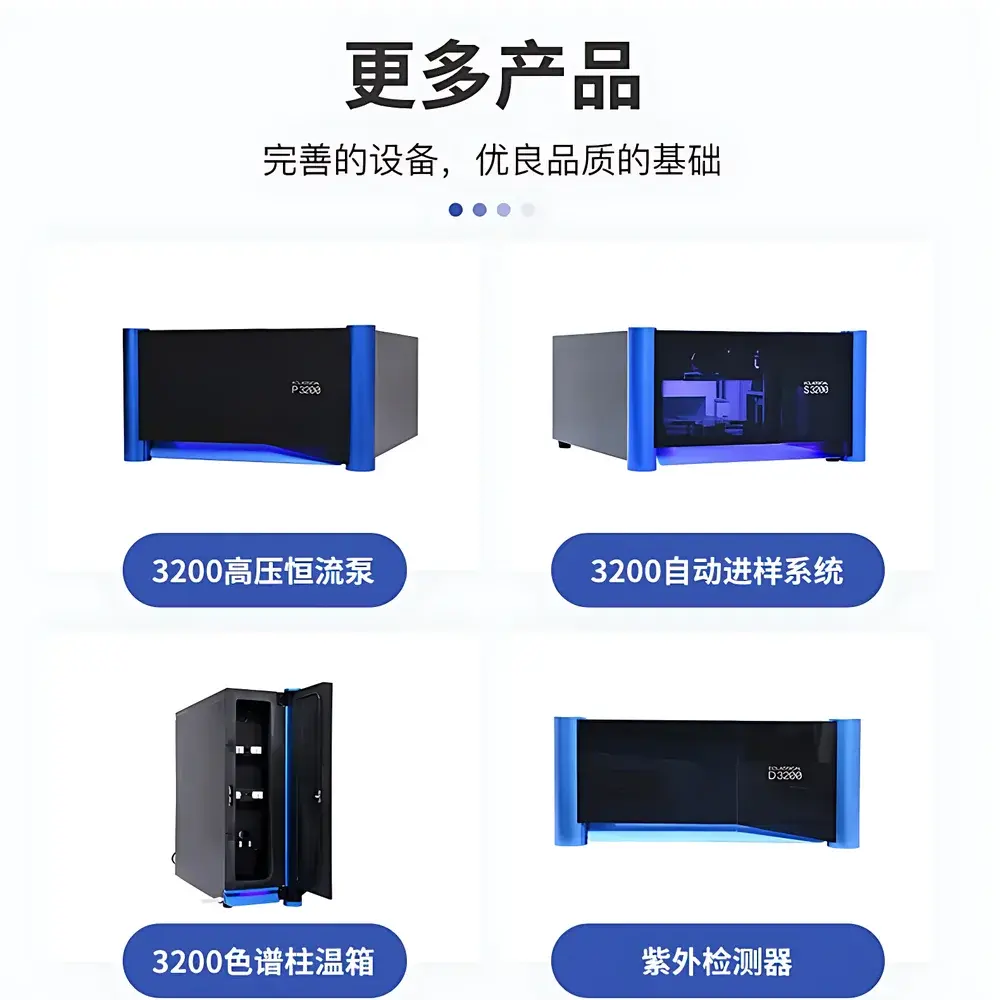
- Autosampler with optional refrigerated compartment (4 °C), programmable dilution, and post-injection derivatization capability—validated for thermolabile biomolecules, peptides, and unstable metabolites.
- UV-Vis detector featuring a temperature-stabilized fused-silica flow cell and fixed-angle optical path design, delivering < 0.5 mAU RMS noise (at 254 nm, 1 s time constant) and linear dynamic range of 4 orders of magnitude.
- Optional diode array detector (DAD) with 1024-pixel linear CCD array, supporting full-spectrum acquisition from 190 to 800 nm at up to 100 Hz sampling rate—enabling spectral deconvolution, peak purity assessment, and interference identification per ICH Q5A/Q5C guidelines.
- Column oven with six independently monitored zones and dual valve integration support—accommodating up to two 2-position/6-port or 2-position/10-port switching valves for flexible multidimensional routing and column regeneration protocols.
Sample Compatibility & Compliance
The Elite 3200 is validated for use with aqueous-organic mobile phases (including TFA, formic acid, ammonium acetate/formate buffers), polar and non-polar stationary phases (C18, C8, HILIC, SEC, chiral), and sample matrices ranging from plasma and urine (post-protein precipitation) to plant extracts and polymer digests. System components meet ISO 9001 manufacturing standards; hardware and firmware architecture support audit trail logging, electronic signatures, and user access level management in accordance with FDA 21 CFR Part 11 and EU Annex 11 requirements. All detectors are calibrated traceable to NIST SRM 930e (UV absorbance) and certified for linearity per USP and EP 2.2.46.
Software & Data Management
Control and data acquisition are managed via EliteChrom v3.x, a Windows-based chromatography data system (CDS) compliant with GLP/GMP environments. The software provides method templating for 2D-LC workflows, automatic peak tracking across dimensions, retention time locking (RTL) algorithms, and embedded reporting modules aligned with ASTM E2500-17 for instrument qualification. Raw data files adhere to ANDI/NetCDF format, ensuring interoperability with third-party processing tools (e.g., OpenLab CDS, Chromeleon, MassHunter). Audit trails record all parameter changes, sequence edits, and report exports with timestamp, operator ID, and reason-for-change fields—retained for minimum 15 years per internal retention policy.
Applications
- Pharmaceutical impurity profiling per ICH Q3B(R2), including genotoxic nitrosamine detection using heart-cut 2D-LC–MS coupling.
- Clinical therapeutic drug monitoring (TDM) of narrow-therapeutic-index agents (e.g., tacrolimus, voriconazole) in whole blood with protein precipitation and on-column concentration.
- Biopharmaceutical characterization: intact mass analysis of monoclonal antibodies via SEC–RP gradient coupling; peptide mapping with online derivatization for cysteine alkylation.
- Natural product dereplication: simultaneous quantification of flavonoids, alkaloids, and terpenoids in botanical extracts using orthogonal HILIC–C18 separation.
- Environmental analysis of PFAS compounds in wastewater using mixed-mode cation-exchange–reversed-phase 2D-LC with DAD confirmation.
FAQ
What dimensional configurations does the Elite 3200 support?
It supports both comprehensive two-dimensional liquid chromatography (LC×LC) and selective heart-cutting (mLC) modes, configurable via software-defined valve actuation sequences.
Is the system compatible with mass spectrometry interfaces?
Yes—the low-flow, low-dead-volume design and modular detector bay accommodate standard ESI and APCI sources; dwell volume is optimized for synchronization with TOF, Q-TOF, and triple quadrupole platforms.
Can column oven temperature be programmed independently per zone?
No—temperature is uniform across all six zones, but each zone includes individual Pt100 sensor feedback and PID-controlled heating/cooling for ±0.1 °C stability.
Does the autosampler support needle wash optimization for viscous biological samples?
Yes—programmable multi-solvent wash cycles with adjustable dwell time, rinse volume, and aspiration speed are available per injection event.
Is method transfer supported between Elite 3200 and other UHPLC platforms?
Retention time normalization and gradient scaling tools are embedded in EliteChrom; however, dwell volume differences require empirical re-optimization when migrating from systems with >150 µL dwell volume.




