
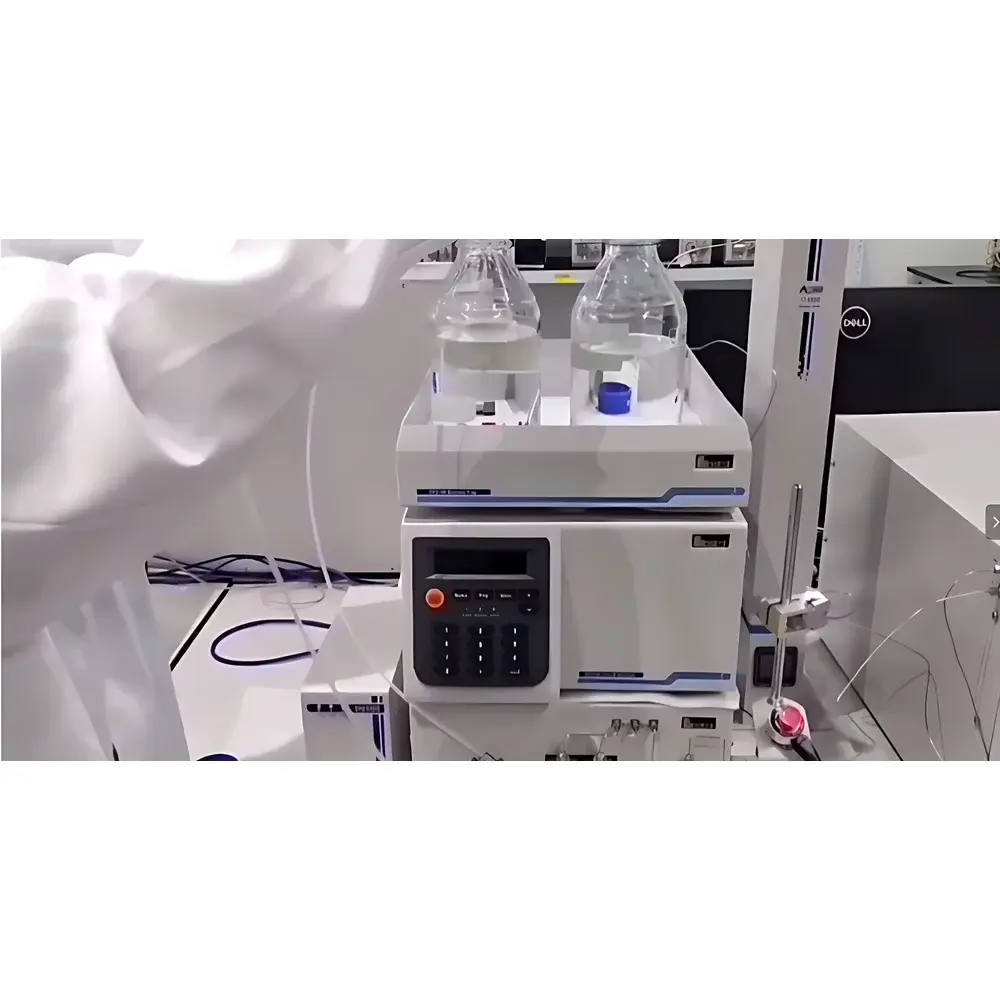
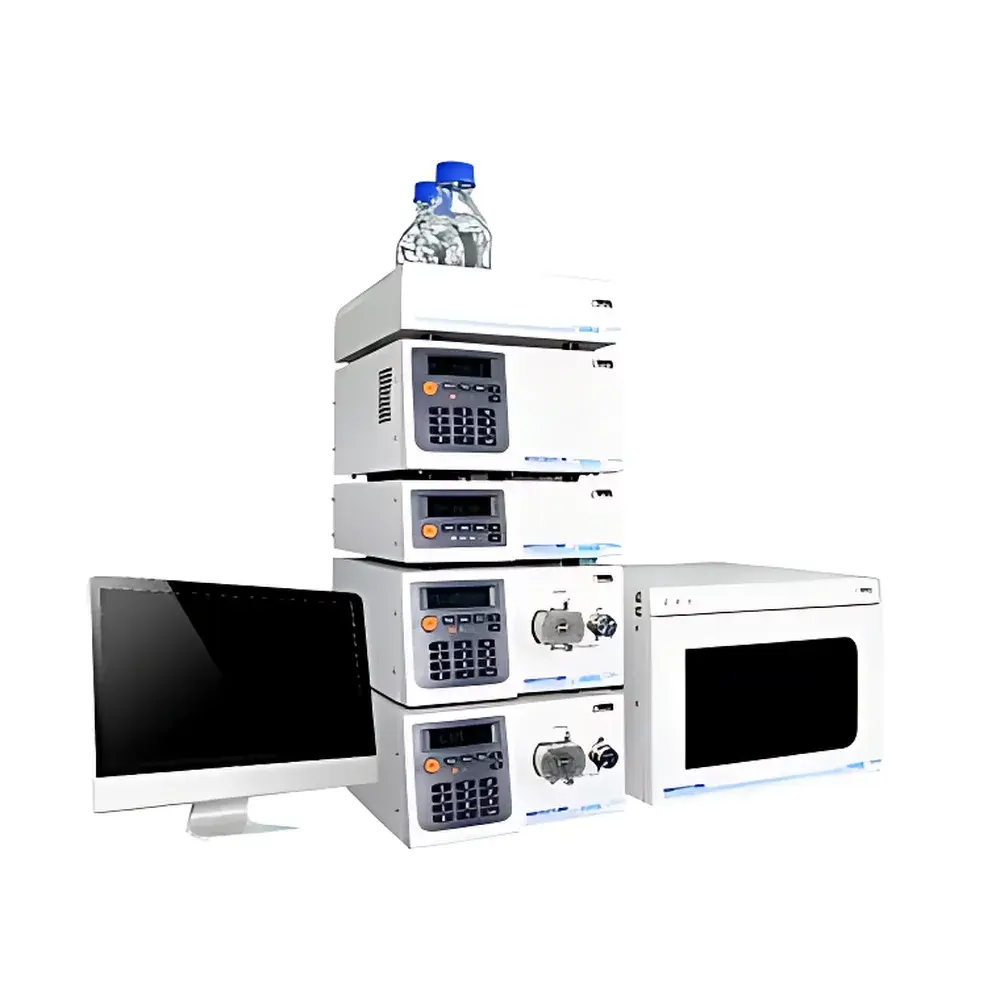
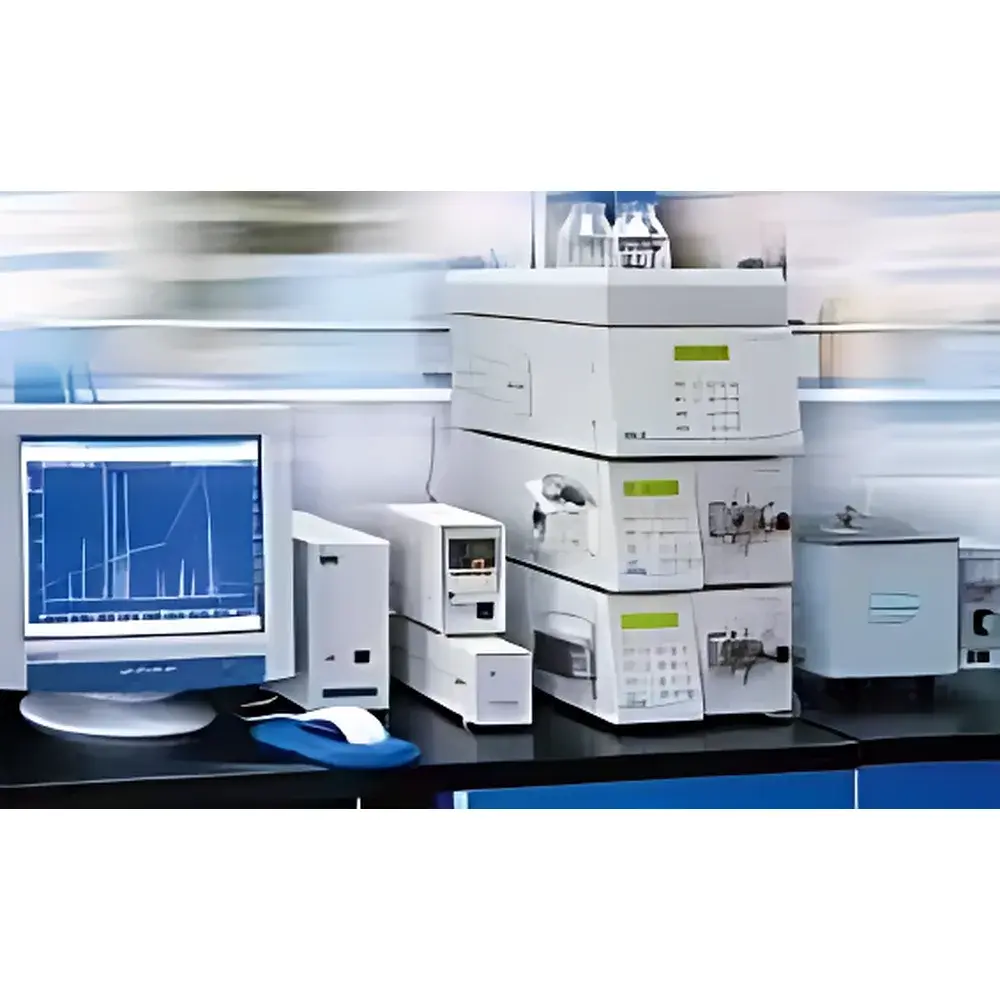
Elite AAk Amino Acid Analysis System
| Brand | Elite |
|---|---|
| Origin | Liaoning, China |
| Manufacturer Type | OEM Manufacturer |
| Regional Classification | Domestic (China) |
| Model | AAk Amino Acid Analysis System |
| Instrument Type | Conventional High-Performance Liquid Chromatograph (HPLC) |
| Application Scope | General-Purpose Amino Acid Quantification |
| Flow Rate Range | 0.001–10.000 mL/min |
| Maximum Pressure | 45 MPa |
| Autosampler Capacity | 120 positions |
| Injection Volume Range | 0–100 µL |
| Column Oven Temperature Range | 5–80 °C |
| UV Detection Wavelength Range | 190–700 nm |
| Data Acquisition Frequency | 20 Hz |
Overview
The Elite AAk Amino Acid Analysis System is a dedicated high-performance liquid chromatography (HPLC)-based platform engineered for the precise separation, identification, and quantification of proteinogenic and non-proteinogenic amino acids in complex biological, pharmaceutical, food, and feed matrices. It operates on the principle of pre-column derivatization using 1-fluoro-2,4-dinitrobenzene (DNFB), followed by reversed-phase HPLC separation and ultraviolet (UV) absorbance detection. This methodology delivers high selectivity and reproducibility for all 18 standard amino acids—including acidic, basic, neutral, and sulfur-containing species—without interference from common matrix components. The system integrates a precision binary high-pressure gradient pump, a thermostatically controlled column oven, a 120-position autosampler with programmable injection volume (0–100 µL), and a broadband UV-Vis detector (190–700 nm). Its robust architecture supports method transfer across laboratories and complies with fundamental requirements for analytical method validation per ICH Q2(R2) guidelines.
Key Features
- Binary high-pressure gradient HPLC pump delivering stable flow rates from 0.001 to 10.000 mL/min with pressure tolerance up to 45 MPa—enabling both fast gradient elution and low-flow micro-separation protocols.
- Column oven with precise temperature control (5–80 °C) to ensure retention time stability and peak shape reproducibility across extended run sequences.
- 120-position autosampler supporting variable injection volumes (0–100 µL) and compatible with standard 1.5 mL vials; designed for unattended overnight operation in routine QC environments.
- Dedicated Elite AAk amino acid analysis column and guard column assembly—optimized for DNFB-derivatized amino acids, providing baseline resolution of all 18 primary analytes within <40 minutes.
- UV-Vis detector with 20 Hz acquisition frequency and wavelength range spanning 190–700 nm—supporting dual-wavelength monitoring and spectral verification of derivative peaks.
- Integrated iChrom 5100 or EClassical 3100 chromatography data system (CDS) for instrument control, sequence management, peak integration, calibration curve generation, and report export in PDF/CSV formats.
Sample Compatibility & Compliance
The Elite AAk system accommodates diverse sample types including hydrolyzed protein digests (acidic or enzymatic), cell culture supernatants, serum/plasma extracts, food hydrolysates, and fermentation broths. All derivatization reagents—including DNFB solution and proprietary buffer components A/B for both derivatization and mobile phase equilibration—are supplied as part of the Elite AAk Reagent Kit (catalog number: AAk-REAG-1). The system meets core operational prerequisites for GLP-compliant laboratories: audit trail-enabled CDS software (iChrom 5100 supports optional 21 CFR Part 11 compliance modules), electronic signature capability, and full data integrity traceability. While not certified to ISO/IEC 17025 out-of-the-box, it is routinely deployed in laboratories accredited to ISO 17025:2017 for amino acid profiling in nutritional labeling (per AOAC 994.12 and ISO 13903) and pharmaceutical raw material testing (per USP residual solvents and amino acid assays).
Software & Data Management
Instrument control and data processing are managed via Elite’s iChrom 5100 Chromatography Data System—a Windows-based application supporting method development, sequence scheduling, real-time chromatogram display, and automated peak identification using retention time indexing. Calibration curves are generated using external standard addition or internal standard methods; linearity is verified over ≥10³ concentration range (e.g., aspartic acid: R² ≥ 0.999 over 0.1–100 µM). Raw data files (.ichd) are stored with embedded metadata (operator ID, method name, injection time, instrument parameters), and reports comply with LIMS-ready formatting. Optional upgrades include electronic lab notebook (ELN) integration and networked deployment across multi-instrument labs.
Applications
- Quantitative amino acid profiling in infant formula, dietary supplements, and sports nutrition products per Codex Alimentarius STAN 253-2007.
- Release testing of therapeutic peptides and recombinant proteins during biomanufacturing process development.
- Stability-indicating assays for amino acid-containing APIs under ICH Q5C conditions.
- Metabolomic screening of plasma/urine samples in clinical research settings (requires additional sample cleanup via solid-phase extraction).
- Quality control of fermentation-derived amino acids (e.g., lysine, glutamic acid) in industrial biotechnology.
FAQ
What derivatization chemistry does the Elite AAk system use?
It employs 1-fluoro-2,4-dinitrobenzene (DNFB) pre-column derivatization, which yields stable dinitrophenyl (DNP) derivatives detectable at 360 nm with high molar absorptivity and minimal side reactions.
Is the system compatible with post-column ninhydrin detection?
No—the Elite AAk is configured exclusively for pre-column DNFB derivatization and UV detection; it does not support post-column reaction systems or ninhydrin-based workflows.
Can the system be validated for GMP environments?
Yes—when equipped with iChrom 5100 Part 11-compliant software, IQ/OQ documentation packages, and calibrated reference standards, it satisfies baseline requirements for GMP-compliant amino acid release testing.
What maintenance intervals are recommended for the autosampler and pump?
Pump seal replacement every 6 months under continuous use; autosampler needle wash solvent更换 every 2 weeks; column guard cartridge replacement after every 50 injections when analyzing dirty matrices.
Does Elite provide method transfer support?
Yes—Elite offers application notes, system suitability test (SST) protocols, and remote method optimization assistance for laboratories transitioning from other amino acid analyzers (e.g., Biochrom 30+, Hitachi L-8900).





