
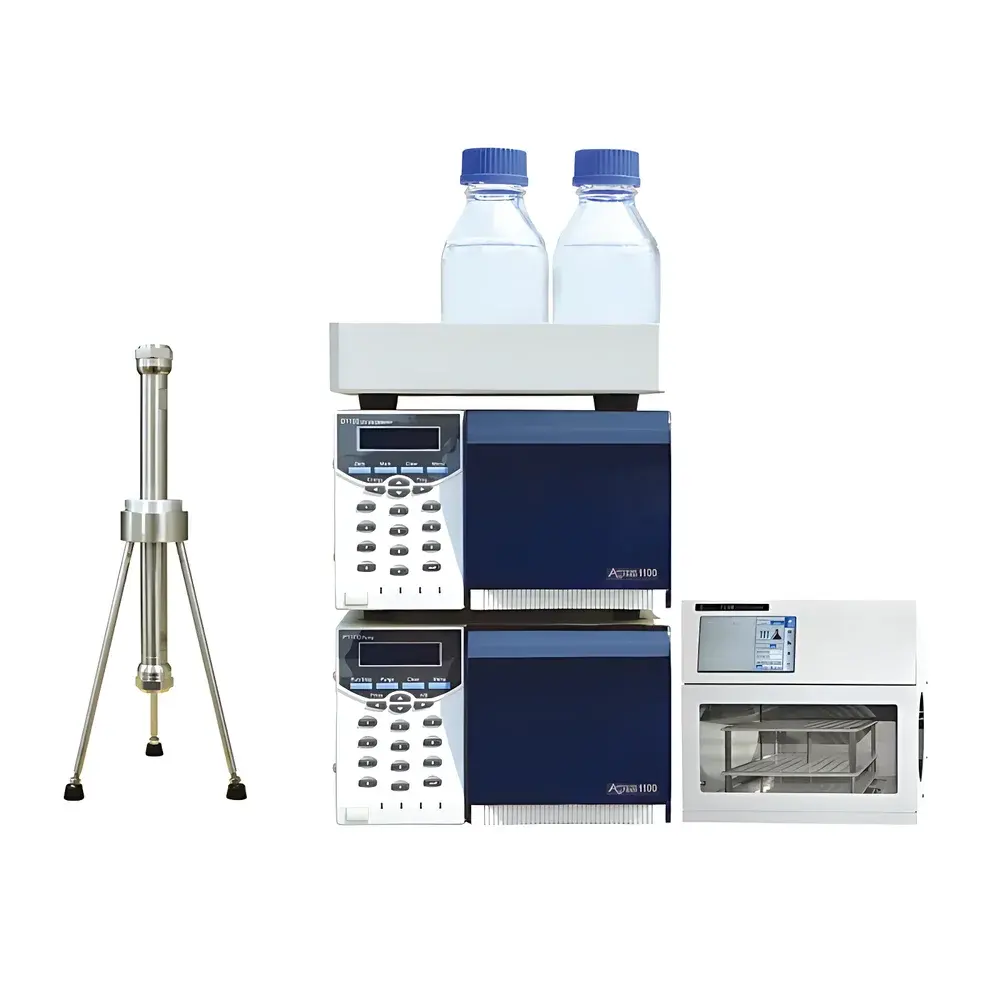
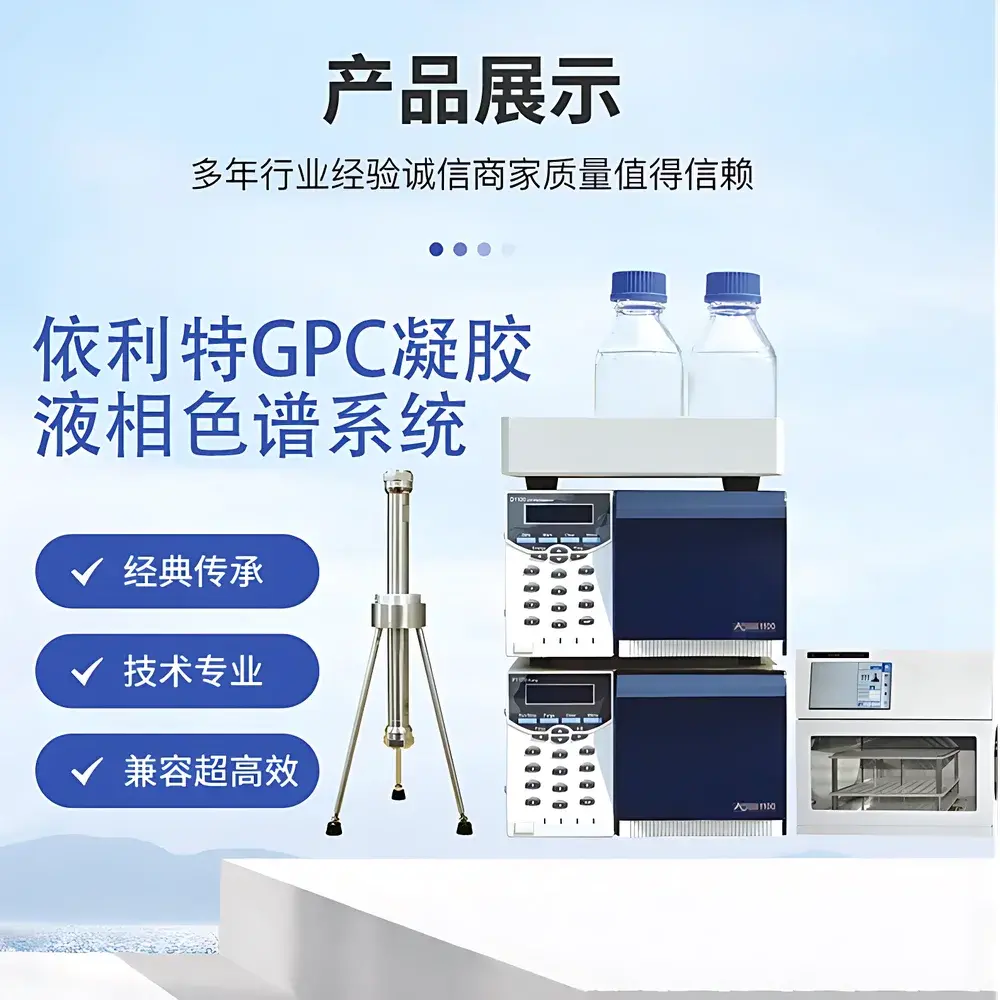
Elite GPC Gel Permeation Chromatography System
| Brand | Elite |
|---|---|
| Origin | Liaoning, China |
| Manufacturer Type | Direct Manufacturer |
| Instrument Type | Ambient-Temperature GPC System |
| Pump Flow Range | 0.01–100.00 mL/min |
| Pump Pressure Limit | 42 MPa |
| Refractive Index Detector Drift | Not Specified |
| RI Detector Flow Cell Volume | Not Specified |
| UV-Vis Detector Wavelength Range | Not Specified |
| UV-Vis Detector Noise Level | Not Specified |
| Column Oven Temperature Range | Not Specified |
Overview
The Elite GPC Gel Permeation Chromatography System is a dedicated ambient-temperature gel permeation chromatograph engineered for high-efficiency sample cleanup in preparative-scale applications. Based on the principle of size-exclusion chromatography (SEC), the system separates analytes from complex matrices—such as lipids, pigments, and polymeric interferences—by differential elution through porous gel packing material. Unlike analytical SEC used for molecular weight distribution analysis, this system operates in the gel permeation chromatography (GPC) mode optimized for off-line fraction collection, enabling robust removal of macromolecular contaminants prior to downstream quantification by GC, LC-MS, or HPLC. Designed for routine use in regulatory-compliant laboratories, the Elite GPC system supports method reproducibility across food safety, environmental monitoring, and agricultural residue testing workflows—particularly for pesticide and veterinary drug residue analysis, polycyclic aromatic hydrocarbons (PAHs), and polychlorinated biphenyls (PCBs).
Key Features
- High-precision dual-plunger reciprocating pump delivering stable flow rates from 0.01 to 100.00 mL/min with pressure capability up to 42 MPa—suitable for both low-viscosity mobile phases (e.g., hexane/isopropanol) and moderately viscous solvent systems.
- Real-time pressure monitoring with programmable high- and low-pressure alarm thresholds, integrated into the control logic to prevent column overpressure and ensure operator safety.
- Optional dual-wavelength UV-Vis detector with broad spectral coverage (typically 190–700 nm) and low baseline noise (< ±0.5 × 10⁻⁵ AU), facilitating selective detection of aromatic contaminants during fraction collection.
- Refractive index (RI) detector compatible with non-UV-absorbing compounds; configured with temperature-stabilized flow cell and drift-compensated electronics for improved baseline stability during extended runs.
- Touchscreen-controlled automated fraction collector with customizable trigger logic (time-, peak-, or threshold-based), supporting sequential or looped tube rack configurations for unattended operation.
- Stainless-steel GPC columns pre-packed with cross-linked polystyrene-divinylbenzene (PS-DVB) gels—manufactured under controlled batch conditions to ensure retention time reproducibility and column-to-column consistency.
Sample Compatibility & Compliance
The Elite GPC system accommodates a wide range of organic solvent-compatible samples, including crude extracts from soil, sediment, animal tissue, plant matrices, and edible oils. It complies with established sample preparation protocols referenced in EPA Method 3640A (GPC Cleanup), AOAC Official Method 2007.01, and EN 15662:2018 for multiresidue pesticide analysis. All wetted components—including pump heads, injector valves, tubing, and column hardware—are constructed from chemically resistant materials (e.g., stainless steel, PEEK, sapphire) to withstand aggressive solvents such as dichloromethane, acetone, and toluene. The system architecture supports GLP-aligned documentation practices, with audit-trail-capable software logging method parameters, run history, and user actions—facilitating alignment with FDA 21 CFR Part 11 requirements when paired with validated software modules.
Software & Data Management
Control and data acquisition are managed via Elite’s proprietary GPC Control Suite, a Windows-based application offering intuitive workflow configuration, real-time chromatogram visualization, and customizable fraction collection rules. Raw data files are stored in vendor-neutral formats (e.g., .cdf) compatible with third-party processing tools. The software includes built-in calibration utilities for retention time alignment and system suitability assessment (e.g., resolution check between standard markers). Audit trails record all parameter modifications, user logins, and sequence execution events. Export functions support CSV, PDF, and XML output for integration into LIMS environments. Optional instrument qualification packages—including IQ/OQ documentation templates—are available for laboratories operating under ISO/IEC 17025 or pharmaceutical GMP frameworks.
Applications
- Pesticide residue analysis in fruits, vegetables, and cereals—removing chlorophyll, waxes, and triglycerides prior to GC-MS/MS analysis.
- PCB and dioxin congener cleanup from fish oil and adipose tissue extracts prior to HRGC-HRMS quantification.
- PAH removal from air particulate matter (PM₁₀/PM₂.₅) filter extracts and wastewater sludge digests.
- Veterinary drug residue purification (e.g., sulfonamides, tetracyclines) from milk and muscle homogenates.
- Removal of phospholipids and hemoglobin interference from plasma samples in biomarker discovery workflows.
FAQ
What solvents are compatible with the Elite GPC system?
The system supports common GPC mobile phases including tetrahydrofuran (THF), chloroform, dichloromethane, toluene, and mixtures thereof—provided they are filtered (0.45 µm) and degassed prior to use.
Can the system be integrated with an existing HPLC platform?
Yes—the GPC module features standard 1/16″ stainless-steel tubing connections and TTL-compatible trigger I/O, enabling synchronization with autosamplers and mass spectrometers for hybrid workflows.
Is column regeneration supported?
Regeneration protocols using strong solvents (e.g., THF followed by methanol) are documented in the operator manual; however, repeated regeneration may affect pore structure integrity and is not recommended beyond manufacturer-specified cycles.
Does the system meet ISO 17025 traceability requirements?
When operated with calibrated reference standards (e.g., polystyrene molecular weight markers traceable to NIST SRM 1475a) and validated methods, the system supports measurement traceability per ISO/IEC 17025:2017 Clause 6.5.
What maintenance intervals are recommended?
Pump seal replacement every 6 months under continuous operation; RI detector flow cell cleaning every 200 hours; column backflushing after every 10th sample batch—details provided in the Preventive Maintenance Schedule included with the system.





