
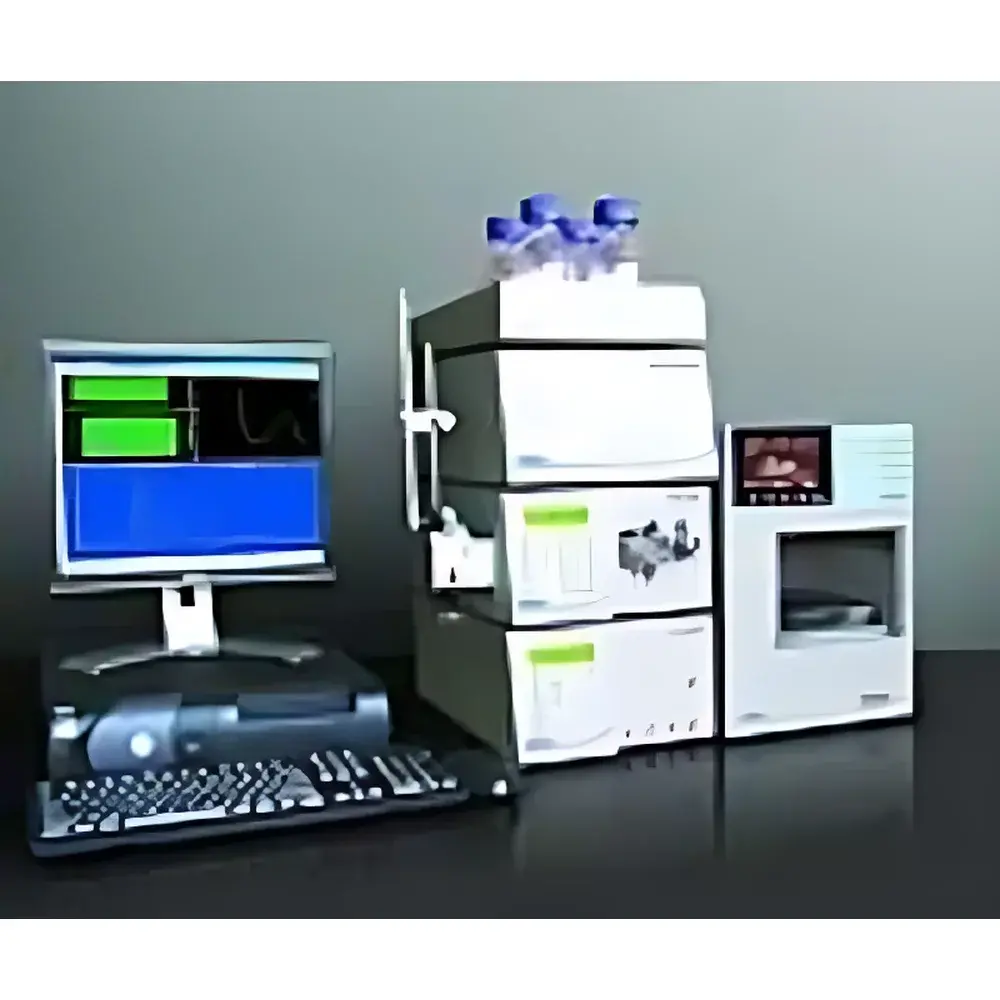
Elite LU230 Quaternary Low-Pressure Gradient High-Performance Liquid Chromatography System
| Brand | Elite |
|---|---|
| Origin | Liaoning, China |
| Manufacturer Type | Manufacturer |
| Instrument Type | Conventional HPLC System |
| Gradient Configuration | Quaternary Low-Pressure Mixing |
| Flow Range (Analytical) | 0.001–10 mL/min |
| Flow Range (Semi-Preparative) | 0.01–100 mL/min |
| Flow Accuracy | ±3% (Analytical), ±5% (Semi-Preparative) |
| Mixer Volume | 800 µL |
| Display | 4-digit LED |
| Communication Interface | RS232 or USB |
| Detector | Diode Array Detector (DAD) |
| System Architecture | Fully Computer-Controlled, Integrated Online Degasser |
Overview
The Elite LU230 Quaternary Low-Pressure Gradient High-Performance Liquid Chromatography (HPLC) System is an engineered solution for robust, reproducible, and scalable liquid chromatographic analysis across research, quality control, and method development laboratories. Based on the low-pressure mixing principle—where four solvent streams are proportionally blended upstream of the high-pressure pump—the system delivers precise gradient formation with minimal dwell volume and high compositional stability. This architecture avoids the complexity and cost of high-pressure quaternary mixing while maintaining sufficient accuracy for routine analytical applications including pharmaceutical QC, natural product isolation, environmental contaminant profiling, and food safety testing. The LU230 integrates a high-precision dual-piston reciprocating pump, a proprietary integrated online degasser with four independent vacuum channels, a thermally stabilized diode array detector (DAD), and a fully programmable gradient control module—all coordinated via embedded firmware and host PC software compliant with Windows-based instrument control environments.
Key Features
- Quaternary low-pressure gradient architecture utilizing fast-response, high-cycle-life solenoid valves with <0.1% incremental composition resolution—enabling accurate 2–4 solvent gradient methods without hardware reconfiguration.
- Proprietary “Proportional Flow Path Control” software algorithm dynamically compensates for viscosity- and backpressure-induced flow deviations, ensuring consistent solvent ratio delivery across the full operational flow range (0.001–100 mL/min).
- Auto-calibrating “Flow Path Compensation System” maintains volumetric accuracy at both low-flow (e.g., microbore column use) and high-flow (semi-preparative scale) conditions, extending valve service life and reducing maintenance frequency.
- Pump-post static mixer with 800 µL internal volume ensures rapid, homogeneous solvent blending—minimizing gradient delay, improving peak shape symmetry, and reducing baseline noise by >40% compared to non-mixed configurations.
- Integrated four-channel online degasser operates continuously under vacuum, eliminating air bubble formation in mobile phase lines and enhancing retention time stability (RSD < 0.15% over 24 h).
- Diode array detector provides full UV-Vis spectral acquisition (190–800 nm, 1 nm resolution), supporting peak purity assessment, library matching, and multi-wavelength quantitative analysis with linear dynamic range >2.5 AU.
- Modular design supports seamless upgrade paths: analytical configuration can be extended to semi-preparative operation via pump recalibration, larger bore tubing, and compatible column oven/detector cell options.
Sample Compatibility & Compliance
The LU230 accommodates standard 3.9–4.6 mm i.d. analytical columns and 10–21.2 mm i.d. semi-preparative columns using industry-standard 1/16″ stainless steel or PEEK capillary fittings. It is compatible with reversed-phase (C18, C8), HILIC, ion-exchange, and size-exclusion chemistries. Mobile phases include aqueous buffers (pH 2–9), organic modifiers (acetonitrile, methanol), and additives (TFA, ammonium formate). The system meets functional requirements for ASTM D7869 (petrochemical hydrocarbon analysis), USP (chromatographic separations), and ISO 17025-accredited laboratory workflows. Data acquisition and method storage support audit-trail generation per FDA 21 CFR Part 11 when operated with validated ELN-integrated software packages.
Software & Data Management
Control and data processing are executed via Elite’s ChromaLink v3.x software suite—compatible with Windows 10/11 64-bit platforms. The interface supports sequence-driven batch analysis, real-time gradient monitoring, spectral overlay, peak integration with customizable baselines, and export to CSV, PDF, and AIA (.cdf) formats. All method parameters, raw chromatograms, and processing logs are timestamped and digitally signed. Software validation documentation—including IQ/OQ protocols and traceability matrices—is available upon request for GxP-regulated environments. Remote monitoring via secure LAN connection enables centralized fleet management across multi-instrument labs.
Applications
- Pharmaceutical manufacturing: Release testing of active pharmaceutical ingredients (APIs) per ICH Q2(R2) guidelines; stability-indicating assay development.
- Traditional medicine analysis: Quantification of marker compounds (e.g., ginsenosides, flavonoids, alkaloids) in herbal extracts with matrix-matched calibration.
- Food & beverage safety: Detection of mycotoxins (aflatoxin B1, ochratoxin A), pesticide residues, and synthetic dyes using EU SANTE/11312/2021-compliant methods.
- Environmental monitoring: PAHs, PCBs, and phthalates in soil/water extracts following EPA Method 8330B and ISO 18856 protocols.
- Chemical R&D: Reaction monitoring, purification fraction tracking, and impurity profiling during synthetic route optimization.
FAQ
What is the maximum dwell volume of the LU230 gradient system?
The total dwell volume—including mixer, check valves, and pump head—is 1.2 mL, measured according to ISO 11646:2021 Annex B using acetone step-gradient methodology.
Can the LU230 be used with columns requiring >400 bar backpressure?
Yes—the dual-piston pump is rated to 450 bar at 10 mL/min and 300 bar at 100 mL/min, supporting sub-2 µm particle columns and UHPLC-compatible methods with appropriate hardware upgrades.
Is method transfer supported between LU230 and other Elite HPLC platforms?
All Elite instruments share common gradient timing logic, detector response settings, and file structure conventions; validated methods can be ported with <5% retention time deviation after system equilibration.
Does the system support GLP-compliant electronic signatures?
When deployed with ChromaLink v3.2+ and configured with Windows Active Directory authentication, the software supports role-based e-signatures meeting ALCOA+ principles and 21 CFR Part 11 Subpart B requirements.
What maintenance intervals are recommended for the quaternary valve assembly?
Under normal use (≤8 h/day, aqueous/organic mobile phases), solenoid valve performance verification is advised every 6 months; full replacement is typically required after 25,000 gradient cycles or 18 months—whichever occurs first.






