
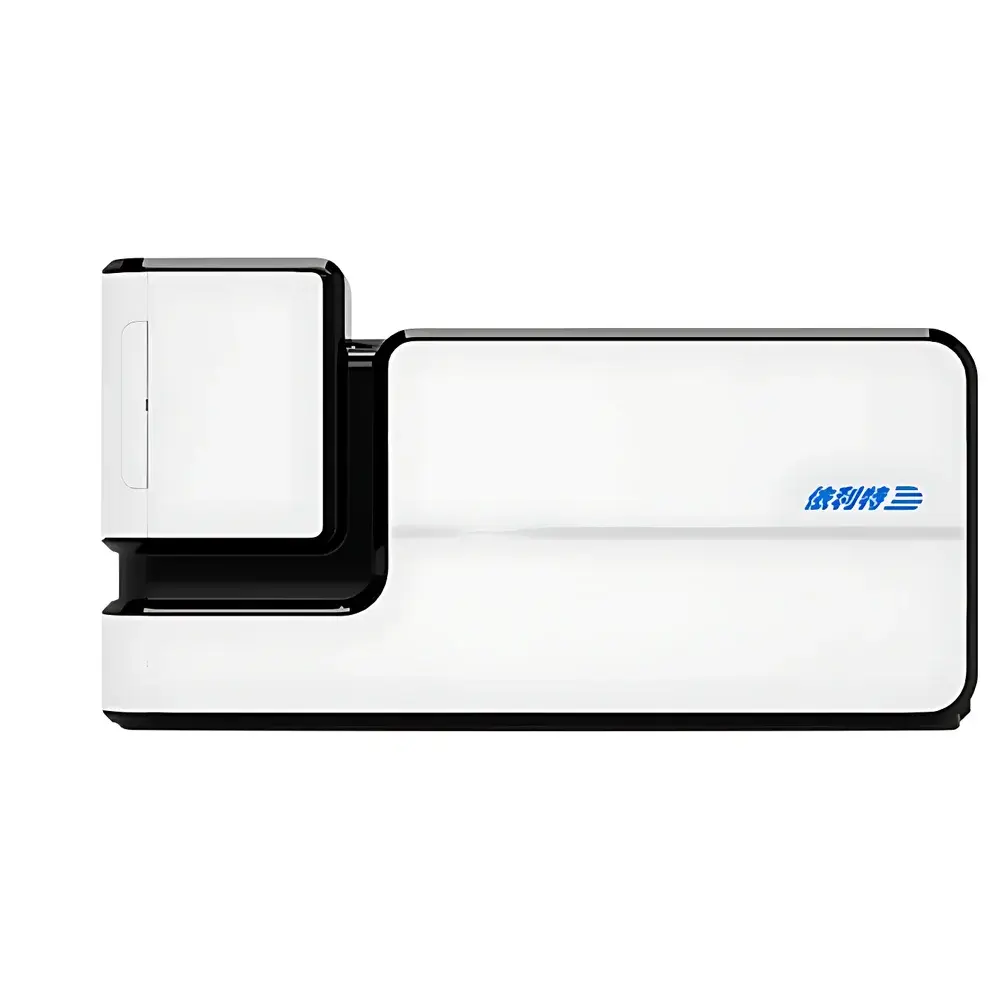
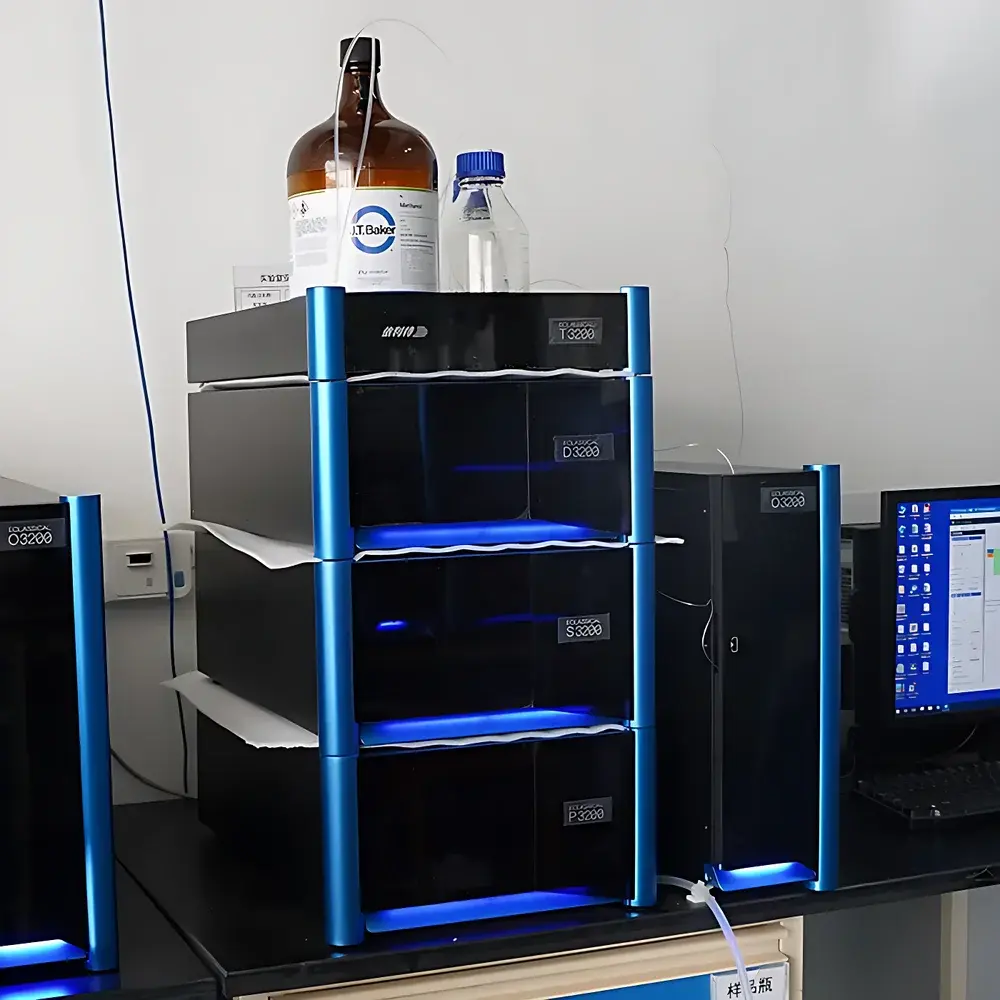
Elite MS²Vertical9010 Triple Quadrupole Liquid Chromatography Tandem Mass Spectrometer (LC-MS/MS)
| Brand | Elite |
|---|---|
| Origin | Jiangsu, China |
| Manufacturer Type | Direct Manufacturer |
| Instrument Type | Triple Quadrupole (QqQ) |
| Mass Range | m/z 19–2800 |
| Configuration | Integrated LC-MS/MS System |
| Application Scope | General-Purpose Quantitative and Qualitative Analysis |
| Compliance | Designed for GLP/GMP-aligned laboratories |
Overview
The Elite MS²Vertical9010 is a fully domestic triple quadrupole liquid chromatography tandem mass spectrometer engineered for high-fidelity quantitative analysis in regulated and research-intensive environments. Built upon the fundamental principles of electrospray ionization (ESI) and atmospheric pressure chemical ionization (APCI), the system employs a robust QqQ mass analyzer architecture—comprising three linear quadrupole segments—to deliver selective reaction monitoring (SRM), multiple reaction monitoring (MRM), and enhanced product ion scanning. Its vertical ion path design minimizes signal loss and improves transmission efficiency across the full mass range (m/z 19–2800), supporting both small-molecule metabolites and moderately sized peptides. As a purpose-built LC-MS/MS platform developed and manufactured in Jiangsu, China, the MS²Vertical9010 meets core functional requirements for method transfer, routine batch analysis, and method validation without reliance on imported hardware or proprietary firmware lock-in.
Key Features
- Triple quadrupole mass analyzer with independently controlled RF/DC voltages on each quadrupole segment for optimized ion transmission and collision-induced dissociation (CID) efficiency
- Vertical ion optical path architecture reducing ion scattering and improving duty cycle consistency during high-throughput MRM acquisition
- Dual ionization sources (ESI and APCI) mounted on a shared, motorized source interface enabling rapid, software-controlled switching without manual realignment
- Integrated high-pressure LC module compatible with UHPLC gradients up to 1300 bar, supporting sub-2 µm particle columns and fast polarity-switching methods
- Real-time internal calibration using lock-mass correction during acquisition to maintain mass accuracy within ±0.1 Da over 24-hour continuous operation
- Modular vacuum system with dual-stage turbomolecular pumps and intelligent pressure regulation ensuring stable operation under variable ambient conditions
Sample Compatibility & Compliance
The MS²Vertical9010 accommodates a broad spectrum of sample matrices—including plasma, urine, tissue homogenates, food extracts, environmental water/sludge digests, and cell culture supernatants—without requiring extensive method re-optimization. Its ion source geometry and desolvation parameters are adjustable to accommodate flow rates from 5 µL/min (nano-LC) to 1 mL/min (conventional HPLC). The instrument complies with ISO/IEC 17025:2017 requirements for analytical laboratory competence and supports audit-ready data handling per FDA 21 CFR Part 11 when paired with validated third-party or Elite-certified LIMS interfaces. All firmware and control logic are traceable to version-controlled release packages, enabling full GxP compliance for QC laboratories operating under GLP or GMP frameworks.
Software & Data Management
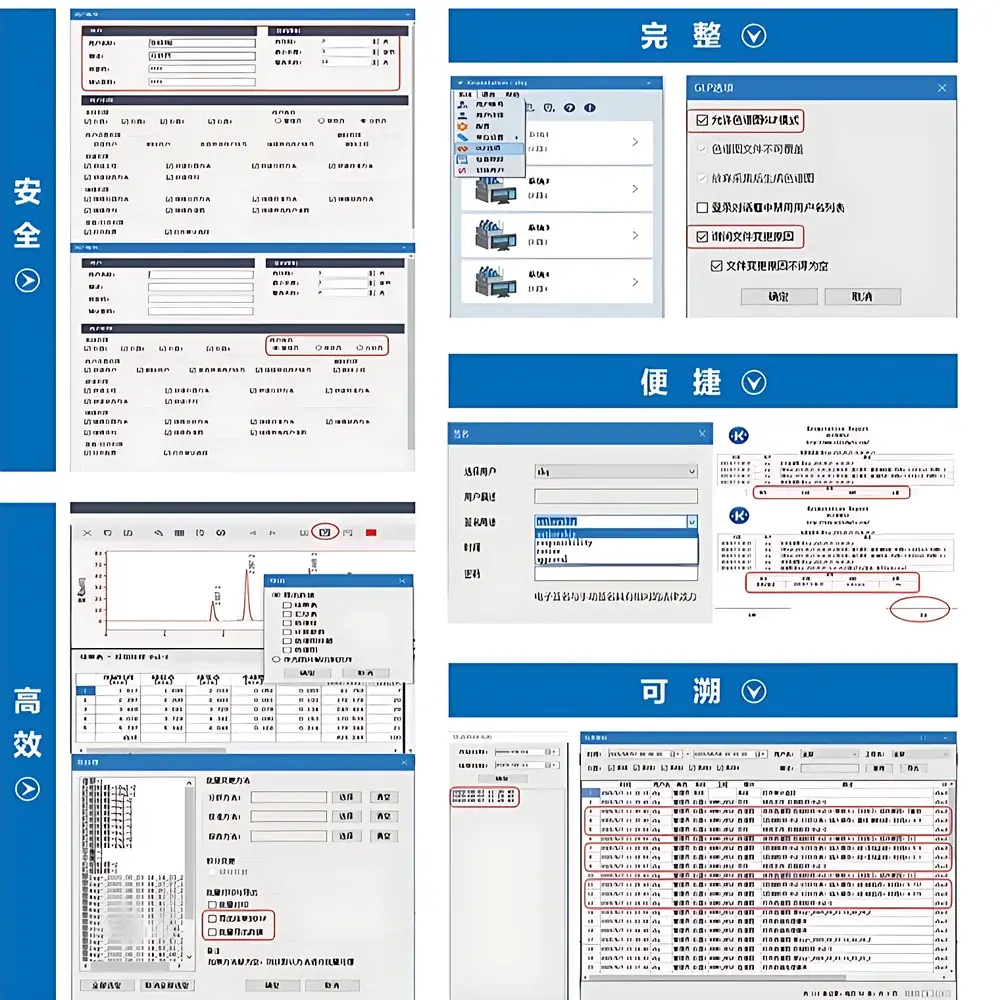
Control and data acquisition are managed via Elite’s MSNavigator v3.x software suite, a Windows-based application supporting method development, sequence execution, peak integration, and report generation. The software implements role-based user access control, electronic signatures, and immutable audit trails for all acquisition, processing, and export events. Raw data files adhere to open-standard mzML format, facilitating interoperability with third-party quantitation tools (e.g., Skyline, SimGlycan, Compound Discoverer). Batch processing workflows support automated calibration, carryover assessment, and system suitability testing (SST) against predefined acceptance criteria. Data archiving is configurable to network-attached storage (NAS) or secure cloud repositories with AES-256 encryption and retention policy enforcement.
Applications
The MS²Vertical9010 serves as a primary quantitative platform in pharmaceutical quality control (e.g., residual solvent analysis, impurity profiling per ICH Q2(R2)), clinical toxicology (therapeutic drug monitoring, forensic screening), food safety (pesticide multi-residue analysis per EU SANTE/11312/2021), and environmental monitoring (PAHs, PFAS, pharmaceutical residues in wastewater). Its MRM sensitivity enables low-pg/mL detection limits for target analytes in complex biological matrices, while its dynamic range (>5 orders of magnitude) supports simultaneous quantification of high- and low-abundance compounds in a single injection. Method transfer studies have demonstrated >95% correlation with established Agilent 6470 and Waters Xevo TQ-S platforms for regulated bioanalytical assays.
FAQ
Is the MS²Vertical9010 compliant with FDA 21 CFR Part 11 for electronic records and signatures?
Yes—when deployed with configured audit trail logging, user authentication, and electronic signature modules enabled, the system satisfies core technical requirements for Part 11 compliance.
Can the instrument be integrated into existing LIMS or ELN systems?
Yes—via standard ODBC, REST API, or vendor-provided middleware connectors supporting ASTM E1482, HL7, and ANSI/X12 message formats.
What level of technical support and service coverage is available outside mainland China?
Elite provides international service agreements through authorized regional partners, including remote diagnostics, on-site preventive maintenance, and certified application specialist consultation.
Does the system support high-resolution accurate-mass (HRAM) scanning?
No—the MS²Vertical9010 is a dedicated triple quadrupole platform optimized for targeted quantitation; HRAM functionality requires orthogonal time-of-flight (TOF) or Orbitrap-based architectures.
Are consumables and spare parts supplied globally with documented traceability?
Yes—all columns, ion sources, detector components, and calibration standards are serialized and supplied with CoA documentation meeting ISO 9001 traceability standards.




