
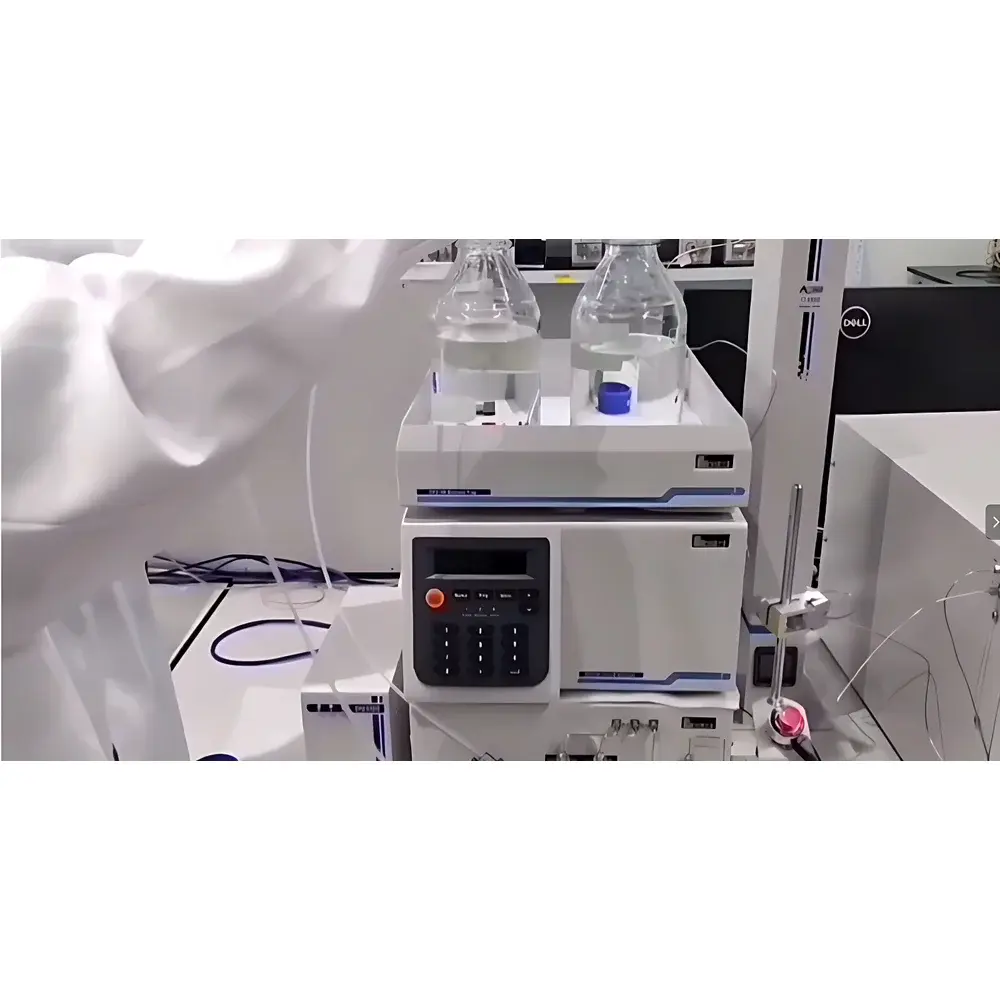
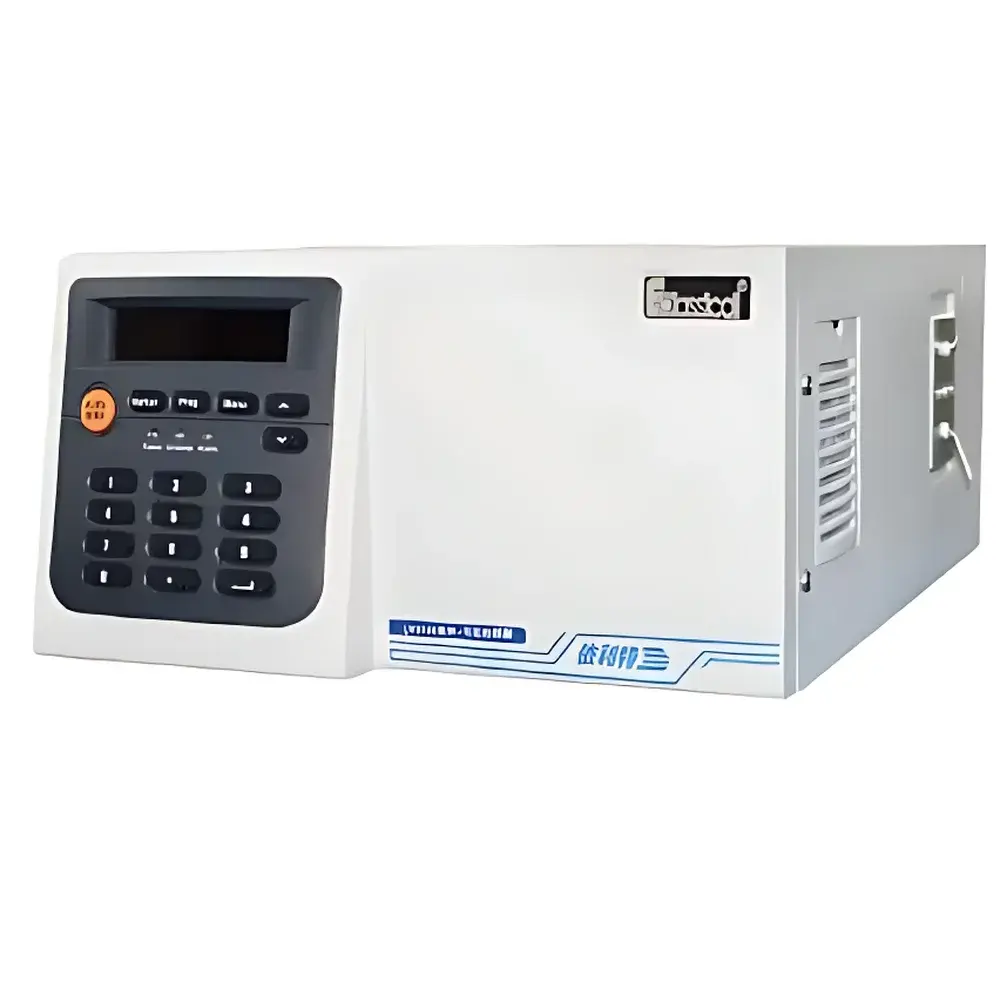
Elite UV3100 Diode Array UV-Visible Detector
| Brand | Elite |
|---|---|
| Origin | Liaoning, China |
| Manufacturer Type | Original Equipment Manufacturer (OEM) |
| Product Category | Domestic |
| Model | UV3100 |
| Compatible Instrument | HPLC Systems |
| Detector Type | UV-Vis Absorbance Detector |
| Wavelength Range | 190–700 nm |
| Detection Principle | UV-Vis Absorption Spectrophotometry |
| Light Source | Deuterium Lamp |
| Baseline Noise | ≤ ±0.5 × 10⁻⁵ AU |
| Baseline Drift | ≤ 1.0 × 10⁻⁴ AU/h |
| Linear Dynamic Range | 2.0 AU |
| Flow Cell Options | Analytical Cell (10 mm pathlength, 11 µL volume) |
| Power Supply | AC 220 V ±10%, 50 Hz / 100 W |
| Dimensions (L×W×H) | 420 × 300 × 175 mm |
| Weight | 16 kg |
| Analog Output | Optional DA output interface |
Overview
The Elite UV3100 Diode Array UV-Visible Detector is a high-performance, fixed-wavelength and programmable-wavelength absorbance detector engineered for integration with high-performance liquid chromatography (HPLC) systems. Designed on the foundation of over two decades of Elite’s field-proven detector architecture, the UV3100 implements dual-beam UV-Vis spectrophotometric detection using a stable deuterium lamp source and precision optical path design. It operates across a broad spectral range of 190–700 nm, enabling quantitative and qualitative analysis of compounds exhibiting characteristic UV or visible absorption—such as aromatic hydrocarbons, conjugated dienes, carbonyl-containing molecules, and many pharmaceutical actives. The detector supports multiple operational modes—including single-wavelength, dual-wavelength, time-programmed wavelength scanning, and stop-flow spectral acquisition—providing flexibility for method development, peak purity assessment, and co-elution resolution without requiring hardware modification.
Key Features
- Optimized thermal management architecture with engineered airflow channels to minimize thermal gradients across the optical bench, resulting in improved baseline stability and reduced drift (≤1.0 × 10⁻⁴ AU/h).
- Low-noise photometric circuitry delivering baseline noise performance of ≤ ±0.5 × 10⁻⁵ AU (measured at 254 nm, 1 s time constant, under standard HPLC flow conditions), supporting high-sensitivity trace analysis.
- Modular flow cell design: interchangeable analytical cell (10 mm pathlength, 11 µL internal volume) and semi-preparative cell (2 mm pathlength, 6 µL volume), each optimized for pressure compatibility and minimal extra-column band broadening.
- Time-programmed wavelength functionality enables dynamic adjustment of detection wavelength during a single chromatographic run—ideal for multi-analyte methods where optimal λ varies across retention time windows.
- Optional analog DA output interface (0–1 V or 0–5 V, user-configurable) facilitates seamless integration with legacy data acquisition systems, PLC-based process monitoring, or third-party control platforms compliant with 4–20 mA industrial standards.
- Compact mechanical footprint (420 × 300 × 175 mm) and robust aluminum alloy chassis support benchtop deployment in regulated QC laboratories and pilot-scale analytical environments.
Sample Compatibility & Compliance
The UV3100 is compatible with standard HPLC mobile phases—including aqueous buffers (e.g., phosphate, acetate), organic modifiers (acetonitrile, methanol), and low-UV-absorbing additives (e.g., trifluoroacetic acid < 0.1%). Its optical design ensures stable performance under typical HPLC operating pressures up to 40 MPa (6000 psi). While not certified to IEC 61000-4 electromagnetic immunity standards out-of-box, the detector meets CE marking requirements for EMC and LVD when installed per Elite’s specified grounding and cable routing guidelines. Data integrity features—including non-volatile method storage and timestamped event logging—are aligned with GLP and GMP documentation expectations. Though not natively 21 CFR Part 11 compliant, the detector’s analog/digital outputs enable traceable data capture when paired with validated chromatography data systems (CDS) that implement electronic signatures, audit trails, and user access controls.
Software & Data Management
The UV3100 communicates via RS-232 or optional USB-to-serial interface to Elite’s EZChrom Elite CDS or third-party HPLC control software (e.g., Chromeleon, OpenLab CDS). All operational parameters—including wavelength setpoints, gain, filter time constant, and cell selection—are configurable and stored in non-volatile memory. Spectral acquisition mode generates full UV-Vis spectra (190–700 nm) at user-defined retention time points, supporting post-run peak purity evaluation and library matching against reference spectra. Raw absorbance data are exported in ASCII-compatible formats (.csv, .txt) for secondary analysis in MATLAB, Python (NumPy/Pandas), or statistical process control (SPC) platforms. Firmware updates are delivered via secure FTP and require physical USB key authentication to maintain configuration integrity.
Applications
- Pharmaceutical QC testing per USP and EP 2.2.45 for assay, related substances, and dissolution profiling of small-molecule APIs.
- Environmental analysis of PAHs, phenolic compounds, and nitroaromatics in water and soil extracts (EPA Method 8330B, ISO 17993).
- Food and beverage quality control—including caffeine, preservatives (sorbic/benzoic acid), synthetic dyes, and antioxidant quantification (AOAC 992.15, ISO 11022).
- Academic and industrial research involving natural product isolation, polymer additive screening, and catalyst reaction monitoring via in-line UV detection.
- Method transfer between R&D and manufacturing labs where reproducible UV response and inter-instrument comparability are critical.
FAQ
What wavelength accuracy and repeatability does the UV3100 achieve?
Wavelength accuracy is ±1.0 nm across the 190–700 nm range, verified using NIST-traceable holmium oxide and didymium filters. Repeatability is ±0.2 nm (RSD < 0.1%) over 24 h under stabilized ambient conditions.
Can the UV3100 be used with UHPLC systems?
Yes—the detector’s low-volume flow cells and fast analog response time (< 0.1 s) support gradient separations at flow rates up to 2 mL/min and system pressures up to 40 MPa, though dwell volume considerations must be addressed during method transfer.
Is spectral deconvolution supported in real time?
No—the UV3100 acquires full spectra in stop-flow mode only; real-time spectral processing requires external software integration via exported data files.
How is calibration performed?
Factory calibration uses certified reference standards; end-user verification follows ASTM E275 for photometric linearity and wavelength accuracy, with optional annual recalibration services available through Elite-certified service centers.
Does the detector include temperature-controlled flow cell options?
Not standard—cell temperature is ambient; however, third-party Peltier-based column oven enclosures with integrated detector shielding may be deployed to stabilize thermal environment in high-precision applications.
Related Products




