
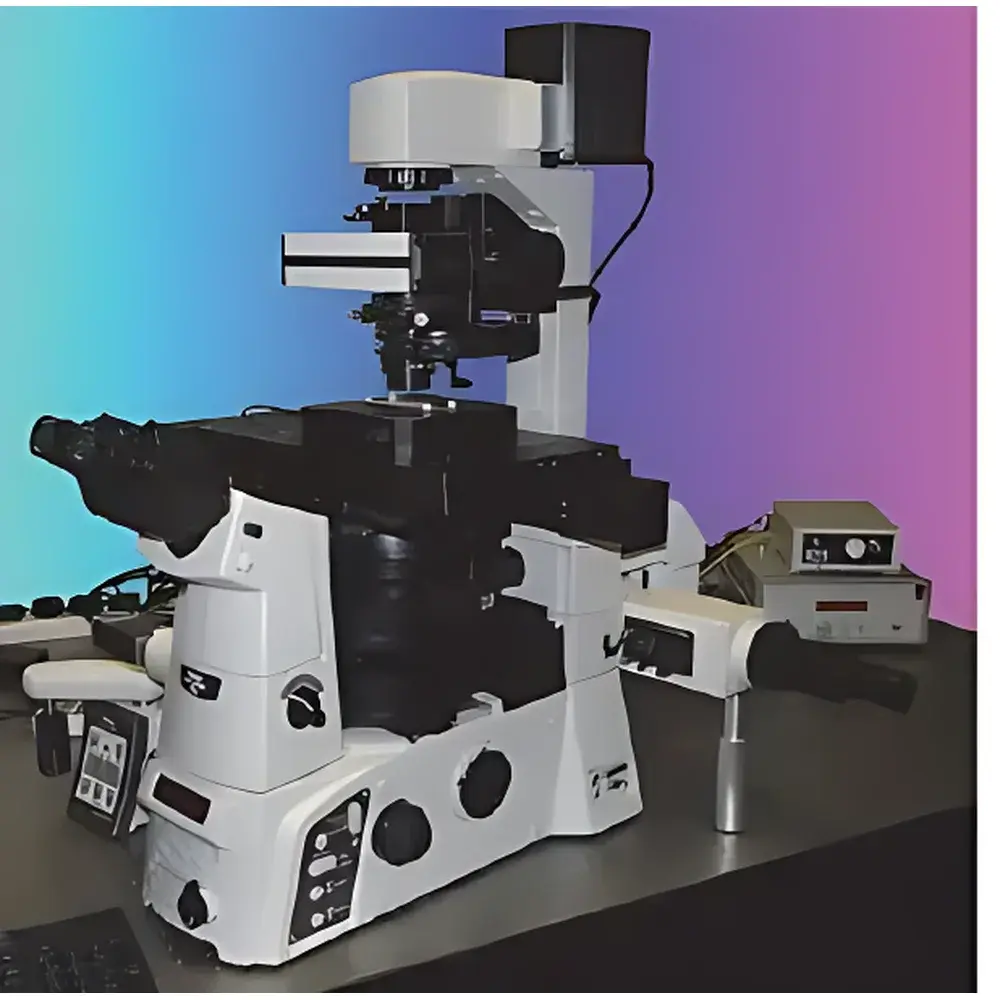
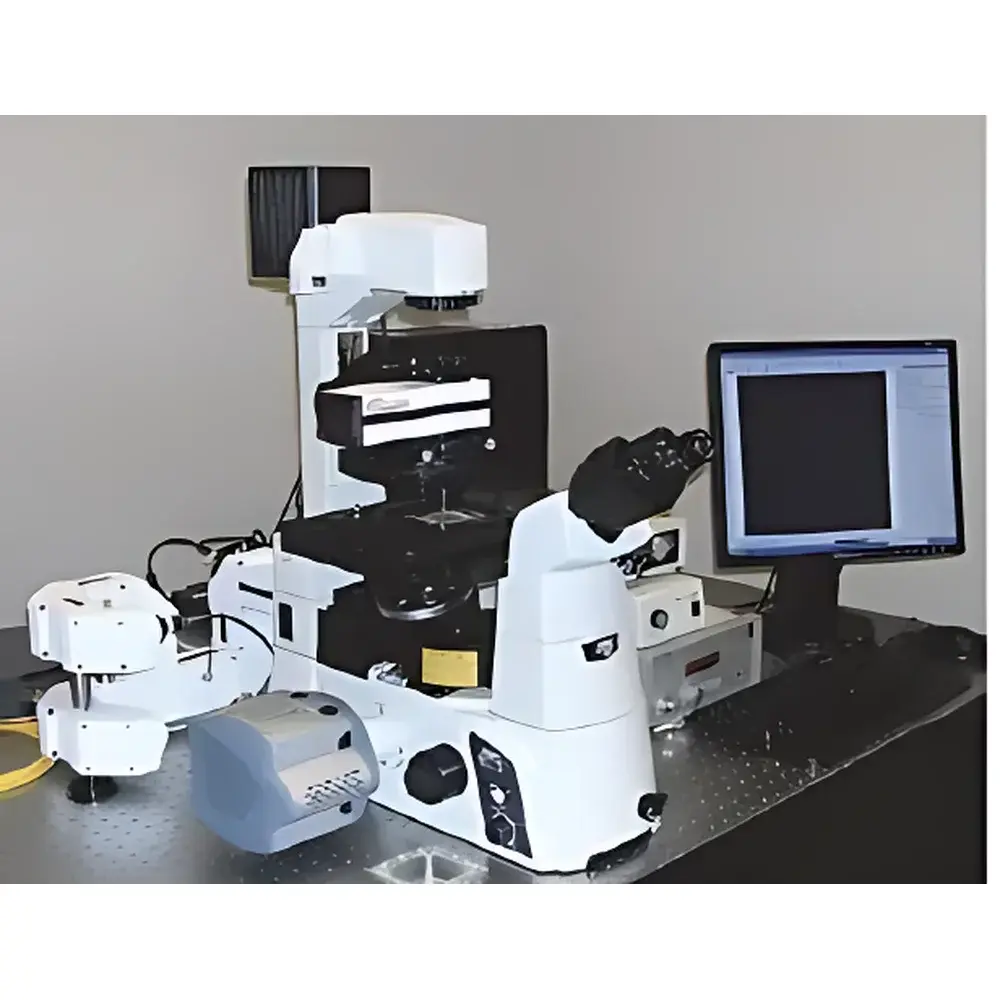
Elliot E4500/E4100/E3500/E3200 Optical Tweezers System
| Origin | UK |
|---|---|
| Manufacturer Type | Authorized Distributor |
| Origin Category | Imported |
| Models | Elliot E4500, E4100, E3500, E3200 |
| Price Range | USD 68,000 – 136,000 |
Overview
The Elliot E4500/E4100/E3500/E3200 Optical Tweezers System is a precision laser-based manipulation platform engineered for quantitative biophysical investigation at the single-molecule and single-cell level. Operating on the principle of radiation pressure and gradient force trapping, these systems utilize highly focused near-infrared (NIR) laser beams—typically at 1064 nm—to generate stable, three-dimensional optical potential wells capable of immobilizing and translating dielectric microspheres, organelles, vesicles, bacteria, and even individual biomolecules tethered to beads. Designed for integration into standard inverted or upright research-grade microscopes, Elliot optical tweezers provide non-contact, sub-piconewton force resolution and nanometer-scale positional control—enabling real-time mechanical interrogation of molecular motors, DNA elasticity, protein folding kinetics, and cell membrane mechanics under physiological conditions.
Key Features
- Modular architecture supporting open-frame, stand-alone, or microscope-integrated configurations
- Single-beam gradient-force trapping with high numerical aperture (NA ≥ 1.25) objective compatibility
- Multi-trap capability via acousto-optic deflectors (AODs) or spatial light modulators (SLMs) in E4500/E4100 models
- Integrated quadrant photodiode (QPD) for real-time, high-bandwidth (up to 100 kHz) force calibration and trap stiffness measurement
- Dual-camera imaging path: one for brightfield/fluorescence sample visualization, another for high-speed particle tracking (≥ 1000 fps)
- Motorized XYZ stage with closed-loop piezo control (E4500/E4100) for precise trap positioning and multi-particle coordination
- Compliance with ISO 13847:2013 (laser safety for optical trapping systems) and IEC 60825-1:2014 Class 1/Class 1M enclosure standards
Sample Compatibility & Compliance
Elliot optical tweezers accommodate a broad range of biological and synthetic samples, including polystyrene and silica microspheres (0.5–10 µm), functionalized beads for antibody/DNA tethering, live eukaryotic and prokaryotic cells, isolated mitochondria, lipid vesicles, and reconstituted cytoskeletal filaments. All systems are supplied with CE-marked enclosures and interlocked laser shutters meeting EN 60825-1 requirements. Force calibration protocols follow the power-spectrum method (PSM) and equipartition theorem, traceable to NIST-recommended procedures. Data acquisition workflows support GLP-compliant audit trails when operated with optional FDA 21 CFR Part 11–enabled software modules.
Software & Data Management
The bundled Elliot TrapControl™ software suite provides unified control of laser power, trap position, camera acquisition, QPD signal processing, and real-time force reconstruction. It supports batch-mode experiment scripting, automated bead calibration routines, and export of time-stamped HDF5 datasets compliant with FAIR (Findable, Accessible, Interoperable, Reusable) data principles. Integration with MATLAB, Python (via PyTweezer API), and LabVIEW enables custom analysis pipelines for kymograph generation, Hookean/non-Hookean spring constant fitting, and hidden Markov modeling of motor protein stepping. Raw QPD voltage traces and calibrated force trajectories are stored with metadata including laser wavelength, objective NA, medium viscosity, and temperature—ensuring full experimental reproducibility.
Applications
- Single-molecule biomechanics: unfolding of titin, RNA hairpins, and Ig domains under controlled load
- Molecular motor characterization: processivity, stall force, and step size analysis of kinesin, dynein, and myosin V
- Chromatin dynamics: nucleosome remodeling, histone-DNA binding strength, and loop extrusion by cohesin
- Cell–cell and cell–matrix interaction forces during migration and phagocytosis
- Micro-rheology: local viscoelasticity mapping of cytoplasm and nucleoplasm using passive bead tracking
- Directed assembly of colloidal particles and plasmonic nanostructures via multi-trap holographic patterning
FAQ
What laser wavelength options are available for Elliot optical tweezers?
Standard systems use a 1064 nm Nd:YAG fiber laser; optional 980 nm and 1030 nm sources are available for reduced photodamage in sensitive live-cell experiments.
Can I integrate the system with my existing Nikon Eclipse Ti2 or Zeiss Axio Observer microscope?
Yes—Elliot offers OEM-certified coupling kits for major commercial platforms, including standardized C-mount and infinity-corrected tube lens interfaces.
Is force calibration performed in situ or requires external equipment?
All models support in situ calibration via QPD-based power-spectrum analysis and thermal noise methods; no external AFM or calibration standards are required.
Does the system comply with FDA 21 CFR Part 11 for regulated pharmaceutical research?
When configured with optional electronic signature and audit trail modules, TrapControl™ meets Part 11 requirements for electronic records and signatures in GMP environments.
What is the minimum trap stiffness resolution achievable with the E4500 configuration?
Under optimal conditions (1.4 NA oil immersion, 1 µm PS bead, 25°C water), typical trap stiffness ranges from 0.01 to 100 pN/nm, with RMS noise floor < 0.1 pN over 1 Hz bandwidth.





